
Uncategorized
Clif Bloks Energy Chews: The Ultimate Performance Flavour & Fueling Guide (2026)
Sep
Precision fueling is a mechanical requirement, not a culinary choice. When you’re deep into a technical climb and the Australian sun is relentless, the physical act of eating must be as efficient as your pedal stroke. You’ve likely experienced the mid-race nausea of gel fatigue or the frustration of sticky hands during high-intensity efforts. It’s a common barrier for athletes who demand accurate calorie tracking without the gastrointestinal distress often triggered by high-fructose alternatives. Clif Bloks energy chews provide the streamlined solution for those who refuse to leave their performance to chance.
This guide serves as your authoritative resource for mastering endurance nutrition in 2026. We’ll analyse the specific flavour profiles and caffeine levels required for tactical racing, ensuring you have a clear plan for every stage of your event. You’ll discover how to utilise high-sodium options like Margarita to combat electrolyte loss and which caffeinated variants will sharpen your focus when fatigue sets in. We’re moving beyond basic snacks to provide a results-driven strategy that instils total confidence in your race-day fueling.
Key Takeaways
- Master the “squeeze-and-pop” technique to access fuel one-handed without interrupting your high-intensity racing rhythm.
- Optimise your mental focus by strategically timing Clif Bloks energy chews with specific caffeine doses ranging from 0mg to 50mg.
- Combat the Australian heat with high-sodium flavour profiles designed to prevent cramping and maintain electrolyte balance during long efforts.
- Hit your 60g to 90g hourly carbohydrate target by integrating chews that provide a more substantial texture than standard gels.
- Prevent mid-race palate fatigue by mapping a progressive flavour strategy that keeps your fueling consistent over ultra-endurance distances.
Mastering Your Race-Day Fuel: What Makes Clif Bloks Energy Chews Different?
Clif Bloks energy chews aren’t just another snack; they’re a high-performance carbohydrate delivery system engineered for the rigours of endurance racing. Unlike liquid-based fuels, these semi-solid cubes provide a structured alternative for athletes who need reliable energy without the mess. Each block is designed to be easily digestible, offering a blend of simple and complex carbohydrates that hit the bloodstream quickly while sustaining output over long durations. This makes them a versatile tool in any serious competitor’s arsenal.
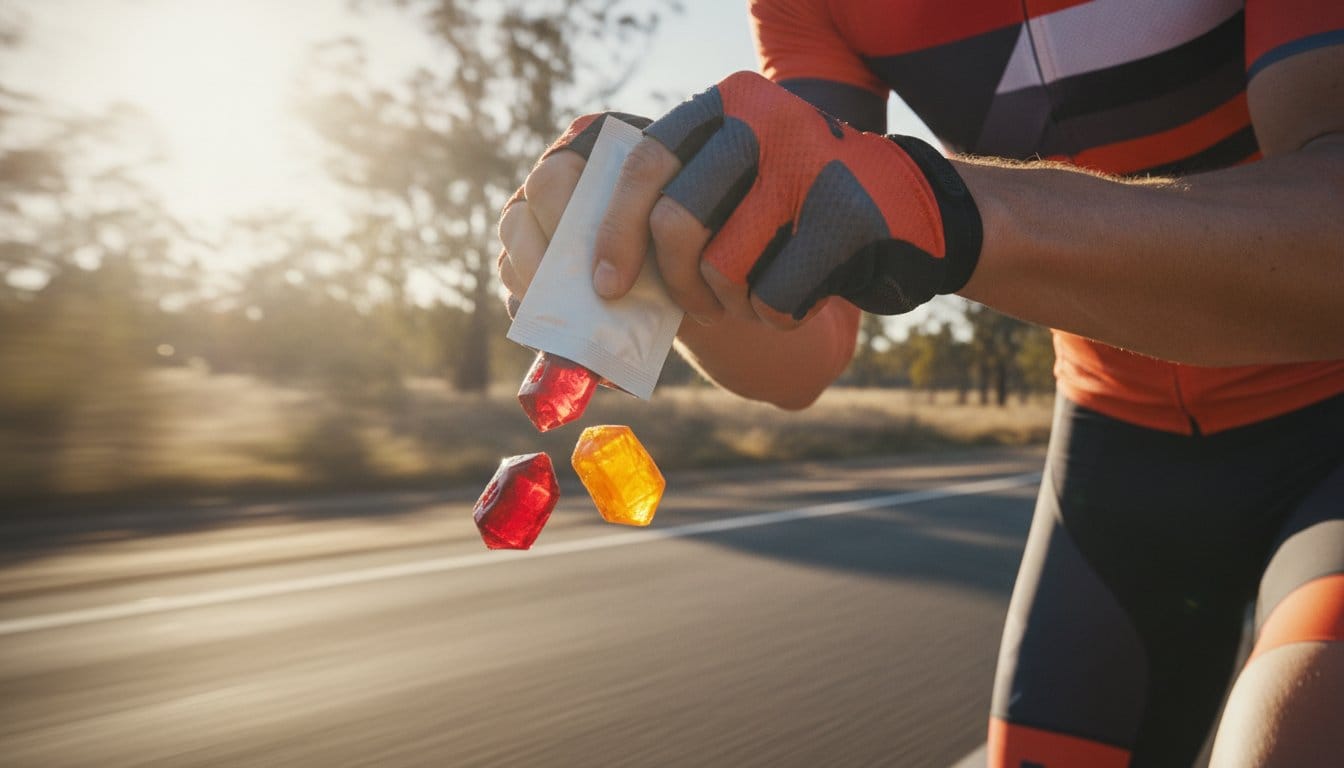
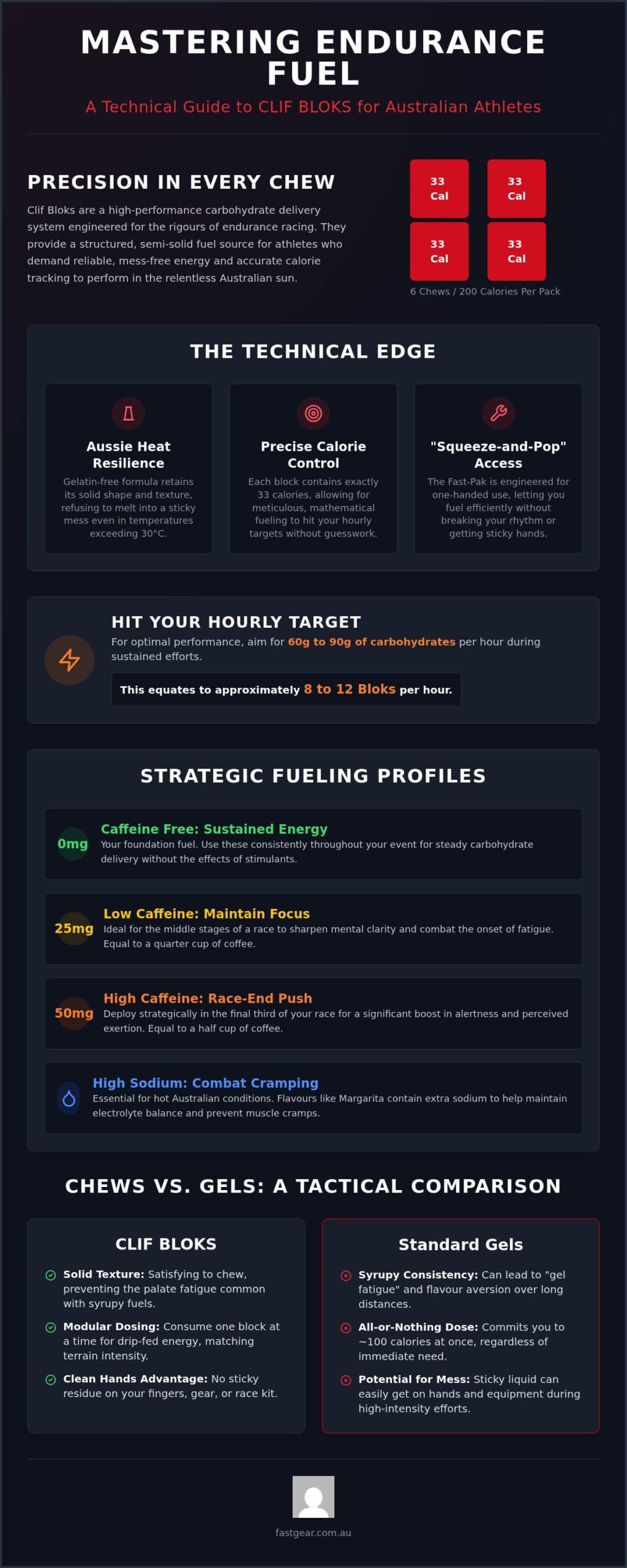
The Fast-Pak packaging is a standout feature for those on the move. It’s specifically engineered for one-handed application, allowing you to squeeze a single block into your mouth while maintaining your grip on the handlebars or keeping your running stride. This eliminates the fumbling often associated with tearing open gel sachets during a technical climb. Precision is another key advantage. With exactly 33 calories per block, you can calculate your hourly intake with mathematical accuracy. If your strategy requires 200 calories per hour, you know exactly how many blocks to consume, removing the guesswork that often leads to mid-race bonking.
Beyond the caloric data, there’s a physiological benefit known as the mouth-to-brain connection. Research into sports science suggests that the act of chewing and the presence of carbohydrates in the oral cavity can signal the central nervous system to reduce perceived exertion. This “mouth sensing” prepares your gut for fuel absorption, potentially reducing the risk of gastrointestinal distress compared to swallowing large volumes of liquid at once. It’s a technical edge that helps you maintain focus when the fatigue starts to set in.
The Anatomy of a Performance Chew
The internal chemistry of these chews relies on a dual-source carbohydrate blend of maltodextrin and cane sugar. This combination ensures a steady release of glucose and fructose to the muscles. Crucially for Australian athletes, the texture is entirely gelatin-free. This structural integrity ensures the chews won’t melt or become a sticky slurry in your bento box when the temperature climbs above 30 degrees. Their sleek, vertical profile makes them easy to slide into the technical pockets of a Compressport Free Belt Pro, ensuring your fuel is always within reach during a trail ultra.
Chews vs. Gels: A Tactical Overview
While gels are a staple, Clif Bloks energy chews offer a “clean hands” advantage that is hard to ignore. There’s no sticky residue to wipe off your fingers or your gear after fueling. Psychologically, the act of chewing breaks the monotony of a long-distance race, providing a sensory reset that can boost morale during the later stages of a 100km event. For athletes who find the syrupy consistency of gels unpalatable after several hours, chews are the primary solution to overcome the dreaded “gel fatigue” while maintaining consistent energy levels.
The Technical Edge: Texture, Calorie Control, and Aussie Heat Resilience
Maintaining structural integrity during a six-hour ride in the Australian summer is where most nutrition fails. Clif Bloks energy chews are specifically engineered to resist the “melt-down” effect common with gelatin-based products. Whether stored in a top-tube bento box or a compression run belt, these chews retain their firm, cube-like shape even when ambient temperatures exceed 30°C. This reliability ensures that your fuel remains accessible and palatable, rather than becoming a sticky residue that’s impossible to consume under duress.
The mechanical advantage of the Fast-Pak shouldn’t be underestimated. Using the “squeeze-and-pop” method, you can extract a single cube by applying pressure to the bottom of the sleeve, launching the chew directly into your mouth. This eliminates the need to stop or use both hands. Because the sleeve is modular, containing six individual blocks, it allows for highly customisable fueling. You aren’t committed to a single 100-calorie hit like a standard gel; you can drip-feed your energy intake cube by cube to match the intensity of the terrain.
To ensure optimal absorption, you must coordinate your chew consumption with fluid intake. Carbohydrates require water to pass through the intestinal wall efficiently. Aim for several mouthfuls of water with every two blocks to prevent gastric delay and ensure the glucose reaches your working muscles without causing a “brick” sensation in the stomach. If you’re refining your race-day logistics, you can order Clif Bloks to practice this mechanical delivery during your next long training session.
Performance in the Australian Heat
Clif Bloks utilise a starch-based structure that remains stable at high temperatures, a critical feature for racing across the country or during mid-summer marathons. To keep them at their best, store them in internal pockets or shaded areas of your kit rather than exposed on top of a bike frame. When your heart rate is in Zone 4 and breathing is laboured, take small bites and let the chew soften in your mouth. This reduces the chewing effort required and allows you to maintain your breathing rhythm while still hitting your caloric targets.
Calculating Your Hourly Carb Intake
Precision fueling relies on simple mathematics. A standard formula for Clif Bloks energy chews is that three blocks equal approximately 100 calories, which is the direct equivalent of one standard energy gel. To build a complete performance profile, you should stack these chews with high-quality electrolytes to manage sodium loss. Consuming 30g to 60g of carbohydrates per hour remains the physiological gold standard for maintaining glycogen stores during prolonged endurance efforts. By using the modular nature of the blocks, you can hit these targets with pinpoint accuracy regardless of the race duration.
Flavour Profile Breakdown: Categorising Your Fuel by Caffeine and Electrolytes
Performance fueling isn’t just about hitting a caloric target; it’s about tactical deployment. Clif Bloks energy chews are categorised into specific performance tiers based on their stimulant and mineral content. This allows you to map your nutrition to the intensity and duration of your race profile. You don’t want a 50mg caffeine hit during a neutral roll-out, just as you don’t want a low-sodium option during a midday technical climb when your sweat rate is peaking. By categorising the range into Non-Caffeinated, Low-Caffeine (25mg), and High-Caffeine (50mg) tiers, you can build a fueling schedule that evolves with the race.
Palate fatigue is a common barrier in ultra-endurance events, occurring when the sensory receptors in your mouth become desensitised to high sugar concentrations after four or five hours of racing. To combat this, you must rotate between tart and sweet profiles. Flavours like Sour Green Apple or Ginger Ale provide a sharp, acidic contrast to the sweeter fruit-based options. Ginger Ale is particularly effective for settling the stomach during the middle stages of a trail ultra when nausea often begins to surface. This variety keeps your fueling consistent and prevents the psychological “gag reflex” often associated with single-flavour strategies.
The Caffeine Kick: Black Cherry and Tropical Punch
Black Cherry is the “finishing gear” of the range, delivering a 50mg caffeine punch per serving. This is twice the amount found in the Orange or Tropical Punch variants. Use Black Cherry for late-race mental focus when cognitive fatigue threatens your technical execution. The 25mg flavours provide a “steady state” caffeine dose, ideal for maintaining alertness during the middle hours of a century ride without causing a sharp heart rate spike. Introducing these stimulants strategically into your endurance sports nutrition Australia plan ensures you have a potent ergogenic aid available exactly when glycogen stores are most depleted.
Electrolyte Specialists: Margarita and Salted Watermelon
For athletes with high sweat rates, the Margarita flavour is a technical necessity. It contains triple the sodium content of the standard range, providing approximately 150mg of sodium per three-block serving. This makes it the primary choice for the middle segments of an Ironman or any event conducted in high humidity. Salted Watermelon acts as the “Goldilocks” flavour, offering a balanced electrolyte profile that provides more sodium than the standard fruit variants without the intense saltiness of the Margarita. These high-sodium options are critical for maintaining fluid balance and preventing the onset of cramping during prolonged efforts.
Strategic Fueling: Integrating Energy Chews into Your Australian Endurance Plan
Executing a successful race-day fueling plan requires more than just carrying calories; it demands a methodical approach to timing and texture. Clif Bloks energy chews are most effective when integrated into a structured five-step protocol. First, standardise your hourly carbohydrate target. For most competitive athletes, this sits between 60g and 90g. Since three blocks provide roughly 33g of carbohydrates, you can easily calculate how many Fast-Paks you need for your specific event duration.
Second, map your flavour progression. Start with milder fruit flavours to protect your palate, transitioning to high-sodium options mid-race, and finishing with caffeinated variants. Third, integrate these chews with liquid calories. Combining chews with Tailwind or Maurten 320 provides a balanced intake of hydrogel technology and semi-solid fuel. Fourth, master the “chew and sip” rhythm. Always follow a block with a mouthful of water to facilitate gastric emptying. Finally, review your post-session gut comfort. If you experience bloating, adjust the frequency of your intake to ensure your system can process the load at race pace.
Triathlon and Cycling Specific Strategies
Logistics are critical on the bike. Many triathletes tape a Fast-Pak directly to their top tube with a small tab of electrical tape. This allows you to “squeeze and pop” a block without digging into a rear pocket. Use the chews as a psychological “reward” fuel. Setting a goal to have one block every 20 minutes creates a mental milestone that maintains momentum. However, as you transition to the final 10km of a run, consider switching to gels. When your heart rate is red-lining and breathing is laboured, the mechanical effort of chewing can become a distraction.
Managing Your Gut in High Intensity
Digestive efficiency begins in the mouth. Thorough chewing allows salivary amylase to start the breakdown of maltodextrin before it reaches the stomach. Clif Bloks energy chews are formulated without artificial sweeteners, which significantly reduces the risk of the osmotic bloating often caused by sugar alcohols. Success on race day depends on your ability to train the gut to handle solid fuel under physiological stress. You can shop the full range of Clif Bloks energy chews to begin standardising your intake during your next high-intensity build.
Clif Bloks vs. Energy Gels: Why Texture Matters for Your Performance
Choosing between a semi-solid chew and a traditional gel is a tactical decision that impacts both your gut comfort and mental state. During ultra-endurance events exceeding 100km, the “fullness” factor of Clif Bloks energy chews provides a distinct advantage. While gels deliver rapid glucose, they often leave athletes feeling “liquid-logged” and physically hungry. The substantial texture of a chew satisfies the psychological need to consume real food, which can prevent the despondency that often accompanies a liquid-only diet during long hours in the saddle or on the trail.
Absorption rates are frequently debated, but the reality depends heavily on your hydration status. Gels are often marketed as faster, but Clif Bloks energy chews deliver carbohydrates at a comparable rate when paired with adequate water. Without fluid, any concentrated carbohydrate source will sit in the stomach, causing distress. When comparing the weight-to-calorie ratio against other cycling nutrition Australia options, chews offer a dense, space-efficient energy source that doesn’t add unnecessary bulk to your kit. For maximum versatility, we recommend a hybrid strategy: use chews for steady-state efforts and reserve gels for high-intensity surges.
When to Reach for a Gel Instead
There are specific race phases where a gel is the safer, more efficient choice. When your heart rate hits Zone 5 and your breathing is too laboured to chew safely, the risk of choking makes solid fuel impractical. In these high-intensity thresholds, hydrogels like Maurten Gel 100 are superior because they encapsulate carbohydrates in a pH-sensitive matrix, allowing them to bypass the stomach quickly. For the final sprint or a steep technical climb, the “rip and swallow” nature of a gel provides an immediate ergogenic boost without the mechanical distraction of chewing.
The Fastgear Verdict: Customising Your Kit
Every athlete’s digestive system is unique, so testing “flavour flights” during training is essential before committing to a full box of 18 packets. To maintain efficiency on race day, organise your Compressport trail shirt pockets by placing chews in the side mesh for easy access and gels in the rear for the final stages. This methodical organisation ensures you never fumble for the wrong fuel when fatigue sets in. Ready to optimise your performance? Shop the full range of Clif Bloks and endurance fuels at Fastgear Australia to build your ultimate 2026 racing kit.
Fuel Your Next Milestone with Precision
Mastering your endurance strategy requires a shift from generic snacking to tactical fueling. By categorising your intake based on caffeine requirements and electrolyte loss, you eliminate the guesswork that leads to late-race performance drops. Clif Bloks energy chews provide the structural reliability needed for the Australian climate, ensuring your carbohydrates remain accessible even in extreme heat. Whether you’re utilising high-sodium Margarita blocks for mid-race stability or Black Cherry for a final mental surge, your success depends on a methodical, hybrid approach.
As technical gear experts, we curate world-leading nutrition to support your most ambitious goals. Fastgear Australia is an authorised retailer of Clif, Maurten, and SIS, providing fast national shipping to ensure you’re race-ready. Optimise your race-day fuel with Clif Bloks at Fastgear Australia and secure the technical edge for your 2026 season. Your peak performance is built on the discipline of your preparation. Stay focused and keep pushing toward that next personal best.
Frequently Asked Questions
How many Clif Bloks should I eat per hour during a marathon?
Aim for one to two packets of Clif Bloks energy chews per hour to meet a standard carbohydrate target of 60g to 90g. Each individual block contains 33 calories and approximately 8g of carbohydrates. You should consume three blocks to hit a 100-calorie threshold. Start with half a packet 15 minutes before your race begins and maintain a consistent intake every 20 minutes to prevent glycogen depletion during the later stages.
Do Clif Bloks energy chews contain caffeine?
Select flavours within the range contain caffeine, while others are stimulant-free. Black Cherry provides the highest dose with 50mg of caffeine per serving. Orange and Tropical Punch offer a moderate 25mg dose for steady-state alertness. Flavours such as Strawberry, Mountain Berry, and Salted Watermelon contain 0mg of caffeine. This variety allows you to rotate your intake based on your specific mental focus requirements throughout different phases of your endurance event.
Are Clif Bloks vegan and gluten-free for Australian athletes?
Clif Bloks are vegan-friendly and gluten-free, making them suitable for athletes with specific dietary requirements. They are formulated with 95% organic ingredients and rely on plant-based carbohydrate sources like maltodextrin and cane sugar rather than animal-derived gelatin. This starch-based composition is what gives them their firm, chewable texture. Always check the specific packaging for the most current ingredient list to ensure it aligns with your personal health and performance standards.
Can I use Clif Bloks instead of energy gels for an Ironman?
You can certainly use chews as your primary carbohydrate source for an Ironman. Many triathletes prefer the semi-solid format during the bike leg because it provides a sense of fullness that liquid gels lack. However, a hybrid approach is often more effective. Use the chews for the 180km cycle and transition to liquid-based gels for the marathon run when the mechanical effort of chewing becomes difficult at a higher heart rate.
How much sodium is in the Margarita flavoured Clif Bloks?
The Margarita flavour is specifically engineered for high sweat rates, containing 150mg of sodium per three-block serving. This is triple the sodium found in standard fruit flavours like Strawberry or Mountain Berry. It’s a technical solution for maintaining electrolyte balance during long efforts in humid Australian conditions. Salted Watermelon is another alternative, providing a balanced sodium profile that sits between the standard range and the high-output Margarita option.
Do Clif Bloks melt in the heat if I leave them in my bike bag?
Clif Bloks energy chews are designed to be heat-stable and won’t melt into a liquid state in your bike bag or bento box. Their starch-based structure maintains its cube shape even when exposed to high ambient temperatures during mid-summer races. While they won’t lose their form, they may become slightly softer in extreme conditions. For the best experience, keep them in a shaded part of your kit and avoid leaving them in direct sunlight.
What is the best way to open Clif Bloks while running or cycling?
The Fast-Pak packaging is engineered for a “squeeze-and-pop” delivery that requires only one hand. Simply tear the top of the sleeve before you start your session. When you need fuel, apply pressure to the bottom of the packet to slide a single block out and into your mouth. This method allows you to consume your carbohydrates without breaking your aero position or disrupting your running stride, ensuring your focus remains on the technical terrain.
How do Clif Bloks compare to Maurten gels for stomach sensitivity?
Both options are designed for high performance, but they utilise different delivery mechanisms. Maurten gels use hydrogel technology to encapsulate carbohydrates, allowing them to pass through the stomach with minimal irritation. Clif Bloks rely on a traditional blend of organic maltodextrin and sugar. If you have an extremely sensitive stomach at peak intensity, hydrogels might be superior. However, many athletes find the simple ingredient profile of Bloks very tolerable during steady-state endurance efforts.
