
Uncategorized
The Ultimate Guide to Endurance Sports Nutrition Australia 2026
Aug
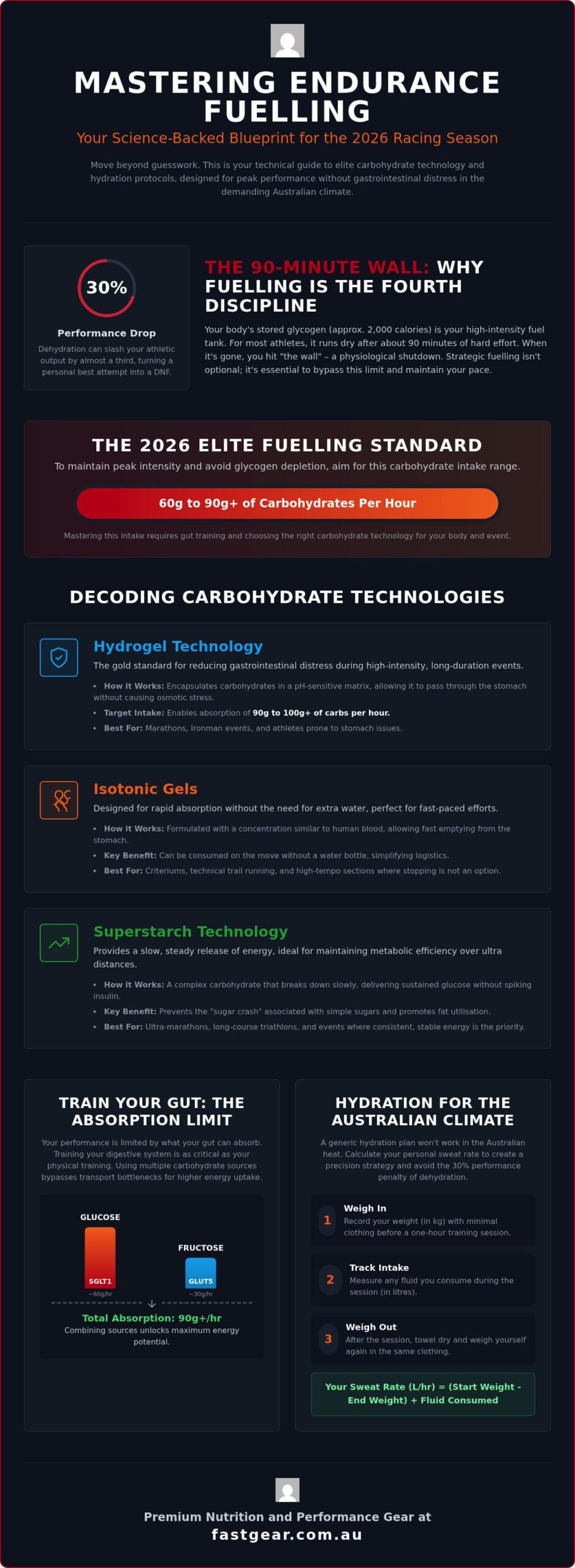
Research from the Australian Institute of Sport reveals that dehydration can slash your athletic performance by up to 30%. For most athletes, stored glycogen only lasts around 90 minutes; after that, you’re either fuelling efficiently or you’re fading fast. Perfecting endurance sports nutrition Australia wide means more than just surviving the heat; it’s about maintaining a high-performance output when the mercury rises. You’ve likely felt that sudden, heavy-legged wall or the stomach cramps that turn a PB attempt into a DNF.
It’s a frustrating reality that sidelines even the fittest competitors during intense events, but it doesn’t have to be yours. This guide provides the technical blueprint to master your fuelling strategy using elite-level carbohydrate technology and hydration protocols designed for the 2026 racing season. We promise to move you beyond guesswork and into a science-backed routine that delivers consistent energy without the gastrointestinal distress.
We’ll break down the critical differences between hydrogel and isotonic options, explain how to hit 90g of carbs per hour, and show you how to train your gut for maximum absorption. From advanced glucose-to-fructose ratios to precision electrolyte management, this is your roadmap to peak physical output and a stronger finish.
Key Takeaways
- Understand why glycogen depletion triggers performance failure and how to bypass the physiological “wall” using modern carbohydrate protocols.
- Compare hydrogel and isotonic technologies to find the delivery system that prevents gastrointestinal distress while maintaining peak intensity.
- Learn to calculate your individual sweat rate to create a hydration strategy capable of withstanding the unique demands of the Australian climate.
- Master the 2026 standards for endurance sports nutrition Australia by scaling your carbohydrate intake between 60g and 90g per hour.
- Identify how to curate a multi-brand fuelling kit that matches your gut physiology and specific race-day performance goals.
The Science of Endurance Fuelling: Why Nutrition is the Fourth Discipline
Elite performance relies on more than just aerobic capacity. It requires a precise metabolic strategy. Endurance sports nutrition is the strategic management of exogenous fuel to preserve endogenous stores. This is the fourth discipline of multisport racing. Mastering this science ensures that your physical preparation isn’t wasted by a preventable physiological collapse. To succeed with endurance sports nutrition Australia athletes must look beyond basic hydration and focus on technical energy delivery that matches their output.
Understanding Glycogen Depletion
The human body has hard limits. You can only store roughly 2,000 calories of glycogen in your muscles and liver. As your intensity increases toward your VO2 max, your body shifts its reliance toward these finite stores. When they run dry, you hit “the bonk”. This physiological shutdown occurs because the brain and muscles lose their primary high-intensity fuel source. While fat adaptation provides a baseline for low-intensity efforts, it can’t sustain the glycolytic demands of competitive racing. Supplementing with external fuel is the only way to maintain your pace and protect your muscle tissue. Understanding The Science of Endurance Fuelling is vital for anyone targeting a podium finish in 2026.
The Gut-Performance Connection
Performance is often limited by what you can absorb, not just what you consume. The small intestine uses specific pathways to move energy into the bloodstream. SGLT1 transporters handle glucose, while GLUT5 transporters manage fructose. These pathways saturate at different rates. Using multiple carbohydrate sources allows for higher total absorption, often exceeding 90g per hour. Gut training is as critical as your weekly long run. You must condition your digestive system to handle high carbohydrate loads under physiological stress. Common GI distress usually stems from osmotic imbalances or the simple overloading of a single transporter. High-sugar gels can sit in the stomach, drawing water in and causing the bloating that ends a race. Effective endurance sports nutrition Australia relies on products that bypass these bottlenecks through advanced delivery technology.
Decoding Carbohydrate Technologies: Hydrogel vs. Isotonic vs. Superstarch
Carbohydrate delivery has moved beyond the era of simple glucose syrups. Early endurance gels were often little more than concentrated sugar; they frequently led to the osmotic imbalances that cause GI distress. Modern endurance sports nutrition Australia athletes now demand precision. We have entered the age of technical fuelling, where the delivery mechanism is as engineered as a carbon fibre frame. By matching specific carbohydrate technologies to race intensity, you achieve the marginal gains necessary for elite performance. This isn’t just about calories. It’s about how those calories interact with your physiology under stress.
Hydrogel Technology (Maurten)
Hydrogel technology represents a significant leap in performance nutrition. By encapsulating carbohydrates in a pH-sensitive biopolymer matrix, the fuel passes through the stomach quickly. Once the gel hits the acidic environment of the stomach, it maintains its structure, shielding the carbohydrates from direct contact with the stomach lining. This process significantly reduces the risk of bloating and nausea. Using Maurten gel Australia allows you to push toward 90g or even 100g of carbohydrates per hour. This is the gold standard for Marathons and Ironman events where high energy density is mandatory for survival and speed.
Isotonic and Superstarch Options
Isotonic options, such as SIS GO Isotonic Gels, serve a different tactical purpose. These are formulated to have a similar concentration to human blood, meaning they don’t require additional water to be digested effectively. This makes them ideal for high-intensity efforts like Criteriums or technical trail sections where reaching for a bottle is difficult. Conversely, Superstarch technology found in UCAN provides a slow-release energy curve. It offers a steady supply of fuel without the insulin spikes associated with simpler sugars. This makes it a powerful tool for ultra-marathons where metabolic efficiency is the priority.
For variety, Clif Bloks provide a psychological break from liquids and gels. They offer the chewable texture that many athletes crave during late-race fatigue, providing a tactile distraction from the physical effort. Selecting the right combination requires alignment with the Australian Institute of Sport nutrition guidelines, which emphasise individualised planning. A Criterium racer might lean heavily on isotonic gels, while an ultra-runner will likely mix superstarch for stability and hydrogel for peak efforts. You don’t have to choose just one brand. Successful athletes curate a toolkit from the best available technologies. Browse the full range of high-performance nutrition at Fastgear to build your custom race-day kit.
Hydration and Electrolytes in the Australian Climate
Australian heat is a performance killer. High humidity levels often prevent effective evaporative cooling, causing core temperatures to spike rapidly. When your internal temperature rises, blood is diverted from the working muscles to the skin for cooling. This metabolic shift leads to an immediate drop in power output and early onset fatigue. You can’t guess your fluid needs in these conditions. Hydration and Electrolytes in the Australian Climate requirements vary wildly between athletes based on sweat rate and salt concentration. A generic plan is a recipe for a DNF.
Sweat rate testing is non-negotiable for serious competitors. Some athletes lose 500ml per hour; others exceed 2 litres in the same conditions. Sodium is the primary driver for performance here. It maintains blood volume, supports nerve function, and prevents the “brain fog” associated with long-distance efforts. Specific electrolytes facilitate fluid absorption in the gut, ensuring water actually reaches your cells instead of sloshing in your stomach. This is a cornerstone of effective endurance sports nutrition Australia wide.
Managing Sodium Loss
Sodium loss is highly individual. It ranges from 200mg to 2,000mg per litre of sweat. If you’re a “salty sweater” who finishes races with white streaks on your kit, you need aggressive replacement. Ignoring this leads to hyponatremia, a dangerous drop in blood sodium that causes confusion and performance collapse. Products like Tailwind powder offer a dual-purpose solution. They combine high-quality carbohydrates with precise electrolyte concentrations. This allows for streamlined fuelling and fluid management in a single bottle.
Fuelling Through Fluids
Liquid-only strategies are gaining significant traction for the 2026 season. They simplify race-day logistics and ensure a constant drip-feed of energy. However, cycling nutrition Australia protocols differ from running due to gut mechanics. Cyclists can typically tolerate higher volumes and concentrations because the torso remains relatively stable. Runners face constant vertical oscillation. This “gut jostle” makes liquid-only plans harder to manage during ultra-marathons without specific gut training. Optimise your bike setup with aerobar hydration systems or frame-mounted bottles to ensure frequent, small sips. This maintains a steady state of hydration without overloading the digestive tract. Precision is your only protection against the Australian sun.
Building Your 2026 Race-Day Fuelling Strategy
A race-day plan is more than a list of calories. It is a timeline of execution. For the 2026 season, the standard for elite endurance sports nutrition Australia has shifted toward higher volume and multi-brand integration. You cannot rely on a single source of energy for a multi-hour event. Success requires a tiered approach that addresses hourly targets, gut comfort, and metabolic recovery. Precision matters. Every gram of carbohydrate must have a purpose.
Step 1 involves calculating your hourly carbohydrate target. For most competitive athletes, this sits between 60g and 90g, though some elite outliers now push toward 120g per hour. Step 2 requires selecting fuel types based on intensity. Use hydrogels for high-intensity sections and isotonic gels when water access is limited. Step 3 focuses on the taper week. Focus on low-residue carbohydrate loading to saturate glycogen stores without the digestive “heavy” feeling or bloating. Finally, Step 4 is recovery nutrition. You have a 30-minute window post-race to ingest a 3:1 ratio of carbohydrates to protein. This initiates muscle repair and glycogen resynthesis immediately.
The 90 Grams Per Hour Goal
Hitting 90 grams per hour is a technical challenge. You must train your gut during your long blocks to handle this load. Mixing delivery methods is the most effective way to avoid “flavour fatigue” and palate exhaustion. Combine Maurten 320 powder in your bottles with SIS GO Isotonic Gels and GU Energy Gels. This variety keeps the SGLT1 and GLUT5 transporters active without overloading a single pathway. For a deeper dive into these protocols, consult our ultimate guide to endurance sports nutrition Australia 2026. Consistency is the goal. Avoid new products on race morning.
Race-Day Execution
Execution starts three hours before the gun. Your pre-race breakfast should be high-carb, moderate-protein, and low-fibre to ensure rapid gastric emptying. During the race, carry an “Emergency Kit”. This should include a single GU Energy Gel or a pack of Clif Bloks in case you miss a bottle at an aid station. Use a Compressport free belt pro to organise your fuel. This technical gear allows you to carry multiple gels and chews with zero bounce, keeping your nutrition accessible at high speeds. Don’t leave your performance to chance. Secure your high-performance nutrition kit at Fastgear and lock in your fuelling strategy today.
Premium Nutrition and Performance Gear at Fastgear Australia
Elite performance is rarely the result of a single product. It is the culmination of a highly disciplined approach to equipment and physiology. At Fastgear Australia, we don’t believe in a one-brand-fits-all philosophy. We curate a multi-brand selection because serious athletes require different technologies for different race phases. Our commitment is simple: we only stock science-backed, performance-proven tools that deliver measurable results. This makes us the premier destination for endurance sports nutrition Australia wide, providing the national reach you need for race-week essentials.
The synergy between what you consume and how you carry it is vital. A perfect fuelling plan fails if your gear is restrictive or if your storage is inaccessible at high speeds. We bridge that gap by pairing world-tour-level nutrition with technical racing gear designed for the extreme demands of the 2026 season. Every item in our inventory is selected for its ability to contribute to your marginal gains, ensuring that your equipment is as refined as your training plan.
Curated Elite Brands
Our inventory features the exact brands used by world-record holders and professional pelotons. Maurten and SIS represent the pinnacle of carbohydrate delivery, offering the hydrogel and isotonic solutions needed for high-intensity output. For those tackling ultra-endurance events, Tailwind and UCAN provide the metabolic stability required for multi-hour efforts. By sourcing these elite brands from a single Australian shop, you can experiment with different ratios and textures during your training blocks. This allows you to build a customised kit that specifically addresses your gut physiology and performance targets.
Beyond Nutrition: Technical Racing Gear
Technical gear is the delivery system for your nutrition. Managing your fuel at 40km/h or on a technical trail requires specialised equipment that doesn’t compromise your focus. Our triathlon race day essentials Australia guide explains how to integrate your fuelling strategy with high-performance hardware. From the aerodynamic efficiency of a Wove M8 saddle to the storage capacity of a Compressport Free Belt Pro, every detail matters. Comfort is a performance metric. Reducing friction with a Mugiro neck protector or ensuring visibility with premium swimming goggles allows you to maintain total concentration on your power output and pacing.
Don’t leave your 2026 milestones to chance. Whether you’re preparing for a local marathon or an international Ironman, your preparation deserves the best tools available. Fastgear Australia is your reliable performance partner, delivering the world’s most innovative endurance sports nutrition Australia has to offer directly to your door. Prepare with precision. Race with confidence. Secure your elite-level gear and nutrition today.
Elevate Your Race-Day Execution
Elite performance is never accidental. It is the result of aligning your physiology with the world’s most advanced carbohydrate technologies. You now have the blueprint to bypass the “bonk” and manage gastrointestinal distress through precision fuelling. By mastering hydrogel delivery and calculating your specific sweat rate, you transform your nutrition from a liability into a competitive advantage. High-performance endurance sports nutrition Australia is about more than just energy; it is about the disciplined management of your metabolic ceiling.
Fastgear Australia stands ready as your seasoned expert and performance partner. We are an authorised retailer for world-class brands including Maurten, SIS, and Tailwind, offering a curated selection that guarantees marginal gains. Our inventory features specialised gear built for the Australian climate, supported by fast national shipping to ensure your race-week essentials arrive on time. Stop guessing and start executing with a strategy backed by science. Optimise your race-day fuel with Fastgear Australia’s curated nutrition range and prepare to dominate your next 2026 milestone. The finish line is waiting. Fuel like a professional and take your place at the front of the field.
Frequently Asked Questions
How many carbohydrates should I consume per hour during an Ironman?
Target 60g to 90g of carbohydrates per hour as your baseline. Elite athletes often push toward 100g or 120g by using advanced glucose-to-fructose ratios. This requires training the gut during your long sessions to handle high osmolality. Use a mix of Maurten powders and SIS gels to saturate multiple transporters. Consistent intake ensures you have sufficient glycogen to maintain your target pace during the final marathon leg.
What is the difference between an isotonic gel and a standard energy gel?
Isotonic gels, like SIS GO Isotonic Gels, have a concentration similar to human blood. They pass through the stomach quickly without needing extra water for absorption. Standard energy gels are hypertonic and more concentrated. They can draw water out of your bloodstream and into the gut if consumed without enough fluid. This often leads to bloating or dehydration. Choose isotonic options when water access is limited during high-intensity efforts.
How do I prevent stomach cramps while running in hot Australian weather?
Preventing cramps in the heat requires a combination of precise sodium replacement and avoiding hypertonic solutions. Calculate your sweat rate and match your sodium intake to your losses. Some athletes lose over 1,000mg per hour. Use hydrogel technology to bypass the stomach. This reduces the risk of osmotic imbalances that trigger GI distress. Mastering endurance sports nutrition Australia wide means adapting to these high-sweat conditions with precision.
Is it better to use energy gels or energy chews for a marathon?
Gels are generally superior for high-intensity running because they require no chewing and absorb rapidly. Energy chews like Clif Bloks offer a valuable psychological break and a different texture during lower-intensity sections. Most athletes use gels as their primary fuel source and carry chews as a backup. This variety prevents flavour fatigue. It’s an effective way to maintain consistent energy levels without overwhelming your palate during a long marathon.
Do I really need electrolytes if I am drinking plenty of water?
Yes, drinking plain water in high volumes without electrolytes can lead to hyponatremia. This condition dilutes the sodium in your blood, causing confusion and performance failure. Sodium, potassium, and magnesium are essential for muscle contraction. Effective endurance sports nutrition Australia relies on replacing what you lose in sweat. This maintains blood volume and prevents early fatigue. Don’t rely on water alone when the mercury rises during a race.
What is hydrogel technology and why is it more expensive?
Hydrogel technology uses a pH-sensitive biopolymer matrix to encapsulate carbohydrates. This allows high concentrations of fuel to bypass the stomach and enter the small intestine directly. It significantly reduces the risk of nausea and bloating. The premium price reflects the advanced sports science required to deliver 40g to 80g of carbs in a single serving. It’s a high-performance tool designed for athletes who prioritise gut comfort and maximum energy density.
How should I change my nutrition for an ultramarathon vs. a standard marathon?
Ultramarathons require metabolic stability and a focus on preventing palate fatigue. While marathons rely on fast-absorbing gels, ultras benefit from slow-release energy sources like UCAN or Tailwind powder. You should lower your average intensity to allow the gut to process fuel more effectively over ten or twenty hours. Training your gut to handle solid food or chews becomes essential as the event duration increases. Consistency is more important than raw speed.
Can I use a liquid-only fuelling strategy for a long-distance triathlon?
Liquid-only strategies are highly effective for long-distance triathlons, especially on the bike leg. Using high-carbohydrate powders like Maurten 320 or Tailwind allows for a constant, controlled drip-feed of energy and electrolytes. This simplifies your logistics and ensures you don’t miss a fuelling window. While most athletes transition to gels for portability on the run, a well-tested liquid plan can sustain your performance through the entire event without GI distress.
