
Uncategorized
Electrolytes for Athletes: Performance Hydration Guide
Jul
You’re 20 kilometres into a humid Queensland marathon when your calves start to twitch and your focus begins to blur. You’ve been drinking water at every station, yet your performance is cratering. It’s a hard truth to swallow: water alone isn’t enough when you’re pushing your limits. Pounding plain water can actually dilute your system, leading to the “sloshy stomach” and brain fog that ruins race days. To stay in the game, you need a precise balance of electrolytes to maintain the electrical signals that drive every muscle contraction.
We know the frustration of training for months only to have your body quit because of a flawed hydration strategy. This guide shows you how to master electrolyte science to prevent cramps and maintain power in the harshest Australian conditions. You’ll learn which minerals actually move the needle, how to avoid the risks of hyponatremia during ultra-distance events, and how to build a bulletproof race-day plan. From understanding isotonic osmolality to choosing technical fuels like Maurten or SIS, we’re cutting through the noise to give you a direct path to peak efficiency.
Key Takeaways
- Understand how electrolytes act as your body’s internal electrical grid to maintain nerve impulses and muscle contractions under heavy load.
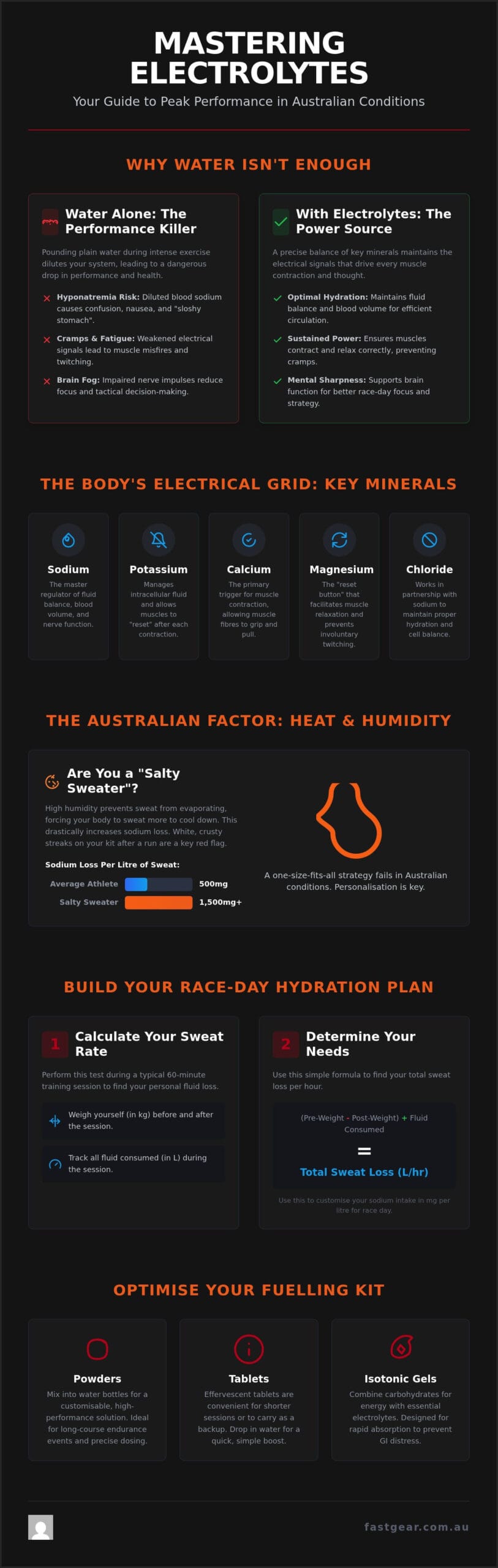
- Identify the physical signs of being a “salty sweater” and learn why high Australian humidity demands a more aggressive sodium replacement strategy.
- Evaluate the technical benefits of different delivery formats, from effervescent tablets for short sessions to high-performance powders for all-day endurance.
- Master a practical two-step method to calculate your personal sweat rate and customise your milligram-per-litre sodium intake for race day.
- Optimise your fueling kit with elite, athlete-tested solutions designed to prevent GI distress and maintain power in the heat.
Understanding Electrolytes: The Electrical Grid for Peak Athletic Performance
Think of your body as a high-performance machine. For that machine to fire, it needs more than just fuel and water. It requires a functional electrical circuit. This is where electrolytes come into play. By definition, what are electrolytes? are essential minerals that carry an electrical charge when dissolved in your blood and cellular fluids. They are the conductors that allow your brain to communicate with your muscles. When you decide to kick for the finish line, it’s an electrical impulse that makes it happen. If your mineral levels are off, the signal weakens. Your power output drops. Your coordination falters.
The Big Five: Key Minerals for Endurance
Sodium is the undisputed leader of the pack. It’s the primary driver of fluid balance and blood volume. When sodium levels are optimal, your heart doesn’t have to work as hard to circulate blood to working muscles. Potassium acts as the internal counterweight. It sits inside your cells, managing intracellular fluid and ensuring your muscles can reset after every stride or pedal stroke. Without enough potassium, you’ll feel a distinct loss of “snap” in your movements.
Magnesium and calcium operate as a specialised duo. Calcium is the trigger for muscle contraction. It’s what allows the fibres to grip and pull. Magnesium is the reset button. It facilitates muscle relaxation. If you’ve ever felt your muscles locking up or twitching involuntarily, you’re likely witnessing a breakdown in this specific mineral exchange. Maintaining this balance is non-negotiable for long-course athletes in the Australian heat.
Why Water Alone Isn’t Enough
Many athletes fall into the trap of over-hydrating with plain water. This is a dangerous mistake. During an ultra-distance event or a long ride in high humidity, you lose massive amounts of salt through sweat. If you only replace that loss with water, you dilute your remaining blood sodium. This leads to a condition called hyponatremia. It’s the primary cause of the “sloshy stomach” and can result in severe confusion, fatigue, and even collapse. Water alone actually decreases your performance by disrupting the sodium-potassium pump.
This pump is the microscopic engine in every cell. It moves ions back and forth to create the energy potential needed for movement. When you’re depleted, the engine stalls. This isn’t just a physical issue; it’s a cognitive one. Your brain is your most electrically active organ. Early signs of electrolyte imbalance often manifest as brain fog or a loss of tactical focus late in a race. Under FSANZ Standard 2.6.2, a true electrolyte drink must be formulated for rapid replacement during 60 minutes or more of strenuous activity. It’s a technical requirement for a technical sport.
The Science of Sweat: Why Australian Conditions Demand More
Australia’s climate is a brutal testing ground for endurance athletes. Training in the dry heat of Perth is a different physiological beast compared to the oppressive humidity of a Brisbane summer. In high humidity, sweat cannot evaporate effectively. Your body’s primary cooling system fails. To compensate, your sweat rate increases, leading to a rapid loss of fluid and electrolytes.
If you finish a long run with white, crusty streaks on your kit or grit on your face, you’re a “salty sweater.” This isn’t just a laundry problem. It’s a performance red flag. While an average athlete might lose 500mg of sodium per litre of sweat, a salty sweater can lose over 1,500mg. This massive variance is why a one-size-fits-all approach fails. Developing a personal hydration strategy is the only way to ensure your engine doesn’t seize when the mercury rises.
Physiological demands shift dramatically across the continent. A session that feels manageable in Melbourne’s temperate air can become a high-risk endeavour in Darwin’s 80% humidity. The increased thermal load forces your heart rate higher at the same power output. Your body prioritises skin blood flow for cooling, leaving less oxygen for your working muscles. Sweat rate testing, weighing yourself before and after a 60-minute session, is the gold standard for understanding these local impacts.
Heat, Humidity, and Mineral Depletion
High temperatures accelerate more than just fluid loss. They ramp up the depletion of sodium and chloride, the two minerals most prevalent in sweat. In the Australian summer, relying on thirst is a losing game. Thirst is a lagging indicator. By the time your brain signals for water, you’ve likely already lost 2% of your body mass. This level of dehydration significantly impairs power output and cognitive function. You aren’t just losing water; you’re losing the electrolytes that keep your muscles firing.
The Danger of Hyponatremia
Endurance athletes often fear dehydration, but over-hydration with plain water is equally dangerous. Hyponatremia occurs when blood sodium levels are diluted to critical levels. This typically happens during long-course events when athletes drink water at every aid station without replacing lost salts. The symptoms are deceptive: nausea, pounding headaches, and mental confusion. It’s often mistaken for “bonking,” but eating more sugar won’t fix it. You need targeted mineral replacement. For those tackling ultra-distances, using technical formulations like tailwind powder provides a balanced approach to mineral and fluid intake without the risk of dilution.
Comparing Electrolyte Formats: Powders, Tablets, and Isotonic Gels
Selecting the right delivery system is as critical as the minerals themselves. While the foundational science remains constant, the format dictates how quickly your body can access those nutrients. Understanding The Role of Electrolytes in Hydration helps you match your supplement to your session’s specific demands. Whether you’re attacking a 45-minute criterium or a 12-hour trail ultra, your choice of format will define your power output and gut comfort.
Hydration Powders vs. Effervescent Tablets
Effervescent tablets are designed for convenience. They are low-calorie and best for shorter, high-intensity sessions where weight and simplicity matter. They provide a precise dose of electrolytes without unwanted sugars. For anything exceeding 90 minutes, hydration powders take over. Solutions like tailwind powder provide a synergistic blend of carbohydrates and minerals. This “all-in-one” fueling strategy maintains blood glucose levels while replacing what you lose through sweat. High-performance powders use specific mineral forms to maximise bioavailability, ensuring rapid absorption into the bloodstream without the lag time of solid food.
- Tablets: Ideal for daily hydration and sessions under 90 minutes.
- Powders: Essential for long-course endurance and high-sweat environments.
- Bioavailability: Technical formulations prioritise mineral salts that the gut can transport immediately.
The Rise of Isotonic and Hydrogel Formulations
Traditional gels often require a specific amount of water to digest, leading to timing errors and stomach cramps. SIS – GO Isotonic Gels solve this. They are formulated to match blood osmolality, allowing them to exit the stomach quickly without drawing fluid from the rest of your body. This makes them ideal for technical sections of a race where drinking from a bottle is difficult or impossible. You get the fuel and the electrolytes you need with zero “gut bomb” risk.
For those pushing the absolute limits of endurance, hydrogel technology is the gold standard. Brands like Maurten use a biopolymer matrix to protect the stomach from high concentrations of fuel. Products like maurten gel 100 and maurten 320 powder allow for a higher intake of energy without the risk of GI distress. This technical superiority is why elite professionals bypass supermarket options for athlete-tested formulations. It’s about peak efficiency and ensuring your nutrition plan doesn’t become your biggest hurdle in the Australian heat.
Developing Your Personal Hydration Strategy for Race Day
Execution is where most athletes fail. You can have the best electrolytes in your kit bag, but without a systematic plan, you’re just guessing. A data-driven strategy removes the guesswork and ensures your power doesn’t drop when the temperature climbs. Follow these steps to build a bulletproof hydration protocol.
- Step 1: Calculate your sweat rate. Weigh yourself naked before and after a 60-minute threshold session. Every kilogram lost equals approximately one litre of fluid.
- Step 2: Gauge your saltiness. If your kit is covered in white streaks, you’re likely losing over 1,000mg of sodium per litre. Adjust your mix accordingly.
- Step 3: Training is for testing. Never use a new concentration on race day. Run your specific mix during your long Sunday sessions to ensure your gut can handle the osmolality.
- Step 4: Adopt a “Little and Often” schedule. Set a timer on your watch for every 10 to 15 minutes. Small, frequent sips are easier for the stomach to process than large, infrequent gulps.
- Step 5: Replenish post-race. Aim to drink 150% of your fluid deficit within four hours of finishing. Include magnesium and potassium to assist muscle relaxation and glycogen storage.
Pre-Loading: To Salt or Not to Salt?
Hyper-hydration is a tactical move for hot-weather racing. By consuming a high-sodium solution the night before and 90 minutes before the gun goes off, you expand your plasma volume. This extra fluid buffer helps maintain your stroke volume and cooling capacity. Avoid pre-loading with plain water. This only triggers your kidneys to flush the system, leaving you bloated and potentially low on sodium before you even start. Stick to technical formulations designed for high-concentration loading.
During the Race: Managing the Load
Most endurance athletes should target 500mg to 1,000mg of sodium per hour. This is highly individual. If you’re tackling an Ironman or an ultra-trail event, flavour fatigue is your biggest enemy. Overly sweet drinks become repulsive after five hours of racing. This is why elite athletes gravitate toward mild or unflavoured options like Maurten 160 powder or maurten 320 powder. These hydrogel-based fuels provide the necessary electrolytes and carbs without the cloying sweetness that leads to nausea.
Logistics are the final piece of the puzzle. How you carry your fuel dictates how consistently you use it. For trail runners, a Compressport Free Belt Pro offers a bounce-free way to carry soft flasks and salt tabs, keeping your hydration within easy reach at all times. On the bike, prioritise aerodynamic bottle placements that don’t require you to break your tuck to drink.
Optimise Your Output with Fastgear’s Curated Range
Fastgear Australia doesn’t stock generic supermarket fillers. We specialise in technical endurance solutions designed for the rigours of the Australian environment. Every product in our range undergoes a rigorous selection process. We only partner with athlete-tested brands that deliver measurable performance gains. For serious competitors, electrolytes are more than just a hydration tool. They are a fundamental component of your race-day infrastructure. We curate world-leading brands like Maurten, SIS, and Tailwind because they offer technical superiority and reliability when you’re deep in the pain cave.
Technical Hydration for Every Discipline
Triathletes require extreme efficiency, especially during high-stress transitions. When you move from the bike to the run, your digestive system is often compromised. SIS – GO Isotonic Gels are a game-changer in these moments. They are specifically formulated to match blood osmolality. This allows them to exit the stomach rapidly for instant absorption without the need for additional water. It’s the ultimate solution for maintaining pace during the final leg of a 70.3 or full Ironman.
Trail runners facing all-day missions in the bush have different requirements. You need lightweight, high-calorie solutions that are compatible with soft flasks. Tailwind powder is our top recommendation for “all-day” endurance. It’s a complete fueling system that mixes fuel and electrolytes into a single, easy-to-digest liquid. This simplifies your nutrition plan, reducing the cognitive load when you’re navigating technical terrain 50 kilometres into a mountain ultra. Our expert team chooses these brands because they withstand the extreme sweat rates seen in the Australian climate.
Gear Up for Your Next Personal Best
A successful race day is the result of combining elite nutrition with high-performance technical kit. Heat management is a multi-front battle. Pairing your hydration strategy with a Compressport Trail Racing SS Tshirt ensures your body can regulate temperature effectively. Your training bag should always contain a reliable fueling kit. This includes a mix of fast-acting energy and sustained mineral support. The Compressport Free Belt Pro is an essential piece of gear for this, providing a bounce-free way to carry your flasks and salt tabs without breaking your stride.
Maurten remains the gold standard for athletes with sensitive stomachs. Their hydrogel technology creates a protective barrier, allowing you to consume high concentrations of carbohydrates without the risk of GI distress. Products like maurten gel 100 and maurten 320 powder have revolutionised how professional athletes fuel. For those moments when you need an immediate spike in both energy and mineral levels, GU Energy Gel – Single offers a concentrated and reliable hit. By integrating these technical solutions into your plan, you ensure that your body has the electrical and caloric support needed to crush your endurance goals. Shop our expert-curated electrolyte range at Fastgear Australia and take the first step toward your next personal best.
Dominate the Australian Heat
High-performance racing in Australia leaves no room for guesswork. You now have the blueprint to move beyond basic hydration and master the science of sweat. By calculating your individual sweat rate and selecting technical formulations that match your osmolality, you eliminate the risk of the dreaded “bonk” or GI distress. Electrolytes are the essential electrical grid that keeps your muscles firing and your focus sharp through every technical kilometre.
Fastgear Australia is your dedicated partner in peak efficiency. As an official stockist of elite brands like Maurten, SIS, and Tailwind, we provide the same technical solutions used by the world’s best professionals. Our range is expertly curated specifically for the unique demands of Australian endurance athletes. Whether you’re prepping for a local crit or a national ultra-trail event, our fast national shipping ensures you have your race-day essentials ready to go when it counts.
Ready to level up? Fuel your performance with Fastgear’s elite electrolyte range. It’s time to stop surviving the conditions and start dominating them. Train hard, fuel smart; we’ll see you at the finish line.
Frequently Asked Questions
How many electrolytes do I actually need per hour while running?
Target between 500mg and 1,000mg of sodium per hour for most endurance sessions. Your precise requirement depends on your sweat rate and the ambient temperature. If you’re a “salty sweater” training in high humidity, you might need to push toward the higher end of that scale to maintain peak power.
Can I get enough electrolytes from just eating real food during a race?
It’s difficult to get a precise balance of minerals from real food alone during high-intensity efforts. Digestion slows under load, and technical products like tailwind powder or Maurten 160 powder for high-intensity endurance sessions are designed for rapid gut exit. Real food often lacks the specific sodium-to-potassium ratio needed for peak performance and can lead to unwanted GI distress.
What is the difference between isotonic and hypotonic sports drinks?
Isotonic drinks match the concentration of your blood for rapid absorption, whereas hypotonic drinks are less concentrated. Isotonics like SIS – GO Isotonic Gels are ideal for fueling and hydration simultaneously. Hypotonics are better suited for rapid rehydration when carbohydrate intake isn’t your primary priority.
Do electrolytes help prevent muscle cramps during long-distance cycling?
Yes, maintaining your mineral balance is a primary defence against the neuromuscular failures that cause cramping. While muscle fatigue is a factor, depletion of electrolytes disrupts the electrical impulses required for smooth contractions. Consistent intake ensures your legs keep turning over during the final kilometres of a long ride.
Is it possible to take too many electrolytes during an Ironman?
Yes, excessive intake can lead to “salty stomach” issues and actually hinder hydration. If your solution is too concentrated, your body draws water from the bloodstream into the stomach to dilute it. This causes bloating and can lead to dehydration despite high fluid intake. Stick to your tested milligram-per-litre strategy and avoid the temptation to over-salt.
Why do some electrolyte drinks cause stomach upset or bloating?
Stomach upset is usually caused by high osmolality or the use of simple sugars that sit in the gut. Many generic brands use formulations that aren’t designed for high-intensity movement. Technical hydrogels like maurten gel 100 protect the stomach by encapsulating the nutrients, ensuring they pass into the small intestine without causing irritation.
Should I use caffeine-infused electrolytes for my race?
Caffeine is a powerful tool for reducing perceived exertion, but it requires careful timing. Using maurten gel 100 caffein late in a race can provide the cognitive spark needed to finish strong. Test these products during your long training sessions first to ensure they don’t cause heart rate spikes or jitteriness under load.
What are the best electrolyte brands for athletes with sensitive stomachs?
Maurten and SIS are the top choices for athletes who struggle with GI distress. Their formulations are engineered to be isotonic or use hydrogel technology to bypass the stomach quickly. These brands prioritise technical purity and mineral absorption, making them much safer for the gut than standard electrolytes found in supermarkets.
