
Uncategorized
Mastering the Long Game: Slow Release Carb Gels for Running
Sep
The high-sugar gel you’re currently using might be the exact reason your marathon performance plateaus. While most athletes assume a rapid glucose spike is the only way to power through, that surge often leads to a devastating crash. Integrating a slow release carbohydrate gel running approach into your kit can eliminate the “gut rot” that sends you searching for the nearest portaloo. You’ve likely felt your energy levels plummet at the 30-kilometre mark and realised that traditional fuelling methods aren’t reliable for the long game.
By choosing technical solutions like UCAN Edge or Maurten Gel 100, you can maintain stable blood sugar for three hours or more and avoid the volatile peaks that compromise your pace. This guide explains how slow-release technology provides a steady stream of fuel while remaining gentle on your digestive system. We’ll break down the specific science behind these innovations and provide a clear, professional fuelling strategy to ensure you cross the finish line with power to spare.
Key Takeaways
- Understand the physiological mechanics of gastrointestinal distress and how technical fuels prevent water from being pulled into the intestine.
- Master the science behind Hydrogel and Superstarch technologies to ensure your fuel is absorbed efficiently in the small intestine.
- Transition to a slow release carbohydrate gel running protocol to achieve stable blood sugar levels for sessions exceeding three hours.
- Calculate your precise hourly carbohydrate requirements based on body weight and intensity to build a bulletproof race-day plan.
- Evaluate premium options like UCAN and Maurten to find the specific technical solution that provides the best marginal gains for your performance.
Beyond the Sugar Rush: Why Standard Gels Often Lead to the Bonk
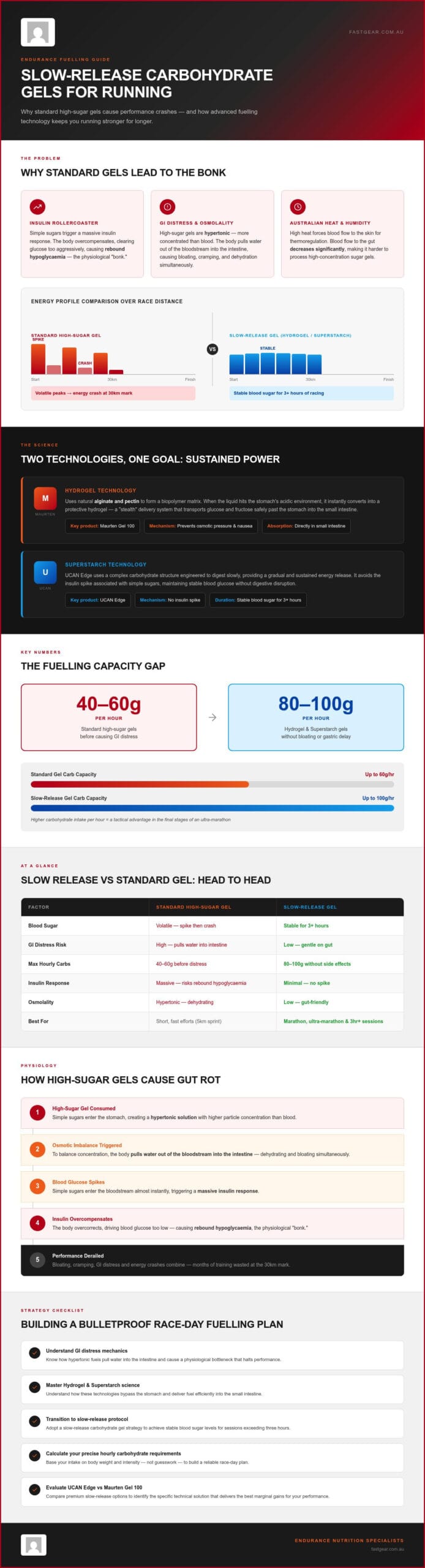
Standard gels provide a quick fix but often lead to a metabolic dead end. This “sugar spike” is the primary enemy of the endurance athlete. It creates a volatile energy profile that is difficult to manage over long distances. High-sugar fuels rely on simple molecules that enter the bloodstream almost instantly. While this works for a five-kilometre sprint, it’s a liability during a marathon. A slow release carbohydrate gel running strategy serves as a low-osmolality alternative to traditional high-sugar fuel, providing a more consistent energy floor for the duration of your event.
In Australia, our racing conditions frequently involve high heat and humidity. These environmental factors force the body to redirect blood flow to the skin for thermoregulation. Consequently, blood flow to the digestive system decreases significantly. When you introduce a high-concentration sugar gel into this environment, your gut struggles to process it. This leads to the infamous “gut rot” that can derail months of training. Simple sugars pull water into the intestine, causing a physiological bottleneck that halts performance.
The Insulin Rollercoaster
Simple sugars trigger a massive insulin response. Your body attempts to clear the sudden glucose surge, often overcompensating and leading to rebound hypoglycaemia. This is the physiological “bonk” where energy levels crater despite having just consumed fuel. While carbohydrate loading for endurance athletes builds your initial glycogen stores, maintaining them requires a fuel source that doesn’t trigger this insulin spike. Stable blood glucose is the holy grail for performance; it ensures your brain and muscles have constant access to energy without the mid-race fatigue caused by fluctuating levels.
GI Distress and Osmolality
Osmolality refers to the concentration of particles in a solution. High-sugar gels are hypertonic, meaning they have a higher concentration than your blood. To balance this, your body pulls water out of the bloodstream and into the intestine. This process causes the bloating, sloshing, and cramping known as GI distress. You aren’t just fuelling your muscles; you’re effectively dehydrating your system and bloating your gut simultaneously. For a deeper look at managing these variables, consult The Ultimate Guide to Endurance Sports Nutrition Australia 2026. Understanding the difference between fuelling for a quick kick and fuelling for a sustained burn is the first step toward a personal best.
The Science of Sustained Power: Hydrogels and Superstarch Explained
Understanding the molecular architecture of your fuel is the difference between a podium finish and a DNF. Traditional gels rely on high concentrations of simple sugars that flood the system immediately. In contrast, slow release carbohydrate gel running technology utilises complex structures to manage the rate of absorption. This fundamental shift in how carbohydrates are digested and used for energy allows athletes to push harder for longer. By bypassing the stomach’s sensitive lining, these advanced formulations deliver fuel directly to the small intestine for efficient uptake.
These technical formulations allow runners to increase their hourly carbohydrate intake significantly. While standard gels often cap out at 40 to 60 grams before causing distress, hydrogels and superstarch enable intakes of 80 to 100 grams per hour. You can fuel your performance without the typical side effects of bloating or gastric emptying delays. This capacity for higher density fuelling is a tactical advantage in the final stages of an ultra-marathon. If you’re looking to optimise your metabolic efficiency, exploring the UCAN range is a logical next step for your endurance strategy.
Maurten and Hydrogel Technology
Maurten has revolutionised the endurance landscape with its biopolymer matrix. This technology uses natural alginate and pectin to encapsulate high concentrations of carbohydrates. When the liquid hits the acidic environment of the stomach, it instantly converts into a hydrogel. This protective barrier hides the sugar from the stomach, preventing the osmotic pressure that causes nausea. It’s a “stealth” delivery system that transports glucose and fructose safely into the small intestine. For a comprehensive breakdown of this protocol, see our Maurten Gel Australia guide.
UCAN and the Superstarch Molecule
UCAN takes a different approach by using a massive, complex molecule known as Superstarch. Originally developed to provide steady energy for medical patients, this heat-moisture treated cornstarch has a high molecular weight and low osmolality. Unlike the rapid peaks and valleys of maltodextrin, Superstarch provides a remarkably flat glucose curve. It enters the small intestine quickly but breaks down slowly over several hours. This makes it the ideal choice for fat-adapted athletes or those looking to maintain stable metabolic efficiency during high-intensity training blocks.
Slow Release vs. Fast Fuel: Choosing the Right Engine Room Strategy
Selecting the correct fuelling strategy requires an objective assessment of your intensity and duration. Standard gels offer a metabolic “kick” by providing rapid-access glucose, whereas a slow release carbohydrate gel running protocol provides a sustained “burn” that protects your glycogen stores. Research into carbohydrate intake and endurance exercise performance confirms that the rate of exogenous oxidation is a critical factor in delaying fatigue. UCAN superstarch molecules are absorbed at a significantly slower, more controlled rate than standard glucose/fructose mixes, which enter the bloodstream through rapid-access pathways.
For distances like the half marathon, you might rely on a standard engine room strategy. However, as you move into marathons and ultra-endurance events, the metabolic cost of high-sugar spikes becomes too high. A hybrid approach often works best for competitive marathoners. Start with a slow-release base to keep insulin levels stable, then switch to fast-release options for the final 10 kilometres when the intensity peaks and you need an immediate boost. This method ensures you have a high energy floor while still benefiting from the cognitive lift required to maintain a threshold pace during the final stages of the race.
When to Use Fast-Release Gels
Fast-release fuel is tactical. Use it for short, high-intensity efforts like 5K or 10K races where your heart rate is consistently high and digestion is secondary to immediate output. These gels provide the rapid glucose necessary for anaerobic efforts and often include caffeine for a cognitive lift during the final stages of a race. If you prefer a different mouthfeel during these sprints, check out Energy Gels vs Chews: Which Fuel is Faster? to see how texture impacts absorption speed. You don’t want to be fumbling with complex fuel when you’re operating at 95 per cent of your max heart rate.
When Slow-Release is Non-Negotiable
Slow-release technology is essential for training sessions exceeding 90 minutes. It teaches your body to use fuel efficiently without relying on constant sugar hits. In the Australian summer, this becomes even more critical. When heat causes blood to shunt away from the gut to cool the skin, standard gels often sit undigested, leading to nausea. Slow-release formulations bypass this issue by remaining gentle on the system. For multi-day endurance events, maintaining gut health is the primary factor in finishing; slow-release gels are the only way to ensure your digestive system doesn’t shut down before your legs do. This sustained approach prevents the cumulative gastric damage that often plagues ultra-runners during the second half of their race.
How to Organise Your Fueling Plan for Marathons and Ultras
Supporting your gut health and overall recovery with professional-grade nutrition is equally important for long-term success; read more about specialised supplements for athletes.
Success on race day is a direct result of meticulous planning. Introducing a slow release carbohydrate gel running strategy requires a structured approach during your peak training blocks. Start by calculating your hourly requirements. Most endurance athletes target 60 to 90 grams of carbohydrates per hour, but the efficiency of slow-release technology often allows for higher thresholds without gastric distress. Base your calculations on your intensity and body weight, then test these levels during your longest weekend runs to ensure your gut is trained for the load. A disciplined protocol in training prevents panic on the start line.
Hydration management is non-negotiable when using technical fuels. To optimise absorption, you must maintain a consistent fluid intake that matches your sweat rate. Slow-release gels are designed to work with your body’s natural processes, but they require adequate water to facilitate transport across the intestinal wall. Avoid mixing different brands randomly during a race. Stick to a proven system that you’ve refined over several weeks. Consistency in your fuel source ensures your metabolic rate remains predictable even as fatigue sets in.
The Pre-Race Protocol
Front-loading your energy is a tactical move that sets the tone for the entire event. Consume a slow-release gel 30 to 45 minutes before the start gun. This timing prevents the “start line spike” associated with simple sugars and establishes a stable blood glucose baseline before you even take your first step. This is particularly effective for ultramarathon fueling for hot weather, where starting with a settled stomach is critical for long-term performance. You’ll avoid the early-race jitters and the subsequent energy crash that often occurs 15 minutes into the run.
Mid-Race Execution
Execution during the race involves precision timing. Because slow-release gels provide a sustained energy curve, you can often space them further apart than traditional options. If you’re using Maurten, always use a “chaser” of plain water to facilitate the hydrogel process in the stomach. To manage your supplies without bouncing or discomfort, store your gels in a Compressport Free Belt Pro. This ensures your fuel is accessible while you maintain a streamlined profile. Ready to refine your strategy? Shop our range of high-performance nutrition to secure your race-day essentials and gain a technical edge.
Elevate Your Endurance: Premium Slow-Release Solutions at Fastgear Australia
Fastgear Australia doesn’t just stock products; we curate high-performance solutions for the dedicated competitor. Our commitment to technical excellence ensures every item in our inventory provides a measurable advantage for those seeking peak physical output. We understand that in endurance racing, the difference between a personal best and a mid-race collapse often comes down to the quality of your metabolic floor. By focusing on slow release carbohydrate gel running technology, we provide the professional tools needed for sustained output over extreme durations. We act as an active partner in your journey, ensuring you have access to the same innovations used by the world’s most disciplined athletes.
The Fastgear advantage lies in our expert curation and specialized knowledge of marathon and triathlon fuelling. We don’t settle for generic options that cause systemic distress. Instead, we select brands that push the boundaries of sports science. Our national delivery ensures that Australian runners have reliable access to race-day essentials, regardless of their training volume. Whether you’re preparing for your first marathon or your tenth ultra-endurance event, our range is designed to provide the marginal gains that lead to superior performance. We provide the technical certainty you need to focus entirely on your pace and strategy.
The UCAN Edge
The UCAN range represents the pinnacle of steady-state energy management. Specifically, the UCAN Edge format is a revolution for runners who require portability without the need for additional water intake. These ucan gels are a primary solution for athletes who struggle with the overwhelming sweetness and sticky texture of traditional maltodextrin-based fuels. Because they utilize Superstarch to provide a flat glucose curve, you avoid the insulin response that often leads to systemic fatigue. This makes them a game-changer for maintaining metabolic efficiency during three-hour-plus sessions where consistent energy is non-negotiable.
The Maurten System
Maurten is the undisputed choice for world-record holders and elite marathoners globally. Integrating Maurten Gel 100 and Gel 100 Caffeine into your race plan allows for high-density carbohydrate intake without gastrointestinal risk. The neutral flavour profile is a specific advantage for long-distance efforts where flavour fatigue often leads to under-fuelling in the final stages. You can maintain your intake targets deep into the race without the nausea associated with artificial sweeteners or heavy syrups. The hydrogel matrix ensures that the fuel bypasses the stomach and enters the small intestine for immediate absorption. Optimise your race day kit with our curated slow-release range.
Secure Your Performance Floor for the Long Game
Transitioning from the volatile cycles of simple sugars to a technical slow release carbohydrate gel running protocol is a tactical shift that defines elite performance. You’ve seen how hydrogel and Superstarch technologies bypass gastric bottlenecks to deliver fuel where it’s needed most. By eliminating the insulin rollercoaster and the risk of gut rot; you ensure your engine remains primed for the final kilometres of your longest events. Success in endurance racing isn’t just about training volume. It’s about the precision of your metabolic strategy.
Fastgear Australia is the authorised retailer of Maurten and UCAN. We provide the same expertly curated tools used by elite Australian endurance athletes to secure world-class results. Don’t leave your race-day success to chance with outdated fuelling methods that compromise your digestive health. Shop the World’s Best Slow-Release Nutrition at Fastgear Australia and secure the marginal gains necessary for your next personal best. Your hardest training sessions deserve the world’s most advanced fuel. It’s time to outrun the crash and dominate your distance.
Frequently Asked Questions
Do slow-release gels taste different from regular energy gels?
Slow-release options often feature a more neutral profile compared to the syrupy sweetness of traditional gels. Maurten Gel 100 uses a clean, slightly sweet taste without artificial flavours or acids. This helps prevent the flavour fatigue that often occurs during the final stages of a marathon. UCAN gels provide a different mouthfeel due to the complex superstarch molecule, offering a smoother experience that doesn’t leave a sticky residue in your mouth or throat.
Can I mix slow-release gels with standard energy drinks?
Mixing these technical fuels with high-sugar energy drinks can compromise their effectiveness. Hydrogel technology, like that found in Maurten, relies on a specific pH balance in the stomach to form its protective matrix. Introducing standard energy drinks can disrupt this process and lead to the GI distress you’re trying to avoid. Stick to plain water when using a slow release carbohydrate gel running protocol to ensure the carbohydrate structures remain intact for optimal intestinal absorption.
Are slow-release carbohydrate gels better for runners with sensitive stomachs?
These formulations are specifically engineered for athletes who suffer from nausea and cramping. Because they have low osmolality, they don’t pull excess water into the intestine like high-sugar gels do. This reduces the risk of the sloshing and bloating often referred to as gut rot. By bypassing the stomach and releasing energy in the small intestine, these gels provide a safer alternative for runners who find standard maltodextrin-based fuels difficult to digest.
How many grams of carbs are in a typical slow-release gel?
Carbohydrate content varies by brand but remains dense enough for high-performance needs. A single Maurten Gel 100 contains exactly 25 grams of carbohydrates within its hydrogel matrix. In comparison, a UCAN Edge pouch provides 19 grams of complex carbohydrates through its superstarch technology. These specific amounts allow you to precisely calculate your hourly intake requirements, ensuring you hit the target of 60 to 90 grams per hour without overloading your digestive system.
Do I still need to drink water with a hydrogel or superstarch gel?
You must maintain a consistent hydration strategy, though the requirements differ by product. Maurten Gel 100 requires water to facilitate the hydrogel formation in the stomach; you should drink plain water shortly after consumption. UCAN Edge is formulated to be taken on its own without immediate water, but you still need to drink to replace fluids lost through sweat. Always separate your technical fuel from electrolyte drinks to prevent interfering with the slow-release mechanisms.
Will slow-release gels help prevent the “bonk” in a marathon?
Stable energy delivery is the primary defence against hitting the wall. Using a slow release carbohydrate gel running strategy prevents the rapid insulin spikes that lead to rebound hypoglycaemia. By maintaining a flat glucose curve, your brain and muscles receive a steady stream of fuel for three hours or more. This prevents the sudden energy crater known as the bonk, allowing you to maintain your threshold pace during the critical final 10 kilometres of the race.
Are slow-release gels suitable for keto or fat-adapted runners?
UCAN gels are highly effective for athletes focusing on metabolic efficiency and fat oxidation. Because superstarch provides a remarkably stable glucose response, it doesn’t trigger a massive insulin surge that shuts down fat burning. This allows fat-adapted runners to maintain their aerobic efficiency while still providing the brain with necessary glucose. It’s a technical solution that supports your metabolic training rather than working against it like traditional high-sugar energy gels often do.
Can I use slow-release gels for shorter races like a 10K?
While you can use them for shorter efforts, their true value is realised in sessions exceeding 90 minutes. For a 10K, the intensity is typically too high for the slow-release mechanism to be the most efficient choice. You’re better off using a standard fast-release gel or caffeine-boosted option for immediate output. Reserve your premium slow-release solutions for marathons, ultramarathons, and long-range training blocks where managing gut health and stable energy levels becomes the primary factor in your performance.
