
Uncategorized
Trail Running Nutrition: Ultimate Australian Fuelling Guide
Jul
Hitting the wall at the 15-kilometre mark isn’t a rite of passage. It’s a failure of logistics. Mastering your trail running nutrition is the difference between a podium finish and a miserable walk back to the trailhead. Whether you’re navigating technical descents or grinding up a fire trail, your body requires more than just water and grit to keep moving.
You’ve likely experienced that sudden hollow sensation in your legs or the dreaded stomach flip while descending a steep ridge. It’s frustrating when your fitness is ready but your gut isn’t. This guide will show you how to eliminate those variables by mastering a precision fuelling strategy tailored for the unique demands of the Australian bush.
We’ll provide a clear blueprint for your next adventure. You’ll learn specific hourly carbohydrate targets to maintain peak output. We’ll also compare high-performance products like Maurten Gel 100 and SIS GO Isotonic Gels to help you find what works for your system. From managing GI distress to choosing the right gear like a Compressport Free Belt Pro, you’ll gain the confidence to finish your next 20-kilometre run feeling strong.
Key Takeaways
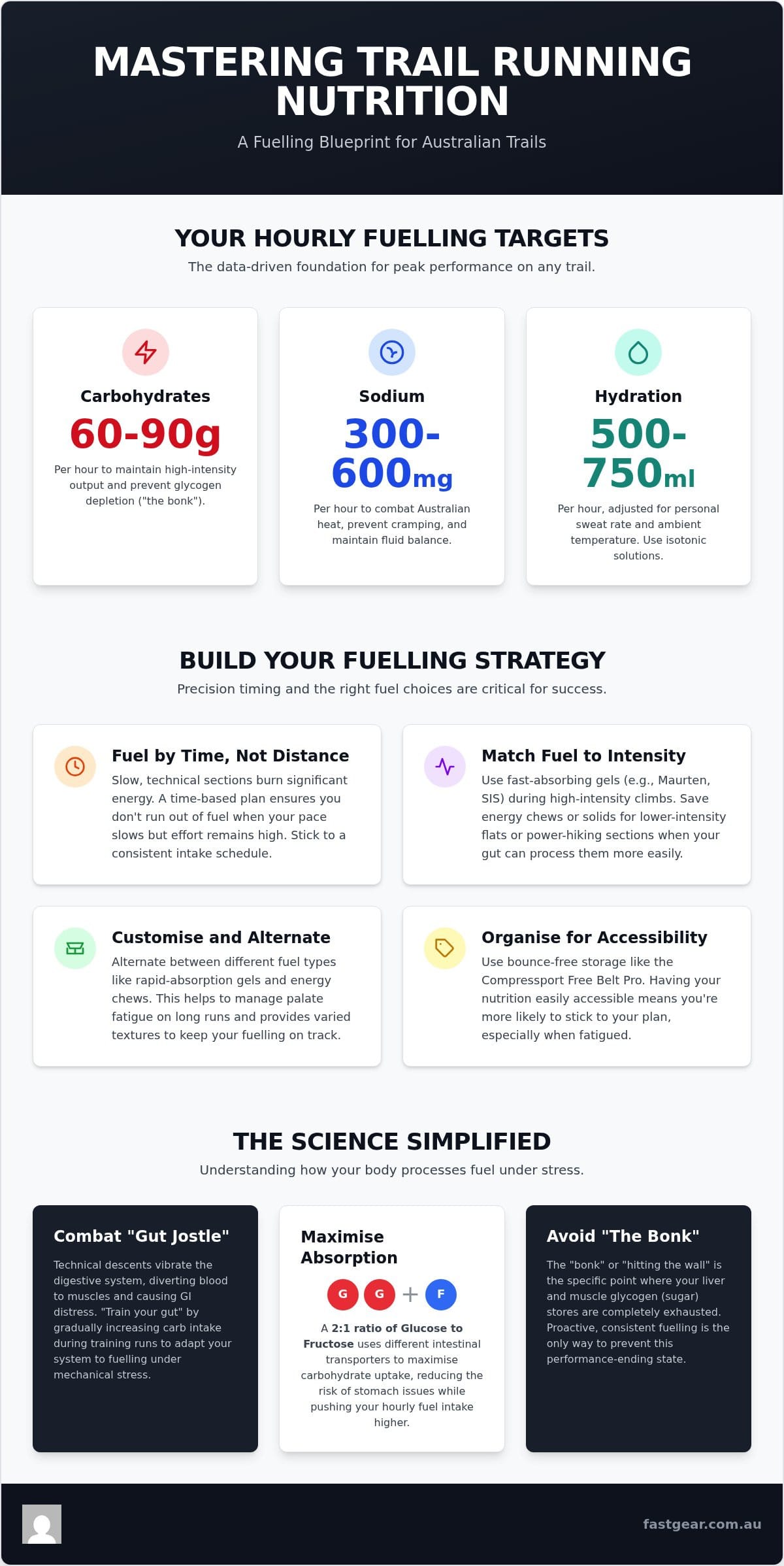
- Target 60-90g of carbohydrates per hour to maintain high-intensity output across technical terrain and significant vertical gain.
- Combat the Australian heat by integrating 300-600mg of sodium per hour into your hydration strategy to prevent cramping and dehydration.
- Customise your trail running nutrition strategy by alternating between rapid-absorption gels and energy chews to manage palate fatigue on long efforts.
- Plan your fuelling based on time rather than distance to ensure you don’t run dry during slow, technical sections of the track.
- Utilise bounce-free storage solutions like the Compressport Free Belt Pro to keep your Maurten and SIS essentials accessible at all times.
Understanding the Unique Demands of Trail Running Nutrition
Trail running nutrition is the strategic intake of carbohydrates, electrolytes, and fluids to maintain physical output on unpredictable terrain. It’s a calculated protocol designed to keep your engine running when the track gets tough. Unlike road running, which usually involves a steady cadence on flat bitumen, What is Trail Running? involves constant shifts in intensity, significant vertical gain, and extended durations that challenge the body’s energy stores. You aren’t just managing calories; you’re managing a complex logistical puzzle where every climb and descent dictates how well your body can process fuel.
Technical descents create “gut jostle,” a physical vibration that often leads to gastrointestinal (GI) distress. When you’re flying down a rocky ridge, blood is diverted from the digestive tract to the working muscles. This shift makes absorption difficult and can lead to cramping or nausea. To combat this, you must “train your gut” during your long training runs. This process involves gradually increasing your carbohydrate intake over several weeks to teach your digestive system to handle high fuel loads under mechanical stress. Success on race day starts with a gut that’s as conditioned as your quads.
Glycogen Depletion and the Bonk
Steep climbs demand massive amounts of glycogen. Your body burns through these sugar stores far faster on a 15% incline than on a flat suburban street. When these stores vanish, you hit the wall. You’ll feel a sudden, heavy lethargy in your legs, mental fog, and a sharp drop in coordination. The bonk is the specific point where liver and muscle glycogen stores are exhausted. Avoiding this state requires a proactive trail running nutrition strategy that starts long before you feel the first signs of fatigue.
The Role of Intensity in Fuel Absorption
Heart rate is the primary driver of digestion. In high-intensity zones, your body prioritises movement over processing solid food. This is why liquid nutrition or high-performance gels like Maurten Gel 100 are superior for technical or steep segments; they require minimal digestive effort. Save complex fuels or energy chews for “low-intensity windows,” such as flat fire trails or power-hiking sections where your heart rate stabilises. Matching your fuel type to the terrain’s profile ensures you maintain a steady stream of glucose without the stomach cramps. Precision timing is just as vital as the fuel itself.
Calculating Your Hourly Fuel: Carbs, Sodium, and Hydration
Precision is the bedrock of elite trail running nutrition. To maintain intensity on the technical tracks of the Blue Mountains or the Victorian Alps, you need a data-driven approach to intake. Aim for a baseline of 60 to 90 grams of carbohydrates per hour. This range ensures your glycogen stores remain topped up without overloading your digestive system. Following core endurance sports nutrition principles allows you to push through the third and fourth hour of a race with the same vigour as the first.
Carbohydrate Ratios: Glucose vs Fructose
Your body absorbs different sugars through distinct pathways. A 2:1 ratio of glucose to fructose is the industry standard for maximising absorption. While glucose is limited by specific transporters in the gut, adding fructose allows you to process more energy simultaneously. Brands like Maurten have refined this further using hydrogel technology, which encapsulates the carbohydrates to bypass traditional gut limits. This reduces the risk of GI distress even when pushing toward that 90-gram limit on longer efforts. Adjust your intake based on duration; a 90-minute blast requires less density than a six-hour ultramarathon.
Electrolyte Balance for Australian Conditions
Australian conditions demand more than just water. High humidity and heat lead to rapid sodium loss through sweat. You should target 300 to 600 milligrams of sodium per hour to prevent cramping and maintain fluid balance. Relying on plain water alone during long events increases the risk of hyponatremia, a dangerous drop in blood sodium levels marked by confusion and nausea. Using a full-spectrum hydration powder like Tailwind ensures you receive a balanced profile of magnesium, potassium, and calcium alongside your fuel. This combination of electrolytes and energy simplifies your logistical load on the trail.
Hydration volume should sit between 500 and 750 millilitres per hour. Adjust this based on your personal sweat rate and the ambient temperature. For the fastest possible absorption, focus on isotonic solutions. These match the salt concentration of your blood, allowing for rapid gastric emptying and immediate energy delivery. You can find these high-performance options in the curated nutrition range at Fastgear Australia, designed specifically for the rigours of the trail. Matching your fluid intake to your carbohydrate density is the only way to ensure the fuel actually reaches your muscles instead of sitting heavy in your stomach.
Choosing Your Fuel Source: Gels, Chews, and Liquids
Selecting the right delivery method for your trail running nutrition is a tactical decision. While your hourly carb targets are set, how you consume those grams depends on the terrain and your gut’s tolerance. Gels offer the fastest absorption for high-intensity efforts, while liquid nutrition provides a streamlined approach for those who prefer to drink their calories. Balancing these options helps you answer common trail running nutrition questions regarding palate fatigue and energy crashes. If you’ve hit the four-hour mark and can’t stand the thought of another sweet gel, switching to a different texture or a caffeinated option like Maurten Gel 100 CAF 100 can provide the mental and physical reset required to finish strong.
Energy Gels: The Trail Runner’s Staple
Gels are the most efficient way to transport high-density energy. SIS – GO Isotonic Gels are a standout for technical Australian trails because they don’t require additional water for digestion, reducing the risk of bloating. If you prefer a slow-release approach to avoid blood sugar spikes, Ucan gels utilise “Superstarch” technology to provide a steady stream of energy over a longer period. Consider the viscosity of your fuel; low-viscosity gels are easier to swallow when breathing hard on a climb, while thicker gels often feel more substantial. Always test these in training to ensure they don’t cause a “stomach brick” sensation during high-output segments.
Energy Chews and Solids
Chews offer a psychological break from the monotony of liquids and gels. Clif – BLOKS Energy Chews provide a familiar texture that can settle a bored palate during 50km+ ultramarathons. The act of chewing can actually increase satiety and provide a much-needed lift when your motivation flags. However, solids require more blood flow to digest, so save them for lower-intensity fire trails or power-hiking sections. When using chews on remote tracks, remember that Australian trail etiquette is paramount. Always secure your wrappers in a dedicated pocket or a Compressport Free Belt Pro to ensure you leave no trace on our pristine wilderness tracks.
Liquid-only strategies using Tailwind powder are increasingly popular for their simplicity. By mixing your fuel and electrolytes into your soft flasks, you remove the guesswork of timing individual gels. This method is ideal for runners who struggle with the “sticky hands” mess of gels or those who simply forget to eat when the terrain gets technical. Alternating between a flask of Tailwind and a flask of plain water allows you to manage both your energy levels and your thirst independently. Success comes from finding the combination of these sources that keeps your energy stable without overwhelming your senses.
How to Organise Your Trail Nutrition: A Step-by-Step Plan
Success on a technical track requires more than just the right fuel; it requires a logistical system that works under pressure. Your trail running nutrition strategy is only as good as your ability to access it while moving at pace. Managing calories on a steep incline or a rocky descent is difficult, so your organisation must be second nature. Follow this five-step plan to streamline your next effort.
- Step 1: Map your trail by time. Forget distance. A five-kilometre technical ridge might take twice as long as a fire trail. Identify your “nutrition stations” based on elapsed time to ensure a consistent glucose drip.
- Step 2: Pre-mix your flasks. Prepare your Tailwind or Maurten powders in soft flasks before you leave the trailhead. This avoids the mess of handling powders in the bush.
- Step 3: Organise by access priority. Place your primary gels in high-reach zones and save solid chews for lower-intensity segments.
- Step 4: Practice in training. Use your long weekend runs to mimic race-day intensity. Your gut needs to learn how to process fuel while your heart rate is elevated.
- Step 5: Set a nutrition alarm. Use your sports watch to trigger an alert every 20 or 30 minutes. It’s easy to forget to eat when the scenery is stunning or the track is technical.
The Gear: Carrying Fuel Efficiently
Fuel accessibility is non-negotiable on technical terrain. The Compressport Free Belt Pro is a superior solution for carrying gels and chews without the bounce associated with traditional packs. Distribute your weight effectively by placing hydration flasks in the front pockets and solid fuel or emergency gear in the rear. This balance prevents the belt from shifting during high-cadence descents. For quick access, practice tearing gel sachets with one hand or your teeth while maintaining your stride. Small efficiencies save significant mental energy over a long day in the bush. If you’re evaluating your carry options, our guide to the best running belts for Australian athletes covers the technical specifications you need to match your belt to your nutrition strategy.
The “Nothing New” Rule
Never trial a new gel or chew on race day. Use your training block to identify individual triggers for gut distress. If your nutrition plan goes off the rails mid-trail, don’t panic. Slow your pace to lower your heart rate and sip plain water to help clear the gut. Often, a small dose of salt or a five-minute power-hike is enough to reset your system and allow you to resume your trail running nutrition protocol. Consistency in training builds the confidence required to handle the unpredictable nature of the trail. Precision in your preparation ensures you aren’t left struggling when the terrain gets tough.
Optimise Your Performance with Fastgear Australia’s Curated Range
Effective trail running nutrition requires access to the world’s most advanced endurance products. Fastgear Australia provides a curated selection of athlete-tested fuel designed for peak efficiency. We don’t stock every brand; we stock the ones that deliver results on technical terrain. From the elite hydrogel technology of Maurten to the isotonic simplicity of SIS, our range is built for runners who refuse to compromise on performance.
Maurten stands as the gold standard for high-carb intake without the risk of GI distress. By using a biopolymer matrix, Maurten gel 100 and Maurten 320 powder encapsulate carbohydrates to bypass the stomach and absorb directly in the intestine. This technology allows you to hit those 90-gram hourly targets with total confidence. For those who prefer a liquid-only approach, Tailwind powder offers a versatile solution that combines fuel and electrolytes in a single flask, simplifying your logistics during long days in the bush.
The Fastgear Advantage for Endurance Athletes
We partner with brands that power world-record performances across the globe. Our selection process is rigorous, ensuring every gel, chew, and powder meets the high standards of serious trail athletes. Beyond nutrition, we provide the technical gear required to carry your fuel efficiently. The Compressport Free Belt Pro offers a bounce-free experience, while the Compressport Trail Racing SS Tshirt ensures maximum breathability during high-intensity efforts in the Australian heat. We understand that race day is the culmination of months of work, and your gear should reflect that dedication.
- Expertly selected brands like Maurten, SIS, and GU that are proven in competition.
- Fast national shipping across Australia to ensure your race-day stack arrives on time.
- A specialised shop for both technical racing apparel and high-performance nutrition.
Ready to Conquer the Trails?
Build your custom fuel pack today to ensure your next training cycle is backed by sports science. Buying in bulk allows you to test your strategy consistently during long runs, ensuring there are no surprises when you cross the start line. Whether you’re targeting a local 20km or a remote 100km ultra, the right stack is essential for sustained energy and mental focus. Shop the full range of trail running nutrition at Fastgear Australia and take control of your performance on the track.
Fuel Your Next Peak Performance
Mastering your trail running nutrition is the final piece of the performance puzzle. By targeting 60 to 90 grams of carbohydrates per hour and maintaining a precise electrolyte balance, you eliminate the variables that lead to the bonk. Success on technical Australian terrain requires a logistical system that matches your physical fitness. You now have the blueprint to calculate your needs, select the right fuel sources, and organise your gear for maximum efficiency.
Fastgear Australia is your dedicated performance partner. We stock world-leading brands including Maurten, SIS, and GU, alongside specialised Compressport gear for the perfect technical carry. With fast national delivery across the country, your race-day stack is always within reach. Don’t leave your energy levels to chance when the track gets tough.
Optimise your trail fuel at Fastgear Australia and hit the trailhead with total confidence. Your strongest finish is just one strategic fuelling plan away.
Frequently Asked Questions
How many grams of carbs do I need per hour for trail running?
Aim for 60 to 90 grams of carbohydrates per hour for sustained endurance efforts. This target ensures your glycogen stores remain topped up during the variable intensities of technical terrain. Start at the lower end of this range during training and gradually increase your intake as you train your gut to handle higher fuel loads. Precision in your trail running nutrition is the key to avoiding the bonk.
What is the best way to carry nutrition on a trail run without a heavy pack?
A technical waist belt is the most efficient solution for carrying fuel without the bulk of a vest. The Compressport Free Belt Pro allows you to store several gels, a soft flask, and even your poles in a bounce-free, streamlined system. This setup keeps your centre of gravity low and your movement unrestricted on technical descents while ensuring your trail running nutrition is always accessible at a moment’s notice. For a detailed comparison of carry options, see our running belt guide for Australian athletes to find the right fit for your race-day setup.
Are energy gels or chews better for long-distance trail events?
Both have a specific role in a high-performance protocol. Gels like GU or Maurten provide rapid, efficient absorption when your heart rate is high and digestion is difficult. Energy chews, such as Clif BLOKS, offer a psychological lift and palate variety during lower-intensity sections of an ultramarathon. Alternating between the two helps manage palate fatigue and provides a sense of satiety during efforts lasting over five hours.
How do I prevent stomach cramps and gut issues during a run?
Preventing GI distress requires a combination of gut training and choosing the right fuel technology. Maurten Gel 100 uses hydrogel technology to encapsulate carbohydrates, allowing them to pass through the stomach to the intestine without causing irritation. Consistently practicing your fuelling protocol in training ensures your digestive system is conditioned for the mechanical stress of technical descents. Avoid trying new products on race day to minimise risk.
Should I use caffeine gels during a trail race?
Caffeine gels are highly effective for improving mental focus and reducing perceived exertion during the final stages of a race. Products like Maurten Gel 100 CAF 100 provide a controlled 100mg dose of caffeine to help you push through the “pain cave.” It’s best to reserve these for the second half of your event or for early morning starts when you need an immediate boost in alertness and coordination.
What is the difference between isotonic gels and regular energy gels?
Isotonic gels, such as SIS GO Isotonic Gels, are formulated to match the salt concentration of your blood. This allows them to be absorbed rapidly without the need for additional water. Regular energy gels are highly concentrated and require water to move from the stomach into the small intestine. Using isotonic options reduces the risk of bloating during high-intensity segments where drinking large volumes of water is physically difficult.
How much water should I drink with an energy gel?
You should consume approximately 200 to 300 millilitres of water with every standard, non-isotonic energy gel. This fluid is necessary to facilitate gastric emptying and ensure the carbohydrates are processed efficiently. If you’re using isotonic options, you can skip the extra water, though general hydration remains essential for performance in Australian conditions. Always match your fluid intake to the concentration of your chosen fuel source.
Can I use Tailwind as my only source of nutrition for an ultra?
Yes, many athletes successfully use Tailwind as their sole source of energy and electrolytes. This “liquid only” approach simplifies your logistics by delivering 25 grams of carbohydrates per scoop directly into your soft flasks. It’s an ideal strategy for runners who struggle to remember to eat or those who find solid food difficult to digest under heat stress. It provides a steady, consistent stream of fuel without the mess of wrappers.
