
Uncategorized
Tinted Open Water Goggles Australia: 2026 Buyer’s Guide
Sep
Could the darkest lens be the wrong choice for your next open-water swim? It can be. Bright sun, overcast skies and shifting light all affect how clearly you see. Choosing tinted open water goggles australia swimmers can use comfortably starts with matching lens characteristics to your usual conditions, not simply picking the darkest option.
There’s more to consider than visibility. Goggles that leak, fog or put pressure around your eyes can distract you when you’re sighting buoys or swimming distance. Tint, mirror finish and UV protection are also different features: tint changes how much visible light reaches your eyes, a mirror coating can reduce brightness and glare, and UV protection is a separate specification to check.
This 2026 buyer’s guide explains how to compare lenses for bright, cloudy or changeable conditions, then assess fit and seal before you buy. Use the checks for field of vision, anti-fog treatment and UV specifications to compare swimming goggles with purpose and choose a pair that suits your next session.
Key Takeaways
- Choose a lens tint with your usual swimming conditions in mind, including cloud cover, surface glare and changing light.
- Compare tinted open water goggles australia swimmers may consider with clear and mirrored options, without assuming one lens suits everyone.
- Assess comfort and seal as well as lens choice, then check strap adjustment before committing to a longer session.
- Check each goggle’s stated UV protection, anti-fog treatment and fit details in the product specifications.
- Before buying, check the exact listing and current availability rather than assuming a tinted option is in stock.
Tinted open water goggles in Australia: what the lens tint actually changes
Start with the conditions you’ll swim in. A lens tint changes perceived brightness and can affect contrast, but it doesn’t make every waterway easier to read. Sunlight, cloud cover, glare off the surface, water colour and time of day all influence what you see. A lens that feels comfortable in bright midday sun may seem too dark early in the morning or under heavy cloud.
Tinted open-water goggles are swimming goggles with coloured lenses designed to manage incoming visible light and provide a more comfortable view in particular conditions. Goggles also help protect the eyes during a swim. For a foundational overview of their use as protective eyewear, see Wikipedia’s summary.
How tinted lenses affect brightness and contrast
Darker lenses reduce the amount of visible light reaching your eyes, so they may suit bright conditions. In lower light, such as overcast skies or early and late sessions, lighter or clearer lenses are worth comparing because they allow more light through. The best choice depends on the conditions you encounter and what feels comfortable, not on a promise that one tint will improve vision everywhere.
Water colour and surface reflections matter too. A familiar swimming spot can look different as sunlight, cloud and glare change. If your sessions cover a range of conditions, compare lens characteristics with the light you’re most likely to swim in. Also consider whether a single fixed tint will suit your usual schedule.
Tint, mirror coating and UV protection are different
Tint is the lens colour, which affects the visible light passing through. A mirror finish is a reflective coating on the lens, not another name for tint. UV protection is a separate specification. A dark or mirrored appearance alone doesn’t confirm how much ultraviolet radiation a lens filters.
Check each detail separately in the manufacturer’s product information: the lens tint, whether a mirror coating is present, and the stated UV protection. Look for any product standards or compliance information the manufacturer specifies, and check that it’s relevant to your intended use. Don’t infer a technical feature from the lens colour or appearance.
That’s the practical starting point for choosing tinted open water goggles australia swimmers can assess with confidence: match the lens to typical light conditions, then verify the specifications. Fastgear Australia sells swimming goggles, but tinted options and their features aren’t confirmed across its range. Check the precise product listing for current availability and manufacturer details before buying.
Which goggle lens tint suits your open-water swimming conditions?
Choose for the light you’re most likely to face, then allow for change. Bright sunshine can create strong surface glare, while cloud, early starts or late finishes may reduce available light. Water clarity, colour and surrounding reflections also affect how the view feels through a lens. The right tint is personal: prioritise comfortable vision for your usual swims rather than expecting one option to suit every session.
Use this guide to narrow down tinted open water goggles australia swimmers may consider. The characteristics below are starting points, not guarantees. Tint and coating details vary by product, so check the current manufacturer specifications before buying.
| Swimming conditions | Lens characteristics to investigate | What to consider |
|---|---|---|
| Bright sun and reflective water | Darker tint; mirrored coating, if specified | Assess whether the lens reduces perceived brightness without making your view uncomfortably dark. |
| Overcast skies | Lighter tint or a clearer lens | Consider how much available light reaches your eyes, especially if cloud thickens during a session. |
| Early or late sessions | Clear or lighter lens characteristics | Lower light may make a dark lens feel unsuitable; consider the light at your actual swim time. |
| Variable conditions | A tint suited to your most common conditions; photochromic options where available | Check the manufacturer’s description of any light-adapting feature and whether it suits your expected conditions. |
Bright sun, glare and reflective water
For a sunny session, a darker lens may be worth considering to reduce incoming visible light. A mirrored coating is another feature to investigate for bright conditions, but its reflective appearance doesn’t confirm UV protection. Check the manufacturer’s UV specifications separately. Before relying on an unfamiliar lens in a race, try it during a safe training swim and assess your comfort and ability to see your surroundings.
Overcast skies, low light and changing conditions
A lighter lens may feel more comfortable when cloud or low-angle light reduces brightness. A dark lens can seem too dim as conditions change, particularly if a swim starts in daylight and finishes under heavier cloud. Choose for your typical session, but consider how much the light might shift. If you’re comparing adaptive lenses, check the claimed tint behaviour in the current product information.
Fastgear Australia sells swimming goggles as part of its endurance-sports accessories range. Check the swimming goggles range and confirm the exact lens features and current availability in each product listing.
Tinted goggles versus clear or mirrored lenses: what should you compare?
Compare the lens with the conditions you swim in, not just its appearance. A clear lens may be worth considering in low light, while a tinted lens may reduce perceived brightness in stronger light. A mirror finish is a separate coating and can be applied to a lens that also has a tint. None is automatically the best choice for every swimmer or waterway.
For tinted open water goggles australia buyers, the useful comparison is practical: how bright are your usual sessions, how much light does the lens transmit, and does the view feel comfortable in the water? Check the manufacturer’s current product details, as lens options and specifications differ between goggles.
Tinted or clear lenses for outdoor swimming
Use the scenarios below as a starting point. They describe characteristics to investigate, not guaranteed performance. Water clarity, surface glare, surrounding light and your own visual comfort can all affect what you see.
| Typical conditions | Option to compare | Trade-off to consider |
|---|---|---|
| Bright outdoor sessions | Tinted lens | May reduce perceived brightness, but could feel too dark if light drops. |
| Low light or heavy cloud | Clear or lighter lens | May let more visible light through; check whether the view suits your eyes. |
| Sessions with changing light | Available lens options, including any adaptive feature stated by the manufacturer | Verify how the feature is described and whether it fits your usual conditions. |
These are broad comparisons, not a ranking. A clear lens isn’t automatically suitable for every overcast swim, just as a tinted lens isn’t only for direct sun. Consider the light where you swim and how the water and surroundings affect contrast. Check the exact listing before purchase, as a brand’s available lens variants can differ by model.
Tinted or mirrored lenses: compare the actual specifications
Tint describes the lens colour; mirror describes a reflective surface finish. They can be combined, but the mirror coating doesn’t replace choosing a tint that suits the light. A mirrored appearance also doesn’t prove that a lens is polarised, offers UV protection or has anti-fog treatment.
Look for published light-transmission data where available, alongside separate manufacturer statements for UV protection, polarisation and anti-fog features. If a specification isn’t stated, don’t assume it from the colour or finish. This checklist helps you compare tinted goggles without confusing appearance with verified product features.
Planning your wider race-day kit too? Explore the triathlon equipment guide for a broader look at equipment considerations.
Choosing Open Water Goggles: Fit, Seal & Pre-Swim Checks
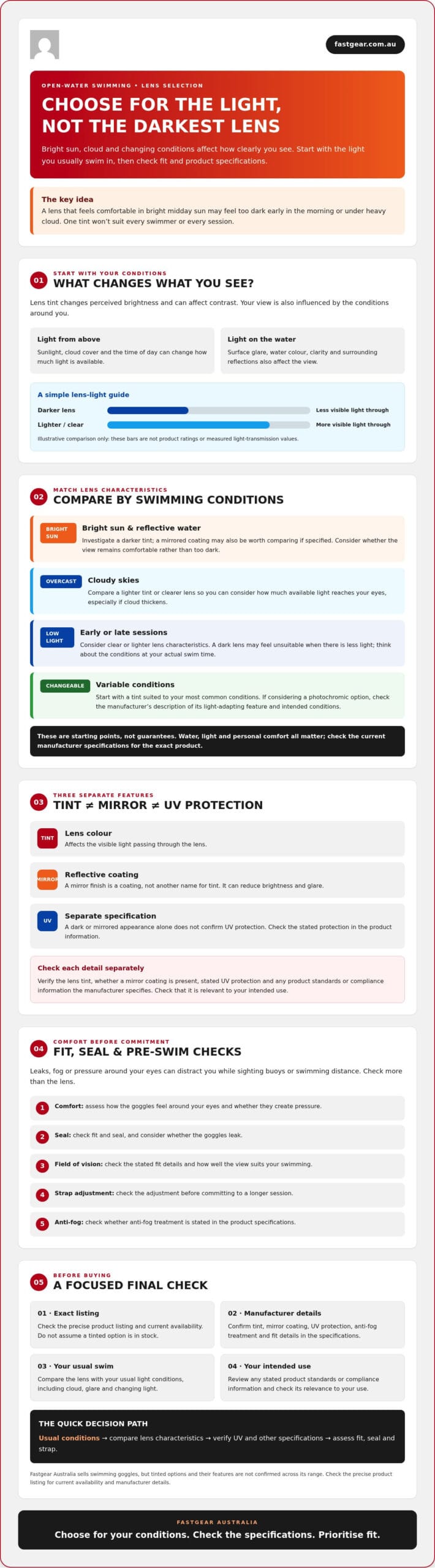
A lens that suits the light still needs to fit securely. During a longer open-water session, discomfort or a leaking seal can pull your attention away from sighting and swimming. Use this checklist to assess the whole goggle, not just its colour.
Lens tint alone cannot confirm goggle fit or UV protection.
- Check sizing and shape. Review the manufacturer’s fit guidance and product dimensions. Consider how the gasket sits around your eye sockets without pinching.
- Assess the seal gently. Following the manufacturer’s instructions, position the goggles against your face and check for a comfortable, even seal. Don’t force strong suction or rely on tight straps to compensate for a poor fit.
- Check the nose bridge. Make sure it feels comfortable and doesn’t create pressure between your eyes. Confirm whether the bridge is adjustable or supplied in different sizes, if the listing specifies this.
- Adjust the strap. Aim for stable positioning without excessive tension. Check that the strap stays in place as you move your head, and follow the maker’s adjustment guidance.
- Recheck the lens choice. Consider whether the lens suits the expected light and verify stated features, including UV protection, against the product information.
- Review purchase details. Before ordering, check sizing information and the retailer’s current return conditions. Policies can differ, so confirm the terms that apply to the specific purchase.
Check the seal and comfort before race day
Fit can feel different once you start moving. Try unfamiliar goggles in a safe, controlled swim before using them in competition. Notice any leakage, pressure around the eye sockets, discomfort at the nose bridge or strap movement. Follow the manufacturer’s fitting instructions, and don’t wait until race day to discover a problem.
Reduce fogging and protect the lens
Anti-fog performance and care requirements vary by model. Check whether the manufacturer specifies an anti-fog treatment and follow its care instructions. Avoid rubbing the inside of coated lenses or applying products the manufacturer hasn’t approved, as this may affect the coating. Rinse and store the goggles as directed, and check the guidance for the exact model.
Fastgear Australia sells swimming goggles, but specific tint, fit and care features need to be confirmed in each listing. Explore Fastgear’s swimming goggles and check the product details before choosing a pair for your next open-water session.
Buying tinted open water goggles in Australia: make your final checks
Make the decision in sequence. Start with the light you usually swim in, compare lens characteristics, then confirm fit and care requirements. A product photo or colour name isn’t enough to establish technical suitability. For tinted open water goggles australia shoppers should rely on the precise product listing and manufacturer specifications to check what the goggles offer.
Use this final checklist before choosing
- Match lens brightness to your sessions. Consider whether you mostly swim in bright sun, under cloud or across changing conditions. Choose for the light you typically face, while allowing for variation during a swim.
- Verify each lens feature separately. Check the stated tint, UV protection and whether a mirror finish is specified. Look for published light-transmission data if available, and don’t infer a feature from lens appearance.
- Review fit information. Read the manufacturer’s sizing and fit guidance. Check details about the nose bridge, strap and seal so you can assess whether the design is likely to suit your face.
- Check care instructions. Confirm whether an anti-fog treatment is specified and how the manufacturer says to care for the lens. Follow the directions for that model rather than assuming all coatings need the same treatment.
- Confirm the purchase details. Check current stock status, included components and the retailer’s terms before checkout. Product options and retailer policies can change, so verify the details on the listing you’re considering.
This final check helps prevent common assumptions: a mirrored lens doesn’t automatically confirm UV protection, and a tinted lens doesn’t confirm fit. If a specification you need isn’t stated, check the manufacturer’s information or ask the retailer to clarify before purchasing.
Find swimming goggles through Fastgear
Fastgear Australia is an online retailer offering swimming goggles as part of its endurance-sports accessories range. Specific tinted models, lens colours, fit features and stock aren’t confirmed across the range, so check the current listing rather than assuming a suitable tinted option is available. Verify each product’s specifications before deciding it matches your swimming conditions and comfort needs.
Ready to compare current options? Shop Fastgear’s swimming goggles and review the product details before choosing.
Make your next open-water swim a confident one
The right goggle choice starts with your usual conditions. Match lens brightness to the light you swim in, then check tint, mirror finish and UV protection as separate specifications. Just as important, confirm the fit and seal feel comfortable, and follow the manufacturer’s care guidance to protect the lens.
Use these checks to compare tinted open water goggles australia options without assuming a dark or mirrored lens is automatically right for you. Product features and availability vary, so verify the details on the current listing before you buy.
Fastgear focuses on technical triathlon and endurance-sports equipment, and its confirmed range includes swimming goggles. Browse the category and check the specifications of any suitable options: Shop Fastgear’s swimming goggles.
Choose with purpose, test the fit before race day and head into your next session ready to focus on the water ahead.
Frequently Asked Questions
Is a tinted lens better for open-water swimming?
It depends on brightness, glare, water conditions and your visual comfort. A darker tint can reduce perceived brightness in strong light, but it won’t suit every swim, especially if conditions become dim. Tint also doesn’t confirm UV protection. Check the specific product specifications for stated protection and lens details. If the goggles are unfamiliar, try them in a safe, controlled swim before relying on them on race day.
What colour lens is best for open-water goggles?
There isn’t one lens colour that’s best for every open-water swimmer. Bright sunlight may make a darker lens more comfortable, while overcast skies or low-light sessions may lead you to consider a lighter or clear option. Water clarity and your own visual comfort also matter. Start with the conditions you usually swim in, then verify the lens colour and related specifications for the exact model you’re considering.
Are mirrored goggles the same as tinted goggles?
No. Tint refers to the lens colour, while a mirror finish is a reflective coating on the lens. A goggle may have both features, but they describe different things. Neither a dark tint nor a mirrored appearance alone confirms UV protection. Check the manufacturer’s information for the lens tint, whether a mirror coating is present and any stated UV protection. Don’t assume one specification from another.
Can you wear dark-tinted goggles in cloudy or low-light conditions?
You can, but dark lenses may feel too dim when available light is limited. Whether they remain comfortable also depends on water clarity, surrounding light and your individual vision. Check conditions before you swim, particularly if cloud or daylight is likely to change during your session. Choose a lens that allows comfortable visibility, and test an unfamiliar pair safely before using it in a race.
Do tinted swimming goggles protect your eyes from UV rays?
Tint alone doesn’t prove that swimming goggles provide UV protection. Lens colour changes the amount of visible light reaching your eyes, but it doesn’t confirm the level of ultraviolet protection. Check reliable product information, ideally the manufacturer’s specifications, for an explicit UV protection claim. If the listing doesn’t state the feature you’re looking for, don’t infer it from a dark or mirrored appearance. Verify details before buying.
How should open-water goggles fit without leaking?
Open-water goggles should sit comfortably around your eyes, form a secure seal and stay stable without excessive strap pressure. Face shape affects how a goggle fits, so a dry fit can’t guarantee leak-free performance in water. Follow the manufacturer’s fitting guidance, checking the nose bridge, eye socket pressure and strap adjustment. Test new goggles in a safe, controlled swim before race day so you can assess the fit in motion.
Are tinted open-water goggles available from Fastgear Australia?
Fastgear Australia’s confirmed range includes swimming goggles, but current tinted options need to be checked in the product listings. A particular model, lens colour or stock status isn’t confirmed across the range, so don’t assume a tinted pair is available. If you’re searching for “tinted open water goggles australia”, inspect current listings and verify each product’s tint, UV details, fit information and care instructions before ordering.
