
Uncategorized
Triathlon Bike Seats: 2026 Numbness Prevention Guide
Sep
A saddle that feels comfortable on an upright ride may become a pressure point when you settle into an aero position. If numbness or discomfort builds over longer efforts, changing the seat can seem like the obvious fix, but saddle choice is only part of the picture. Searching for triathlon bike seats for numbness prevention australia means weighing saddle shape alongside your position, fit and individual comfort, rather than relying on a universal solution.
Your concerns are valid: width, nose shape and a central cut-out can all influence how a saddle feels, while an unsuitable setup may leave a new seat uncomfortable too. This guide explains factors that can contribute to saddle-related numbness and how to compare design features with your riding position. You’ll also learn how to assess a saddle methodically, with less guesswork before committing. Fastgear Australia stocks the Wove M8 Road / Tri Saddle as one option to evaluate. Check its current specifications and consider how they align with your fit needs before choosing.
Key Takeaways
- Use ride symptoms and your position to help identify where saddle pressure may be coming from.
- Change one fit variable at a time so you can assess what affects comfort.
- Compare saddle width, profile and relief features with your own riding posture, not universal claims.
- Test progressively and record how your body responds before settling on a saddle.
- Use this guide to assess triathlon bike seats for numbness prevention australia, including whether the Wove M8 Road / Tri Saddle’s verified specifications suit your setup.
Triathlon bike seat numbness: what may be causing pressure on the ride?
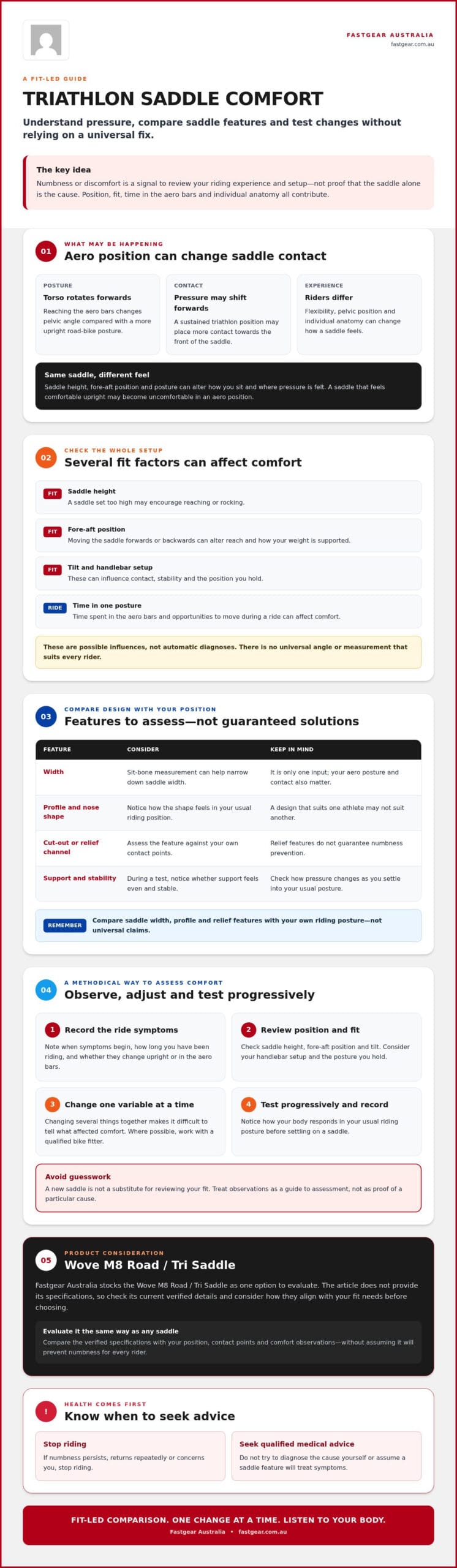
Numbness can interrupt training and make it uncomfortable to hold an aero position, especially as a ride gets longer. It’s tempting to blame the saddle alone, but pressure develops through the interaction of your position, bike fit, time in the aero bars and individual anatomy. The same saddle can feel different when its height or fore-aft position changes, or when you adopt a more aggressive posture.
Saddle-related pressure is the load and contact a rider feels where their body meets the saddle during a ride. If that pressure becomes uncomfortable or is accompanied by numbness, treat it as a signal to review your setup and riding experience, not as proof of a particular cause. An overview of Bicycle saddle health issues discusses how saddle design and contact can relate to discomfort. No saddle shape guarantees numbness prevention for every rider.
How the triathlon position changes saddle contact
Rotating your torso forwards to reach the aero bars changes your pelvic angle and can shift where pressure is borne. Compared with a more upright road-bike posture, a sustained triathlon position may place more contact towards the front of the saddle rather than mainly through the sit-bone area. The exact pattern varies between riders. Flexibility, pelvic position and individual anatomy all matter, so a design that suits one athlete’s aero posture may not suit another’s.
That’s why searching for triathlon bike seats for numbness prevention australia should be the start of a fit-led comparison, not a hunt for a guaranteed fix. Note when symptoms appear and whether they change between upright and aero riding. Those observations can help you assess saddle contact without assuming the saddle is the only factor.
When numbness needs more than a saddle change
Saddle selection is one part of the system. Saddle height, fore-aft position, tilt, handlebar setup, time spent in one posture and opportunities to move during a ride can all affect comfort. Changing several things together makes it difficult to tell what helped. Assess adjustments carefully and don’t treat a new saddle as a substitute for reviewing your fit.
If numbness persists, returns repeatedly or concerns you, stop riding and seek qualified medical advice. Don’t try to diagnose the cause yourself or assume a particular cut-out, width or saddle profile will treat symptoms. A considered response protects your health and gives you a clearer basis for evaluating equipment and position.
How saddle fit and triathlon position can influence numbness
A saddle that seems comfortable on a short ride can feel different once you hold an aero position for longer. Small setup changes can alter how you sit, reach the bars and load the saddle. Before replacing equipment, check whether fit or posture could be contributing to the discomfort.
Check position before blaming the saddle
Start with a simple record: note when symptoms begin, how long you’ve been riding and whether they change when you sit upright or return to the aero bars. Then review saddle height, fore-aft position and tilt. A saddle set too high may encourage reaching or rocking. Moving it forwards or backwards can alter reach and how your weight is supported. Tilt can also shift contact and affect whether you feel stable. These are possible influences, not automatic diagnoses.
There’s no universal angle or measurement that suits every rider. Avoid making several adjustments at once: if you change saddle height, tilt and reach together, you won’t know which change affected comfort. Where possible, work through the setup with a qualified bike fitter and assess one adjustment at a time.
Use anatomy and contact points to guide fit
Sit-bone measurement can help narrow down saddle width, but it’s only one input. Your posture on the bike matters too. In an aero position, contact may differ from what you experience sitting upright, so a width that seems suitable by measurement alone may not provide the support you need on the tri bike.
Saddle fit depends on the rider’s anatomy and position, not width alone. Cut-outs and relief channels are design features to evaluate against your own contact points, not guaranteed solutions to numbness. During a test, notice whether support feels even and stable, and whether pressure changes as you settle into your usual riding posture.
These checks make it easier to compare triathlon bike seats for numbness prevention australia without relying on a single measurement or a feature that promises the same result for everyone. If symptoms persist or keep returning, seek qualified medical advice rather than cycling through repeated equipment changes. To assess a saddle against your fit needs, you can review the Wove M8 Road / Tri Saddle and verify its current specifications before purchase.
Compare triathlon bike seats by shape, support and fit potential
Compare each saddle with the position you actually ride, not just its headline features. A short nose, split nose or central relief channel may change where support is available, but the result depends on your contact points and setup. Use the table to narrow your options, then confirm dimensions and fitting guidance for each model.
| Profile | Width and support | Relief features | Adjustment range to check | Posture to assess |
|---|---|---|---|---|
| Short-nose | Compare usable support width with your contact points; don’t assume shorter means narrower overall. | Check for a channel or cut-out, if specified. | Confirm rail dimensions and permitted clamp positions. | Often considered for aero riding; assess in your own position. |
| Split-nose | Assess how each side supports you and whether the shape feels stable. | Check the split’s dimensions and contact around its edges. | Verify mounting compatibility and fore-aft adjustment. | Test in the posture you expect to hold on the tri bike. |
| Conventional profile | Compare the width and contour with the support you need. | Check whether relief features are present and where they sit. | Confirm the manufacturer’s fitting and clamp guidance. | Assess comfort in your intended riding position, not only upright. |
Which saddle features are worth comparing?
Look at nose shape and usable support together. Can you maintain your intended aero position without feeling pushed forwards, unstable or restricted? Treat these as questions to check during a trial, not outcomes you can predict from the product description. A cut-out or relief channel may change contact, but comfort, support and compatibility with your fit still need to be assessed together. No profile is automatically best for every triathlete or every numbness concern.
What a comparison table cannot tell you
Listed dimensions don’t establish how a saddle will feel for an individual rider. Manufacturer specifications can clarify width, length, rail format and adjustment guidance, but they can’t confirm your comfort in the aero position. Check current product details before comparing named models, and use fitting guidance to interpret measurements against your setup.
Fastgear Australia stocks the Wove M8 Road / Tri Saddle. Product-specific specifications aren’t confirmed here, so check the current product information before purchase rather than inferring its shape, materials or fit from its name. Apply the same criteria as for any option in your search for triathlon bike seats for numbness prevention australia: verify the details, then assess whether they suit your bike and position.
How to test a triathlon saddle before committing
A saddle trial is more useful when you control the variables. Start with a familiar, manageable training ride and a correctly positioned saddle. Then build towards the aero time you want to sustain, rather than judging comfort from a few minutes on the bike. Keep your usual clothing and riding conditions as consistent as practical so you can compare like with like.
Set up a useful saddle trial
Use this process to assess a saddle systematically. Change one fit variable at a time wherever practical, and record what you changed before your next ride.
- Establish a baseline. Before adjusting anything, note your current setup and when discomfort or numbness begins during a typical ride.
- Check the starting position. Confirm the saddle is securely mounted and note its height, fore-aft position and tilt. If you’re unsure about the setup, ask a qualified bike fitter to review it.
- Test progressively. Begin with a familiar ride, then gradually increase time in your intended triathlon position. Don’t make the first assessment a long, high-pressure effort.
- Keep a simple log. Record ride duration, time spent in each position, discomfort location, when symptoms start and how they change. Include any adjustment made since the previous test.
- Compare the results. Look for repeatable changes across rides. If you alter saddle tilt and height together, for example, it becomes harder to identify which adjustment may have affected comfort.
This measured approach helps you assess triathlon bike seats for numbness prevention australia against your own riding, rather than relying on a brief first impression or a feature list alone.
Know when to reassess fit or get help
If discomfort persists, worsens or occurs alongside other concerning symptoms, pause the trial and seek appropriate advice. A qualified bike fitter can assess your position and setup. Persistent or concerning numbness also warrants qualified medical advice. Repeatedly swapping equipment without reviewing fit may leave the key issue unresolved.
For broader context on selecting race equipment, read this triathlon equipment guide. If you’re ready to compare a confirmed saddle option, browse the Wove M8 Road / Tri Saddle and check its current specifications against your bike and fit requirements before purchase.
Is the Wove M8 Road / Tri Saddle worth considering for your setup?
The Wove M8 Road / Tri Saddle is a confirmed Fastgear Australia offering and may be worth including in your comparison. That makes it an option to assess, not a universal answer to numbness. Product-specific dimensions, construction and fit details aren’t provided in the information available for this guide, so check the current product specifications before drawing conclusions about how it may suit your bike or riding position.
Match the Wove M8 to your riding requirements
Use the manufacturer’s current specification sheet to check practical details against your setup. Confirm the saddle’s dimensions, construction, rail and clamp compatibility, adjustment range and stated intended use. Then consider whether those details align with your bike, seatpost and the position you need to hold during training or racing.
Keep the decision fit-led. A specification can tell you what the product is made to, but it can’t predict exactly how your body will respond. Comfort and numbness outcomes depend on the rider and setup, so no product description can guarantee a particular result.
Weigh the confirmed points before deciding
- What’s confirmed: Fastgear stocks the Wove M8 Road / Tri Saddle as part of its endurance equipment range.
- What still needs checking: Current stock status and product-page details, plus specifications that determine compatibility and fit.
- What can’t be assumed: Its shape, materials, performance benefits or ability to reduce numbness. Verify these claims against current product information rather than inferring them from the name.
This is a practical way to assess triathlon bike seats for numbness prevention australia: compare verified details with your requirements, then treat real-world comfort as something to assess, not presume. If symptoms persist or concern you, prioritise appropriate professional advice rather than relying on a saddle change alone.
Make the next step a fit-led decision
Before ordering, confirm the saddle’s current specifications and check that it’s compatible with your bike and intended position. If you’re uncertain about fit or setup, consider seeking guidance from a qualified bike fitter. Fastgear’s product listing is a place to review the saddle, not a substitute for individual fit assessment.
Explore the Wove M8 Road / Tri Saddle and review the current product details before deciding whether it belongs on your shortlist.
Build comfort into your next aero ride
Reducing saddle-related numbness risk starts with the whole setup, not a seat shape alone. Your riding position, fit, time in the aero bars and individual anatomy all influence contact and comfort. Compare saddle profiles and relief features with your needs, then test progressively and record how your body responds. Change one fit variable at a time wherever practical, so each adjustment gives you useful information.
For athletes comparing triathlon bike seats for numbness prevention australia, the Wove M8 Road / Tri Saddle is a confirmed Fastgear Australia offering to assess against your bike and fit requirements. Check its current product specifications before deciding; product details can’t guarantee personal comfort or a particular outcome. Fastgear serves endurance athletes nationally across Australia.
Explore the Wove M8 Road / Tri Saddle and review the current specifications as you refine your shortlist. Make a considered choice, monitor your comfort on the bike and keep building towards your next race with confidence.
Frequently Asked Questions
Can a triathlon bike saddle prevent numbness?
No saddle can guarantee numbness prevention for every rider. A well-matched saddle may help you manage contact and support in your riding position, but comfort also depends on bike fit, ride duration and individual anatomy. If numbness occurs, consider the whole setup rather than assuming the saddle alone is responsible. Persistent or concerning symptoms warrant stopping and seeking qualified medical advice.
Why do I get numbness when riding in the aero position?
Aero posture rotates your body forwards and can change where pressure is borne on the saddle. How that feels varies with your position, fit, anatomy and time spent riding in the bars. Saddle height, tilt and fore-aft placement may also affect contact. Note when symptoms begin and whether they change when you sit upright, but don’t treat that observation as a diagnosis.
Are cut-out saddles better for numbness?
Not for everyone. A cut-out or relief channel changes the saddle’s contact surface, but it doesn’t guarantee less pressure or numbness. Its position and shape need to suit your anatomy and riding posture. Compare how the saddle supports you and feels in your intended aero position, alongside its fit compatibility. Treat the feature as something to assess, not a promised solution.
How do I choose the right width for a triathlon saddle?
Use sit-bone measurement as one useful starting point, not the final answer. In a triathlon position, your contact points may differ from those in a more upright posture, so consider width alongside the support you feel when riding in the aero bars. Check the manufacturer’s dimensions and fitting guidance, then assess the saddle in your usual position. No single width suits every rider.
Should I change my bike fit or saddle first?
Review your position and saddle setup before assuming you need a different saddle. Record when discomfort starts and whether it changes with posture, then check saddle height, fore-aft position and tilt. A qualified bike fitter can assess your position if you’re unsure. If you adjust the setup, change one variable at a time where practical, so you can judge its effect.
Is the Wove M8 Road / Tri Saddle suitable for every triathlete?
No saddle suits every triathlete. The Wove M8 Road / Tri Saddle is a confirmed Fastgear Australia offering, but product-specific dimensions and fit details should be checked against its current specifications. Compare those details with your bike, riding position and requirements. A product description can’t guarantee comfort or prevent numbness. If considering this option among triathlon bike seats for numbness prevention australia, assess it against your own fit needs.
When should I stop riding because of saddle numbness?
Stop riding if numbness develops, rather than pushing through it to finish a session. Get off the bike and allow symptoms to settle; don’t resume if they persist or concern you. Repeated or worsening numbness should prompt qualified medical advice, not just another saddle change. If symptoms occur alongside other concerning signs, seek medical assessment. Your health takes priority over completing the ride.
