
Uncategorized
Open Water Swimming Neck Guard Australia: How to Choose the Right Fit
Sep
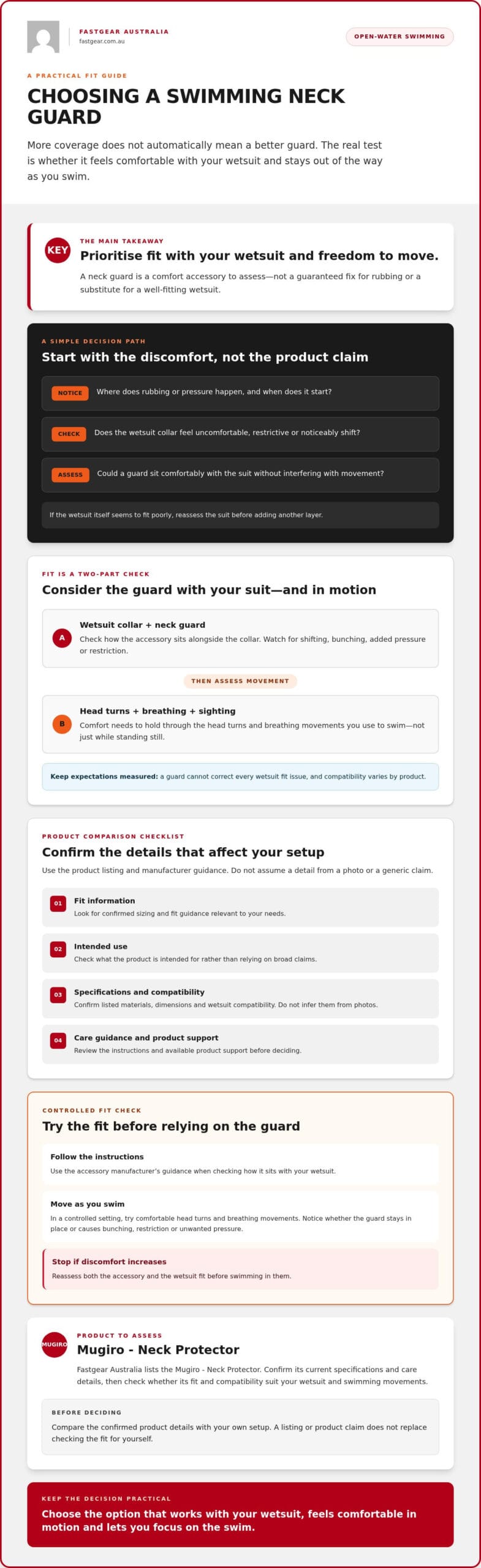
If you’re searching “open water swimming neck guard australia”, more coverage doesn’t automatically mean a better neck guard. The practical test is whether it sits comfortably with your wetsuit and stays out of the way as you swim.
Neck rubbing can build during a long swim, but adding another layer without checking the fit may create a different problem. A guard needs to work with your wetsuit’s neckline, feel comfortable as you turn to breathe and sight, and stay in place without restricting movement.
This guide covers the checks that matter before you buy: how a guard fits with your wetsuit, its coverage and comfort in motion, and which product details to confirm for your own setup. You’ll also find a simple way to assess sizing, care and compatibility rather than relying on generic claims. Use these checks to decide whether the Mugiro – Neck Protector is worth considering for your open-water swims. The aim is to choose gear that lets you focus on the swim, not your neck.
Key Takeaways
- Compare fit information, intended use, care guidance and product support before choosing a neck guard.
- Check the product listing for confirmed specifications. Don’t infer materials, sizing or wetsuit compatibility from photos.
- Review the instructions, try the fit and move through your usual stroke movements in a controlled setting before relying on the guard.
- When comparing options for open water swimming neck guard australia, prioritise a fit that works with your wetsuit and movement.
- Fastgear Australia lists the Mugiro – Neck Protector. Confirm its current specifications and care details before deciding if it suits your setup.
Why consider an open-water swimming neck guard in Australia?
A swimming neck guard is an accessory intended to sit around the neck during a swim. Some swimmers consider one when contact between their skin and wetsuit causes rubbing or pressure that distracts them in the water. It’s a comfort accessory to assess, not a guaranteed solution or a substitute for a well-fitting wetsuit.
Swimmers across Australia use different equipment for different open-water setups. The useful question isn’t whether everyone needs a guard. It’s whether your own neck comfort is affected, and whether an accessory can sit with your wetsuit without interfering with movement.
When might a neck guard be useful with a wetsuit?
Neckline comfort is individual. The wetsuit’s cut, how it sits on your body and the way you move through each stroke can all affect how its collar feels. Rubbing or pressure might appear during a longer swim, when turning to breathe or when sighting. First, note where you feel discomfort and when it starts. This can help you work out whether the issue relates to the collar, movement or the suit’s overall fit.
A neck guard may be worth investigating if contact around the neckline is a recurring distraction. But don’t assume an accessory will solve a fit problem. If the wetsuit feels restrictive or shifts noticeably, check the suit’s fit before adding another layer.
What should swimmers expect from a neck guard?
Think of a neck guard as a separate accessory, not part of the wetsuit and not a replacement for swimming goggles. Check its fit on its own and in combination with your suit. For background on how wetsuits work, including their design and insulating function, review the wetsuit overview. This context can help you consider how an accessory might sit against a suit’s collar, but it doesn’t confirm that a particular product is compatible.
Keep expectations measured. A guard can’t correct every wetsuit fit issue, and product claims don’t replace checking specifications against your needs. Before choosing an open water swimming neck guard australia, note when rubbing occurs and what you need the accessory to do. A wider equipment guide can offer general context, but for this decision, focus on the product details and fit checks below.
How a neck guard works with your wetsuit and swimming stroke
A neck guard’s fit can’t be judged on its own. It sits alongside your wetsuit collar, so the way the layers meet matters. An accessory that shifts, bunches or adds pressure may become a distraction once you start swimming. Materials, dimensions and compatibility vary by product, so check the listing and manufacturer guidance rather than assuming every neck guard works with every suit.
Your stroke is part of the fit check. Turning your head to breathe or lifting it to sight changes how the skin and fabric around your neckline move. Comfort at the neck is proven in motion: check how the accessory feels through the head turns and breathing movements you use to swim.
Check the neck area before your first open-water swim
Start with the wetsuit collar. Notice whether it presses against a particular spot or whether rubbing tends to appear after you’ve been swimming for a while. These details can help you distinguish a collar-fit concern from discomfort that develops during movement. For general background on preventing wetsuit chafing, U.S. Masters Swimming discusses factors swimmers can consider.
Follow the accessory manufacturer’s instructions when checking how it sits with your suit. A neck guard shouldn’t be used to make an incorrectly fitting wetsuit suitable. If the collar is uncomfortable or the suit seems to fit poorly, reassess the suit first.
Assess fit while moving, not only while standing
A static check won’t show how the layers behave through a stroke. In a controlled setting, try comfortable head turns and breathing movements. Notice whether the accessory stays in place or creates bunching, restriction or unwanted pressure. Stop if discomfort increases, then reassess both the accessory and the wetsuit fit before swimming in them.
Use the movements you rely on in the water, but keep the check measured. You’re looking for a comfortable range of motion, not a reason to push through pressure. If a product’s fit or compatibility details aren’t confirmed, don’t assume it will suit your setup. That applies whether you’re assessing the Mugiro – Neck Protector or another option. A search for “open water swimming neck guard australia” can help you find products, but the practical details determine whether one merits a closer look.
For another point of comparison, review Fastgear Australia’s listed swimming accessories, including the Mugiro – Neck Protector. Check the product information against your wetsuit and movement needs before making a decision.
How to compare open-water swimming neck guards before buying
A useful comparison starts with verifiable details, not product photos or broad comfort claims. Suitability depends on how a guard fits you and sits alongside your specific wetsuit. Check the product information, then assess the fit and movement before relying on it in open water.
Which product details should you check?
Use the same checklist for each option. If a listing leaves a detail unclear, note it for confirmation rather than filling the gap with an assumption.
| What to compare | What to look for | Why it matters |
|---|---|---|
| Fit information | Any stated sizing, measurements and guidance on how the guard should sit or be worn. | Helps you judge whether it may work with your neck and wetsuit collar. |
| Intended use | A clear description of the accessory’s intended purpose and use conditions. | Prevents you from assuming it suits a particular swim setup without supporting information. |
| Materials and care | Confirmed material details and specific cleaning or care instructions. | Lets you understand what you’re buying and how to look after it. |
| Product support | Available product guidance, including where to direct questions about missing specifications. | Gives you a way to check important details before making a decision. |
A photograph can show a product’s appearance, but it can’t confirm sizing, material, care requirements or compatibility. Look for those details in the listing, or ask the seller or manufacturer when information is missing. If you’re comparing options for open water swimming neck guard australia, this step keeps the decision grounded in your actual setup.
How to assess the Mugiro – Neck Protector
Fastgear Australia lists the Mugiro – Neck Protector. Assess it using the same criteria as any other option: check the current listing for confirmed sizing, materials, intended use, care guidance and product support. Then compare the available fit information with your needs and wetsuit.
Don’t infer unlisted features, wetsuit compatibility or performance from the product name or images. If a specification you need isn’t confirmed, verify it before deciding. A useful comparison is based on clear product details and your own fit requirements, not broad claims.
How to test, use and care for a swimming neck guard
A fit check before a swim can reveal whether a neck guard works with your setup. Don’t wait until an event to find out it shifts, bunches or creates pressure. Follow the product maker’s instructions and test the accessory in a controlled setting before relying on it in open water.
A pre-swim fit check for neck guards
Use the wetsuit configuration you intend to swim in. Check the accessory’s placement and how it feels against the collar, then move through comfortable head turns and breathing motions. The fit shouldn’t depend on pulling the guard tight or accepting restriction. If it shifts or causes new pressure, stop and reassess rather than forcing it into place.
- Review the instructions. Read the product listing or manufacturer guidance for how the accessory should be worn and any fit limitations.
- Try the fit. Put it on with your intended wetsuit setup. Check its position without stretching or tightening it beyond the stated instructions.
- Move naturally. Practise comfortable head turns and breathing movements. Notice any slipping, bunching, restriction or pressure.
- Reassess comfort. If discomfort increases, remove the accessory and check whether the issue relates to its placement or the wetsuit fit. Don’t rely on it for an event until you’ve tested it adequately.
Testing in a controlled setting gives you the chance to assess the fit without event pressure. If the accessory doesn’t stay comfortable during movement, it may not suit your setup. An open water swimming neck guard australia search can identify options, but a careful fit check helps you judge how one feels with your own suit.
Care and storage: follow product-specific instructions
Care requirements differ between products. Check the listing or manufacturer guidance for cleaning, drying and storage instructions. Don’t assume a particular water temperature, detergent or storage method is suitable unless the product instructions confirm it. If care details aren’t available, seek clarification before using a generic routine.
Apply the same standard to the Mugiro – Neck Protector: confirm its current product-specific fit and care information before use. Clear instructions help you make an informed choice and look after the accessory as directed.
To review the product information, view the Mugiro – Neck Protector listing and check the available details before deciding.
Is the Mugiro – Neck Protector the right choice for your swim kit?
The Mugiro – Neck Protector may be worth investigating if wetsuit-neck rubbing or pressure affects your comfort during open-water swims. Fastgear Australia lists it among its swimming accessories. That makes it a product to assess, not a universal recommendation. Whether it suits your kit depends on the confirmed product details and how it fits alongside your wetsuit.
Pause before buying if key information is missing. Without confirmed fit, care and use guidance, you can’t make a reliable comparison with your own setup. Don’t assume the product is compatible with your wetsuit or will feel comfortable in motion just because it’s designed as a neck protector.
A quick decision checklist before you buy
Use this checklist to keep the decision practical:
- Check the current listing. Look for confirmed specifications, care instructions and available options. Don’t infer details from the product name or photos.
- Match the guidance to your setup. Compare the listed fit and use information with your wetsuit and the specific neck-comfort issue you’ve identified.
- Identify what’s still unknown. If you need more detail about fit, care or compatibility, seek confirmation before placing an order.
- Consider a fit test. If you proceed, follow the maker’s directions and assess comfort with your wetsuit and natural swimming movements before relying on the accessory during an event.
Where the Mugiro – Neck Protector fits in your kit
Treat the Mugiro – Neck Protector as a swimming accessory to assess alongside your existing equipment, not as a replacement for a well-fitting wetsuit. If your suit feels restrictive or creates persistent pressure, adding an accessory may not address the underlying fit concern. Recheck the wetsuit and confirm the accessory’s product-specific instructions before deciding.
For anyone searching open water swimming neck guard australia, look for clear specifications and a fit that works for you. Fastgear lists the Mugiro – Neck Protector, but confirm the current product information and any details you need before making your decision.
Explore the Mugiro – Neck Protector at Fastgear and review the current listing before deciding whether it belongs in your swim kit.
Make your next swim more comfortable with a confident gear check
A neck guard is worth considering if wetsuit contact around your neck distracts you, but comfort depends on the match between the accessory, your suit and your stroke. Check confirmed product details, try the fit with your intended wetsuit setup, then move through natural breathing and head turns before relying on it in open water. Follow the product maker’s care instructions as well.
Fastgear lists the Mugiro – Neck Protector and serves endurance athletes nationally across Australia. Whether it suits your kit depends on its current product information and your personal fit. If sizing, care or compatibility details aren’t clear, verify them before deciding.
Before choosing an open water swimming neck guard australia option, make sure the details and fit make sense for your swim setup. A considered gear check helps you head into your next swim prepared and focused.
Frequently Asked Questions
What is an open-water swimming neck guard?
An open-water swimming neck guard is an accessory intended to sit around the neck during a swim. Swimmers may consider one if contact with a wetsuit collar causes rubbing or pressure that affects comfort. It’s separate from the wetsuit and from swimming goggles, and it shouldn’t be treated as a guaranteed fix for chafing or a substitute for a suitable wetsuit fit. Check the product’s intended use and instructions before trying it.
Can you wear a neck guard under a wetsuit?
Possibly, but only if the product’s instructions support wearing it with your wetsuit and the fit feels comfortable. Don’t assume every neck guard is designed to go under every suit. Check how the accessory is intended to be worn, then try it with your wetsuit and test gentle head turns and breathing movements. If it bunches, shifts or creates pressure, stop and reassess rather than forcing the fit.
How do I stop my wetsuit rubbing my neck while swimming?
Start by checking whether your wetsuit fits comfortably around the neck and identifying when the rubbing begins. Suit cut, body shape and movement can all affect how the collar feels. If the suit seems too tight, loose or restrictive, reassess its fit before adding an accessory. You could also investigate an anti-chafe product or neck guard, but check its suitability and instructions, then test your setup before a long swim or event.
Does a neck guard affect swimming movement?
It can, depending on its fit and how it sits with your wetsuit. Try comfortable head turns and breathing movements, and notice any restriction, bunching, slipping or new pressure. A standing fit check alone won’t show how the accessory behaves during a stroke. Stop if discomfort increases, then reassess the guard and wetsuit combination. Don’t rely on it during an event until you’ve tested it in a controlled setting.
How do I choose a neck guard for open-water swimming in Australia?
For an open water swimming neck guard australia search, compare confirmed fit information, intended use, materials, care guidance and product support. Check the listing rather than guessing from photos, and consider how the accessory may sit with your specific wetsuit. Fastgear Australia lists the Mugiro – Neck Protector, but verify its current product details before deciding whether it suits your needs. If key information is missing, seek confirmation first.
How should I care for a swimming neck guard?
Follow the care instructions provided for the specific product. Check its listing or manufacturer guidance for cleaning, drying and storage, and don’t assume a particular water temperature, detergent or method is suitable unless the instructions confirm it. If care details aren’t available, ask for clarification before using a generic routine. For the Mugiro – Neck Protector, confirm the current product-specific care guidance before use rather than relying on assumptions.
