
Uncategorized
SIS GO Isotonic Gel: The 2026 Australian Guide to Gut-Friendly Fueling
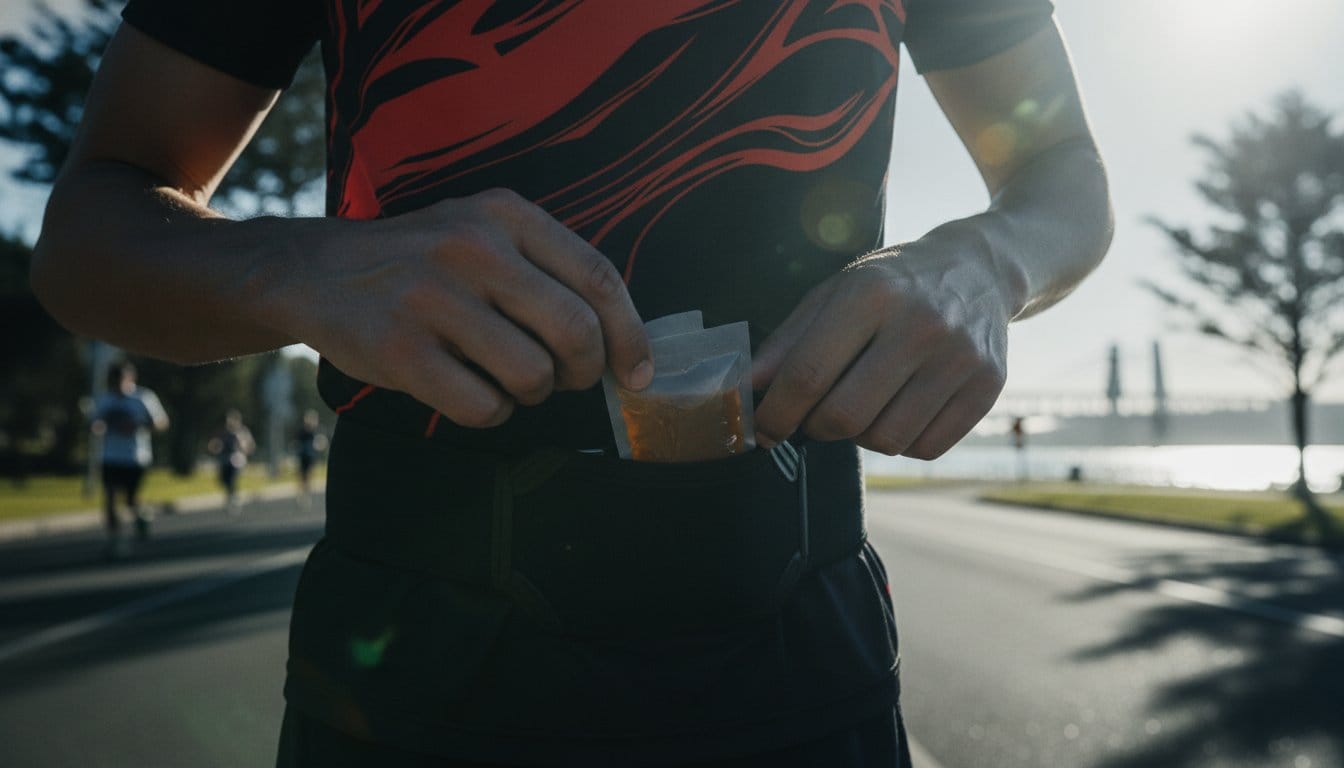
Sep
What if the water you’re forced to chug to wash down a thick energy gel is actually the primary cause of your mid-race gut rot? For many Australian endurance athletes, the struggle isn’t just about finding energy; it’s about keeping it down when the heart rate climbs. The SIS GO isotonic gel provides a technical solution to this physiological bottleneck. By matching the concentration of your blood, it bypasses the need for additional fluid to aid absorption, delivering 22g of carbohydrates directly to your working muscles without the dreaded stomach cramps.
You’ve likely experienced the frustration of hitting the wall because your stomach couldn’t handle another syrupy hit. We understand that peak performance requires a settled gut and consistent power output from start to finish. This guide masters the science of isotonic fuelling to help you eliminate digestive distress and maintain your pace through the final leg. We will examine the specific mechanics of rapid gastric emptying, compare isotonic formulas against hydrogel alternatives, and provide a precise 2026 strategy to optimise your carbohydrate intake for your most demanding Australian events.
Key Takeaways
- Understand how isotonicity eliminates the need for extra water, preventing the mid-race “gut rot” caused by traditional hypertonic gels.
- Discover why the 22g of maltodextrin in each SIS GO isotonic gel ensures rapid energy absorption without the risk of insulin spikes or crashes.
- Master a high-performance fuelling strategy that targets 60-90g of carbohydrates per hour to maintain peak power through the final leg.
- Learn to differentiate between isotonic and hydrogel technologies to select the most effective tool for your specific endurance environment.
- Optimise your race-day kit by pairing your nutrition strategy with technical gear like Compressport belts for streamlined, efficient delivery.
The Science of Isotonicity: Why SIS GO Gels Are a Game Changer
Isotonicity is a matter of osmotic pressure. To be truly isotonic, a solution must match the concentration of dissolved particles found in human blood. This balance is critical because it dictates how fluid and nutrients move across cell membranes. When you consume a Isotonic sports drink or gel, your body doesn’t need to work to equalise these concentrations. It’s a biological shortcut that allows for immediate processing.
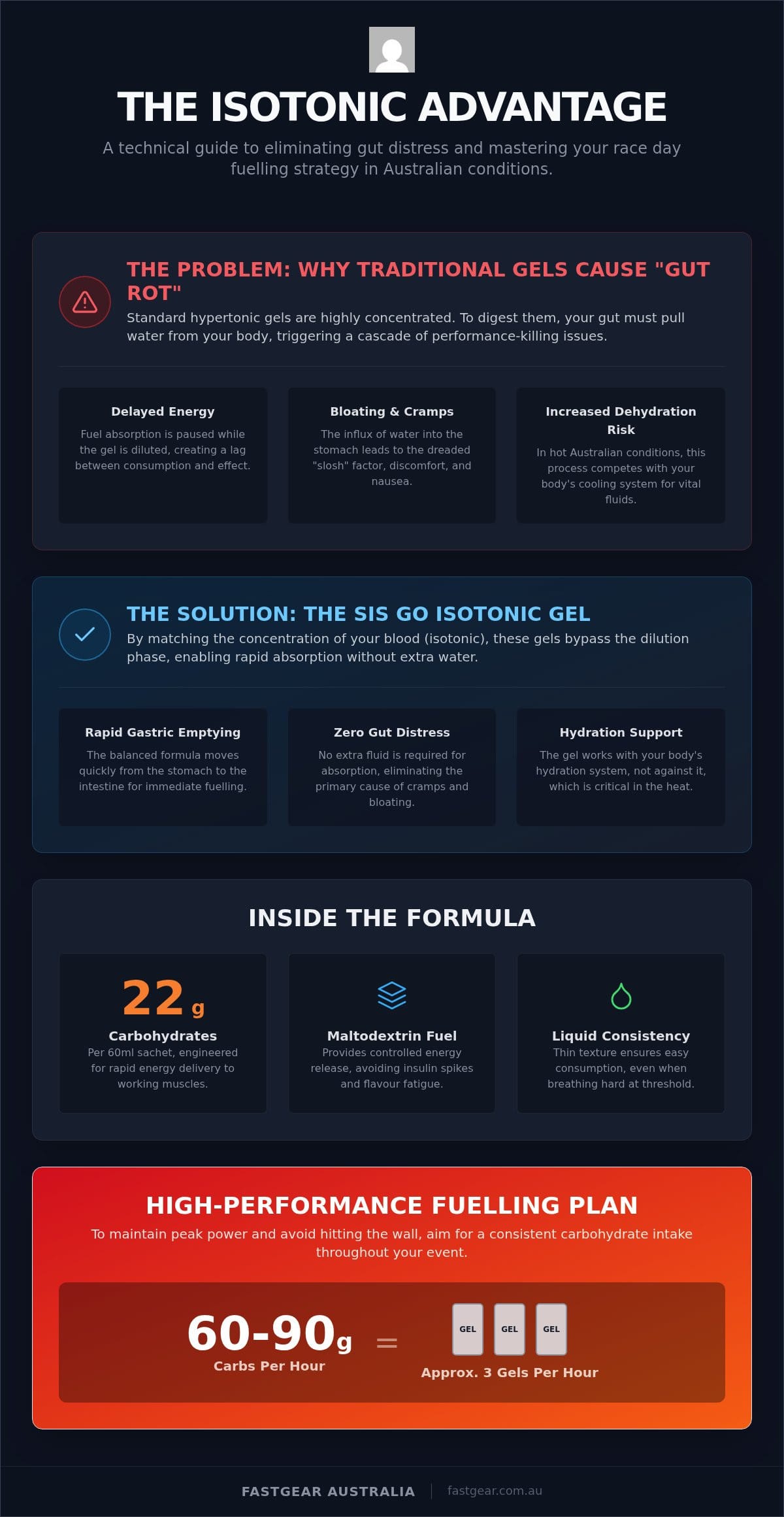
Traditional energy gels are typically hypertonic. They contain a high density of sugar and solids that far exceed the concentration of your internal fluids. To process these “thick” gels, your gut must draw water from your body’s own reserves into the stomach. This dilutes the gel until it becomes isotonic, but it creates a massive delay in energy delivery. An isotonic gel is a fuel source that doesn’t require extra fluid for absorption.
The real performance advantage lies in gastric emptying. This is the rate at which fuel leaves your stomach and enters the small intestine for absorption. Because the SIS GO isotonic gel arrives already balanced for your physiology, it bypasses the dilution phase. It moves through the stomach rapidly, ensuring the 22g of carbohydrates reach your bloodstream without the lag time associated with standard gels. You get power when you need it, not twenty minutes too late.
Osmolality and Your Gut: Avoiding the “Slosh” Factor
Hypertonic gels are a common cause of the “slosh” sensation. By drawing water into the intestine to aid digestion, they create a pool of fluid that sits heavy in your gut. This leads to bloating, nausea, and the mid-race distress often called gut rot. The 22g carbohydrate dose in an SIS GO isotonic gel is engineered to maintain low osmolality. This makes it the safe choice for athletes with sensitive stomachs who need to maintain a high work rate without digestive interference.
Performance in the Australian Heat
Racing in the Australian climate puts immense pressure on your hydration status. Whether you’re dealing with humid coastal conditions or dry inland heat, your sweat rate will be high. As dehydration sets in, your gut becomes less efficient at processing concentrated fuels. Isotonic gels are superior in these environments because they don’t compete with your cooling system for water. You can maintain consistent energy levels even when your fluid intake is limited, ensuring your performance doesn’t tank as the temperature rises.
Inside the SIS GO Isotonic Gel Formula: Technical Breakdown
Every 60ml sachet of SIS GO isotonic gel is engineered to deliver 22g of carbohydrates with clinical precision. Unlike many competitors that rely on high concentrations of simple sugars, SIS utilises maltodextrin derived from maize. This choice is deliberate. Maltodextrin has a significantly higher molecular weight than glucose, which lowers the osmotic pressure of the solution. This technical detail is what allows the gel to remain truly isotonic while still providing a meaningful energy dose to your working muscles.
The texture is a critical performance feature. It’s notably thinner than the syrupy, viscous consistency of traditional gels. When you’re breathing hard at threshold, swallowing a thick paste is difficult and often triggers a gag reflex. The formula’s liquid-like consistency ensures you can refuel under heavy load without breaking your stride or gasping for air. It’s designed for the heat of competition, where ease of consumption is as important as the fuel itself.
Maltodextrin vs. Simple Sugars
Simple sugars like glucose or fructose are intensely sweet and can cause rapid insulin spikes followed by performance-killing crashes. Maltodextrin delivers a controlled energy release. Because it’s less sweet, it prevents the flavour fatigue that often ruins nutrition plans during long-haul events like an Ironman or a 100km trail run. Research from Harvard on sports drinks highlights how carbohydrate concentration affects nutrient replenishment; SIS hits the specific balance required for rapid absorption. Maintaining a neutral palate is essential when you’re eight hours into a race and the thought of another sugary hit becomes nauseating.
Informed Sport: The Gold Standard for Clean Sport
For competitive Australian athletes, the risk of accidental contamination is a serious concern. Every batch of SIS nutrition undergoes rigorous, independent testing for prohibited substances. This Informed Sport certification is why the SIS logo is a permanent fixture in professional pelotons and triathlon transition racks across the country. You can trust that what’s on the label is exactly what’s in the gel, providing total peace of mind during drug-tested events.
Building a reliable strategy requires more than just picking a flavour. You need to understand how these components fit into your broader endurance sports nutrition Australia plan. At Fastgear, we curate our range to ensure every product meets these high technical standards. If you’re ready to upgrade your race-day kit, you can explore our performance-tested nutrition range to find the right fuel for your next milestone.
SIS GO vs. The Field: Comparing Isotonicity and Hydrogels
Selecting the right fuel depends on your event intensity and gut sensitivity. Traditional gels, such as GU, are hypertonic. They possess a high density of solutes that requires you to consume roughly 250ml of water per gel to avoid gastric distress. In contrast, the SIS GO isotonic gel provides a thinner, more liquid texture that enters the small intestine without siphoning water from your body. For high-volume training blocks, SIS offers a superior cost-to-performance ratio, making it the practical “base” for daily endurance sessions.
It’s vital to debunk the “no-water” myth. While you don’t need water to transport the SIS GO isotonic gel through your digestive tract, you still need fluid for hydration. Isotonicity solves a fuelling problem, not a hydration problem. If you’re racing in the Australian sun, you must continue to drink to replace sweat losses, even if your gels don’t strictly require it for absorption. Ignoring your fluid intake because your gels are isotonic is a fast track to a performance plateau.
When to Choose SIS GO over Maurten
The choice between SIS and hydrogel technology often comes down to carbohydrate concentration and intensity. While a Maurten gel Australia strategy might focus on 25g or 40g doses encapsulated in a pectin structure, SIS provides a consistent 22g of maltodextrin. At threshold heart rates, the thinner consistency of SIS is often easier to swallow than the firmer, jelly-like texture of hydrogels. Use SIS for high-intensity intervals or Olympic distance triathlons where your breathing is heavy and your gut is under maximum stress. The lower carb count per sachet also allows for more frequent, smaller doses, which can be easier for some athletes to process during peak efforts.
Stacking with Electrolytes
Standard SIS GO gels are a pure energy source. They don’t contain significant mineral concentrations, meaning you must manage your sodium intake separately. To prevent cramping and maintain fluid balance, you should stack your energy intake with dedicated electrolytes. This modular approach allows you to scale your carbohydrate intake independently of your salt requirements. During a multi-hour Australian race, this precision prevents the common mistake of over-consuming sugar just to get enough salt, or vice versa. Balancing these two pillars ensures you maintain peak power from the starting gun to the finish line without the risk of hyponatremia or dehydration.
The Pro’s Fuelling Plan: How to Strategise Your Intake
Successful endurance performance is built on a foundation of metabolic efficiency. To maintain peak power, most athletes should target between 60g and 90g of carbohydrates per hour. With each SIS GO isotonic gel delivering exactly 22g of carbohydrates, you have a precise tool for hitting these numbers. Your strategy must begin before the starting gun. Consume your first gel 15 to 20 minutes before your session starts. This ensures your blood glucose is elevated and your digestive system is primed for the work ahead.
Consistency is more important than volume. Establish a 20 to 30 minute “feed window” and stick to it religiously. This drip-feed approach prevents the energy troughs associated with infrequent, large doses. While SIS is an excellent base, a sophisticated plan often involves a multi-brand approach to manage flavour fatigue. You might use SIS for your high-intensity intervals, stack it with Maurten for concentrated carbohydrate peaks during long climbs, and sip on Tailwind for constant electrolyte replenishment. This variety keeps your palate fresh and your energy levels stable over several hours of racing.
The final step is to train your gut. Digestion is a trainable skill. Use your long Sunday sessions to practice your exact race-day protocol. If you intend to consume 80g of carbs per hour during your “A” race, you must prove your stomach can handle that load during training. This practice allows you to identify any potential issues well before you reach the transition area.
The 20-Minute Rule for Consistency
Drip-feeding carbohydrates is biologically superior to “bolus” loading. Smaller, frequent doses are absorbed more efficiently and reduce the risk of overwhelming your transporters. To maintain this rhythm, keep your nutrition accessible. Using a Compressport free belt pro allows you to carry multiple gels comfortably around your waist without bouncing. Set a repeating alert on your bike computer or sports watch. When the timer hits the 20-minute mark, you fuel. This removes the guesswork when fatigue starts to cloud your judgement.
Transitioning from Training to Race Day
The golden rule of endurance racing is to never try anything new on race morning. Your gut response to an SIS GO isotonic gel at a recovery pace will differ significantly from its response at race intensity. Simulate your target power and heart rate during key workouts to ensure your fuelling plan holds up under stress. Adjust your strategy based on environmental factors like heat and humidity, which can slow gastric emptying. If you’re ready to build your custom fuelling kit, you can shop our performance-tested nutrition range to find the perfect mix for your next event.
Optimising Your Race Day Kit: Why Serious Athletes Choose Fastgear
Performance isn’t just a result of the hours you spend on the bitumen or in the trails; it’s a consequence of the precision of your toolkit. At Fastgear Australia, we recognise that a single fuelling error can negate months of disciplined preparation. We don’t operate as a generic big-box retailer. Instead, we provide a curated selection of endurance tools that have been rigorously tested in the field. Every product in our inventory, from technical hardware to the SIS GO isotonic gel, is chosen because it serves a specific performance purpose.
Integrating your SIS GO isotonic gel strategy with high-end technical equipment is essential for maintaining peak power. For instance, the aerodynamic stability of a Wove M8 Road / Tri saddle or the thermoregulation provided by a Compressport Trail Racing SS Tshirt works in tandem with your internal fuelling. If your body is struggling with heat stress or mechanical discomfort, your gastric emptying rate will inevitably slow down. By aligning your nutrition with premium gear, you ensure that your physiological systems remain focused on propulsion rather than damage control.
More Than Just Gels: The Performance Ecosystem
Every component of your kit should contribute to a marginal gain. In the world of elite multisport, nutrition is the fuel, but your apparel and hardware are the delivery systems. High-performance racing requires a holistic approach where your energy intake is streamlined. Carrying your gels in a Compressport Free Belt Pro allows you to maintain your cadence and aerodynamic position without fumbling with pockets. This synergy between gear and fuel is what separates a personal best from a mid-race collapse. For a comprehensive breakdown of the gear required for your next event, check out our guide on triathlon race day essentials Australia.
Expert Curation for High Performance
We choose SIS as a cornerstone of our nutrition range because it delivers predictable, science-backed results for athletes operating at their limit. We understand the “bonk” because we are active participants in the endurance community. Our expertise in nutrition stacking and multi-sport gear means we act as a reliable performance partner rather than just a shopfront. We prioritise Informed Sport approved products to ensure your integrity as a competitive athlete is never compromised. Our streamlined national shipping is designed for race-day readiness, ensuring your supplies arrive exactly when you need them for your final taper. When the stakes are high, you need a partner who understands the demands of the discipline.
Fuel your next PB with SIS GO Isotonic Gels at Fastgear and ensure your hard-earned fitness isn’t wasted by a compromised gut.
Dominate Your Next Endurance Milestone
Mastering your nutrition is the final piece of the high-performance puzzle. By incorporating the SIS GO isotonic gel into your strategy, you eliminate the digestive bottlenecks that often derail race day. The science is clear; matching your body’s osmotic pressure allows for rapid energy delivery without the “slosh” factor. You’ve seen how a precise 22g dose of maltodextrin maintains steady glycogen levels while keeping your palate fresh during long sessions on the bitumen.
At Fastgear Australia, we only stock tools that meet the demands of elite competition. Our range is Informed Sport Approved and trusted by professional WorldTour teams for its reliability under pressure. We ensure your race-day readiness with rapid national AU shipping, so you never have to scramble for supplies before a major event. It’s time to stop guessing and start executing a fuelling plan that works with your physiology rather than against it.
Optimise your fuelling with SIS GO Isotonic Gels at Fastgear Australia
Your next PB is waiting. Get your nutrition right, trust your training, and stay focused on the finish line.
Frequently Asked Questions
Do I need to drink water with SIS GO Isotonic Gels?
No, you don’t need to consume water specifically to aid the absorption of an SIS GO isotonic gel. Its unique formulation matches the concentration of your blood, allowing it to empty from the stomach and enter the bloodstream rapidly. While you must still drink to manage your overall hydration and fluid losses during a race, you won’t need to time your gel intake with water stations to avoid digestive distress.
How many SIS GO gels should I take per hour during a marathon?
For optimal endurance performance, aim to consume one to three gels every hour to reach a target of 60g to 90g of carbohydrates. Each sachet provides exactly 22g of fuel, so a marathon runner might use one every 20 to 30 minutes. Your specific requirements depend on your body mass and intensity level. Always practice this strategy during your long training runs to ensure your gut is primed for race-day loads.
Are SIS GO Isotonic Gels vegan and gluten-free?
Yes, these gels are suitable for both vegan and gluten-free diets. The primary energy source is maltodextrin derived from maize, which contains no animal products or wheat-based ingredients. This makes the SIS GO isotonic gel a reliable choice for athletes with specific dietary requirements or sensitive stomachs. The clean ingredient profile focuses on performance, ensuring you can fuel your sessions without compromising your ethical or health-based dietary choices.
Can I use SIS GO gels for cycling and running?
These gels are highly effective for both cycling and running disciplines. The thinner consistency is particularly beneficial for runners who often struggle to swallow thick pastes while breathing heavily at threshold. For cyclists, the easy-to-open sachet and rapid absorption mean you can refuel on the move without needing to reach for a bottle every time. They are a staple for triathletes who require a consistent fuelling solution across multiple legs.
What is the difference between SIS GO Isotonic and SIS GO Caffeine gels?
The primary difference is the addition of specific stimulants for mental focus. The standard isotonic gel focuses purely on carbohydrate delivery for energy. The caffeine versions contain either 75mg or 150mg of caffeine to lower your perceived exertion and provide a cognitive boost during the final stages of a race. While the base carbohydrate delivery remains similar, the caffeine variants are designed for strategic use when fatigue starts to impact your mental clarity.
Do SIS gels expire, and how should I store them in the Australian heat?
SIS gels have a shelf life and will display an expiry date on the individual packaging. To maintain the integrity of the formula, store them in a cool, dry place away from direct sunlight. Avoid leaving your supply in a hot vehicle or an uninsulated shed during the Australian summer, as extreme temperatures can degrade the ingredients. For best results, keep your race-day stock in a temperature-controlled environment until you head to the start line.
Why do SIS gels have a thinner consistency than other brands?
The thinner consistency is a deliberate result of the isotonic formulation. Traditional “thick” gels are hypertonic, meaning they have a higher concentration of particles than your blood. By adding more water to the maltodextrin, SIS creates a solution that your gut can process immediately without drawing fluid from other parts of your body. This fluid-like texture is the key to preventing the bloating and stomach cramps often associated with more viscous energy products.
Are SIS GO gels safe for teenagers and junior athletes?
Standard SIS GO gels are generally considered safe for junior athletes as they are primarily composed of water and carbohydrates. They provide a controlled way to manage energy levels during long training sessions or multi-day competitions. However, juniors should avoid the caffeine-enhanced versions due to the high stimulant content. It is always best to consult a sports dietitian to tailor a fuelling plan that supports the specific growth and performance needs of younger competitors.
