
Uncategorized
Olympic Distance Triathlon Fuelling: The 2026 High-Performance Guide
Aug
Why does a flawlessly executed training block often disintegrate into a sloshing stomach and a heavy-legged 10km shuffle the moment you hit race intensity? You’ve disciplined yourself through the threshold sets and the brick sessions, yet the 30km mark on the bike often feels like an insurmountable metabolic cliff. It’s a frustrating reality for competitive athletes aiming for a sub-2.5 hour finish. This 2026 guide masters the technical science of olympic distance triathlon fueling to ensure your engine doesn’t sputter when the heart rate climbs.
We’ll show you how to eliminate gut distress and maintain a consistent power output that lasts from the swim exit to the final timing mat. You’ll gain a calibrated race-day blueprint covering everything from hydrogel absorption limits to the precise, strategic timing of your caffeine intake. We are moving past generic advice and into high-performance nutrition strategies designed specifically for a threshold-shattering finish and your fastest possible 10km run split.
Key Takeaways
- Target a precise intake of 40-80g of carbohydrates per hour to sustain threshold power without compromising your digestive comfort.
- Implement a technical olympic distance triathlon fueling plan that utilises hydrogels to prevent gastric distress during high-intensity efforts.
- Maintain blood volume and mental clarity in the heat by calibrating your sodium intake to match your specific sweat rate and intensity.
- Optimise your physical layout with gear like the Wove M8 saddle to reduce pressure on the gut and ensure efficient nutrient absorption.
- Plan your metabolic strategy across all three disciplines, including the critical 24-hour carb load and the final 15-minute pre-swim top-off.
Mastering Olympic Distance Triathlon Fuelling: The Fourth Discipline
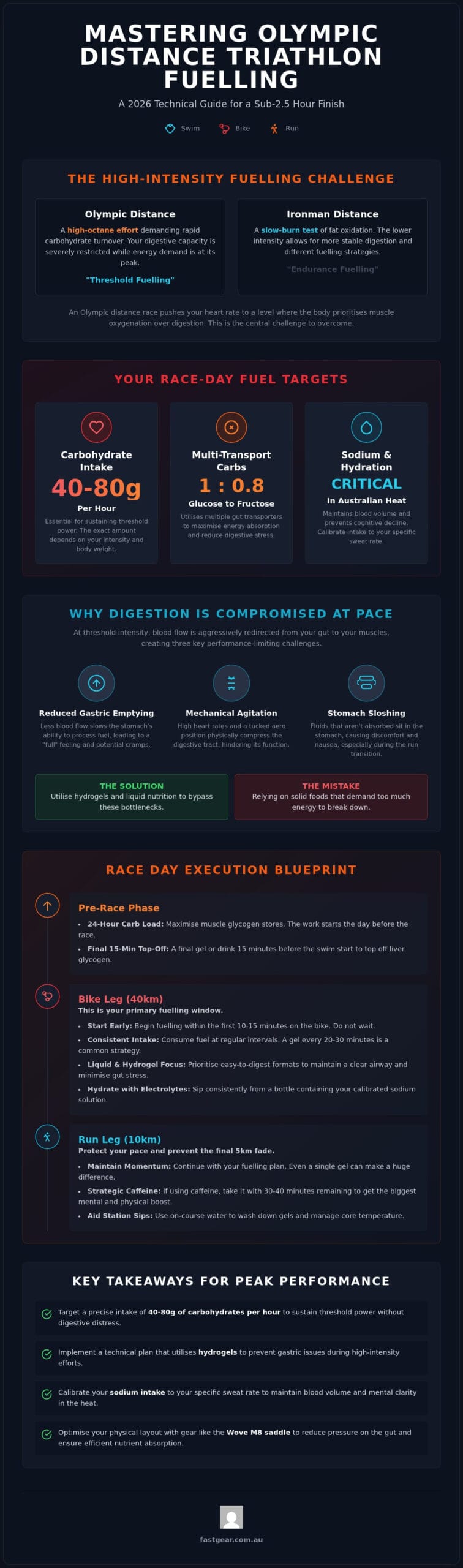
Success in the Olympic distance triathlon isn’t just about your FTP or your swim stroke. It’s about the strategic management of glycogen at threshold intensity. While an Ironman is a slow-burn fat oxidation test, a sub-3 hour race is a high-octane effort that demands rapid carbohydrate turnover. We call this “Threshold Fuelling.” It’s a high-stakes environment where your energy demand is maximum, but your digestive capacity is severely restricted.
Proper olympic distance triathlon fueling requires a fundamental shift in mindset. You’re racing at a heart rate where the body prioritises muscle oxygenation over digestion. If you haven’t trained your gut to handle high carbohydrate loads under stress, your race-day nutrition will fail. Gut training is the process of increasing your absorption rates during training sessions to ensure your small intestine can transport glucose and fructose into the bloodstream when the pressure is on.
Why High Intensity Complicates Nutrition
When you’re pushing threshold power on the bike, your body undergoes significant physiological shifts. Blood flow is aggressively redirected from the gut to the working muscles. This creates several performance-limiting challenges:
- Reduced gastric emptying: Less blood flow to the stomach slows down the processing of nutrients.
- Mechanical agitation: High heart rates and a tucked aero position physically compress the digestive tract.
- Stomach sloshing: Fluids that aren’t absorbed sit in the stomach, causing discomfort during the run transition.
Traditional solid foods are a strategic error in a Standard distance race. They demand too much metabolic energy to break down. Stick to liquid or hydrogel-based solutions to bypass these mechanical bottlenecks.
The Goal: Protecting Your Threshold Power
Your brain is the ultimate limiter. When blood glucose levels drop, the central nervous system reduces muscle recruitment to protect vital organs. This results in a faded “kick” during the final 5km of the run. Consistent fuelling ensures the brain perceives a surplus of energy, allowing you to maintain a high power output until the finish line. Don’t wait for hunger; by then, your pace has already peaked.
Threshold glycogen depletion is the physiological point where your stored muscle energy is exhausted by high-intensity output, forcing a dramatic reduction in 10km pace as the body switches to less efficient fuel sources.
The Physiology of Performance: Carbs, Sodium, and Australian Heat
A sub-2.5 hour effort requires a metabolic engine running at peak efficiency. For olympic distance triathlon fueling, the baseline target is 40 to 80g of carbohydrates per hour. This range isn’t arbitrary. It’s dictated by your gut’s ability to transport fuel while your heart rate hovers near threshold. To maximise this, you must utilise a multi-transportable carbohydrate blend, typically a 2:1 or 1:0.8 ratio of glucose to fructose. This allows your body to absorb more energy than glucose alone could provide.
The Australian climate adds a layer of complexity. High humidity and soaring temperatures accelerate fluid loss, which thickens the blood and forces the heart to work harder. Sodium is your primary tool here. It maintains blood volume and prevents the cognitive decline often mistaken for physical fatigue. Precision in your sodium calibration ensures that the fluids you drink actually enter your bloodstream rather than sloshing in your stomach.
Calculating Your Carbohydrate Density
Determining your hourly goal depends on your intensity and body weight. A heavier athlete pushing high watts will lean toward the 80g limit. Integrating high-quality endurance sports nutrition Australia into your plan allows you to hit these numbers without the bulk of solid food. Liquid fuelling on the 40km bike leg is superior. It provides a steady stream of glucose while keeping your airway clear for the high respiratory demands of the cycle.
The Australian Heat Factor: Sodium Calibration
Australian race days often involve high sweat rates. If you lose more than 2% of your body weight, your performance will drop. Early signs of dehydration include a rising heart rate for the same power output and a loss of focus. Using high-dose electrolytes drives fluid absorption across the gut wall. This keeps your plasma volume stable, ensuring oxygen continues to reach your legs during the transition to the run.
Training Your Gut for the Red Zone
You can’t test your limits on race day. Use your high-intensity brick sessions to practice your plan. Gradually increase the carbohydrate density of your bottles to see where your personal “red zone” for digestion lies. Testing your cycling nutrition Australia setup under load reveals whether your stomach can handle 80g per hour while you’re tucked in aero. If you’re looking for a gut-friendly way to hit these numbers, consider exploring our range of Maurten hydrogel products for a cleaner energy delivery.
Gels, Powders, or Chews: Choosing Your 2026 Race-Day Fuel
Selecting the right fuel is a tactical decision, not a matter of taste. When your heart rate is pinned at threshold, your choice of delivery mechanism determines whether you finish strong or fade. The 2026 standard for high-performance olympic distance triathlon fueling focuses on rapid gastric emptying and high carbohydrate density. You need products that work under the extreme physiological stress of a sub-2.5 hour effort.
Maurten gel Australia represents the gold standard for gut sensitivity. By using hydrogel technology, it bypasses traditional digestive bottlenecks. For those who prefer a simpler approach, SIS GO Isotonic Gels offer the benefit of fuelling without needing immediate water. If you want to manage 100% of your needs through aero bottles, Tailwind powder allows for a customised liquid-only strategy on the 40km bike leg. This keeps your cockpit clean and your focus on the road.
The Hydrogel Advantage for Threshold Efforts
The biopolymer matrix in Maurten is a technical breakthrough. It protects the stomach lining by encapsulating carbohydrates in a pH-sensitive gel. This allows for high carb intake even when your heart rate is at 90% of its maximum. The body absorbs the energy in the small intestine, significantly reducing the risk of GI distress. Use the standard Gel 100 during the bike leg. Deploy the Gel 100 Caffeine variant during the final transition or the first 2km of the run to sharpen your focus for the finish.
Texture and Timing: When to Use What
Texture plays a psychological role in performance. Clif Bloks energy chews provide a necessary ‘reset’ during the early stages of the bike when your heart rate is slightly lower. The act of chewing can break the monotony of a high-intensity effort. As you approach the 30km mark of the bike, transition to gels. They require less mechanical effort to consume, which is vital as your respiratory rate increases.
Your caffeine strategy is critical for a sub-2.5 hour effort. Time your final intake for the last 45 minutes of the race. This ensures the peak effect hits just as you enter the final 5km of the run. For athletes using UCAN gels, these provide a steady release of energy that complements a high-intensity finish without the spike and crash of lower-quality sugars. Consistency is the key to maintaining your threshold pace until the final timing mat.
Discipline-by-Discipline Execution: From the Pontoon to the Finish Line
Execution is where theory meets the tarmac. Your olympic distance triathlon fueling strategy must be segmented by discipline to account for varying heart rates and digestive availability. It begins 24 hours before you rack your bike. A focused carbohydrate load of 8 to 10g per kilogram of body mass ensures your glycogen stores are saturated. Fifteen minutes before the starter’s gun, consume a final “top-off” gel. This stabilises blood glucose as you enter the high-intensity environment of the swim.
During the 1.5km swim, you are racing exclusively on stored energy. There is no opportunity for intake. Your focus here is efficiency and positioning. Once you hit T1, the metabolic clock starts ticking. The transition from the water to the bike is the most critical moment for initiating your primary caloric intake before the intensity of the run limits your options.
The Bike Leg: The Engine Room
The 40km cycle is your only window for high-density carbohydrate intake. Aim for one to two bottles of concentrated fuel. If the mercury rises, you must adapt your strategy. Managing the ultramarathon fueling for hot weather protocols can save your race if conditions become extreme. High temperatures require a shift toward higher fluid volumes with lower carb concentrations to facilitate faster gastric emptying and maintain hydration.
The bike allows for higher calorie volumes because your core is stable. Use this time to hit your 40 to 80g carbohydrate target. If you rely on liquids, ensure your bottles are accessible without breaking your aero tuck. This is the engine room where you build the energy surplus required for a threshold-shattering run. Don’t finish the bike with a full bottle. That’s wasted potential left on the course.
The Run Leg: The 10km Sprint
Transitioning to the run shifts your needs to survival fuelling. The vertical oscillation of running makes digestion difficult. Follow the 15-minute rule. Take your first run gel early, ideally within the first 2km. Waiting until the 7km mark is a tactical error. By then, the energy won’t reach your bloodstream in time to impact your finish. Store your gels in a Compressport Free Belt Pro to keep your hands free and your gait natural.
Supplement your concentrated gels with on-course water to aid absorption and prevent a gut bomb. Space your final gel intake to avoid overwhelming the small intestine. A focused, fast-acting approach here protects your pace. To ensure you have all the technical essentials for your next race, shop our professional range of race-day nutrition and secure your performance gains today.
Technical Gear Synergy: Optimising Logistics with Wove and Compressport
Precision in your olympic distance triathlon fueling is useless if you can’t access your nutrition under pressure. Technical gear choice isn’t just about weight or aerodynamics; it’s about creating a functional ecosystem that supports your physiology. High-performance racing requires a setup that allows for seamless caloric intake without breaking your aero tuck or disrupting your running economy. When you’re redlining at threshold, every fumbled gel packet represents lost time and a potential metabolic deficit.
The relationship between your equipment and your digestive efficiency is a critical marginal gain. If your position on the bike compresses your abdomen, your gastric emptying rate will drop, regardless of the quality of your hydrogels. By integrating technical solutions like the Wove M8 saddle and the Compressport Free Belt Pro, you ensure that your gear works with your body, not against it. This synergy is what separates a strong finish from a late-race fade.
The Bike Setup: Maximum Fuel, Minimum Pressure
Maintaining a deep aero tuck for 40km puts significant mechanical stress on the digestive tract. The Wove M8 saddle Australia addresses this directly with its aggressive pressure-relief channel. This design reduces abdominal compression, allowing for better blood flow to the gut and more efficient nutrient absorption while you stay tucked. It’s a technical solution for the physical bottleneck of high-intensity cycling.
Organise your cockpit using triathlon race day essentials Australia to keep your fuel within reach. A streamlined top-tube bento box is the ideal location for solid chews or salt tabs. Reserve your aero-mounted bottles for your primary liquid olympic distance triathlon fueling strategy. This no-fumble organisation ensures you can maintain a steady drip-feed of carbohydrates without compromising your CDA or your safety on the road.
The Run Setup: Lightweight Delivery
The transition to the 10km run is where most fueling plans fail due to logistics. Traditional bib belts are notorious for bouncing, which can lead to stomach irritation and a disrupted gait. The Compressport Free Belt Pro is a superior alternative. It provides a 360-degree storage pocket that sits flush against your waist. This prevents gel bounce even at a sub-4:00/km pace, allowing you to carry your Maurten or SIS gels with zero movement.
To achieve a 5-second exit from T2, pre-load your belt with your required nutrition and place it over your running shoes. Distributing the weight of your gels evenly around your centre of mass helps maintain your running form as fatigue sets in. This methodical approach to gear logistics ensures that your focus remains entirely on your pace, not on struggling with a sticky packet or a shifting belt.
Secure Your Threshold Performance
Mastering olympic distance triathlon fueling is the critical difference between a podium finish and a survival shuffle. By calibrating your intake to the precise 40 to 80g carbohydrate-per-hour range and utilising advanced hydrogel technology, you bypass the digestive bottlenecks of threshold-intensity racing. Your gear must support this metabolic effort. A technical cockpit and pressure-relieving saddle ensure your physiology remains focused on consistent power output rather than managing gastric distress or abdominal pressure during the bike leg.
Fastgear Australia is your reliable performance partner. We are an authorised Maurten and SIS stockist and a specialist technical gear curator dedicated to your marginal gains. With fast national shipping across Australia, your race-day essentials are always within reach. Optimise your race-day fuelling with Fastgear’s curated endurance range and execute your fastest 10km split with absolute confidence. You’ve done the hard training; it’s time to fuel the finish.
Frequently Asked Questions
How many grams of carbs per hour do I need for an Olympic distance triathlon?
Target 40 to 80 grams of carbohydrates per hour for effective olympic distance triathlon fueling. This range represents the physiological limit for most athletes racing at threshold intensity. Your specific requirement depends on your body mass and power output. Heavier athletes pushing higher watts should aim for the upper limit. Practising your strategy during high-intensity brick sessions is essential to determine your personal absorption rate without causing gastric distress.
Should I eat solid food during a Standard distance race?
Avoid solid foods during a Standard distance race. At threshold intensity, blood flow is redirected from the gut to the working muscles, making solid digestion nearly impossible. Solids often lead to a sloshing sensation or sharp stomach cramps. Stick to hydrogels, isotonic gels, or liquid nutrition. These formats require minimal metabolic energy to process, ensuring your energy is directed entirely toward maintaining your 40km bike power and 10km run pace.
What is the best way to avoid stomach cramps during the 10km run?
Use hydrogel technology and initiate your run fuelling early. Stomach cramps often result from unabsorbed carbohydrates sitting in the gut. Hydrogels encapsulate carbs to bypass the stomach and absorb in the small intestine. Additionally, take your first run gel within the first 2km. Waiting until you feel fatigued often means it’s too late for the nutrients to reach your bloodstream, leading to a gut bomb effect that ruins your split.
How much sodium should an Australian triathlete consume on a hot day?
Aim for 500 to 1000mg of sodium per hour on typical Australian race days. High humidity and heat significantly increase electrolyte loss through sweat. If you don’t replace sodium, your blood volume drops, leading to increased heart rate and brain fog. Use precision hydration tools or high-sodium electrolyte mixes to drive fluid absorption. This keeps your plasma volume stable, which is critical for cooling and oxygen delivery during the final 10km run.
When is the best time to take a caffeine gel during an Olympic race?
Take your caffeine gel approximately 45 minutes before your expected finish time. This usually aligns with the final 10km of the bike or the very start of the run. Caffeine takes about 30 to 60 minutes to reach peak plasma concentration. Timing it this way ensures the maximum ergogenic benefit hits exactly when you need to maintain your threshold pace and execute a powerful sprint to the finish line.
Do I really need to fuel during the 1.5km swim?
No, you cannot fuel during the 1.5km swim. You are racing on stored muscle glycogen and your pre-race meal. Consume a single gel 15 minutes before the gun to stabilise blood glucose. This prevents an early energy dip during the high-intensity struggle for position in the water. Focus on a clean entry into T1, where your primary olympic distance triathlon fueling strategy begins once you are settled on the bike.
Can I rely on the nutrition provided at the aid stations?
Don’t rely on on-course nutrition for your primary energy needs. Event organisers often use brands that may not align with your specific gut training or digestive sensitivity. Use aid stations only for plain water to supplement your own concentrated gels or powders. Carrying your own verified fuel ensures consistency and eliminates the risk of a mid-race digestive disaster caused by unfamiliar ingredients or incorrect carbohydrate ratios.
What should my ‘last meal’ be before an Olympic distance start?
Consume a high-carbohydrate, low-fibre meal two to three hours before your start time. Focus on simple starches like white rice or a plain bagel with honey. Avoid fats, dairy, and high-fibre vegetables, as these slow down gastric emptying and increase the risk of GI distress under race-pace intensity. This meal tops off your liver glycogen, ensuring your brain stays sharp and your body is primed for the swim exit.
