
Uncategorized
Caffeinated Energy Chews Australia: How to Choose the Right Fuel in 2026
Oct
The chew with the highest caffeine figure isn’t automatically the best race-day fuel. Choosing caffeinated energy chews Australia athletes can use confidently starts with more than caffeine: serving size, carbohydrate content and how easily you can eat them at intensity all matter. Labels can be difficult to compare, and a chew that works in training may feel awkward when the pace lifts.
Choose fuel that fits your event, caffeine tolerance and wider nutrition plan. This guide explains how to compare caffeine and carbohydrate per serving, assess format and practicality, and account for caffeine from other sources. You’ll also learn why it’s worth practising your strategy before race day rather than testing a new product under pressure. Fastgear Australia stocks endurance fuelling options, including Clif – BLOKS Energy Chews, alongside gels and hydration products. Use each product’s current label to compare verified details, and choose by how the fuel fits your plan, not by the marketing alone.
Key Takeaways
- Compare caffeine per serving with the number of pieces in that serving, so you can judge the amount you’ll actually consume.
- Assess carbohydrate information separately. Formulations can differ, so don’t assume every chew delivers the same fuel.
- Choose between chews, gels and drink mixes based on handling, texture and how each format fits your race-day fuelling plan.
- For caffeinated energy chews Australia athletes are considering, check current product labels and practise your approach during training before race day.
- Use a simple buying checklist to match verified product details, personal tolerance and event demands to your endurance goals.
Caffeinated Energy Chews: How They Work and Who They Suit
Caffeinated energy chews are portable sports fuels designed to provide chewable carbohydrates, with caffeine included in some products. They may suit athletes looking for a compact option during prolonged exercise, but they don’t guarantee a performance benefit. Their usefulness depends on the session, the athlete and how they fit into the wider fuelling plan.
Think of the product as providing two separate measures: carbohydrate is the fuel supplied by the serving, while caffeine is a separate ingredient with its own quantity. Neither figure tells you the other. Recipes and serving sizes vary, so check the current packaging for ingredients and amounts rather than relying on front-of-pack language or assumptions about a brand.
How caffeinated energy chews differ from ordinary lollies
Both can be chewable, but sports energy chews are intended for use as part of an exercise fuelling strategy. Confectionery isn’t automatically interchangeable: its label may not provide the sports-fuelling information you need to plan a serving. For background on portable carbohydrate supplements and their role in endurance sport, see Energy gels and chews. For any specific chew, check its current ingredients, carbohydrate information and caffeine content before use.
Which endurance athletes might consider caffeinated chews?
Runners, cyclists and triathletes may consider chews during sustained activity when they want a portable fuel format and have a plan for taking it. Caffeine is optional, not a requirement for effective endurance fuelling. If you prefer to avoid it, a non-caffeinated fuel can still contribute to your carbohydrate plan.
Suitability comes down to event demands, individual tolerance and the rest of your intake. Account for caffeine from other products and drinks, as well as carbohydrate from chews, gels or drink mixes. If you’re building a wider strategy, explore this endurance sports nutrition guide.
Fastgear Australia stocks endurance options including Clif – BLOKS Energy Chews, alongside gels and hydration products. Check the current label for the exact product’s ingredients and nutrition details. For athletes comparing caffeinated energy chews australia options, the right choice is one that suits the session and works within a practised, balanced fuelling plan.
Caffeine, Carbohydrates and Timing: Read the Chew Beyond Its Front Label
A caffeine figure only makes sense alongside its serving size. Check whether the amount applies to one piece, several pieces or a full packet, then work out what you’ll actually consume. A larger serving may provide more caffeine and carbohydrate than a smaller one, so compare like with like and use the current packaging rather than assumptions about a product or brand.
How to compare caffeine and carbohydrate on product labels
Note the labelled serving, then record caffeine and carbohydrate separately. If you eat only part of a serving, use the per-piece information where available. If the label gives values only per serving, calculate the amount for the fraction you’ll consume. Don’t infer caffeine from carbohydrate content, or carbohydrate from a caffeine claim.
| Measure | What to check | How to use it |
|---|---|---|
| Caffeine | Amount per labelled serving and pieces per serving | Work out the amount you’ll consume, then include it in your total from other sources. |
| Carbohydrate | Grams per serving and the serving size | Count it towards your planned carbohydrate intake during exercise. |
Formulations differ, so compare label details rather than assuming all chews provide the same fuel. For athletes evaluating caffeinated energy chews australia options, this side-by-side check puts the front-of-pack message in context.
When should an athlete use caffeinated energy chews?
There’s no universal schedule. Timing depends on the event, your existing routine, the product’s labelled serving and how you respond. The Australian Institute of Sport discusses caffeine in its AIS guidelines on caffeine. Use that evidence as context, not as a personal prescription. Don’t apply a specific dose or timing recommendation without checking that it’s current and appropriate for you.
Map all caffeine sources across the day and session: coffee before the start, then any caffeinated gels, drinks, chews or other supplements. This gives you a clearer picture than assessing one product in isolation. Also consider your carbohydrate plan: a chew’s caffeine content doesn’t tell you whether its carbohydrate contribution suits your fuelling target.
If caffeine affects your sleep, you’re sensitive to it, have a health condition or take medication, seek individual advice from a qualified health professional before using it. Read the current product packaging and relevant Australian food information, and practise your plan in training. To compare formats within a broader fuelling setup, explore Fastgear’s endurance nutrition range.
Caffeinated Chews vs Gels and Drinks: Which Format Fits Your Race?
The best format is one you can carry, access and tolerate while following your fuelling plan. Chews, gels and drink mixes each have practical trade-offs. None is universally faster or easier to use, and your preference can change with race intensity, weather, course conditions and access to fluids.
Use the label to compare carbohydrate per serving and any product-specific caffeine, then consider how each serving fits with your other fuel. A mix may contribute to both fluid and carbohydrate intake, while chews and gels are portable options to use alongside your hydration plan. Check product directions rather than assuming every gel has the same fluid requirements or every drink mix provides the same amount of fuel.
When chews can be a practical race-day format
Chews can be carried in a pocket or belt, and some formats let you take pieces at intervals. How precisely you can portion them depends on the product and packaging. Opening and handling a packet may take attention, while chewing can feel awkward at higher effort or on rough terrain. Test the texture, wrapper and access while moving in training, not for the first time during a race.
Conditions matter. Heat may affect how a particular product feels or handles, so practise with the same format in conditions relevant to your event. Plan where the fuel will sit and how you’ll reach it without disrupting your pace or bike handling.
When a gel or sports drink may suit the plan better
If chewing feels inconvenient, a gel or drink mix may fit your routine more comfortably. A gel can be carried as a single portion, while a drink mix can be incorporated into a bottle-based hydration plan. Both still require attention to serving size, product directions and personal tolerance. Neither format removes the need to plan carbohydrate intake and hydration together.
Event logistics can tip the balance. Consider whether you’ll have easy access to bottles, how much you want to carry, whether aid stations affect your plan, and whether you’ll be able to open and consume the product at race intensity. For gel-specific context, read the Maurten hydrogel fuelling guide.
Compare verified labels and practise your chosen format during training. Fastgear Australia’s endurance range includes chews, gels and drink mixes, so you can assess options against the demands of your event. For caffeinated energy chews australia athletes are considering, the useful question isn’t which format wins for everyone. It’s which one works with your fuel, fluids and race-day routine.
How to Test Caffeinated Energy Chews Before Race Day
Race day isn’t the place to discover that a chew is hard to open, uncomfortable to eat or poorly suited to your caffeine plan. Test it in training first. A controlled trial helps you learn about the product and your response without adding unnecessary variables on event day.
A simple training-session product test
Start with a familiar, low-stakes session. Before heading out, inspect the current label for serving size, ingredients, caffeine and carbohydrate details. Follow the product directions and keep your usual training routine as consistent as practical.
- Record how much you consume and when, including caffeine from coffee, gels, drinks or other supplements.
- Note the chew’s taste, texture and ease of opening and eating while moving.
- Afterwards, log stomach comfort, perceived energy and sleep that night.
One trial offers a snapshot, not a guarantee that the product will feel the same in every session. Repeat only if the first test is comfortable and the product suits your plan. If concerning symptoms occur, stop using it and seek appropriate medical advice.
Build a race-day plan around tested products
Once you’ve found a format that works, write down your intended fuel and caffeine sources before the event. Include what you’ll take before and during exercise, when you plan to take it, and how it fits with your carbohydrate and hydration strategy. Use verified label information rather than memory or marketing claims.
Rehearse the practical details in race-like conditions. Carry the product where you’ll keep it on event day, practise opening the packaging and test eating it at a comparable effort. If you’re evaluating caffeinated energy chews Australia athletes may consider, this helps show whether the format works with your movement and event logistics.
Where practical, change one nutrition variable at a time. If you introduce a new chew, avoid simultaneously changing your drink mix, gel schedule and caffeine intake. That makes it easier to identify what suits you and refine the plan with confidence.
Fastgear Australia offers endurance fuelling options including chews, gels and hydration products. Explore endurance fuelling products and use current labels to guide your training trials.
Choose Caffeinated Energy Chews in Australia with a Clear Buying Checklist
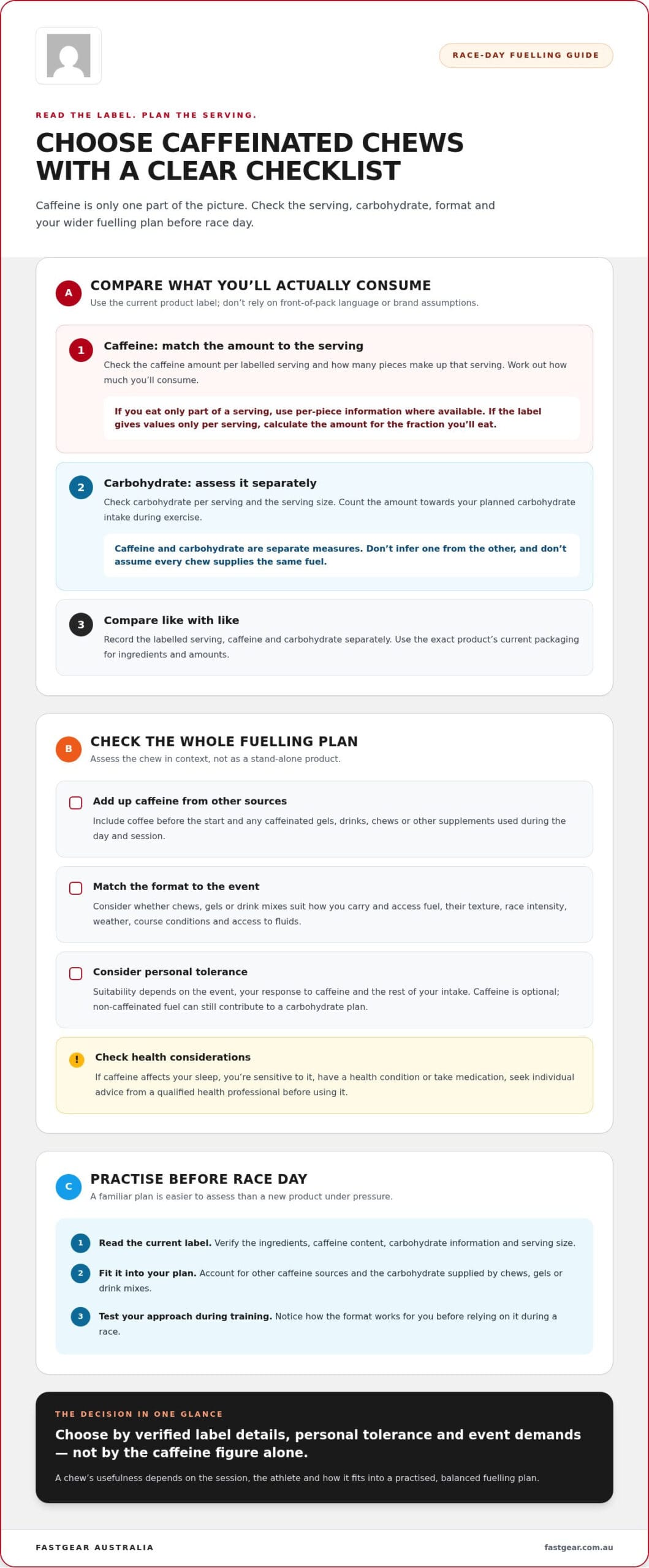
A good choice is about more than the caffeine figure on the front of a packet. Match the product to your event, fuelling plan and training experience. Use this checklist to compare caffeinated energy chews Australia athletes are considering without relying on marketing claims alone.
What to check before selecting a caffeinated chew
- Serving and caffeine: Confirm the labelled serving size and how much caffeine it provides. Check whether that amount refers to one piece, several pieces or a full pack.
- Carbohydrate: Read the carbohydrate information separately and work out how the serving contributes to your planned intake.
- Ingredients and allergens: Review the current ingredient and allergen information against your individual needs.
- Format and packability: Consider whether the chew is practical to carry, open and eat during your activity at the intensity you expect.
- Tolerance and event fit: Base your choice on training experience, event duration and conditions, and the caffeine you’ll consume from other planned sources.
Labels can change, so check the current product packaging and relevant Australian food information before relying on product claims. Don’t infer important details from a product name or range. Use verified label information to make the comparison.
Build a balanced endurance fuelling selection
Chews are one part of the plan. Consider how they work alongside gels, drink mixes and other fuel you expect to use, including the carbohydrate and caffeine each contributes. A mix of formats may suit your event better than relying on a single product, but keep the full plan practical and familiar. Your training trials are the best way to assess handling and tolerance.
Fastgear Australia’s endurance nutrition range includes Clif – BLOKS Energy Chews as an energy chew option, alongside gels and hydration products. Use the exact product label for its ingredients and nutrition details rather than assuming a particular chew contains caffeine.
Choose with purpose: compare the verified label, assess the format and make sure the product fits a fuelling plan you’ve practised. Ready to explore options? Browse Fastgear’s endurance nutrition range and find products to consider for your next training session.
Make Your Next Fuelling Choice with Confidence
The right chew earns its place by fitting your event and fuelling plan, not simply by containing caffeine. Compare the labelled caffeine and carbohydrate per serving, account for other caffeine sources, then test the product and its format during training before relying on it in a race.
For athletes comparing caffeinated energy chews australia options, current label details and personal tolerance matter more than front-of-pack claims. Caffeine is optional, and chews should work alongside the gels, drinks and other fuel in your plan.
Fastgear Australia’s endurance nutrition range includes Clif – BLOKS Energy Chews and products from Maurten, GU, SIS and Tailwind. Explore options that complement your fuelling approach with Fastgear’s endurance nutrition range.
Compare the options and choose a fuelling product to practise in your next training session. Explore Fastgear’s endurance nutrition range.
Frequently Asked Questions
Are caffeinated energy chews suitable for running?
Yes, caffeinated energy chews can suit running if you can carry, open and chew them comfortably while moving. Consider the distance, intensity and terrain, as chewing may feel less practical at a hard effort or on technical trails. Check the product’s caffeine and carbohydrate information, and include it in your overall fuelling plan. Test the format during training first, rather than relying on an unfamiliar chew during an event.
How much caffeine is in an energy chew?
The amount varies by product, flavour and labelled serving, so there’s no single caffeine figure for all energy chews. Read the current packaging and check whether the stated amount applies to one piece, a group of pieces or a full packet. Also note how many pieces you’ll actually consume. Count that amount alongside caffeine from coffee, gels, drinks and other supplements.
When should I take a caffeinated energy chew during a race?
There’s no universal race-day timing that suits every athlete or event. Your plan depends on the product directions, event demands, personal response and caffeine already consumed before or during exercise. Consider the chew as part of your full fuelling schedule, not as a standalone decision. Practise the timing in training and record how it feels; don’t use race day to test a new caffeine strategy.
Are energy chews better than gels for endurance exercise?
Neither format is automatically better. Chews may appeal if you prefer a chewable, portionable option, while gels may suit athletes who find chewing inconvenient during exercise. Handling, texture, access to fluids and personal tolerance all affect the choice. Compare current labels for carbohydrate and caffeine information, then test your preferred format in training. Choose what fits your fuelling plan and race conditions.
Can I use caffeinated chews with coffee or an energy drink?
You can include them in the same overall plan, but count caffeine from every source, including coffee, energy drinks, gels, chews and other supplements. Check each current label and serving size so you can estimate your total intake rather than judging one product in isolation. Individual tolerance varies. If you have a health condition, take medication or are concerned about caffeine, seek advice from a qualified health professional.
Should I try caffeinated energy chews for the first time on race day?
No. Test an unfamiliar product during a low-stakes training session first. Read the label, follow its directions, and record the amount and timing, taste, texture, stomach comfort, perceived energy and sleep afterwards. Keep other fuelling variables as consistent as practical so you can assess your response. If you experience concerning symptoms, stop using the product and seek appropriate medical advice.
How do I choose caffeinated energy chews in Australia?
If you’re comparing caffeinated energy chews Australia-wide, start with the current label for the exact product. Check caffeine per serving, serving size, carbohydrate information, ingredients and allergen details. Then assess whether the format suits your activity, event conditions and personal tolerance, and account for other fuel and caffeine sources in your plan. Fastgear Australia stocks Clif – BLOKS Energy Chews alongside gels and hydration products. Use each product’s label for its exact ingredients and nutrition details.
