
Uncategorized
Best Hydration Powder for Triathlon: Fuel Your PB in the Australian Heat
Aug
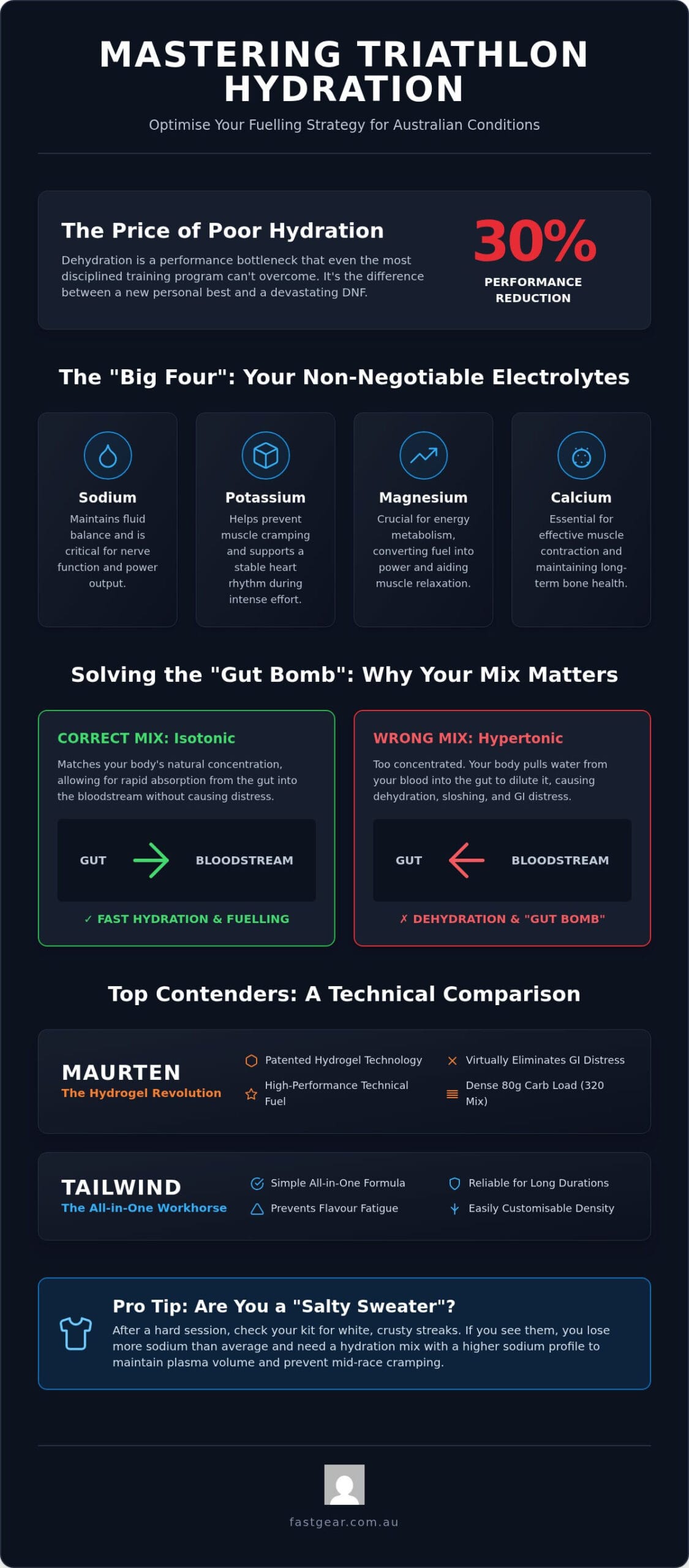
Dehydration can reduce your athletic performance by up to 30%, a margin that turns a podium finish into a desperate struggle just to reach the line. In the relentless Australian summer, where sweat rates skyrocket and humidity saps your resolve, choosing the best hydration powder for triathlon is the difference between a new PB and a devastating “gut bomb” mid-race. You’ve likely felt that leaden weight in your stomach or the sharp tang of flavour fatigue during a long-course event. It’s a performance bottleneck that even the most disciplined training programme can’t overcome.
We’re here to ensure your engine doesn’t overheat. This guide will help you master your race-day fuelling with an expert analysis of the most effective hydration powders for Australian conditions. We’ll examine the technical advantages of hydrogel technology, the precision of isotonic formulations, and how to maintain stable energy levels from the first transition to the final chute. It’s time to optimise your intake, eliminate GI distress, and secure your recovery with nutrition that works as hard as you do.
Key Takeaways
- Understand why the “Big Four” electrolytes are non-negotiable for maintaining power output during high-intensity efforts in the Australian sun.
- Identify the best hydration powder for triathlon by comparing the technical benefits of hydrogel technology against simplified all-in-one endurance fuels.
- Eliminate GI distress by learning how to prevent malabsorption and the dreaded “osmotic pull” that often causes mid-race stomach issues.
- Customise your fuelling strategy for every distance, ensuring you hit the run with stable energy levels and optimal fluid balance.
- Access a curated range of pro-level nutrition with reliable national delivery, getting your fuel to the start line before your taper starts.
The Science of Triathlon Hydration in the Australian Climate
Tap water is fine for a 30-minute jog around the block. For a three-hour-plus effort under the Australian sun, it’s a recipe for disaster. Water alone lacks the solutes needed to drive absorption into the bloodstream. It just sits in the gut, causing that uncomfortable “slosh” while your cells remain parched. The Science of Sports Drinks highlights that effective hydration requires a precise balance of minerals to replace what’s lost in the field. Without these, your power output will inevitably crater as your nervous system struggles to fire.
The “Big Four” electrolytes are your performance insurance. Sodium maintains fluid balance and nerve function. Potassium prevents muscle cramping and supports heart rhythm. Magnesium is critical for energy metabolism and muscle relaxation. Calcium remains essential for muscle contraction and bone health. Your body can’t manufacture these on the fly. You must ingest them in a form your gut can actually process under stress.
Drink concentration, or osmolality, dictates how fast fluids leave your stomach. If the mix is too thick, your body actually pulls water out of your blood into the gut to dilute it, causing dehydration and distress. An isotonic hydration mix matches the body’s natural solute concentration, facilitating rapid gut transit and immediate electrolyte absorption without causing gastric distress.
Sweat Rates and Sodium Loss
Australian humidity is a silent performance killer. It prevents sweat from evaporating, causing your core temperature to spike and your sweat rate to increase without you noticing the cooling effect. This massive fluid loss puts you at risk of hyponatremia if you replace salt loss with plain water. You can identify if you’re a “salty sweater” by checking for white, crusty streaks on your kit after a session. If you see them, you need the best hydration powder for triathlon with a higher sodium profile to maintain your plasma volume and prevent mid-race cramping.
The Carbohydrate Connection
Modern endurance powders aren’t just for electrolytes. They’re often your primary fuel source. The most effective options use a 2:1 glucose to fructose ratio. This setup uses different intestinal transporters, allowing you to absorb more carbohydrates per hour than glucose alone could manage. It’s a delicate balancing act. You need enough energy density to avoid the “bonk,” but not so much that you trigger a “gut bomb.” Finding the best hydration powder for triathlon involves matching your gut’s absorption window to the intensity of your race pace, ensuring you have the glycogen required for a strong finish.
Evaluating the Top Hydration Contenders: Maurten vs. Tailwind vs. SIS
Choosing the best hydration powder for triathlon requires more than just picking a flavour you like. You’re selecting a delivery system for the energy and electrolytes that will sustain you through the Australian heat. The market is dominated by three heavyweights, each offering a distinct physiological advantage. Whether you need an all-in-one liquid fuel or a high-tech hydrogel that bypasses the stomach, your choice should align with your gut’s tolerance and your race-day intensity.
Maurten 160 and 320: The Hydrogel Revolution
Maurten has redefined endurance nutrition with its patented hydrogel technology. By encapsulating high concentrations of carbohydrates in a pH-sensitive structure, maurten 320 powder converts into a gel once it hits the acidity of your stomach. This allows the fuel to bypass the gastric stage entirely, moving straight to the intestine for rapid absorption. It’s a high-performance solution that virtually eliminates the “gut bomb” effect. For lighter training days or shorter sprint distances, maurten 160 powder provides a lighter carb load, while the 320 variant offers a dense 80g of carbohydrates per 500ml bottle. It’s the technical choice for athletes chasing serious PBs.
Tailwind Powder: The Endurance Workhorse
Tailwind is the preferred choice for athletes who value simplicity and reliability over long durations. Their “all-in-one” philosophy combines fuel, electrolytes, and hydration into a single bottle, potentially allowing you to ditch gels entirely. A key advantage of tailwind powder is its clean flavour profile. It avoids the cloying sweetness that leads to flavour fatigue during the middle and late stages of an Ironman. You can easily customise your intake by adjusting the number of scoops per bottle, giving you total control over your calorie density. It’s an efficient, gut-friendly workhorse that excels when the hours start to stack up.
SIS GO Isotonic: Rapid Absorption
Precision is the hallmark of Science in Sport (SIS). Their isotonic approach ensures the drink matches the concentration of your blood, facilitating immediate absorption without the need for extra water. This makes it an ideal “top-up” hydration source, especially when paired with SIS – GO Isotonic Gels for a targeted energy boost. The mixability is excellent, ensuring no gritty residue remains in your cycling bottles. If your priority is rapid rehydration and maintaining electrolyte balance during high-intensity intervals, SIS provides the scientific rigour required to stay ahead of the pack. You can explore our curated range of pro-level nutrition to find the exact mix that fits your racing profile.
Solving the Gut Distress Puzzle: Why Your Powder Might Be Failing You
Gastrointestinal distress is the primary reason for DNFs in long-course racing. It’s rarely a failure of fitness; it’s a failure of physiology. When your heart rate climbs toward threshold, your body shunts blood away from the digestive system to prioritise the working muscles. This reduced blood flow makes your gut significantly less efficient at processing high volumes of sugar. If you continue to force-feed a concentrated mix, you create a “gut bomb” that sits heavy in your stomach, eventually leading to nausea or a forced stop. Finding the best hydration powder for triathlon requires a product that respects these physiological limits.
A common mistake is creating a hypertonic environment in the small intestine. When you ingest a drink with a sugar concentration higher than your blood, your body initiates an “osmotic pull.” It draws water out of your bloodstream and into the gut to dilute the solution. This process causes immediate dehydration and often results in osmotic diarrhoea. Training your gut in the weeks leading up to your A-race is essential. You must practice your exact race-day protocol during your long rides and runs to ensure your digestive system can handle the carbohydrate load under stress.
Identifying the “Gut Bomb” Triggers
Environmental factors in Australia frequently exacerbate digestive issues. In the peak of summer, a bike bottle left in the sun can reach temperatures exceeding 40°C. Warm fluids significantly slow down gastric emptying, causing the liquid to “slosh” uncomfortably as you hit the run. Mixing different brands can also be a gamble. If you combine the complex carbohydrate profile of maurten 320 powder with a random high-fructose gel, you might overwhelm your gut’s specific transport windows. Stick to a proven system that uses compatible carbohydrate sources to ensure consistent absorption.
Isotonic vs. Hypertonic: Knowing the Difference
Isotonic powders are designed to match the solute concentration of your blood. This allows for the fastest possible fluid transfer, making them the superior choice for the run leg when your digestive capacity is at its lowest. Hypertonic drinks, while high in energy, are best reserved for the bike leg where the lower intensity allows for slightly more complex processing. If you feel the tell-tale signs of a “slosh” or stomach pressure, sip plain water immediately. This helps dilute the concentrated fuel in your gut, effectively “correcting” the mix back to an isotonic state. Choosing the best hydration powder for triathlon means understanding these mechanics to keep your engine running smoothly until the finish line.
Race-Day Hydration Strategy: From Sprint to Ironman
Your hydration plan must evolve with the race clock. A Sprint distance effort requires a different physiological approach than an Ironman. In the Australian heat, pre-loading is your first line of defence. Drink a high-sodium mix the night before and the morning of the race to expand your plasma volume. This provides a critical buffer against the fluid loss you’ll experience during the swim and early bike legs. To calculate your personal sweat rate at home, weigh yourself naked before a one-hour race-pace session. Consume no fluids. After the hour, towel off and weigh yourself again. Every 1kg of weight lost represents 1 litre of fluid lost per hour.
Sprint and Olympic Distance: High Intensity, Low Volume
Short-course racing is a high-intensity “red zone” effort. You don’t need massive carbohydrate hits; you need rapid absorption to maintain your pace. A single 500ml bottle of maurten 160 powder is often sufficient for the bike leg. It provides enough energy to keep your glycogen stores topped up without the weight of excess fluid. On the run, a “sip and spit” strategy at aid stations can provide a sensory cooling effect and a small glucose boost. This keeps your mouth fresh and your mind sharp for the final 5km kick to the finish line.
70.3 And Ironman: The Long Game
Long-course racing is an exercise in managed depletion. You should target 60-90g of carbohydrates per hour to avoid the “bonk.” Using the “concentrated bottle” technique is the most efficient way to manage this load on the bike. Mix your total required tailwind powder or maurten 320 powder into one or two bottles. Sip plain water from course aid stations to wash it down. This prevents the cloying sweetness of flavour fatigue and ensures you meet your electrolyte requirements. It’s the most reliable way to use the best hydration powder for triathlon during an eight-hour-plus effort.
The “Bike-to-Run” transition is where many athletes fail. The shift from a seated position to the vertical, high-impact movement of running causes significant fluid shifts in the gut. Finish your primary hydration bottle at least 10-15 minutes before entering T2. This gives your stomach time to empty before the mechanical jarring of the run begins. Ready to dial in your race-day kit? Shop our professional endurance range to secure your fuel before your next event.
Why Fastgear Australia is Your Performance Hydration Partner
Fastgear Australia isn’t a generalist retailer. We’re a performance partner for athletes who demand the absolute best from their bodies and their equipment. Our warehouse only stocks the products we trust on the start line. From the humidity of the Cairns Ironman to the dry heat of Western Australia, we understand the specific environmental stressors of the Australian triathlon circuit. This firsthand experience allows us to curate the best hydration powder for triathlon, ensuring every sachet we sell is backed by sports science and real-world results.
Logistics shouldn’t be a source of pre-race anxiety. We provide reliable national delivery across Australia, ensuring your nutrition plan is locked in well before your taper begins. We know that a missed delivery can derail months of disciplined training. That’s why we prioritise speed and clarity in our shipping process, getting your pro-level fuel to your door so you can focus on the final sessions. You don’t have time to chase parcels; you have a race to win.
Beyond the Powder: Completing Your Race Kit
Performance is a puzzle of marginal gains. While your hydration strategy prevents the “bonk,” your equipment dictates your efficiency. Optimise your bike split by pairing your liquid fuel with the Wove M8 Saddle, a technical solution designed for aggressive aero positions without compromising comfort. For the run leg, eliminate the bounce of loose nutrition by using the Compressport Free Belt Pro. It’s the most efficient way to carry your gels and salt tabs while maintaining a streamlined profile. We also stock the Mugiro Neck Protector to prevent wetsuit chafing during those long salt-water swims, keeping your focus on the water rather than the burn.
Ready to Smash Your Next PB?
The difference between a mid-pack finish and a podium often comes down to the details of your fuelling protocol. Browse our comprehensive range of endurance sports nutrition Australia to find the products that match your sweat rate and energy needs. If you’re looking for the gold standard in gut-friendly energy, stock up on Maurten Gel Australia for your next big training block. Join the Fastgear community of high-performance athletes today and step onto the pontoon with total confidence in your kit. Your best performance starts with the right fuel.
Secure Your Next PB with Precision Fuelling
Mastering your hydration is as critical as your power-to-weight ratio or your swim stroke. You’ve seen how the right electrolyte balance prevents cramping and how technical solutions like hydrogels bypass the gut to deliver energy without distress. Finding the best hydration powder for triathlon is the final piece of your performance puzzle. Whether you’re redlining in a Sprint or managing depletion over an Ironman, your fuel must be as disciplined as your training programme.
Fastgear Australia is your dedicated partner in this journey. As an official Maurten and Tailwind stockist, we only provide products that have been rigorously tested by Australian endurance athletes in the harshest conditions. We ensure your race kit is locked in with fast national shipping that reaches you well before the starting gun. It’s time to stop guessing and start executing with precision. Optimise your race-day fuel with Fastgear Australia’s premium hydration range and step onto the course with total confidence. Your new personal best is waiting.
Frequently Asked Questions
What is the best hydration powder for a hot Ironman 70.3?
Tailwind is arguably the best hydration powder for triathlon during a hot 70.3 because it provides a complete electrolyte profile alongside steady carbohydrate delivery. In the Australian heat, you need a mix that replaces the high sodium losses typical of humid race conditions. Maurten 320 is another top-tier choice if you prefer hydrogel technology to protect your gut while maintaining a high energy intake of 80g of carbs per bottle.
Can I mix different brands of hydration powder in one bottle?
Mixing brands in a single bottle is generally discouraged because it can disrupt the specific carbohydrate ratios designed for optimal absorption. For instance, combining a 2:1 glucose to fructose mix with a different maltodextrin-heavy powder may overwhelm your gut’s transporters. This increases the risk of GI distress and malabsorption. Stick to one proven system per bottle to ensure your body processes the fuel efficiently during high-intensity efforts.
How many grams of carbs should I aim for per hour during a triathlon?
Target between 60g and 90g of carbohydrates per hour for events lasting longer than two hours. Some elite athletes can process up to 120g using advanced hydrogel products like Maurten, but this requires significant gut training. Start at the lower end of this range during your long brick sessions. Use your chosen best hydration powder for triathlon to hit these numbers consistently without relying solely on solid food, which is harder to digest.
Is it better to use hydration tablets or powders for racing?
Powders are superior for racing because they provide the essential carbohydrate fuel needed to sustain your power output. Most hydration tablets contain electrolytes but negligible calories, making them better suited for short recovery sessions or very low-intensity training. During a race, you need the dual benefit of fluid replacement and glycogen sparing. High-performance powders from SIS or Tailwind deliver both in a single, easily absorbed solution.
What should I do if I start feeling nauseous during the bike leg?
Immediate nausea usually indicates your gut is struggling with a hypertonic environment. Stop ingesting concentrated fuel and switch to small sips of plain water to help dilute the contents of your stomach. This encourages gastric emptying and helps “reset” your digestive system. Reducing your intensity by 5-10% for a brief period can also redirect blood flow back to the gut to assist with processing the remaining fuel.
How do I prevent flavour fatigue during a long-distance triathlon?
Flavour fatigue is common during middle and long-course events when cloying sweetness becomes unpalatable. Prevent this by choosing “naked” or neutral-flavoured powders like Tailwind. Alternating between your fuel bottle and sips of plain water from aid stations also helps cleanse the palate. Some athletes find success by switching between a caffeinated and non-caffeinated flavour to provide a sensory change that keeps the mind and gut engaged.
Should I use a different hydration powder for training versus racing?
Never use a new product on race day. You must use the same hydration powder in training that you intend to use during your event to “train the gut.” This allows your digestive system to adapt to the specific carbohydrate concentration and electrolyte profile. While you might use a lower calorie density for shorter training sessions, the brand and formulation should remain consistent to avoid any unpleasant surprises under race-day stress.
Does caffeine in hydration powders actually improve performance?
Caffeine is a proven ergogenic aid that reduces your rate of perceived exertion and improves mental focus during the later stages of a race. Products like Maurten 320 CAF 100 provide a controlled dose that can help you maintain intensity when fatigue sets in. It’s particularly effective during the final third of the bike leg or the start of the run. Always test your caffeine tolerance during training to avoid jitters.
