
Uncategorized
Triathlon Wetsuit Neck Rub Prevention: Apply Balm and Adjust Your Suit
Oct
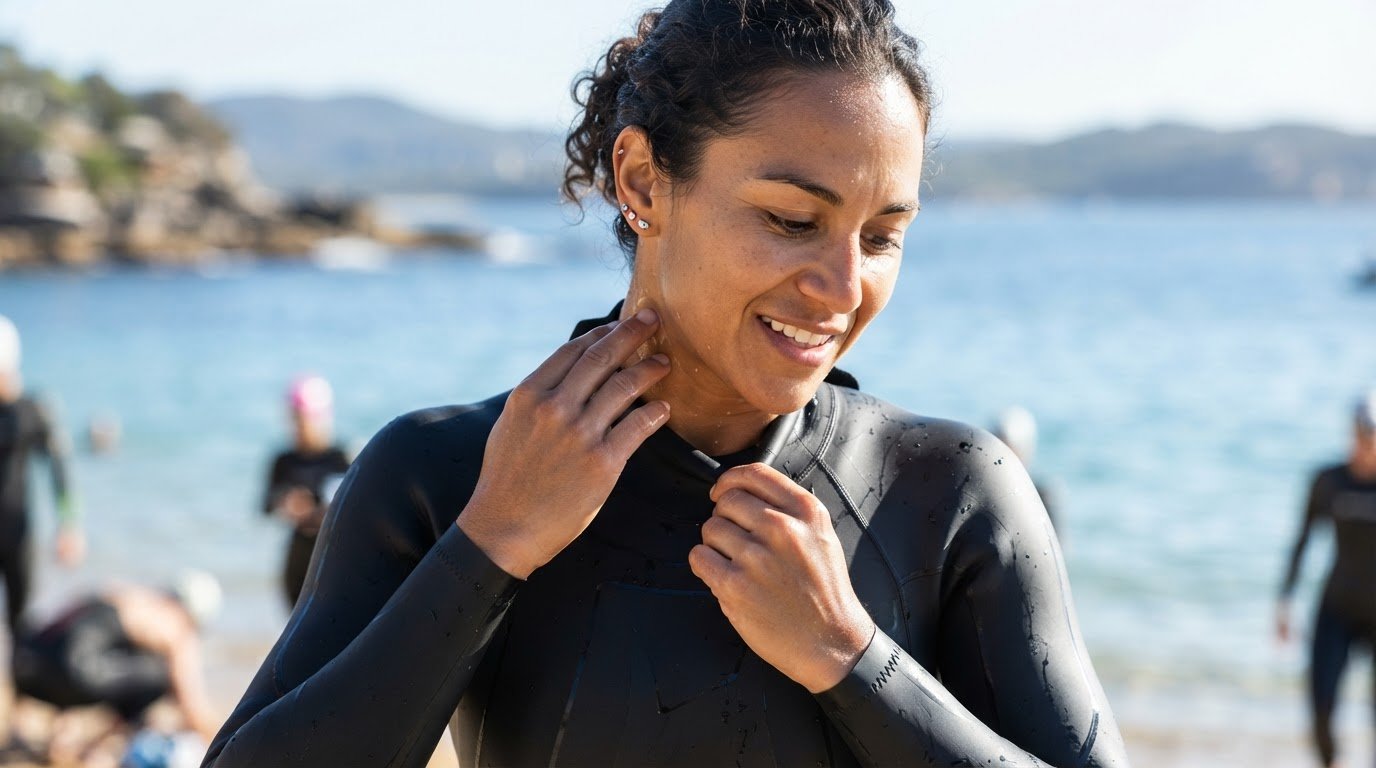
Balm is a backup, not the first fix. For triathlon wetsuit neck rub prevention in Australia, start with a close, comfortable fit, pull the suit into place without leaving slack, and refine your sighting position. If rubbing continues, apply a thin, even layer of swim-appropriate anti-chafe balm. The neckline should feel secure without pressing into your throat or riding beneath your jaw.
Irritation can build when moisture and friction meet at the collar, especially during repeated head lifts in open water. A quick application of lubricant may help, but address fit and swimming mechanics first.
Here’s how to reduce friction before race day. Learn what to check in wetsuit materials, seams and neck design, where to apply balm, and how to adjust your suit so you can focus on your swim, not your skin.
Key Takeaways
- Address suit fit and swimming mechanics first: practise a compact sight with your chin low before relying on balm.
- Choose a neckline that sits securely without pressing into your throat or riding under your jaw.
- Apply a thin, even layer of swim-appropriate anti-chafe balm to friction-prone areas, and avoid petroleum jelly on neoprene.
- Pull the suit up in stages from the ankles, removing slack through the legs and hips before setting the shoulders.
1. Ask A Gear Guru: How To Prevent Triathlon Swim Chafing
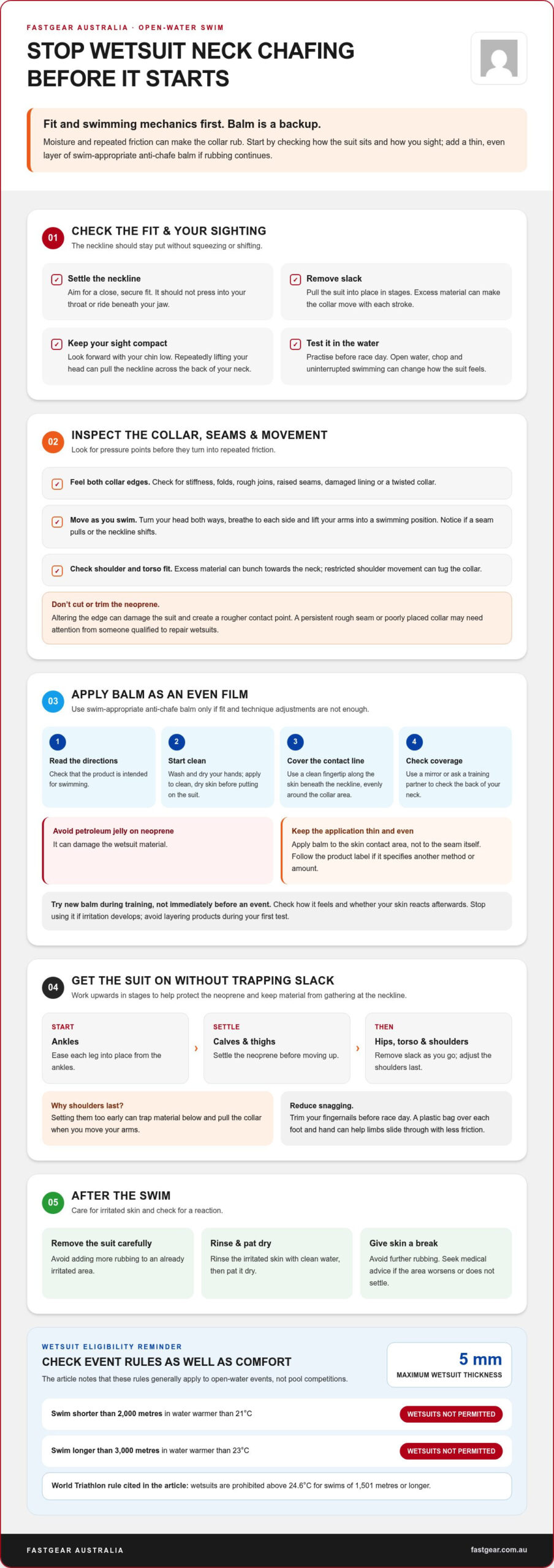
Start with the cause, not the sore patch. Wetsuit neck chafing develops when moisture and repeated friction press the collar against your skin. A neckline that sits too high, shifts during swimming or compresses your throat can increase rubbing. Poor fit or slack in the suit can also make the collar move with each stroke.
Swimming mechanics matter. Repeatedly lifting your head to sight can pull the neckline across the back of your neck. Practise in your wetsuit before race day, then use a compact open-water sight: look forward with your chin low. Test the suit in open water, where chop and uninterrupted swimming can change how it feels. Address fit and technique before relying on balm.
For Australian triathlon swims, wetsuit eligibility depends on water temperature and swim distance. Swims shorter than 2,000 metres in water warmer than 21°C do not permit wetsuits; swims longer than 3,000 metres in water warmer than 23°C also do not permit them. Triathlon wetsuits are limited to 5 mm maximum thickness. These rules generally apply to open-water events, not pool competitions. According to the National Center for Biotechnology Information, cited World Triathlon rules prohibit wetsuits above 24.6°C for swims of 1,501 metres or longer.
If rubbing continues after you adjust fit and sighting, apply a thin, even layer of swim-appropriate anti-chafe balm to your neck before swimming. Avoid petroleum jelly, which can damage neoprene. Aim for an even film, not a thick coating. After swimming, remove the suit carefully, rinse the irritated area with clean water and pat it dry. Give chafed skin a break from further rubbing, and seek medical advice if the area worsens or doesn’t settle.
2. Wetsuit materials, seams and neck design
Neoprene needs to flex with your shoulders and neck during each stroke. If the collar edge feels stiff, folds or catches your skin as you turn, friction can build over repeated lengths. Before swimming, feel the inside and outside edges around the neckline. Check for rough joins, raised seam edges, damaged lining or a twisted collar that could press against one spot.
Seam placement determines where material meets your skin. A seam against the back or side of your neck may become noticeable as your head rotates to breathe. Check the collar while turning your head both ways, then lift your arms into a swimming position. If the seam pulls or the neckline shifts, reassess the suit’s fit rather than cutting or trimming the neoprene. Altering the edge can damage the suit and create a rougher contact point.
Can wetsuit collar, zipper or seam adjustments reduce neck chafing? Yes. Correcting a twisted collar or repositioning the suit can ease pressure and movement at the neckline. A persistent rough seam or poorly placed collar may need attention from someone qualified to repair wetsuits. Don’t make an untested cut before a race.
Neck comfort also depends on shape. The edge should sit close and secure without pressing into your throat or riding high beneath your jaw. Test it while looking forward, breathing to both sides and reaching through a full stroke. A collar that feels fine when standing can shift as your shoulders move through the swimming action.
Women’s and men’s wetsuits may use different body shaping, but labels alone don’t determine comfort. Compare how the torso, shoulders and neckline sit on your body. Excess material near the shoulders, for example, can bunch towards the neck, while restricted shoulder movement can tug the collar with each stroke. Look for even contact, unrestricted rotation and a neckline that stays in place as you move. Test the suit in the water before race day, because wet neoprene and repeated strokes can reveal pressure points a quick dry fitting misses.
3. Applying anti-chafe balm to skin and wetsuit seams
Make balm application part of your pre-swim routine, not a last-minute guess. Read the product directions first, especially instructions about where and how to apply it. Wash and dry your hands before handling the balm to avoid transferring sand, sunscreen or grit to the area.
For controlled application, use a clean fingertip to place the product along the skin-contact line beneath the neckline. Apply it around the collar’s full contact area, not to the seam itself. Keep the application even on both sides of your neck, and follow the label if it specifies another method or amount.
- Read the directions and make sure the product is intended for swimming.
- Apply it to clean, dry skin before putting on the wetsuit.
- Use a mirror or ask a training partner to check coverage around the back of your neck.
- After swimming, rinse the skin and inspect it for any reaction before using the product again.
Try a new balm during training, not immediately before an event. Note how it feels during the swim and whether your skin reacts afterwards. Stop using it if irritation develops. Don’t layer several products during your first test, as that makes it harder to identify the cause of a reaction.
4. Putting on and adjusting a wetsuit correctly
Careful donning protects neoprene and helps prevent excess material gathering at the neckline. Trim your fingernails before race day, as a sharp nail can nick the suit while you pull it on. A plastic bag over each foot and hand can help the limbs slide through with less friction and reduce snagging.
Work upwards in stages. Pull the suit from the ankles, settling the neoprene over your calves and thighs before moving to your hips. Remove slack as you go, then adjust the torso and shoulders. Setting the shoulders too early can trap material below and pull the collar when you move your arms.
- Ease each leg into place from the ankles, using small adjustments rather than tugging hard.
- Lift and distribute the material over your hips, smoothing folds around the groin.
- Set the torso and shoulders only after the legs and hips sit correctly.
- Check the collar, then raise your arms and rotate your head to test movement.
A well-adjusted suit should feel snug, without baggy areas around the armpits or groin. Loose sections can let water pool and shift the suit as you swim. The neckline should stay close without pressing into your throat. Recheck it after moving your shoulders, since the collar can shift while you put the suit on.
Water-based lubricant can make a wetsuit easier to put on and remove. Keep petroleum jelly away from neoprene because it can degrade the material. A snug fit matters after the neoprene stretches during its first hour or two in water, so test your suit in a swim before race day. Notice whether material bunches beneath your arms or pulls at your neck during a full stroke.
Once the suit sits smoothly, complete your swim setup with swimming goggles for your open-water session.
Fastgear Australia: Compressport Trail Racing SS Tshirt
Fastgear Australia offers the Compressport Trail Racing SS Tshirt for athletes preparing their wider race kit. It won’t adjust a wetsuit or prevent neck chafing, but it can complement the swim gear and fit checks covered here as part of your multisport preparation.
For other race-day kit, Fastgear Australia also offers the Compressport Free Belt Pro, GU Energy Gel – Single and Clif – BLOKS Energy Chews. Choose equipment and fuelling products suited to your event, while keeping wetsuit comfort decisions focused on fit, donning technique and swim-appropriate balm.
Explore the Compressport Trail Racing SS Tshirt and other race essentials at fastgear.com.au.
Make your next swim a deliberate test
Make race preparation a repeatable check. Use a training swim to assess how your wetsuit feels once you’re moving, then note where rubbing begins and what changes when you adjust your stroke or collar. This gives you a practical basis for refining your setup before race day. Effective triathlon wetsuit neck rub prevention in Australia starts with observing your own response, not adding more product by default.
Build the rest of your race kit around your event. Fastgear Australia offers the Compressport Trail Racing SS Tshirt, GU Energy Gel – Single and Compressport Free Belt Pro for athletes preparing their multisport essentials. These products are separate from wetsuit fitting, but can support your broader race-day preparation.
For questions about your gear, contact Fastgear Australia. Take your next session with a clear plan, make one adjustment at a time, and arrive ready to race.
Frequently Asked Questions
Ask A Gear Guru: How Do I Prevent Chafing In A Triathlon Swim?
Use a simple pre-session check to identify what triggers discomfort. Note your suit, any product applied, the swim conditions and the affected area after each session. Change one part of your setup at a time, such as your sighting technique or application routine. This makes comparisons more useful than changing several things before one swim and guessing which adjustment helped.
What is Wetsuit Rash?
“Wetsuit rash” describes irritation associated with wearing a wetsuit, rather than a specific cause. If a mark appears beyond the suit’s contact area, consider whether something else may be involved, such as a product used on your skin or clothing worn underneath. Track where and when irritation appears; the pattern can help you decide what to adjust next.
What causes neck chafing from a triathlon wetsuit?
Look beyond the collar’s general fit and inspect the exact point that becomes sore. A damaged edge, small fold or grit caught between skin and suit can create a localised hotspot. After removing the wetsuit, compare the irritated area with the collar’s contact line and inspect that section closely. This can help distinguish one rough spot from movement across a wider area.
How should a triathlon wetsuit fit around the neck to prevent rubbing?
Assess the neckline with the zip fully closed, since fastening can change how the upper suit sits. Check whether the collar edge lies flat and whether the zip pull or nearby material presses against your skin. Then reach forward as you would during a stroke. If one side pulls tighter, redistribute the suit before deciding whether the neckline itself is unsuitable.
How do you apply lubricant to prevent wetsuit neck rub?
Use the product label as your guide, because application instructions can vary between formulations. Keep the container accessible during training so you can repeat the same routine next time. Avoid combining a new balm with another newly introduced skin product during the same test. If you notice an unwanted skin reaction, stop using the product and review its directions.
How can swimmers prevent neck rub during triathlon wetsuit training?
Make training comparisons controlled. Use the same wetsuit and swimwear for a session, then compare the result with a later swim after changing one element. Note whether discomfort starts during the warm-up or only after sustained effort. That timing can help you identify whether the issue appears immediately or builds as the session progresses.
