
Uncategorized
How to prevent wetsuit collar chafing while swimming
Oct
Collar friction is the main issue to control: wear a wetsuit that fits snugly without restricting movement, smooth out folds, and apply anti-chafe balm to your neck before swimming. For wetsuit chafing prevention at the collar in Australia, pay attention to repeated head turns, which can make the collar rub the same patch of skin with every stroke.
If your neck feels raw after a swim, that small contact point can have a noticeable effect. Wet skin, saltwater and repeated movement can all contribute to irritation. This guide explains what causes wetsuit chafing, where it commonly occurs, and how collar fit and head movement can affect your neck during a triathlon swim.
Use these steps to reduce friction before entering the water, spot fit issues and care for irritated skin after a session. Small adjustments can help you focus on your swim rather than collar rub.
Key Takeaways
- Reduce collar rubbing by choosing a snug wetsuit that still allows free head and shoulder movement.
- Apply anti-chafe balm to the neck and other high-friction areas before putting on your wetsuit.
- Check for folds or seams that press against your skin, especially where repeated head turns make the collar shift.
- After swimming, rinse your skin and wetsuit with fresh water, then let the suit dry completely.
What causes wetsuit chafing?
Wetsuit chafing develops when wet skin repeatedly rubs against neoprene, seams or folds. Identify the friction point and reduce irritation with these practical steps.
Check common chafing locations and causes
After swimming, inspect your neck, underarms, wrists, ankles, inner thighs and lower back. Redness in one spot can indicate repeated contact from a collar edge, seam or shifting material. A loose suit may move against your skin; an overly tight suit can also increase pressure and irritation. Before swimming, smooth out folds and check that the suit sits evenly.
Silicone-based lubricants, shea butter and aloe vera gel are used before water sessions as wetsuit-compatible anti-chafe options. Avoid petroleum jelly, which can damage and deteriorate neoprene. Reposition the collar and smooth out folds to adjust its fit. Don’t trim the collar, as cutting can damage the material.
Identify wetsuit rash and its causes
Look for redness, irritation or sore patches where the suit has rubbed. Wetsuit rash refers to this skin irritation; repeated friction, prolonged wear while wet and sensitive skin reacting to neoprene can contribute. A poorly fitting suit, thick seam or fold may concentrate rubbing in one area. Note where symptoms appear and whether they follow the collar line or another contact point.
For a mild neck abrasion, rinse the skin with fresh water and apply a soothing cream such as aloe vera gel. Keep the area clean and dry, and avoid scratching. Stop swimming if pain, discomfort or redness develops. Seek advice from a healthcare professional if you notice swelling, increasing redness or signs of an allergic reaction.
Account for salt water, sweat and sunscreen
Consider what your skin and suit encounter during a session. Saltwater can dry skin, while sweat and prolonged time in wet gear can add to irritation when movement repeatedly rubs the same area. Chlorinated water can also dry skin. Rinse your skin and wetsuit with fresh water after swimming, then let the suit dry completely.
Salt and chlorine left on a wetsuit can contribute to stiffness as the neoprene degrades, potentially increasing friction. Sunscreen is not identified as a direct cause here, but residue can remain on skin and gear. Rinse away residue and sand, and follow the wetsuit care label to help keep the material supple.
Common areas affected by swimming
Map friction points after each swim, then focus prevention on the areas where your skin and equipment repeatedly meet.
- Inspect your neck first, especially beneath the collar and along its edges. Head turns and breathing can shift the suit against the same patch of skin. Apply anti-chafe balm to your neck before dressing, and note whether irritation follows one side or the full collar line.
- Check your underarms after swimming, where arm recovery repeatedly moves skin against suit material. Apply balm to your armpits before putting on your wetsuit. If redness appears on one side, compare the seam position and folds on both sides.
- Check your wrists and ankles where the suit openings contact your skin. Balm on these areas can also help the wetsuit slide off more easily during race transitions. Rinse away sand and residue after swimming, as it can collect around cuffs and increase rubbing during removal.
- After longer or more intense sessions, check your inner thighs and lower back. Leg movement can increase friction between the thighs, while suit movement may rub your lower back. Apply balm to specific problem areas rather than indiscriminately.
- Track where irritation appears after each swim. A repeated mark at the neck points to collar contact; an underarm patch may indicate arm movement or a fold. Rinse your skin with fresh water after the session, and keep chafed areas clean and dry between swims.
Comfort also depends on clear underwater vision and a consistent swim setup. Explore swimming goggles as another practical part of your gear preparation.
Apply anti-chafe balm to areas where rubbing is a concern, including the neck, underarms, wrists, ankles, inner thighs and lower back. Recommended application points also include the armpits, neck, wrists, thighs and ankles. Focus on places that need attention rather than applying balm everywhere without a specific reason.
Keep the choice tied to where irritation appears: a recurring concern at the neck, underarms, wrists, ankles, inner thighs or lower back gives a specific place for application. The recommendation also names the armpits, neck, wrists, thighs and ankles, alongside individual problem areas. Recheck those locations after swimming and let the areas showing irritation guide where balm is applied before the next swim.
Head movement and collar friction
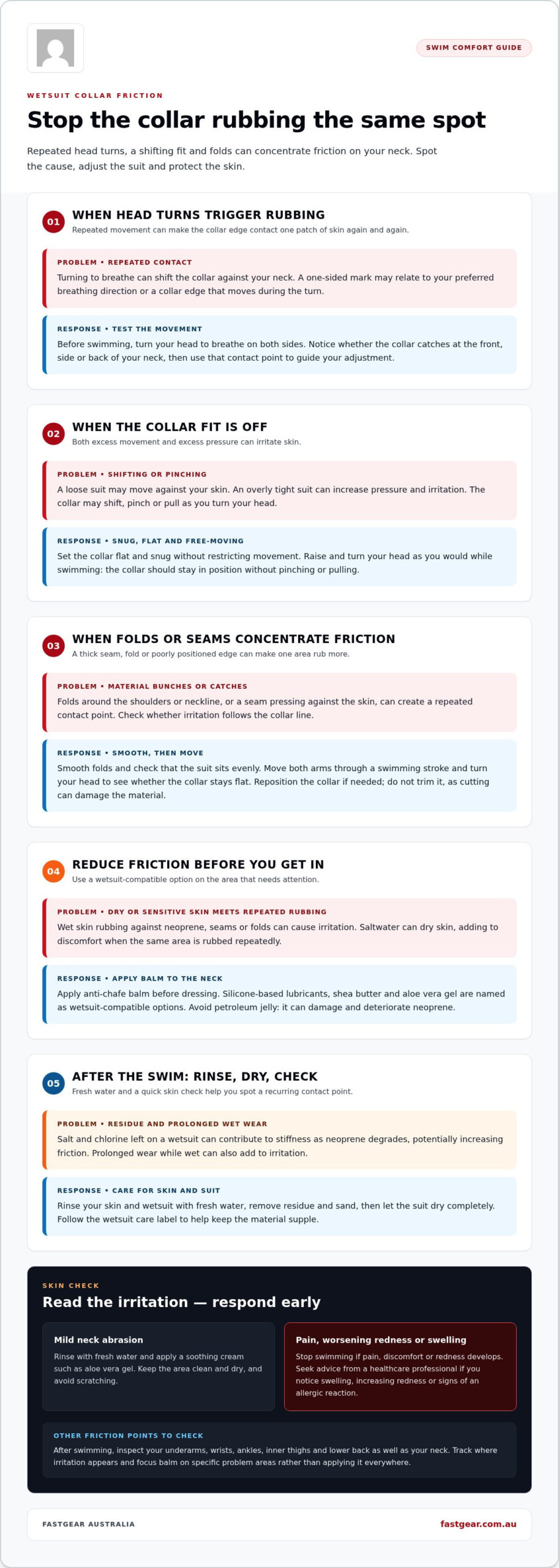
Repeated head turns can make a wetsuit collar rub the same patch of skin. Test your suit’s movement and fit before swimming, then adjust any pressure points.
Notice head movement and collar friction
Test the collar while turning your head to breathe on both sides. Wetsuit collar chafing can develop when repeated movement pushes the edge against your skin, especially if the collar shifts or folds. Thick or poorly positioned seams can add friction. Note whether the collar catches at the front, side or back of your neck.
If you’re in Australia and searching “wetsuit chafing prevention collar australia”, start by identifying which movement triggers rubbing. A one-sided mark may point to your preferred breathing direction or a collar edge that moves during the turn.
Check collar fit to prevent rubbing
Set the collar flat and check that it sits snugly without restricting movement. A loose fit can shift with each head turn, while excessive tightness can increase pressure and irritation. Raise and turn your head as you would while swimming. The collar should stay in position without pinching or pulling.
- Check the whole suit, not just the collar. Smooth folds around the shoulders and neckline, then move both arms through a swimming stroke. If the suit pulls the collar out of place, reassess how it sits across your shoulders and upper back. Flatlock seams are designed to minimise skin friction, while bulky seams or folds can create localised rubbing.
Repeat the movement test after adjusting the suit. Turn your head from side to side, look forward, then return to neutral. Notice any edge that drags over your skin or restricts your breathing motion. For wetsuit chafing prevention at the collar, Australian athletes can use this simple check to pinpoint whether fit, seams or head movement needs attention before the next swim.
Neck chafing during triathlon swims
Prevent neck chafing by reducing collar friction before entering the water. For a triathlon, combine a fit check, targeted lubricant and movement test.
Identify neck chafing during triathlon swims
After a swim, inspect the collar line for redness or sore patches. Note whether irritation appears beneath the front edge, along one side or near the back of your neck. A localised mark can reveal where the collar repeatedly rubs as you turn to breathe. Record its location so you can adjust the fit before your next session.
Prevent wetsuit neck chafing
Before dressing, apply anti-chafe balm to your neck and other high-friction areas, such as your thighs and underarms. Silicone-based lubricants, shea butter and aloe vera gel are used before water sessions to reduce friction without affecting wetsuit performance. Focus application on skin contact points, not the entire suit.
- Run a movement check before your triathlon start. Turn your head to each side, look forward, then mimic a breathing stroke. The collar should remain flat and snug without restricting movement. Smooth any folds that shift against your neck, and reposition the suit if its edge catches during a turn.
- Respond early if rubbing starts during a session. Pain, discomfort or redness are reasons to stop the activity, and scratching irritated skin can make it worse. After swimming, rinse your skin and suit with fresh water. If the area becomes swollen, increasingly red or shows signs of an allergic reaction, seek advice from a healthcare professional.
Prepare your swim setup with swimming goggles for triathlon sessions, then test your collar movement before race day.
Regularly moisturising your skin can help reduce dryness that makes it more susceptible to chafing. Make it part of your routine rather than waiting for discomfort, and pay attention to the skin around the collar where rubbing may occur. This complements, but does not replace, friction-focused precautions.
If you have wetsuit rash, avoid scratching the affected skin, as scratching can increase the risk of infection and further irritation. If the area feels itchy, resist rubbing or picking at it. Protecting irritated skin from further contact helps avoid making the problem worse.
Fastgear Australia: Compressport Trail Racing SS Tshirt
Fastgear Australia offers the Compressport Trail Racing SS Tshirt for athletes building their endurance kit. It’s apparel, not a collar-friction fix, so treat wetsuit fit and skin protection as separate parts of your swim preparation.
For your wider triathlon setup, Fastgear Australia also offers the Compressport Free Belt Pro, GU Energy Gel – Single and Clif – BLOKS Energy Chews. These options support your gear and race-fuelling choices around training and events, while the steps above address neck rubbing directly.
Choose equipment that fits your discipline and preparation needs. Visit Fastgear Australia to explore endurance gear and nutrition.
Make your next swim a deliberate test
Use your next training swim to assess how your collar behaves in the water. Notice whether breathing to one side changes the contact point, and pay attention to early discomfort before it becomes a sore patch. That feedback can guide your next fit adjustment and help you refine your approach to wetsuit chafing prevention at the collar in Australia.
Keep the goal simple: arrive at your next session with your equipment positioned comfortably and a clear plan for responding if rubbing starts. If you’re building your endurance kit alongside swim preparation, Fastgear Australia offers the Compressport Trail Racing SS Tshirt, GU Energy Gel – Single and Compressport Free Belt Pro.
Contact Fastgear Australia for help with your endurance gear choices, then take your next swim with focus and confidence.
Frequently Asked Questions
Can seams make chafing worse?
Yes. A seam can create a concentrated rubbing point, particularly if it sits beneath the wetsuit collar or shifts during a breathing stroke. Before swimming, run a finger along the inside neckline to locate raised or bulky sections, then test the suit with gentle head turns. If irritation repeatedly traces the same seam, note its position and avoid swimming through worsening discomfort.
