
Uncategorized
Long distance running waist packs in Australia: choose the right fit
Oct
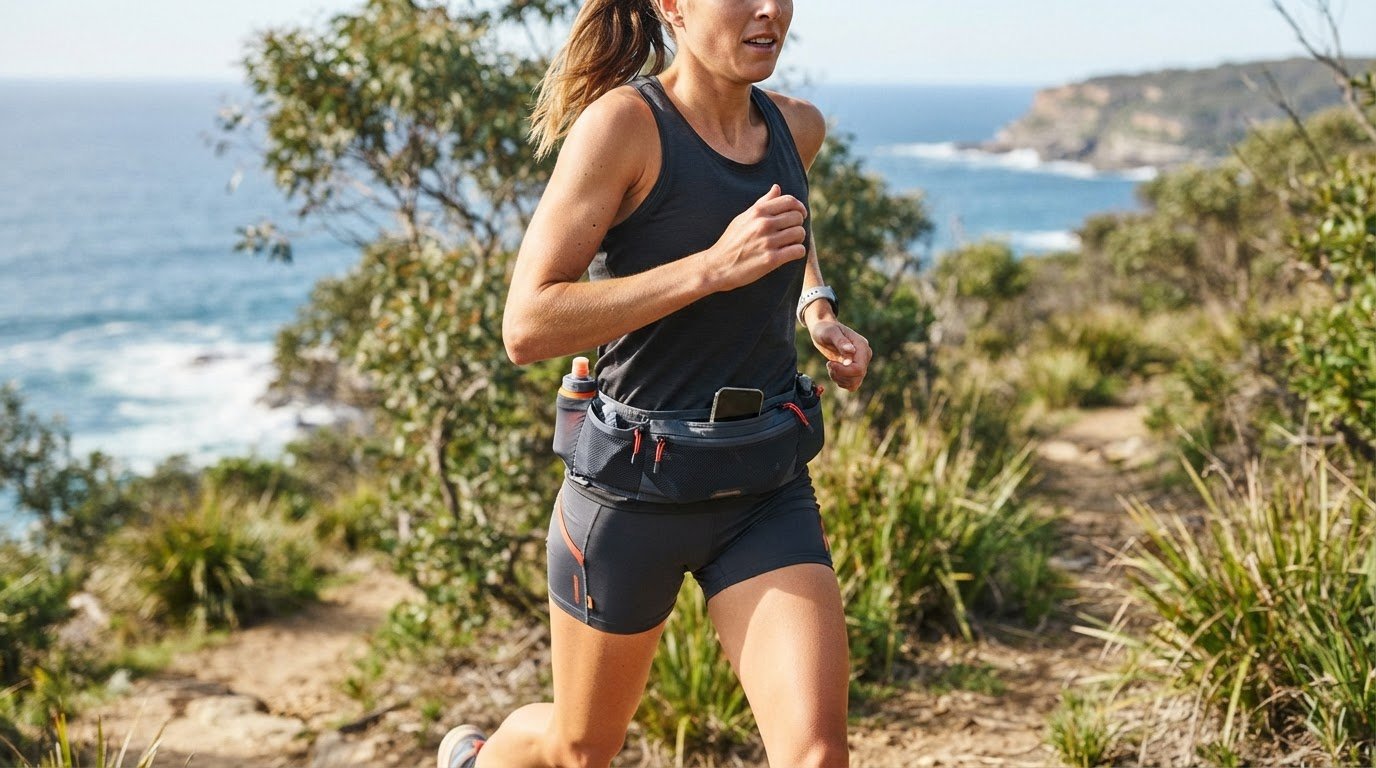
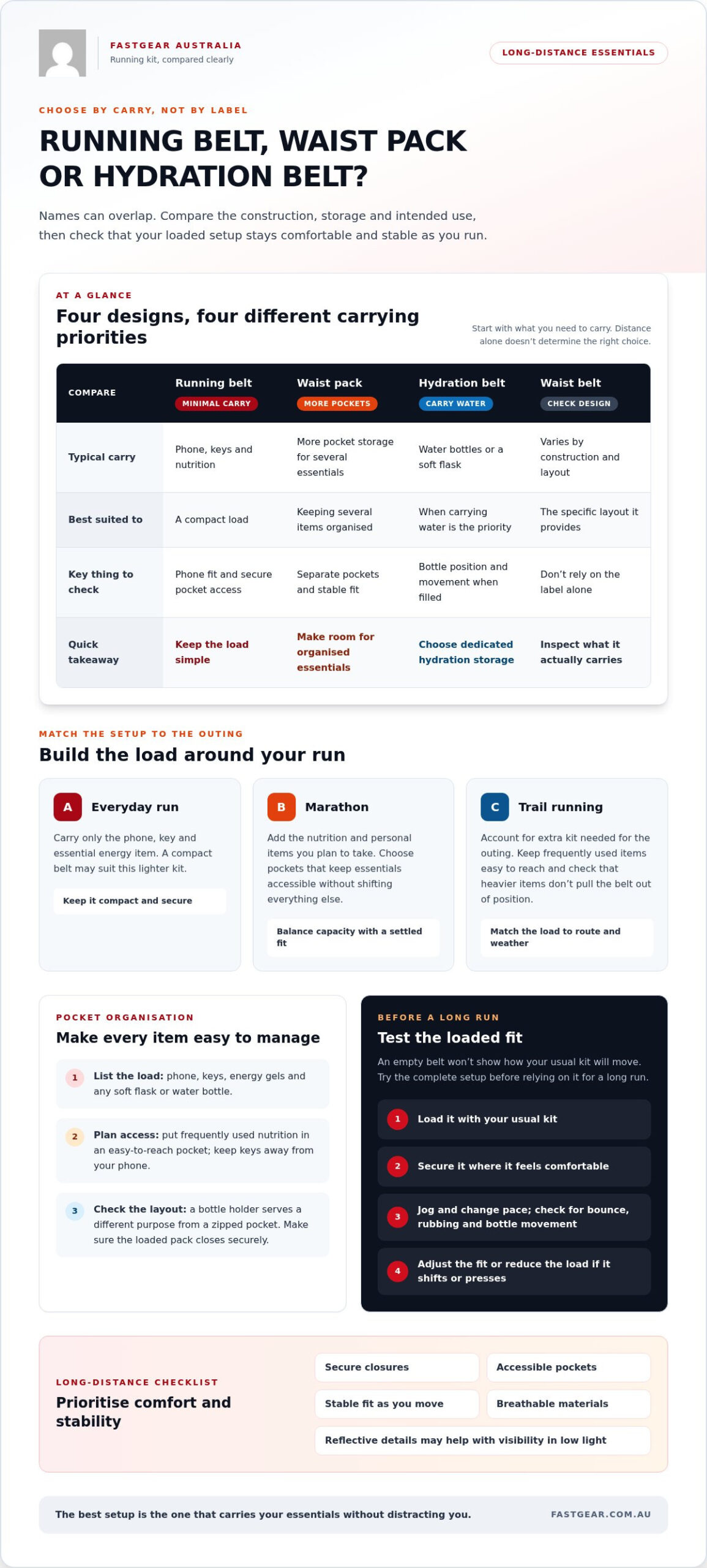
The labels overlap, but the practical difference is usually storage and coverage: a running belt sits close to the body for essentials, a waist pack generally offers more room, and “waist belt” can describe either style. When choosing a long distance running waist pack in Australia, focus on what you need to carry and whether the fit stays stable as you move. The right option holds your run essentials without distracting you.
It’s easy to assume a larger pack is automatically better for a longer run. But extra storage can mean more movement, while a minimal belt may leave key items without a secure place. Fit, comfort and bounce matter as much as capacity.
This guide explains the differences between running belts, waist packs and waist belts, then shows how to compare storage, adjustability and stability on the run. You’ll have a practical way to choose a setup for your distance, kit and preferred running feel.
Key Takeaways
- A running belt, waist pack and waist belt can describe different levels of storage and coverage, so compare the design rather than relying on the label.
- For marathon and long-distance runs, balance carrying capacity with a secure, comfortable fit that stays settled as you move.
- Organise essentials so they’re easy to reach, and test how the loaded pack feels before relying on it for a long run.
- Choose a setup that suits your kit and running style; the Compressport Free Belt Pro is one option to explore alongside your endurance essentials.
What’s the difference between a running belt, waist pack, and waist belt?
The names overlap, so compare construction, storage and intended use rather than relying on the label. For a long distance running waist pack in Australia, match capacity to your run essentials and prioritise a stable fit.
Hydration Belts and Waist Packs
A hydration belt is designed to carry water, often in bottle holders, while a waist pack focuses on carrying items in pockets. A running belt can be a low-profile option for a phone, keys or nutrition. For longer runs, choose hydration storage if carrying water is part of your plan, or pocket space for other essentials. The right choice depends on what you need to carry, not distance alone.
Running Belt Storage Layouts
Running belt layouts range from one main pocket to several compartments. A single pocket suits a phone and key; separate pockets make gels easier to access without shifting everything else. Check whether your phone fits and whether pocket openings stay accessible while moving. Australian retailers specialising in running and outdoor gear sell waist packs; compare current product listings and purchase terms rather than relying on category names.
For long-distance use, look for secure closures, accessible pockets, a stable fit and breathable materials. Reflective details can help with visibility in low light, while weather suitability depends on the belt’s materials and construction.
| Option | Typical carry | Best suited to |
|---|---|---|
| Running belt | Phone, keys, nutrition | Minimal carry |
| Waist pack | More pocket storage | Several essentials |
| Hydration belt | Water bottles | Carrying water |
| Waist belt | Varies by design | Check its layout |
Prices vary with design, materials and included storage, so compare the actual features and total price in A$. Award labels can help organise recommendations, such as minimal carry or hydration, but assess the criteria behind each category.
Before buying, review Australian shipping costs and delivery terms, plus the retailer’s return conditions and product warranty. These terms differ between retailers and products, so read them alongside the product details.
Choose a running belt for a compact load, a waist pack for more organised pockets, or a hydration belt when carrying water is the priority.
Are running belts comfortable for long distances?
Comfort depends on load, fit and movement over time. For a marathon or trail run, test the loaded belt with your usual kit before race day.
Marathon and Long-Distance Belts
A marathon belt carries essentials without requiring a larger pack. Comfort depends on how the weight sits against your body, whether the fabric breathes and whether seams rub as you run. Load it with what you plan to carry, such as a phone and nutrition, then run in it. If it shifts or presses during the test, adjust the fit or reduce the load.
Hydration Belts with Flasks or Bottles
A hydration belt uses a holder for a soft flask or water bottle, keeping fluid accessible while you run. Bottle capacity and holder position affect movement, so test the filled setup rather than an empty belt. Soft flasks compress as you drink; a bottle keeps its shape. Choose the format that sits securely and feels comfortable as you run.
Trail Running Belts
Trail running belts can carry extra kit alongside hydration, making layout and stability especially important on uneven ground. Put frequently used essentials where they’re easy to reach, then check that heavier items don’t pull the belt out of position. Match the load to your route and weather, and avoid carrying spare items that add weight without serving a purpose.
Use this fit test before committing to a long run: load your belt, secure it where it feels comfortable, then jog and change pace. Check for bouncing, rubbing and bottle movement. Clothing matters too, so compare your setup with the Compressport Trail Racing SS Tshirt as part of your running kit.
Storage capacity and pocket organisation
Choose capacity by listing what you’ll carry, then test how each item fits. A marathon load differs from an everyday run or trail outing.
Storage Capacity
Pack capacity is the space available for essentials, not a target to fill. Lay out your phone, keys, energy gels and any soft flask or water bottle before choosing. A compact belt can suit everyday runs with only a phone and key; longer outings may call for room for nutrition and extra kit. Check that the loaded pack closes securely without forcing items into its pockets.
Use this simple load audit before deciding:
- For an everyday run, carry only the phone, key and essential energy item.
- For a marathon, add the nutrition and personal items you plan to take.
- For trail running, account for any extra kit required for your outing.
Compare the complete load, not just the empty belt. Bulky items can take up more space than their weight suggests, while a bottle or soft flask needs a suitable place to sit securely.
Pocket Layouts
Pocket layout determines how quickly you can reach each item and how evenly the load sits. One main pocket keeps a phone and gels together, while separate compartments let you keep keys apart and organise energy products. Stretch pockets can fit different shapes, but check that items stay secure as you move. A dedicated bottle holder serves a different purpose from a zipped pocket.
Organise items by access: put frequently used nutrition in the easiest pocket to reach, and secure keys away from your phone. Then load the belt and move as you would on a run. If a soft flask shifts or a pocket opening presses against an item, rearrange the contents and test again. This helps you balance useful capacity with a tidy, manageable load.
Fit, comfort and bounce while running
A secure fit should hold the loaded belt close without restricting your stride. Test it with your usual running clothes and the items you plan to carry.
Start with an adjustable belt and position it where it feels secure on your waist or hips. Tighten it enough to limit movement, but not so much that the fabric digs in or your breathing feels restricted. A stretch panel can accommodate movement; a lightweight design can reduce the sense of carrying extra kit. Neither feature replaces testing the fit with your actual load.
Pay attention to bounce as you run. A phone on one side can pull the belt off balance, while a shifting soft flask may create repeated movement. Move heavier items towards the centre, then test the belt at your usual pace. If it rides up, slips down or rubs, adjust its position and tension before adding more kit.
Use this practical fit check:
- Load the belt with your phone, keys and planned nutrition.
- Jog, change pace and turn, noticing any bounce or fabric rubbing.
- Recheck the fit over the shorts or tights you’ll wear for your run.
Comfort also depends on the fabric against your skin. Seams, pocket edges and trapped moisture can become distracting on a long outing, especially if the belt shifts with each stride. Check contact points during your test and balance a snug fit with freedom of movement. A belt that feels stable while standing may move once you start running, so judge it in motion rather than by appearance.
Repeat the test with the load you expect to carry on race day or a long training run. A stable setup should keep its contents in place without constant adjustment. If a strap loosens or the pack bounces, redistribute the load and adjust the belt before setting out.
Fastgear Australia: Compressport Trail Racing SS Tshirt
Fastgear Australia brings together endurance gear and nutrition for runners preparing their kit. The Compressport Trail Racing SS Tshirt is an apparel option, while the Compressport Free Belt Pro is worth considering when comparing waist-worn storage. For run nutrition, the range includes GU Energy Gel – Single and Clif – BLOKS Energy Chews.
Choose each item around your setup: consider what you need to carry, how you’ll organise it and which nutrition you plan to take. Pairing a belt with familiar essentials helps you assess your complete running kit before a long outing.
Explore the range at Fastgear Australia.
Make your next run a kit test
Use your next training run to settle on a setup, not just to cover distance. Pack the items you expect to carry, then notice whether anything shifts, rubs or is difficult to reach. That practical test makes choosing a long distance running waist pack in Australia a decision based on your own running rhythm and essentials.
Build the rest of your kit around what you’ll use. Fastgear Australia offers the Compressport Trail Racing SS Tshirt, GU Energy Gel – Single and Compressport Free Belt Pro. Consider how each fits your run rather than adding gear without a clear purpose. Familiar equipment helps you focus on your pace and route.
Ready to plan your setup? Explore Fastgear Australia’s running gear and choose what suits your next outing. Trust your test, keep your load purposeful and head out prepared.
Frequently Asked Questions
How much water can I carry in a running belt?
The amount depends on the belt’s bottle holders or flask sleeves and the containers they fit. Check the container’s marked volume and the belt’s stated compatibility, then test the filled setup while running. A belt designed for water differs from a stretch pocket carrying a soft flask. For a longer route, plan your water carry around the route and access to refills.
Why should I use a running belt instead of pockets on my running shorts or tights?
A running belt gives items a separate place so they don’t shift inside clothing pockets. It can also keep keys away from a phone and make nutrition easier to reach. Shorts or tights pockets may be enough for a short run with minimal essentials. Try both setups with your actual phone and keys, then choose the one that moves less as you run.
What are the best waist packs for long-distance running available in Australia?
The right choice depends on your load and preferred carry style, not a single universal “best”. For a long outing, compare a close-fitting stretch belt for compact essentials with a pack offering more organised storage. If carrying water matters, assess a hydration design separately. Test the loaded option at your training pace, including how it feels when you reach for nutrition.
How much do running waist packs cost in Australia?
Running waist pack prices depend on design, materials, storage layout and whether the pack carries hydration. Compare products by matching those features to your intended use, rather than paying for capacity you won’t need. Check the current Australian listing price before buying, as prices can change. Include any delivery charges in your budget to compare the full purchase cost.
Which running waist packs fit different phone sizes and carry keys or nutrition?
Choose a belt with a pocket that fits your phone, then test it with the case on. A stretchy pocket may suit different shapes, while separate compartments can keep keys from scratching the screen and nutrition within reach. Load the exact items you’ll carry and move as you would while running. This reveals whether the pocket holds everything securely and remains practical to access.
What are the lightest and least-bouncy running waist packs available in Australia?
A minimal, close-fitting belt with just your essentials is a practical starting point for reducing carried weight and movement. Compare the listed empty weight of shortlisted models, then assess bounce with your actual load. Position heavier items centrally and adjust the belt snugly without restricting movement. A pack that feels light in your hands may feel different once loaded and tested at running pace.
