
Uncategorized
Seamless trail running T shirts and technical fabrics in Australia

Oct
The lightest trail-running shirt isn’t always the most comfortable on a long, exposed track. When choosing a seamless trail running T-shirt in Australia, look for lightweight technical fabric that moves sweat away from your skin, enough stretch for free movement and a fit that minimises rubbing. The fabric, knit and construction all matter.
Choosing a shirt can mean balancing ventilation, stretch and durability, especially when conditions change during a run. This guide explains which fabric qualities and seamless details to look for, how moisture management affects comfort, and what to consider in a men’s trail-running shirt. Use these points to match your top to your route, effort and conditions.
Key Takeaways
- Compare technical fabrics by how they balance breathability, moisture movement and durability for the trail conditions you face.
- Assess shirt fit and construction for comfort in motion, including where seams or fabric may rub under pack straps.
- Use stretch, including movement across multiple directions, as a practical fit check rather than relying on the fabric label alone.
- Choose a men’s trail-running top by matching its cut and fabric feel to your build, layering needs and running conditions.
- Explore how the Compressport Trail Racing SS Tshirt fits into your kit alongside the article’s fabric and fit considerations.
What Materials Are Trail Running Apparel Made Of?
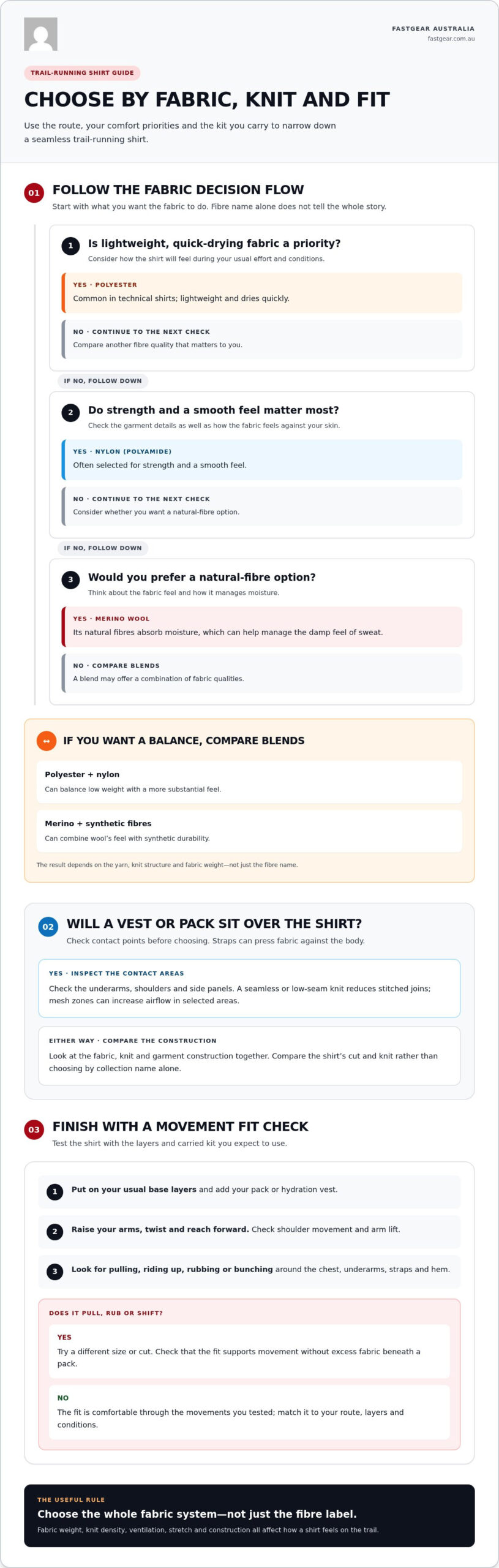
Trail-running apparel uses synthetic fibres, natural fibres or blends. Assess the fabric, knit and garment construction together.
Polyester is common in technical shirts because it’s lightweight and dries quickly. Nylon, also called polyamide, is often selected for its strength and smooth feel. A polyester-nylon blend can balance low weight with a more substantial feel. The result depends on the yarn, knit structure and fabric weight, not just the fibre name.
Merino wool offers another option. Its natural fibres absorb moisture, which can help manage the damp feel of sweat. A merino-synthetic blend can combine wool’s feel with synthetic durability, while elastane adds stretch to some fabrics. Check the garment label for fibre composition, then consider how the shirt feels against your skin.
Construction matters as much as fibre choice. Seamless or low-seam knitting reduces stitched joins, while mesh zones can increase airflow in selected areas. Check the underarms, shoulders and side panels, especially if you’ll wear a hydration vest or pack over them. Compare each shirt’s knit and cut rather than choosing by collection name alone.
Brand descriptions can help narrow your options, but terms such as “technical” don’t explain a fabric’s full performance. Compare the stated materials, stretch and intended use. A lightweight race top may suit a faster effort, while a denser knit may feel more substantial for regular training. Match these details to your route, climate and preferred fit.
Men’s trail-running clothing
Men’s trail-running clothing includes shirts, shorts and layers designed for movement over uneven ground. When assessing a shirt, consider the torso fit, sleeve coverage and fabric feel. A close fit can reduce loose fabric under a pack, while a roomier cut allows more airflow. Check shoulder movement and arm lift before choosing a fit.
Compare men’s options by construction, not just colour or styling. A seamless knit, for example, may reduce bulky joins beneath straps. Check that the hem stays in place as you reach, climb or bend. The fit should support your stride without restricting your upper body.
Moisture-wicking clothing
Moisture-wicking clothing moves sweat away from the skin towards the outer fabric, where it can spread and evaporate. Polyester and nylon are common choices for this purpose. Fabric thickness, knit density and ventilation zones also affect how a shirt feels during a run. A mesh panel, for example, can encourage airflow where heat builds.
Compare the shirt’s inside and outside surfaces, then consider your usual effort and conditions. A saturated top can feel heavier and cling to your body. Breathable, quick-drying fabric can help manage that damp sensation, but you’ll still need to dress for changing weather. Choose a fabric system suited to your route and layering plan.
Trail running shirts and tops
A trail top needs to work with your stride, layers and carried kit. Compare women’s and men’s cuts, then test the fit with your running shoes and pack.
Men’s running tops
Men’s running tops vary in torso shape, sleeve length and hem coverage. Check the shoulders and underarms before choosing a close fit. Raise both arms, twist and reach forward. The shirt should remain comfortable through each movement, without pulling across your chest or riding up.
Consider what you’ll wear over the shirt. A hydration vest can press fabric against the shoulders and sides, so test the shirt with your usual kit. A longer hem can stay tucked beneath a waist belt, while a shorter cut may feel less restrictive. Match the cut to your layering setup.
Women’s running tops
For women’s trail running, pair a comfortable, sweat-wicking sports bra with a lightweight, breathable singlet or shirt. Check how the top sits over the bra, especially around the straps and underarms. Swing your arms and reach overhead to spot tight areas before they become a distraction on the trail.
Choose coverage to suit the route and conditions. A singlet leaves more skin exposed and allows airflow, while a short-sleeved shirt adds shoulder coverage. Try each with the layers you expect to wear. Seams and fabric edges should sit smoothly where a vest or pack makes contact.
Trail-running top options
Trail-running tops include singlets, short-sleeved shirts and long-sleeved layers. Start with the conditions: a breathable singlet suits warm efforts, while sleeves provide more coverage. In variable weather, consider how the top will sit beneath an outer layer. Don’t choose by appearance alone.
A good fit supports movement without excess fabric bunching beneath a pack. Check the neckline, shoulder panels and hem as you lean forward, climb and reach. If the shirt shifts during these movements, try a different size or cut. A smooth fit can reduce friction from repeated fabric movement.
Match the top to the rest of your kit. Your running shoes affect foot comfort, but the shirt also needs to work with your vest, belt and layers. Before a long outing, test the complete setup on a shorter run. Notice where straps meet the fabric and whether the hem stays in place.
Use a simple fitting sequence: put on your usual base layers, add your pack, then move through your full range of motion. Check for tightness, rubbing and fabric bunching. This test helps you compare tops consistently, whether you’re choosing a singlet for a warm route or a shirt for added coverage.
Moisture management and temperature regulation
On Australian trails, sun, wind and shade can change how a run feels. Trail-running clothing can wick moisture away from the body and help maintain body temperature in extreme weather. Your shirt works alongside your pace, layers and route, so consider all three when choosing what to wear.
During a hard climb, sweat production rises and fabric can become damp. A moisture-wicking shirt moves sweat away from the skin towards its outer surface, where it can spread and evaporate. This can limit the sticky, clingy feeling of a saturated top. The fabric also needs airflow to release moisture effectively.
Look beyond the word “wicking” on a product label. Check the garment’s knit, ventilation zones and fit. Open mesh panels, for example, can encourage airflow around the back or underarms. A close-fitting shirt holds fabric against the skin, while excess looseness can trap folds beneath a vest. Try the top with your usual running kit.
Conditions matter. A shaded forest track may feel cooler than an exposed ridge, while wind can make a damp shirt uncomfortable after you stop. On a route with varied terrain, choose a base layer that manages sweat, then carry a light outer layer if you need more coverage. Don’t rely on one shirt to handle every temperature change.
Use this practical check before heading out:
- Review the route for exposed sections, shaded trails and likely wind exposure.
- Match sleeve length and coverage to the conditions and your layering plan.
- Wear the shirt with your hydration vest, then check for airflow and damp spots.
- After a short test run, notice whether the fabric clings or stays comfortable.
Effort affects how much moisture your shirt needs to manage. A steady jog may produce less sweat than repeated climbs or a faster race pace. If your route includes both, choose a top that feels comfortable during movement and recovery. A shirt that dries as you move can feel different when you pause, particularly in wind or cooler shade.
Care affects moisture performance over time. Dirt, sweat and body oils can build up in trail-running gear, so Arc’teryx advises washing it after each use. Follow the care label and avoid fabric softener if the garment instructions prohibit it. Clean, well-maintained clothing is better positioned to perform as designed on your next outing.
For Australian conditions, judge a shirt by how it manages heat and dampness across your route. A breathable top can support comfort during a hot climb, while a suitable outer layer adds coverage when it’s windy or cooler. Plan your combination before you leave instead of waiting for a temperature change to catch you out.
Four-way stretch
Four-way stretch means fabric can extend across its width and length. This helps a shirt follow your torso as your arms swing, reach and rotate. The label describes the direction of stretch, not how much force the fabric can handle. Check how the garment feels and recovers, not just the term.
Trail running involves repeated upper-body movements. On a steep climb, you may drive your arms forward; scrambling can require reaching overhead or across your body. Fabric that moves in both directions can accommodate these actions with less pulling. It should return towards its original shape after movement, rather than staying loose or bagging out.
Stretch commonly comes from elastane blended with fibres such as polyester or nylon. The blend and knit structure affect how a shirt stretches, feels and recovers. A label identifies fibre content, but it won’t tell you how the garment behaves on your body. Try the shirt through a practical movement check before choosing your size.
Use this fitting sequence:
- Raise both arms overhead and check whether the hem lifts sharply.
- Reach forward as if adjusting a hydration vest, then check shoulder tension.
- Rotate your torso each way and feel for resistance across the chest.
- Bend and straighten your elbows to assess sleeve restriction.
- Release each movement and see whether the fabric returns smoothly.
Repeat the test with your usual running pack or vest. Shoulder straps can compress the fabric and change how it moves. A shirt that feels flexible on its own may pull beneath a loaded vest. Check the side panels and underarms too, as these areas move with your arm swing and torso rotation.
Stretch should support a secure fit, not make the shirt cling tightly. Excessive tension can pull seams and fabric against your skin. A loose fit can bunch beneath pack straps or a waist belt. Choose a size that allows unrestricted movement while keeping the hem and sleeves stable through the checks above.
Seamless construction and four-way stretch describe different features. Seamless knitting reduces stitched joins in selected areas, while four-way stretch describes fabric movement across two axes. A shirt may have one feature without the other. Inspect the construction and test your range of movement separately, especially where the shoulders meet pack straps.
For an Australian trail route with climbs, descents and uneven sections, consider how often your upper body changes position. A shirt that moves freely as you reach, rotate and drive your arms can feel better suited to varied terrain. Make your decision using the full movement test, the garment’s recovery and how it fits with your carried kit.
Men’s trail-running shirts and technical fabrics
A men’s trail-running shirt needs to suit your build, movement and carried kit. Assess the fabric and pattern together. A lightweight knit can feel different across broad shoulders than across a narrow torso. The right cut lets you swing your arms and rotate without pulling at the chest, sleeves or hem.
Start with the shirt’s intended use. A short-sleeved technical top can work well beneath a hydration vest, while a looser shirt may shift under its straps. Try the top with your usual pack. Reach forward as if adjusting the vest, then twist each way. Check whether fabric gathers at the waist or tightens across your back.
Fabric composition offers useful clues, but not the whole answer. Polyester is commonly used in lightweight running tops; nylon can offer a smoother, more substantial feel. Elastane adds stretch to some blends. The yarn and knit also influence drape, airflow and how the fabric moves. Compare the garment label with how the shirt feels during a fitting.
Look closely at the construction. Check the shoulder joins, underarm panels and side seams, where movement and pack contact meet. A seamless or low-seam design can reduce stitched joins in selected areas, but not every part of the garment will necessarily be seam-free. Trace the seams with your fingers, then wear the shirt beneath your vest to identify pressure points.
Use this fit check before choosing:
- Lift both arms, then check whether the hem pulls upwards.
- Reach across your chest and feel for restriction at the shoulders.
- Wear your hydration vest and inspect where straps meet fabric.
- Turn your torso and check for bunching around the waist.
- Move through these actions again with your preferred base layer.
Match sleeve length and fabric weight to your route. An exposed ridge may call for more shoulder coverage than a shaded forest loop. A light short-sleeved shirt may suit a warm effort, while a long-sleeved layer offers more coverage. Your pace, pack and layering plan all affect how the top feels over distance.
Keep the decision practical. Compare two shirts using the same pack, base layer and movement checks. Notice whether the fabric stays comfortable across your shoulders and the hem remains stable. A men’s technical top should support your stride without needing constant adjustment. Choose based on fit and construction, not the word “performance” on the label.
Fastgear Australia: Compressport Trail Racing SS Tshirt
Fastgear Australia offers the Compressport Trail Racing SS Tshirt for trail runners. Use the fabric, fit and movement checks in this guide to assess how it suits your route and running kit. If you’re choosing a shirt to wear beneath a hydration vest, consider how it fits with your usual setup. The Compressport Free Belt Pro, GU Energy Gel – Single and Clif – BLOKS Energy Chews are also available as separate kit options for your run.
For your next trail-running shirt, you’re welcome to visit Fastgear Australia.
Make your next trail setup count
Put your shirt choice into practice on your next run. Wear it with the layers and carried kit you plan to use, then notice how it feels on climbs, descents and changes of pace. This real-world check can help you decide whether the fit and fabric suit your route before a longer outing.
If you’re choosing a seamless trail running T-shirt in Australia, Fastgear Australia offers the Compressport Trail Racing SS Tshirt. You can also build out your trail kit with a Compressport Free Belt Pro and GU Energy Gel – Single. Match each item to what you need to carry and use on your run.
For a practical next step, contact Fastgear Australia to explore the available trail-running gear. Set your kit, test your setup and take on the next track with confidence.
Frequently Asked Questions
What seamless trail running T-shirts are available in Australia?
Fastgear Australia offers the Compressport Trail Racing SS Tshirt as a trail-running shirt. To choose a specifically seamless garment, look for product details describing its knit construction and seam placement. “Trail racing” describes an intended activity, not how a shirt is made. Compare construction details with your needs, particularly if you want to reduce stitched joins beneath a hydration vest.
Which Australian retailers sell seamless trail running shirts?
Fastgear Australia is an Australian online retailer offering trail-running apparel, including the Compressport Trail Racing SS Tshirt. For a specifically seamless garment, use the construction description to distinguish seamless knitting from ordinary flat seams or reduced-seam designs. This helps you assess the shirt itself rather than relying on a retailer category or the phrase “trail running” alone.
What materials and construction make a trail running shirt seamless?
Seamless shirts use knitting methods that reduce or avoid stitched joins across some garment areas. The term doesn’t necessarily mean every panel or edge is seam-free. Polyester and nylon are common technical fabric fibres, while elastane can add stretch. Check fibre content separately from the construction description, then inspect areas such as the shoulders and sides where joins may sit beneath pack straps.
Are seamless trail running shirts breathable and moisture-wicking in hot Australian weather?
Seamless construction alone doesn’t determine breathability or moisture management. These depend on the fabric, knit density and ventilation zones. A lightweight knit with open mesh areas encourages airflow, while moisture-wicking fabric moves sweat away from the skin. For a hot Australian run, assess these features alongside sleeve coverage and your pack setup. A well-chosen shirt supports comfort, but doesn’t replace suitable layers for changing conditions.
Which seamless trail running shirts are best for men and women?
For men, look for a comfortable fit that allows shoulder movement and works with your pack; seamless or low-seam construction can reduce bulky joins beneath straps. For women, pair a comfortable, sweat-wicking sports bra with a lightweight, breathable singlet or shirt. Compare fabric, knit and fit with your route and conditions.
How do you wash and care for a seamless technical running shirt?
Arc’teryx advises washing trail-running gear after each use to remove dirt, sweat and body oils. Follow the care label and avoid fabric softener if the garment instructions prohibit it.
