
Uncategorized
High performance running shirts for Australian runners
Oct
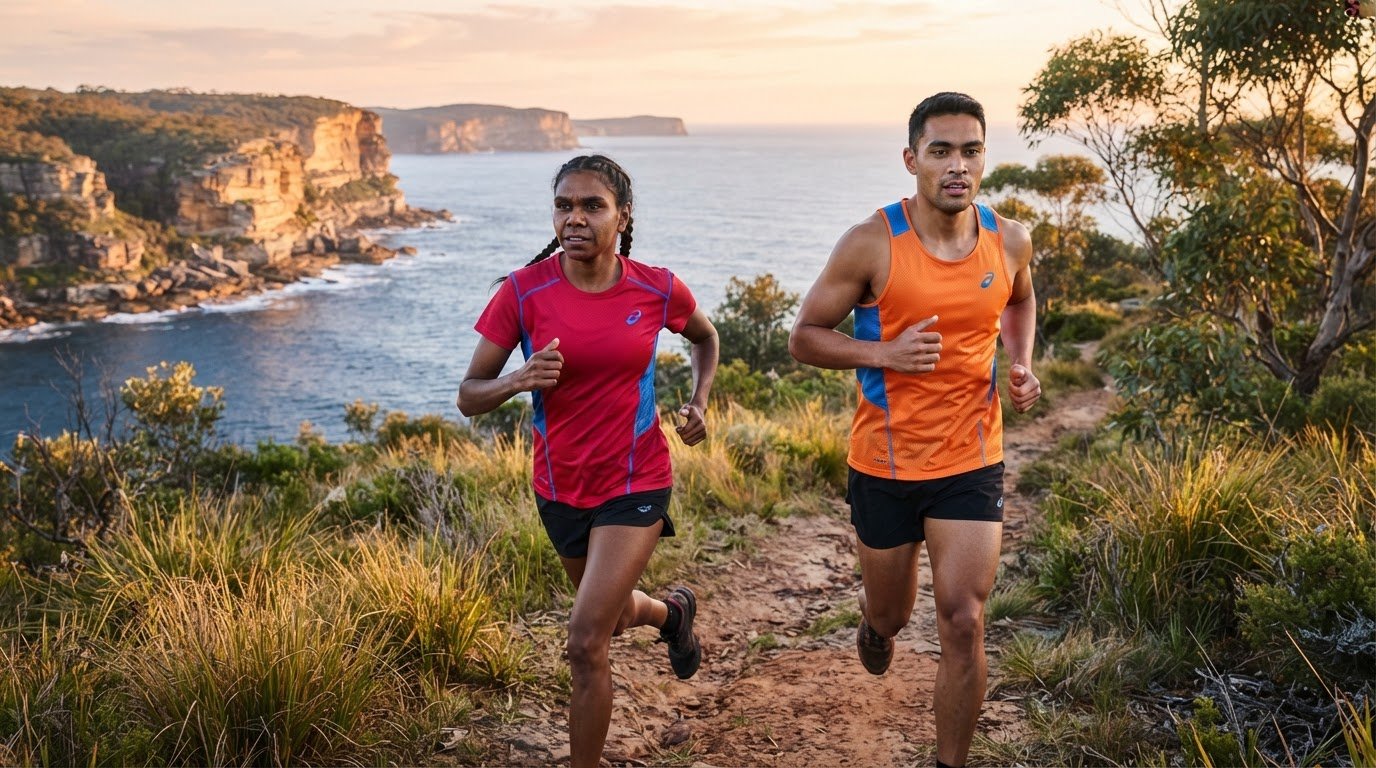
The wrong running shirt can make a tough session harder than it needs to be. Choosing high performance running shirts in Australia starts with the conditions: a lightweight, breathable singlet or short-sleeve top suits hot runs, while more coverage can help in cool or windy weather. Fit matters in every forecast, especially where seams or fabric rub.
It’s not just about staying cool. The right combination of fabric, coverage and fit helps you focus on your pace instead of overheating, feeling exposed or managing irritation. Men’s running shirts and singlets each have a place in your kit, depending on the session and the weather.
This guide explains what to wear in Australian conditions, which features to assess for breathability and chafe resistance, and what can affect performance apparel pricing. You’ll also learn how to compare shirts and singlets in practical terms, so you can choose a top that suits your running and preferred level of coverage.
Key Takeaways
- Match sleeve length and coverage to the conditions: a singlet may suit hot sessions, while a short-sleeve shirt offers more coverage.
- Compare fabric weight, ventilation and fit to find a top that feels comfortable as your effort and the weather change.
- Check how seams and edges sit against your skin, especially around areas prone to rubbing during longer runs.
- When comparing full and sale prices, weigh the garment’s construction and intended use against how often you’ll wear it.
- For a technical short-sleeve option, consider the Compressport Trail Racing SS Tshirt from Fastgear Australia.
Breathability and temperature regulation
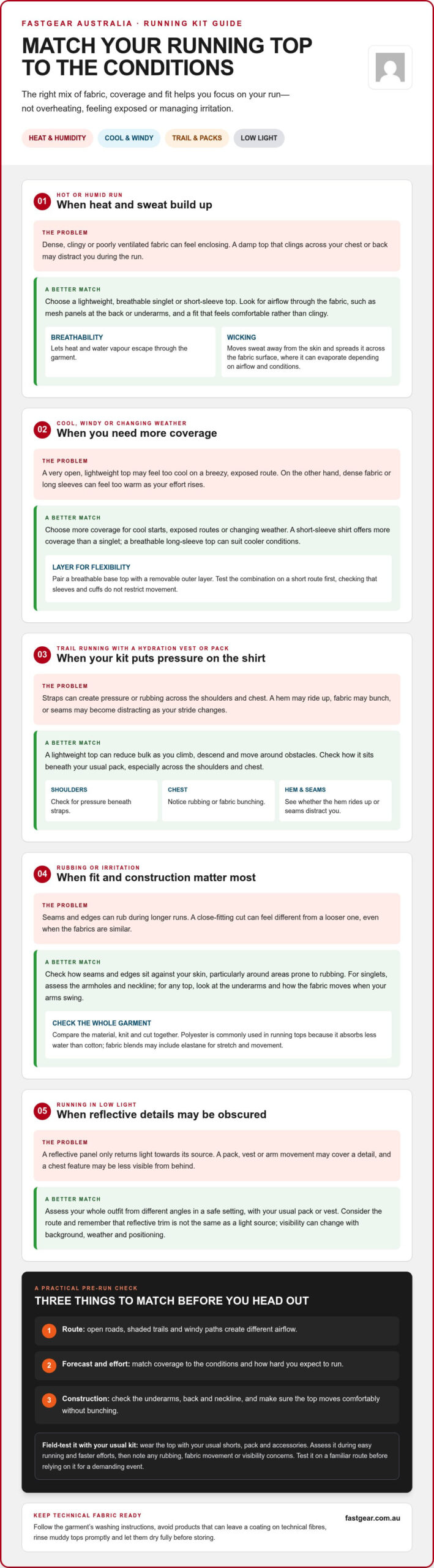
For Australian runs, choose a top that moves air and manages sweat in the conditions you face. Heat, humidity, wind and pace all affect how a shirt feels during a session.
Breathable fabric
Breathable fabrics let heat and water vapour escape through the garment. Check the fabric description and construction, including whether the shirt uses lightweight polyester or mesh panels. These details help you compare tops, but consider the whole garment: a close-fitting design may feel different from a looser cut, even when the fabrics are similar.
Check where ventilation sits. Mesh across the back or underarms can support airflow in areas covered by the shirt, while a lightweight knit may feel less enclosing across the torso. For a warm, humid run, prioritise airflow and a comfortable fit. On a breezy, exposed route, consider whether that same open construction will feel too cool.
Moisture-wicking materials
Wicking describes how fabric draws sweat away from the skin and spreads it across the garment’s surface. The moisture can then evaporate, depending on airflow and conditions. Compare the garment label and product details, then consider how the shirt feels after a steady run. A top that clings when damp may distract you, even if its fabric is described as breathable.
Polyester is commonly used in running tops because it absorbs less water than cotton. Fabric blends may also include elastane for stretch, which affects fit and movement, not just wicking. Don’t judge performance by a single label claim. Check the material, knit and cut together, then assess whether the shirt stays comfortable through your usual session.
Match the fabric to the weather and effort. On a hot, exposed road, a light, ventilated top can reduce the amount of fabric holding warmth against your body. For a humid park loop, prioritise moisture movement and a fit that doesn’t cling across your chest or back. If the forecast turns cool, more coverage can help, but dense fabric may trap heat once your pace rises.
Use a simple selection process before a run. First, consider the route: open roads, shaded trails and windy paths create different airflow. Next, match coverage to the forecast and your expected effort. Finally, check the shirt’s construction at the underarms, back and neckline. A breathable top should allow comfortable movement without excess fabric bunching as your arms swing.
Care also affects fabric performance. Follow the garment’s washing instructions and avoid products that can leave a coating on technical fibres. After a muddy trail session, rinse the shirt promptly and wash it as directed. Let it dry fully before storing it. These steps help keep the fabric fresh and ventilation unobstructed for your next run.
Temperature regulation isn’t down to one fabric feature. It comes from how breathability, wicking, coverage and fit work together. Compare those elements against a specific run, such as a humid morning tempo or a cool, windy recovery jog. That practical match is more useful than choosing a shirt by fabric name alone.
Running tops tested by experienced runners
A useful field test checks how a top performs throughout the session, not just at the start. Assess comfort, movement and visibility on the terrain and in the conditions you regularly run.
Lightweight trail-running tops
On a trail, a lightweight top can reduce bulk as you climb, descend and move your arms around obstacles. Check how the fabric sits beneath a hydration vest or pack, especially across the shoulders and chest. A shirt that feels comfortable on a short road loop may rub under pack straps during a longer trail outing.
Test the top on a familiar route before relying on it for a demanding event. Include a climb, a descent and enough time wearing your usual pack to notice pressure points. Check whether the hem rides up, the fabric bunches or seams become distracting as your stride changes. These observations can reveal fit issues that a brief try-on misses.
Reflective visibility features
Reflective details are designed to return light towards its source, so their usefulness depends on another person’s light reaching them. Check where reflective panels sit when you run, including whether a pack, vest or arm movement covers them. A small detail on the chest may be less visible from behind than one across the back.
For a run near traffic in low light, assess your whole outfit from different angles in a safe setting. Reflective trim isn’t the same as a light source, and visibility can change with the background, weather and positioning. Choose clothing and accessories with your route in mind. Don’t assume one reflective feature makes you visible from every direction.
Singlets and tank tops suit runners who prefer less coverage and greater freedom around the arms. Test the armholes for rubbing and check that the neckline stays comfortable as you move. Wear the top through a warm session with repeated arm swings, then check whether any edge or seam irritated your skin. Coverage is personal, so choose according to comfort and conditions.
Long-sleeve tops provide more coverage for cool starts, exposed routes or changing weather. They can also feel too warm once your effort increases, so test them during the session type you plan to run. A practical layering approach is to pair a breathable base top with a removable outer layer. Try the combination on a short route first, checking that the sleeves and cuffs don’t restrict movement.
Use a consistent test process: wear the top with your usual shorts, pack and accessories, then assess it during easy running and faster efforts. Note any rubbing, fabric movement or visibility concerns after the session. Experienced runners can offer useful observations, but your own route, kit and fit determine whether a top works for you.
Product prices and sale prices
Compare the listed and sale prices, then assess what the shirt offers for your running. A lower price alone doesn’t show whether the garment suits hot road sessions, trail outings or regular training. Consider the fabric, construction, coverage and intended use together. A lightweight singlet and a long-sleeve technical top serve different conditions, so their prices aren’t a direct measure of equivalent value.
Technical details help explain differences between tops. A garment may use mesh panels, a specialised knit, reflective elements or construction designed for movement. Each feature can affect how well the shirt suits your routine. If you mostly run in warm weather, prioritise breathability and a comfortable fit. If your route includes early starts or low light, visibility details may matter more than features you rarely use.
Sale pricing changes the comparison, but it doesn’t change the garment’s purpose. Check the current price beside the original listed price, and read the product description for the exact top on sale. A reduced short-sleeve shirt may be a practical buy if it suits your regular sessions. A sale on a heavier layer offers less value if you mainly run in hot, humid conditions.
Build a simple comparison before choosing. Record the listed price, sale price where shown, garment type, fabric details and intended conditions. Then compare similar items, such as two breathable short-sleeve tops, rather than a singlet and a winter layer. Check sizing information and care instructions, too. A low purchase price is less useful if the fit doesn’t work with your running kit or the garment needs special care.
Consider cost per use without relying on a made-up estimate. A shirt worn across regular weekly runs may serve you more often than a specialised top reserved for occasional cold-weather sessions. Think about your existing wardrobe, too. If your shorts and current tops already cover warm-weather training, a new purchase should fill a genuine gap, such as extra coverage or improved visibility.
Before buying, follow these steps: identify the conditions you run in, choose the top type, compare its fabric and construction, then assess the listed and sale prices. Check whether the discount applies to your preferred size and colour, and review the product details before ordering. This keeps the decision focused on fit and function, rather than the size of the displayed discount.
For Australian runners comparing performance apparel, value depends on intended use, construction and how comfortably the top fits into your existing kit. Treat a sale as one part of the decision. A well-matched shirt can be more useful than a deeper discount on a style that doesn’t suit your routes, weather or sessions.
Anti-chafe construction
Chafing often starts where fabric repeatedly moves against skin, such as the underarms, neckline or side seams. Inspect those areas before choosing a running top. Seam placement, stitching, fit and fabric texture all affect friction during a run. A shirt that feels smooth in the changing room may behave differently after you sweat and move your arms repeatedly, so assess it with your usual running kit.
Start with the seams. Flatlock stitching sits flatter than raised seams, while bonded construction avoids some stitched edges. Check the garment’s inside surface along the shoulders, underarms and sides. Move your arms as you would while running and notice whether seams press or catch. On a longer route, a seam under a hydration vest strap may cause friction where it wouldn’t during a short run without a pack.
Fit matters as much as construction. A shirt that’s too tight can pull across the chest and underarms; excess fabric can bunch beneath a pack or at the waist. Try the top with your usual shorts and running vest. Reach overhead, swing both arms and twist your torso. These simple movements show whether the hem shifts or the sleeves rub against your skin.
Sweat changes how a top sits. Damp fabric may cling, fold or move differently against the skin, especially during a humid summer session. Consider where your kit makes contact: vest straps across the shoulders, a belt near the hem, or watch straps around the wrists. Check each contact point during a familiar run, then note any hot spots straight afterwards.
Use a short test routine before wearing a new shirt for a demanding event:
- Wear it with the shorts, socks and pack you’ll use on your run.
- Move through an easy jog, faster strides and arm swings.
- Check the underarms, neckline, side seams and waistband area afterwards.
- Record which spot felt uncomfortable and whether fabric or equipment caused the rubbing.
That final distinction helps you make a useful adjustment. If the shirt’s side seam rubs, try a different cut or seam position. If discomfort appears beneath a vest strap, adjust the pack fit and check how the shirt sits underneath. Changing one factor at a time makes the cause easier to identify than replacing several pieces of kit together.
Care can also affect the fabric’s surface. Follow the washing instructions, rinse off sweat after a run and check for roughened seams or damaged stitching as the garment wears. Before a race, wear a top you’ve already tested with your event kit. A deliberate fit and friction check can help you choose construction suited to your route and running style.
Men’s running shirts and singlets
For men’s running kit, choose a shirt or singlet based on coverage, conditions and personal fit. A singlet leaves the shoulders and upper arms uncovered, which can feel more comfortable in hot weather. A short-sleeve shirt adds coverage and may suit cool starts or runners who prefer covered shoulders. Neither style is automatically better for every Australian route.
Start by checking the fit across your chest and shoulders. A close cut should allow a full arm swing without pulling across the back; a looser cut shouldn’t flap or bunch during faster efforts. Check the hem while bending and reaching, too. For example, a shirt that rides up when you lift your arms may expose your lower back during a trail climb.
Check the armholes and neckline carefully on singlets. If an edge presses into your skin while standing, repeated movement can make it distracting on a run. Try the singlet with your usual pack or hydration vest, since shoulder straps can change how the fabric sits. On a warm-weather loop without a pack, those same armholes may feel less restrictive.
Match coverage to the session, not just the forecast. A singlet can suit a sunny, high-effort run, while a short-sleeve top may provide preferred coverage on a breezy path. For a cool morning followed by a warmer afternoon, consider a light outer layer you can remove. The shirt underneath still needs to feel comfortable once your pace increases.
Use this fit check before choosing a size:
- Reach overhead, swing both arms and rotate your torso.
- Check that the neckline and armholes don’t pull or rub.
- Wear the top with your regular shorts and running pack.
- Jog briefly and notice whether the hem shifts or fabric bunches.
Men’s sizing can differ between cuts and garment designs, so use each product’s size guide rather than assuming the same label always fits alike. Compare your chest measurements with the guide, then consider whether you prefer a close or relaxed silhouette. If you’re between sizes, think about layering and pack use: extra fabric may bunch beneath straps, while a tighter cut can restrict movement.
Make the final choice around your most common run. A singlet may be the practical option for exposed summer sessions; a short-sleeve shirt can offer a versatile balance for changing conditions. Test your preferred top with the kit you’ll actually wear, then use Fastgear Australia’s running essentials as a next step for preparing your setup.
Fastgear Australia: Compressport Trail Racing SS Tshirt
Fastgear Australia offers the Compressport Trail Racing SS Tshirt for runners comparing technical short-sleeve tops. Assess it against the criteria in this guide: coverage, fit, comfort with your running kit and suitability for your usual routes. Consider whether a short-sleeve top suits your conditions and preferences.
For a trail setup, the Compressport Free Belt Pro is another option for carrying essentials. GU Energy Gel – Single and Clif – BLOKS Energy Chews are separate nutrition options, not features of the shirt. Keep apparel and fuelling decisions distinct so each choice suits your session.
Explore the Compressport Trail Racing SS Tshirt at Fastgear Australia.
Set your kit up for the next run
Choose your next piece of kit for the run you’re preparing for, not an imagined ideal. Choosing high-performance running shirts in Australia means matching your top to your routes, conditions and preferred fit. Use that approach to build a rotation for your regular sessions, then test new pieces before relying on them for an important event.
Fastgear Australia offers the Compressport Trail Racing SS Tshirt, alongside the Compressport Free Belt Pro for carrying essentials. GU Energy Gel – Single is a separate fuelling option, not a feature of your apparel. Keep each choice focused on its role in your setup.
Ready to consider a technical top for your running kit? Contact Fastgear Australia to take the next step. Choose with purpose, prepare your kit, and head into your next run ready to move.
Frequently Asked Questions
What Should I Wear For Running in Different Weather Conditions?
Choose your running top according to the forecast, route exposure and how your session will progress. For a run starting cool and finishing warm, wear a light outer layer you can remove and carry. If rain is possible, consider how wet fabric feels against your skin and whether your route offers shelter. Check the forecast before setting out, then dress for the conditions you’ll encounter, not just the temperature at home.
What fabrics are best for running shirts in hot Australian weather?
Lightweight synthetic fabrics are a practical choice for hot-weather running because they can manage sweat without feeling as heavy as saturated cotton. Look beyond the fibre name: fabric density, surface texture and garment cut affect comfort, too. For example, compare two tops by wearing each during a similar short run, then note how they feel after you sweat. Choose the one that stays comfortable against your skin and suits your usual pace.
How much do performance running shirts cost in Australia?
Performance running shirt prices vary according to garment construction, fabric, brand and features such as specialised panels or reflective details. Sale pricing can also change the amount shown for an individual item. Compare like with like: assess similar shirt styles and check the current product listing rather than relying on a broad market estimate. Before deciding what represents value, consider how often you’ll wear the top and whether its features match your running needs.
How should I choose a running shirt for humid, hot, or cool conditions?
For humid runs, choose a top that feels comfortable when damp and doesn’t cling uncomfortably. In hot, dry conditions, prioritise a light feel and a cut that allows free movement. For cooler sessions, add coverage or a removable layer that won’t restrict your stride. If your route crosses exposed and sheltered sections, consider how changing airflow may affect comfort. Try your chosen combination on a familiar route before using it for an important event.
Are there lightweight running shirts suitable for trail running and long-distance races in Australia?
Yes, lightweight shirts can suit trail running and long-distance events if they fit well with your pack and race kit. When comparing high performance running shirts in Australia, assess the garment with your loaded hydration vest, race belt and other equipment. Check for pressure or bunching beneath straps, and test the top during a comparable training session. A shirt that feels comfortable on a short run may behave differently as your kit shifts over longer distances.
Which Australian brands make performance running shirts?
Compressport is featured for its Trail Racing SS Tshirt.
Where can I buy running shirts online or in stores in Australia?
Fastgear Australia offers the Compressport Trail Racing SS Tshirt.
