
Uncategorized
How to Build a High-Performance Endurance Fueling Strategy
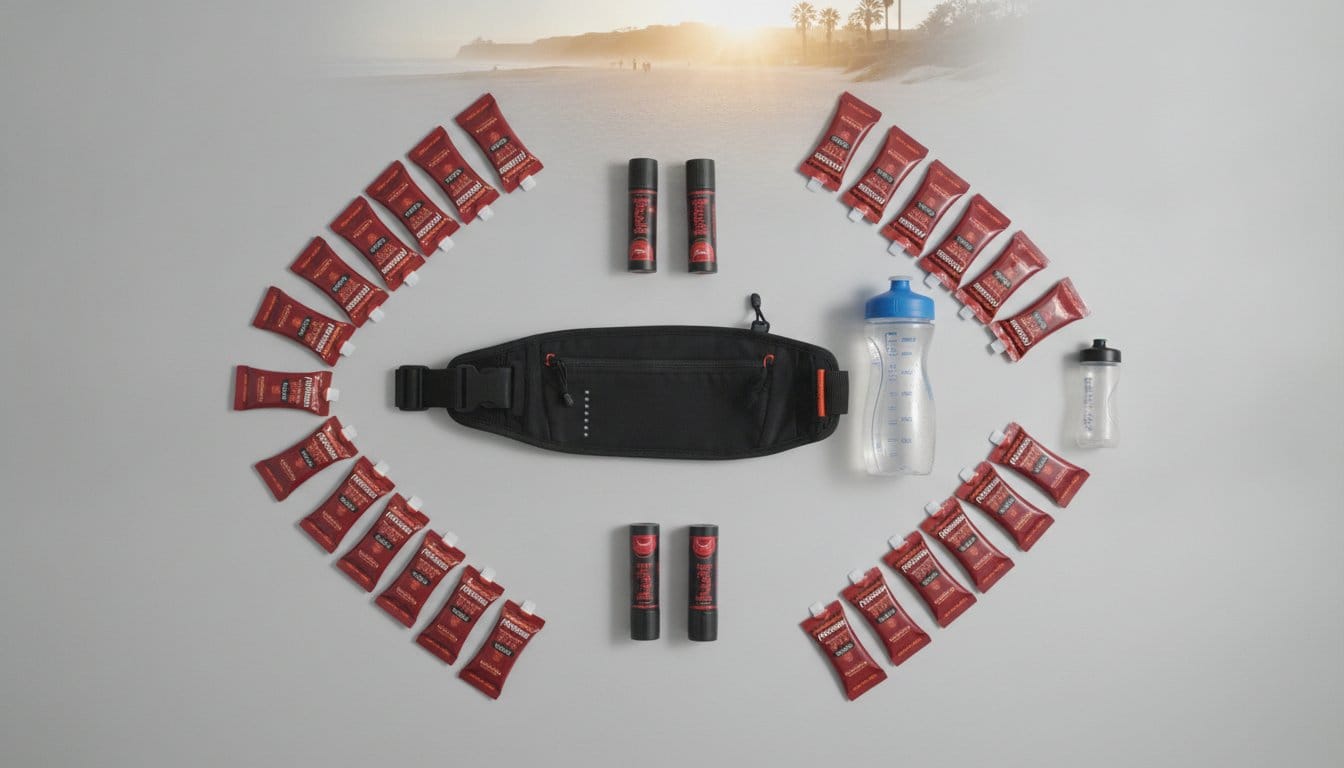
Jul
Hitting the wall at kilometre 32 isn’t a badge of honour; it’s a failure of your endurance fueling strategy. Most athletes spend months training their legs but only minutes planning their gut’s capacity to handle high-octane carbs. You’ve likely felt that sinking sensation when your pace drops and your stomach turns, leaving your goals in the dust. It’s a frustrating, avoidable barrier to your peak performance that stops even the fittest runners and triathletes in their tracks.
You deserve a plan that works as hard as your training does. This guide will help you master the science of fuelling and hydration to eliminate the bonk and crush your personal bests. We’ll explore how to dial in your carb-to-water ratios, train your gut for maximum absorption, and select the technical gear needed to carry your nutrition without slowing down. From the hydrogel technology of Maurten to the streamlined storage of a Compressport Free Belt Pro, we’ll show you how to turn your nutrition into a competitive advantage and ensure you cross the finish line with energy to spare.
Key Takeaways
- Master the three pillars of a high-performance endurance fueling strategy by systematically managing glycogen depletion, fluid loss, and electrolyte balance.
- Learn how to calculate your personal sweat rate and carbohydrate requirements to create a bespoke plan for any race distance or intensity.
- Compare the benefits of isotonic gels like SIS with the advanced hydrogel technology found in Maurten for maximum energy intake with zero stomach issues.
- Identify the best technical gear, such as the Compressport Free Belt Pro, to organise and carry your nutrition efficiently during your event.
- Implement a “train the gut” protocol to increase your carbohydrate tolerance and eliminate the risk of mid-race GI distress.
The Fundamentals of an Endurance Fueling Strategy
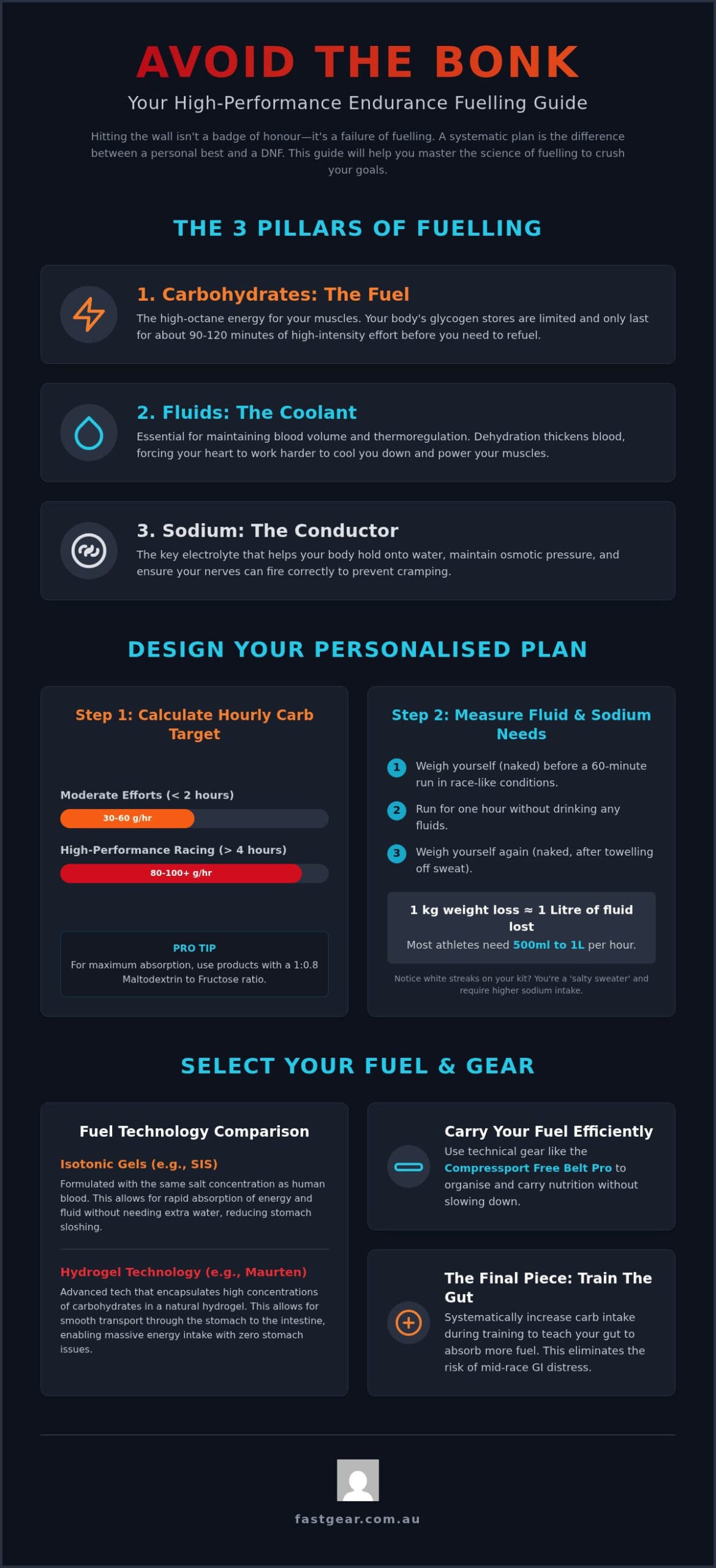
An endurance fueling strategy isn’t just about grabbing a snack when your stomach rumbles. It’s a calculated, systematic replacement of energy, fluids, and salts to keep your body moving at peak efficiency. When you push your limits, you’re essentially managing a biological budget. Every kilometre you cover draws from your internal reserves, creating three acute costs: glycogen depletion, fluid loss, and electrolyte imbalance. If you don’t pay these debts back in real time, your performance will inevitably tank.
Neglecting this balance leads to the dreaded “Bonk.” Scientifically known as hypoglycaemia, this occurs when your blood glucose levels plummet and your brain begins to shut down non-essential functions to preserve itself. Your legs feel like lead, your focus blurs, and your pace evaporates. In Australia, the stakes are even higher. Our intense heat and humidity accelerate sweat rates and sodium loss, making a precise plan the difference between a podium finish and a DNF. Applying Endurance training principles requires a matching nutritional blueprint that accounts for these environmental stressors.
The Three Levers: Carbohydrates, Fluids, and Sodium
- Carbohydrates: This is the high-octane fuel for your internal engine. Your body can only store enough glycogen for about 90 to 120 minutes of high-intensity effort before you need an external top-up.
- Fluids: Water is essential for maintaining blood volume and thermoregulation. If you lose too much through sweat, your heart has to work harder to pump thicker blood to your cooling skin and working muscles.
- Sodium: Think of sodium as the glue that holds water in your system. It maintains osmotic pressure and prevents cramping by ensuring your nerves can fire correctly.
Why a “One Size Fits All” Approach Fails
Every athlete possesses a unique metabolic profile. Some runners are “salty sweaters” who lose massive amounts of sodium, while others can sustain high intensities on fewer calories. Your endurance fueling strategy must be as individual as your fingerprint. A plan for a 10km sprint won’t work for a 100km ultra marathon because the intensity and duration dictate different burn rates. For shorter, high-intensity efforts, you might rely on isotonic solutions. An isotonic drink is a solution with the same salt concentration as human blood, allowing for rapid absorption without weighing down your stomach.
Step-by-Step: How to Design Your Personalised Plan
Designing a high-performance endurance fueling strategy requires moving beyond guesswork. You need hard data from your training sessions to build a plan that survives the heat of competition. Start by establishing your baseline needs through testing, then refine your approach based on the specific demands of your event duration and intensity. This systematic approach ensures you aren’t just eating, but actually absorbing the energy required to maintain your power output.
Calculating Your Hourly Carbohydrate Target
Your gut can only process a certain amount of fuel per hour. For moderate efforts lasting under two hours, 30 to 60 grams of carbohydrates is usually sufficient. However, for high-performance racing and events exceeding four hours, you should aim for 80 to 100 grams or more. To reach these higher levels without gastric upset, you must utilise evidence-based fueling strategies that leverage multiple transportable carbohydrates. Products using a 1:0.8 ratio of maltodextrin to fructose allow your body to absorb more fuel through different pathways in the intestine. If you’re pushing for peak efficiency, hydrogel technology like Maurten Gel 100 is the gold standard for high-carb intake.
The Sweat Test: Measuring Your Fluid and Sodium Needs
Hydration is highly individual. To find your fluid requirement, conduct a 60 minute sweat test in race-like conditions. Weigh yourself naked before a one hour run, then weigh yourself again after. One kilogram of weight loss equals roughly one litre of fluid lost. Most athletes need between 500ml and 1L per hour to stay hydrated. If you notice white streaks on your kit or a gritty feeling on your skin, you’re likely a “salty sweater.” These athletes require higher sodium concentrations to prevent cramping and maintain blood volume. You can find high-sodium options and customisable hydration powders at Fastgear Australia to match your specific sweat profile.
Your endurance fueling strategy is only as good as the format you choose. Runners often prefer the portability of SIS GO Isotonic Gels or GU Energy Gels, while cyclists might rely more on liquid calories like Tailwind powder. For long-distance events, incorporate caffeine strategically during the final third of the race. This provides a critical mental boost and helps maintain power output when fatigue begins to set in. Always test your caffeine tolerance in training to avoid jitters or GI distress on race day.
Selecting Your Fuel: Gels, Chews, and Hydration Powders
Your endurance fueling strategy is only as effective as the fuel you can actually digest. While the previous section established your hourly requirements, choosing the right delivery format is what prevents mid-race GI distress. Standard energy gels, such as GU, provide a concentrated shot of carbohydrates but usually require additional water to assist absorption. If you neglect that water, you risk a “gut bomb” where the high sugar concentration pulls fluid into your stomach, causing nausea or cramping. This makes the delivery mechanism just as critical as the calorie count. Many athletes fall into this trap due to common triathlon nutrition mistakes rooted in outdated fuelling myths that can derail even the most physically prepared competitors.
Hydrogel vs. Isotonic: Which is Best for Your Gut?
Innovation in sports science has provided two distinct solutions for gut sensitivity. Maurten Gel 100 utilises advanced hydrogel technology to encapsulate carbohydrates in a pH-sensitive biopolymer. This allows the fuel to bypass the stomach and release directly in the small intestine, enabling absorption rates of 90g or more per hour without the typical side effects. It is a game-changer for athletes who struggle with traditional syrups. This technology ensures that even at maximum intensity, your energy intake remains high while your stomach stays settled.
Conversely, SIS GO Isotonic gels are designed to be consumed without extra water. Because they have the same concentration as blood, they pass through the stomach quickly for rapid energy delivery. While they contain less carbohydrate per gram than hydrogels, they are ideal for high-intensity efforts where drinking large volumes of fluid is difficult. To combat flavour fatigue during long events, many athletes mix these with Clif Bloks energy chews. The solid texture provides a welcome change in mouthfeel, breaking the monotony of liquids and gels and providing a psychological boost during the middle stages of a race.
Liquid Calories: The Power of Hydration Powders
Hydration powders represent the ultimate “all-in-one” solution for your endurance fueling strategy. Products like Tailwind or Maurten 320 combine high-density carbohydrates with essential electrolytes in a single bottle. This is particularly effective for cyclists. When you’re tucked in an aero position on a Wove M8 road or tri saddle, reaching for a bottle is safer and more efficient than fumbling with gel packets in a jersey pocket. Liquid fuel reduces the cognitive load of tracking gels, allowing you to focus entirely on your power output and cadence.
Using these powders ensures a steady drip-feed of energy rather than the peaks and troughs associated with bolus gel feeding. If you are racing in the Australian heat, these powders also guarantee that you are consuming fluids alongside your energy, preventing dehydration from creeping in. Whether you choose the isotonic simplicity of SIS or the high-tech efficiency of Maurten, your choice should be dictated by your gut’s tolerance and the logistical demands of your sport. Testing these formats during your long training sessions is the only way to guarantee race-day success.
Race Day Execution: Carrying and Organising Your Gear
You’ve crunched the numbers and tested your gut. Now you face the physical reality: where do those 12 gels and two litres of fluid actually go? A high-performance endurance fueling strategy often falls apart because of poor logistics. Fumbling with sticky packets at 160 beats per minute isn’t just annoying; it’s inefficient. If your fuel is hard to reach, you’ll likely delay your intake, leading to the very energy troughs you’ve worked so hard to avoid. Your gear must function as a seamless extension of your body.
The Gear: Compressport Free Belt Pro and Trail Apparel
For runners, the Compressport Free Belt Pro is the elite solution for carrying race-day essentials without the bounce of a traditional pack. This belt sits flush against your hips, keeping your centre of gravity stable while providing enough room for multiple Maurten gels and soft flasks. It’s the perfect companion for the Compressport Trail Racing SS Tshirt. This shirt is engineered for maximum breathability and thermoregulation, ensuring your core temperature stays stable even when you’re pushing hard in the Australian sun. You can even tuck a Mugiro neck protector into your kit to prevent salt-induced chafing during longer efforts.
Organisation is key to maintaining your rhythm. Use the wrap-around pocket of the Free Belt Pro to arrange your nutrition chronologically. Place your caffeine-free gels on one side and your caffeinated “finishers” on the other. This simple system removes the cognitive load of decision-making when fatigue sets in. When your gear is organised, you can focus entirely on your cadence and breathing rather than digging through pockets.
On-the-Bike Logistics for Triathletes
Cyclists and triathletes have a unique advantage when it comes to storage, provided they use the right cockpit setup. The Wove M8 Road / Tri Saddle allows for rear-mounted bottle cages that remain aero-efficient. To maximise space, many athletes use the “concentrated bottle” strategy. By mixing four or five servings of Tailwind powder into a single flask, you create a high-density fuel source that lasts for hours. This allows you to stay in your aero tuck for longer, sipping small amounts of concentrate and chasing it with plain water from your BTA (between-the-arms) bottle.
Safety and speed go hand-in-hand. Reaching for frame-mounted bottles or jersey pockets can break your aerodynamic profile and disrupt your power output. By integrating your endurance fueling strategy into your bike’s ergonomics, you ensure consistent intake without sacrificing speed. Whether you’re on the trail or the tarmac, your equipment should never be the bottleneck in your performance. Explore the full range of high-performance racing gear at Fastgear Australia to streamline your next race-day setup.
Training Your Gut: The Final Piece of the Strategy
Your stomach is just as much an endurance organ as your lungs or your quads. You wouldn’t attempt a marathon without running a single training step; similarly, you shouldn’t attempt a high-carb endurance fueling strategy without training your digestive system to handle the load. The gut is remarkably adaptable. By gradually introducing fuel during your training blocks, you increase the number of carbohydrate transporters in your intestinal lining. This reduces the risk of bloating and ensures that the energy you consume actually reaches your working muscles instead of sitting heavily in your stomach.
The 6-Week Gut Training Protocol
- Weeks 1-2: Start small. Aim for 30g of carbohydrates per hour during low-intensity base rides or runs. This helps your body get used to the mechanical process of digesting while under light physical stress.
- Weeks 3-4: Increase the intensity. Begin testing specific high-performance brands like Maurten Gel 100 or UCAN during your interval sessions. Aim for 60g per hour. This is where you identify which textures and flavours work best for you when your heart rate is elevated.
- Weeks 5-6: Execute full race simulations. During your longest efforts, use the exact gear and nutrition plan you intend to use on the big day. If you plan to carry your gels in a Compressport Free Belt Pro, wear it now. There should be zero surprises when the gun goes off.
Beyond the physiological adaptations, this protocol builds immense psychological confidence. Knowing your nutrition plan is bulletproof removes a major source of race-day anxiety. You can focus on your splits and your competitors instead of worrying about the nearest portable toilet. Fastgear Australia offers a curated selection of elite nutrition, allowing you to sample different brands during your build-up to find your perfect match. Testing these options early ensures you find a solution that sits perfectly, even at maximum effort.
Final Race-Week Preparations
The final 48 hours are about topping up, not testing. Focus on a deliberate carb-load to saturate your muscle glycogen stores. Choose simple, low-fibre carbohydrates to avoid any digestive heaviness on the morning of the event. This is not the time for whole grains or experimental new supplements. Stick to what you’ve proven works in training. Consistency is the foundation of peak performance. Ensure you have everything you need well in advance so you can arrive at the start line ready to execute. Get your race-day fuel and gear at Fastgear Australia and leave nothing to chance.
Execute Your Plan and Conquer the Course
Success on race day is never an accident. It’s the result of a disciplined endurance fueling strategy that balances physiological needs with technical execution. By mastering your hourly carbohydrate targets and training your gut to handle high-octane fuel, you remove the guesswork from your performance. Whether you’re navigating a technical trail or tucking into an aero position on the tarmac, your nutrition must be as refined as your training plan. Consistency in your intake is what separates a strong finish from a mid-race collapse.
Fastgear Australia is your dedicated performance partner. As an authorised Maurten and Compressport retailer, we provide an expert-curated range of nutrition and gear for Australian athletes. We stock high-performance gear for road, trail, and triathlon disciplines to ensure you stay efficient and focused. Optimise your performance with Fastgear’s elite nutrition range and take control of your next event. Gear up, fuel right, and prepare to crush your next personal best with absolute confidence.
Frequently Asked Questions
How many grams of carbs per hour should I aim for?
You should aim for 30 to 60 grams of carbohydrates per hour for moderate efforts, increasing to 90 grams or more for elite performance. High-performance racing requires multiple transportable carbohydrates to bypass absorption bottlenecks. Using hydrogel technology allows you to push toward these higher limits without the risk of gastric upset. Always test your target intake during long training sessions to ensure your gut can handle the specific volume before race day.
What is the difference between an isotonic gel and a standard energy gel?
Isotonic gels like SIS GO are formulated with the same salt concentration as your blood, meaning they can be absorbed without additional water. Standard energy gels, such as GU, are highly concentrated and require water to move from the stomach to the small intestine. If you consume standard gels without water, you risk pulling fluid from your blood into your gut, which often leads to dehydration and nausea during your endurance fueling strategy.
How do I avoid stomach cramps and GI distress while racing?
Avoiding GI distress requires a combination of training the gut and selecting the right fuel formats. Start by gradually increasing your carbohydrate intake during training to improve absorption rates. Utilising hydrogel products like Maurten Gel 100 also helps by encapsulating the sugar, allowing it to bypass the stomach and release in the small intestine. This reduces the acidity and osmotic pressure that typically cause cramping and urgent bathroom stops mid-race.
Is it better to use energy gels or hydration powders?
The choice between gels and powders depends on your sport’s logistics and your personal preference for intake frequency. Hydration powders like Tailwind provide a steady drip-feed of energy and electrolytes, which is ideal for the bike leg where bottles are easily accessible. Gels offer concentrated energy in a portable format, making them superior for the run. Many athletes use a hybrid approach to maintain variety and prevent flavour fatigue over long durations.
Do I really need to take electrolytes if I am not a heavy sweater?
Yes, electrolytes are essential for nerve signalling and muscle contraction regardless of how much you visibly sweat. Even light sweaters lose sodium; maintaining these levels prevents the dilution of your blood volume. In the Australian climate, the cumulative loss over several hours can significantly impact your power output and cognitive function. Incorporating a baseline level of electrolytes ensures your hydration remains effective and your muscles continue to fire correctly.
When should I take my first gel during a marathon or triathlon?
You should consume your first gel approximately 15 to 30 minutes into your race to stay ahead of glycogen depletion. Don’t wait until you feel hungry or tired; that’s a common mistake that leads to an energy deficit you can’t recover from. Establishing an early, consistent rhythm ensures your blood glucose levels remain stable. This proactive approach is a cornerstone of a successful endurance fueling strategy, keeping your engine topped up before the low fuel light comes on.
How do I carry my nutrition without it bouncing around?
Utilise technical gear like the Compressport Free Belt Pro to secure your nutrition flush against your body. Standard waist packs often bounce and chafe, but a high-performance racing belt uses elasticated mesh to hold gels and soft flasks stationary. For triathletes, rear-mounted cages on a Wove M8 saddle provide aero-efficient storage. Proper gear selection ensures your fuel is always within reach without disrupting your stride or aerodynamic profile.
Can I use caffeine gels for the entire race?
It’s generally better to save caffeine for the final third of your race to maximise its ergogenic effect. Using caffeine gels from the start can lead to early-onset jitters, increased heart rate, and potential crashes before the finish line. Most athletes find success by using non-caffeinated options for the first few hours, then switching to Maurten Gel 100 Caf 100 when mental fatigue and physical pain begin to peak in the closing stages.
