
Uncategorized
How to Avoid Bonking in a Marathon with Smart Fueling

Nov
The marathon wall often arrives when glycogen is running low, not simply because you aren’t tough enough. For most runners, glycogen stores begin to run low around the 28 to 32 km mark; taking in 30 to 60 grams of carbohydrate per hour during a run can help keep fuel available. To understand how to avoid bonking in a marathon in 2026, plan for early, regular fuelling, even pacing and hydration that suits the conditions.
It’s easy to assume slower runners are more likely to struggle, or that speed alone determines who hits the wall. Runners at any pace can bonk: what matters is how much carbohydrate your effort uses and whether your fuelling keeps pace with demand. This guide explains what hitting the wall means, how depleted glycogen can contribute, and how carbohydrate, hydration and electrolytes fit into a practical race strategy. You’ll also learn how to adjust your approach so you reach the later kilometres with a plan, not guesswork.
Key Takeaways
- Build your carbohydrate intake in the 24 to 48 hours before race day while easing back your training load.
- Manage glycogen demand with controlled pacing; an aggressive start can leave less fuel for the later kilometres.
- Adjust fluid intake to the conditions, your thirst and your sweat rate, and consider how electrolytes support fluid balance and muscle function.
- Recognise a sudden drop in pace and energy as a cue to reassess your fuelling, hydration and effort.
What constitutes hitting the wall?
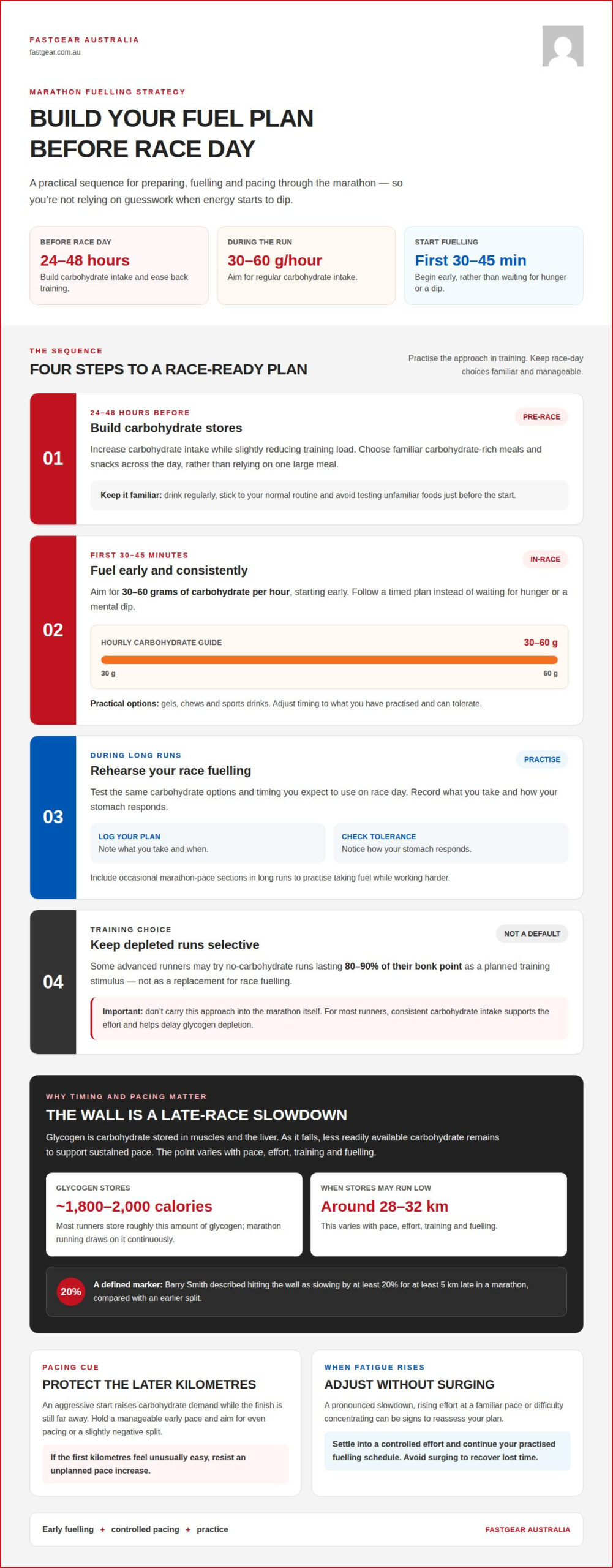
Hitting the wall is a marked late-race slowdown as carbohydrate availability falls and maintaining pace feels harder. Barry Smith defined it as slowing by at least 20% for at least 5km late in a marathon, compared with an earlier split. Use these steps to prepare your fuel plan.
- Load carbohydrate before race day. Increase carbohydrate intake during the 24 to 48 hours before a marathon while slightly reducing your training load. Choose familiar carbohydrate-rich meals and snacks across the day, rather than relying on one large meal. Drink regularly and keep your normal routine; avoid testing unfamiliar foods just before the start. This preparation supports glycogen storage in muscle before race demands rise.
- Fuel early and consistently. Aim for 30 to 60 grams of carbohydrate per hour during your run, starting within the first 30 to 45 minutes. Gels, chews and sports drinks are practical options. Follow a timed plan instead of waiting for hunger or a mental dip, then adjust the schedule to what you have practised and can tolerate.
- Practise race fuelling during long runs. Test the same carbohydrate options and timing you expect to use on race day. Record what you take and how your stomach responds; practice helps make fuelling part of your running routine. Include occasional marathon-pace sections in long runs to rehearse taking fuel while working harder, rather than introducing a new strategy during the race.
- Use depleted training runs selectively. Some advanced runners may try no-carbohydrate runs lasting 80-90% of their bonk point. This is not a default replacement for race fuelling: the aim is a planned training stimulus, not reaching exhaustion. Never carry the approach into the marathon itself. For most runners, consistent carbohydrate intake supports the effort and helps delay glycogen depletion.
Bonking and glycogen depletion
- Understand the fuel limit. Glycogen is carbohydrate stored in your muscles and liver. Most runners store roughly 1800 to 2000 calories of glycogen, but marathon running draws on that supply continuously. As stores fall, the body has less readily available carbohydrate to support sustained pace. For many runners, levels begin running low around the 28 to 32 km mark. The point varies with pace, effort, training and fuelling.
- Keep early effort controlled. Starting faster than planned raises carbohydrate demand when the finish is still far away. Hold a manageable pace early, then aim for even pacing or a slightly negative split. This can help preserve glycogen and maintain performance deeper into the race. If the first kilometres feel unusually easy, resist turning that feeling into an unplanned pace increase. A controlled start is part of how to avoid bonking in a marathon 2026.
- Build endurance through consistent long runs. Regular long runs can improve your ability to use fat alongside carbohydrate, slowing glycogen depletion. This adaptation supports endurance, but it doesn’t remove the need to fuel during a marathon. Include controlled efforts in training and practise your race pace under fatigue, rather than treating every long run as a test of maximum speed.
- Read the change in performance. Bonking is more than ordinary tiredness after hours of running. Watch for a pronounced slowdown, rising effort at a familiar pace and difficulty concentrating on race decisions. Barry Smith defined hitting the wall as slowing by at least 20% for at least 5km late in a marathon, compared with an earlier split. Use your splits alongside perceived effort: a steady fade can signal that the plan needs adjusting.
- Respond before depletion becomes severe. Don’t wait for a dramatic energy crash before following your planned fuelling schedule. When fatigue rises, avoid surging to recover lost time; that increases demand further. Settle into a controlled effort and continue with your practised carbohydrate intake. For how to avoid bonking in a marathon 2026, pacing, training and fuelling need to work together; no single tactic can compensate for consistently starting too hard.
Hydration and electrolytes
- Set a flexible drinking plan. The suggested range is 300-800 ml of water per hour, adjusted for temperature, sweat rate and thirst. Treat it as a guide, not a target to force. A runner sweating heavily in warm conditions may need a different approach from someone running comfortably in cool weather. Practise drinking during training so your plan feels manageable while running.
- Use electrolytes with purpose. Electrolytes help maintain fluid balance and support muscle function, especially in warm conditions. Consider them alongside water during long efforts or hot races. They don’t replace carbohydrate: water and electrolytes address hydration needs, while gels, chews or sports drinks can contribute carbohydrate. Keep each part of your plan clear rather than expecting one choice to cover every need.
- Recognise warning signs early. Low blood sugar may present as sudden weakness, shakiness or difficulty concentrating. Dehydration can involve marked thirst, dizziness or worsening fatigue, while hyponatraemia may cause headache, nausea or confusion. These signs can overlap and shouldn’t be used to diagnose the cause. Stop running and seek urgent medical help for confusion, collapse or rapidly worsening symptoms.
- Avoid drinking beyond thirst or plan. Excessive fluid intake can also be dangerous, including by contributing to hyponatraemia. Don’t keep drinking simply because a station is available, and don’t assume more water will prevent hitting the wall. Match intake to thirst, conditions and your practised approach. Monitor how you feel as the race progresses, particularly if heat increases the strain.
- Prepare before race day. Keep to your normal recommended daily water intake of 2 L in the lead-up to the race. Don’t attempt last-minute overhydration. During training, note how temperature and effort affect thirst, fluid intake and muscle function. That record helps you make a more informed race-day plan and adjust it when conditions differ.
What causes marathon bonking and how can runners recognise it?
- Watch for several causes working together. Bonking can develop when carbohydrate supply can’t keep pace with the energy demand of running. An overly aggressive start, missed fuel, or an unplanned surge can increase demand. Warm conditions and poor hydration can add strain, though they aren’t the same as glycogen depletion. Look at the full race picture, not one symptom alone.
- Notice when the change begins. Marathon runners commonly hit the wall between 18 and 22 miles into the race. About 2 in 5 runners experience bonking or hitting the wall during a marathon. The timing varies, so don’t treat a particular kilometre as a prediction. Compare your pace and effort across the race to spot an unexpected fade.
- Compare effort with your pace. A runner may feel suddenly exhausted, struggle to hold a familiar pace, or find ordinary decisions harder. A pronounced slowdown matters more than routine late-race discomfort. Barry Smith defined hitting the wall as slowing by at least 20% for at least 5km late in a marathon, compared with an earlier split.
- Check the pattern before reacting. Review your recent pace, effort, fuelling and fluid intake. A missed planned fuel intake alongside rising effort may point towards inadequate carbohydrate replacement. Dizziness, confusion or collapse can signal a serious problem, not simply a pacing issue. Stop and seek urgent medical help if these occur.
- Respond with control, not a surge. If your pace fades, ease back to a sustainable effort and resume your practised fuelling plan. Don’t try to regain lost time with a sudden acceleration. After the race, compare splits and note when fatigue began. Use those observations to refine your next long-run rehearsal and race strategy. Put that plan into practice with race-day fuelling essentials.
Fastgear Australia
Fastgear Australia offers endurance nutrition and racing gear to help you put a considered marathon fuelling plan into practice. If your strategy includes portable carbohydrate, options include GU Energy Gel – Single and Clif – BLOKS Energy Chews. Choose fuel that fits the schedule you’ve practised in training, rather than trying something unfamiliar on race day. The Compressport Free Belt Pro can also help you carry your race-day essentials. These products support your preparation, but pacing, fuelling and hydration still need to work together. Choose the fuel and gear that suit your approach, then contact Fastgear Australia to discuss your race-fuelling needs.
Make your next race plan deliberate
If you’re working out how to avoid bonking in a marathon in 2026, make your next step practical: turn your training observations into a simple race-day plan. Write down what you’ll carry, when you’ll use it, and how you’ll respond if your pace or conditions change. Keep the plan clear enough to follow when concentration drops, and rehearse it before race day.
After your next long run, note what felt manageable and what needs adjusting. Use those observations to refine your approach instead of making last-minute changes on the start line. A consistent process gives you a stronger basis for decisions under pressure.
Contact Fastgear Australia for advice on your race-day setup, then take your next training session with a clear plan and focused intent.
Frequently Asked Questions
What is bonking?
Bonking is a pronounced drop in a runner’s ability to sustain effort during prolonged exercise, often linked to low carbohydrate availability. It can feel different from normal marathon fatigue: maintaining pace becomes difficult, concentration may slip, and a familiar effort feels unusually hard. For example, a runner who holds steady splits early but fades sharply later may be experiencing more than ordinary tiredness.
Why do some runners ‘hit the wall’?
Runners may hit the wall when the race demands energy faster than fuelling and stored carbohydrate can support. An early pace surge, missed fuel or a demanding course can all contribute. For example, a runner who starts faster than planned may use carbohydrate rapidly and struggle to hold pace later. These factors can interact, so a slowdown doesn’t always have one simple cause.
How many grams of carbohydrates per hour should marathon runners consume to avoid bonking?
A practical starting range is 30 to 60 grams of carbohydrate per hour during the run. The amount a runner can manage depends on pace, duration and gut tolerance, so build towards a race-day target in training. For example, test a chosen gel or chew during long runs and note whether the timing and amount feel manageable while maintaining your intended effort.
How should runners carbohydrate-load before a marathon, and for how many days?
Increase carbohydrate intake during the 24 to 48 hours before the race, while slightly reducing training load. That means beginning the loading period one to two days beforehand, rather than relying on a single large meal the night before. Choose familiar carbohydrate-rich foods across meals and snacks. Keep the approach routine, so race week doesn’t introduce new foods or a sudden change in eating habits.
What is a practical marathon fuelling schedule by distance or time?
Use elapsed time to keep fuelling consistent, rather than waiting for a particular kilometre or hunger. One simple framework is to take your first carbohydrate within the first 30 minutes, then fuel at regular, practised intervals. Check your target against the carbohydrate on each gel, chew or drink, and make sure the combined intake supports your hourly goal. Practise the schedule during long runs.
How much fluid and sodium should marathon runners take, and how can they avoid overhydration?
A suggested fluid range is 300 to 800 ml per hour, adjusted for temperature, sweat rate and thirst. Don’t force water simply because it’s available; use thirst and your rehearsed plan to guide drinking. Include electrolytes as part of your hydration strategy, especially in warm conditions. Sodium needs vary, so avoid treating one fixed amount as suitable for every runner and race.
