
Uncategorized
4 ways to fuel a marathon and avoid hitting the wall

Nov
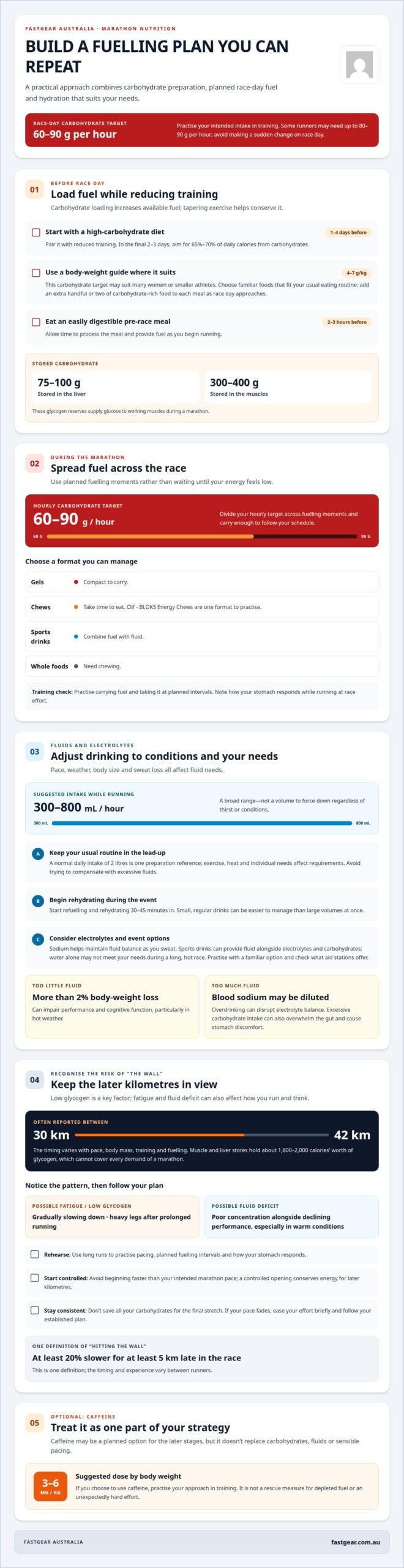
The final kilometres are fuelled long before the start line. A marathon nutrition plan to prevent hitting the wall combines carbohydrate loading before race day with regular fuelling during the event. A practical race target is 60-90 grams of carbohydrate per hour, alongside a hydration and electrolyte strategy that suits your needs.
If you’ve felt your pace fade as your energy drops, you know why nutrition belongs in your race preparation. The aim isn’t to rely on one gel or a last-minute caffeine boost. It’s to practise a repeatable strategy that supports you from the opening kilometres to the finish.
Build your strategy around four elements: increase carbohydrate intake before the race, fuel at planned intervals, manage fluids and electrolytes, and use caffeine thoughtfully if it suits you. Practise the plan in training to learn how each element supports your endurance before taking it to the start line.
Key Takeaways
- Build carbohydrate loading into your pre-race preparation alongside a taper, rather than relying on one large meal before the start.
- Plan regular race-day fuelling, with 60-90 grams of carbohydrate per hour as a target to practise during training.
- Adjust your hydration approach to the conditions and your needs; suggested fluid intake while running ranges from 300 to 800 millilitres per hour.
- If you choose to use caffeine, practise your strategy in training and consider the suggested dose of 3-6 milligrams per kilogram of body weight.
1. Carbohydrate loading
Your body stores about 75-100 grams of carbohydrates in the liver and 300-400 grams in the muscles. During a marathon, these glycogen reserves supply glucose to working muscles. Carbohydrate loading increases available fuel before the race, while tapering exercise helps conserve it.
Start by following a high-carbohydrate diet for one to four days before the event, alongside reduced training. In the final 2-3 days, aim for 65%-70% of daily calories from carbohydrates. A target of 4-7 grams per kilogram of body weight may suit many women or smaller athletes. As race day approaches, add an extra handful or two of carbohydrate-rich food to each meal. Choose familiar options that fit your usual eating routine.
Before the start, eat easily digestible carbohydrates 2-3 hours before the race. This gives your body time to process the meal and provides fuel as you begin running. During the marathon, target about 60-90 grams of carbohydrates per hour. Some runners may need up to 80-90 grams per hour, so build towards your intended intake during training rather than making a sudden race-day change.
Gels, chews, sports drinks and whole foods each have trade-offs: gels are compact, chews take time to eat, drinks combine fuel with fluid, and whole foods need chewing. Clif – BLOKS Energy Chews offer another format to practise alongside gels or familiar foods.
Use a simple schedule to spread fuel across the race instead of waiting until your energy feels low. Divide your hourly target across planned fuelling moments and carry enough to follow your schedule. Consistent carbohydrate intake can help support you as muscle glycogen becomes depleted, an important part of a marathon nutrition plan to prevent hitting the wall.
2. How do I avoid ‘hitting the wall’?
Runners hit the wall when glycogen stores run low and working muscles receive less readily available glucose. Your body uses glycogen stores as fuel during a race, and muscle glycogen can become depleted over time. Fatigue, heavy legs and a sharp pace drop are common signs. Dehydration can also impair performance and cognitive function when fluid loss exceeds 2% of body weight, particularly in hot weather.
The wall often arrives between 30 and 42 kilometres, when sustained effort meets dwindling fuel. One definition is slowing by at least 20% for at least 5 kilometres late in the race. The timing varies with pace, body mass, training and fuelling, but glycogen depletion is a key factor. The muscles and liver store about 1,800 to 2,000 calories’ worth of glycogen, which cannot cover every demand of a marathon.
Distinguish between possible warning signs. Gradually slowing down and heavy legs after prolonged running may point to fatigue and low glycogen. Poor concentration alongside declining performance can also signal fluid deficit, especially in warm conditions. These patterns can overlap, so follow your planned fuelling and drinking schedule rather than waiting for a dramatic crash.
Use training runs as rehearsals. Practise carrying and taking fuel at planned intervals, and note how your stomach responds while running at race effort. Build confidence with long runs that let you practise pacing and fuelling, then refine a manageable routine. Avoid starting faster than your intended marathon pace; a controlled opening conserves energy for the later kilometres.
During the race, fuel consistently rather than saving all your carbohydrates for the final stretch. If your pace fades, ease your effort briefly and follow your established plan. Supporting glycogen availability and hydration before fatigue escalates can help you hold your form through the finish.
3. Hydration and electrolytes
Hydration supports circulation, temperature control and sustained effort during running. Fluid needs change with pace, weather, body size and sweat loss, so one fixed volume won’t suit every marathon. Suggested intake while running ranges from 300 to 800 millilitres per hour. Treat that as a broad range, not a target to force down regardless of thirst or conditions.
Begin with your usual drinking and eating routine in the lead-up, rather than trying to compensate with excessive fluids. A normal daily intake of 2 litres is one preparation reference, but exercise, heat and individual needs affect requirements. During the event, begin refuelling and rehydrating 30 to 45 minutes in. Small, regular drinks can be easier to manage than large volumes taken at once.
Electrolytes, including sodium, help maintain fluid balance as you sweat. Water alone may not meet your needs during a long, hot race, while sports drinks can provide fluid alongside electrolytes and carbohydrates. Choose a familiar option and practise with it during training. Sweat rate and weather matter: a warm Australian race may call for a different approach from a cool morning run.
Aid-station options vary by Australian marathon and may include water or sports drinks. Carry familiar fuel if you need a particular product or want to follow a set schedule, rather than relying on what’s available at each station. Check the event information to plan when you’ll drink, and carry only what you can comfortably manage.
Overdrinking can dilute blood sodium and disrupt electrolyte balance; excessive carbohydrate intake can overwhelm the gut and cause stomach discomfort. Both can interfere with running and make it harder to maintain your planned effort. A fluid deficit greater than 2% of body weight can impair performance and cognitive function, particularly in hot weather. Practise your drinking and fuelling approach in training, then adjust for race conditions and how your body responds.
4. Caffeine during a marathon
Caffeine can be a planned option for the later stages of a marathon, when distance, fatigue and focus test your race strategy. It doesn’t replace carbohydrates, fluids or sensible pacing. Treat it as one part of your approach, not a rescue measure for depleted fuel or an unexpectedly hard effort.
If you choose caffeine, the suggested dose is 3-6 milligrams per kilogram of body weight during the race. Use your body weight to calculate a personal amount, then account for caffeine from every source in your plan. Avoid adding an unfamiliar drink or gel on race day simply because fatigue has arrived.
Timing matters because a marathon is a long event, not a single moment of effort. Decide in advance whether caffeine belongs earlier or later in your schedule, and keep it aligned with your usual carbohydrate intake. A caffeinated gel, for example, can be a planned fuel option rather than an extra dose taken without tracking what you’ve already consumed.
Test your strategy in training. Note the product, timing and how you feel while running, including any stomach response or change in focus. Repeat the approach on another training run before race day. This gives you a practical basis for deciding whether caffeine suits your routine and where it fits across the distance.
Keep caffeine optional. If you don’t use it in training, race day isn’t the time to experiment. If it’s already part of your rehearsed plan, include it alongside your regular fuel and hydration schedule. The maurten gel 100 caffein is one named option to consider within that approach. Explore caffeinated marathon fuel as you organise your race-day nutrition.
Fastgear Australia
Fastgear Australia is an online retailer of endurance sports nutrition and technical racing gear. To put your marathon fuelling plan into practice, explore options such as GU Energy Gel – Single and Clif – BLOKS Energy Chews. The Compressport Free Belt Pro and Compressport Trail Racing SS Tshirt can also be part of your race kit.
Choose fuel to practise with during training, then plan how you’ll carry it and when you’ll take it. A familiar setup can make it easier to follow your routine over race distance. Explore Fastgear Australia’s marathon nutrition and racing gear to prepare for race day.
Make your race plan familiar
Turn your marathon nutrition plan to prevent hitting the wall into a routine you’ve rehearsed. Match your fuel, carrying setup and timing to your training, then keep race day as close to that practice as possible. Familiar choices mean less to manage as the kilometres add up.
Fastgear Australia offers race nutrition and gear to support your preparation, including GU Energy Gel – Single, Compressport Free Belt Pro and Compressport Trail Racing SS Tshirt. Choose what fits your approach and practise with your race kit during training so it feels familiar on the start line.
Explore marathon nutrition and race gear as you prepare your setup. Keep your plan simple, stay focused on the next step, and build towards a strong finish.
Frequently Asked Questions
How do I avoid ‘hitting the wall’?
Reduce the risk by matching your race pace to a rehearsed fuelling routine. Before race day, practise carrying your fuel and taking it while running, not just during rest stops. If you start to fade late in the race, ease your pace, take your next planned fuel and use a brief walk break to reset. Resume running when your effort feels manageable.
Why do some runners ‘hit the wall’?
Hitting the wall can happen when prolonged effort outlasts readily available energy, particularly as muscle glycogen becomes low. An aggressive opening pace can increase fuel demand and bring fatigue forward. Preparation matters too: runners who haven’t practised eating during long runs may struggle to maintain their intended intake once the race is underway.
What Causes You to Hit the Wall?
The main cause is a mismatch between the energy your muscles use and the fuel available to sustain your effort. Glycogen is a limited reserve, so pace, race duration and carbohydrate intake all influence when fatigue becomes pronounced. Heat and inadequate fluid intake can add strain, while stomach discomfort may make it harder to keep fuelling.
What do I do if I encounter ‘the wall’?
Ease your pace instead of forcing your planned speed through severe fatigue. Take the next fuel you’ve practised with, sip fluid according to your race plan and consider a short walk break. Give yourself time to settle before resuming your running rhythm. Avoid swallowing several gels or large amounts of fluid at once to compensate.
How many grams of carbohydrates per hour should marathon runners consume to avoid hitting the wall?
A commonly stated race target is 60-90 grams of carbohydrate per hour. Carbohydrate needs can vary over the course of a marathon, so use a fuelling approach you’ve practised and can tolerate. Use a target you’ve practised and can tolerate; don’t treat a higher number as automatically better for every runner.
How should marathon carbohydrate intake be trained and increased during long runs?
Use long runs to rehearse the timing, format and amount of fuel you intend to use on race day. Start with an intake your stomach handles, then increase it in manageable steps across training sessions. Record what you take and how it feels while running. Practise with the same gels, chews or drinks you plan to carry on race day.
