
Uncategorized
High-Carb Drink Mix for Cycling in Australia: How to Choose

Oct
The most concentrated bottle isn’t automatically the best choice for your ride. If you’re searching for a “high carb drink mix for cycling australia”, match carbohydrate delivery to your pace, hydration plan and gut tolerance rather than simply chasing the biggest number on the label.
It’s easy to confuse a high-carb fuel mix with an everyday hydration powder, or to think you’ll need a pocket full of gels and bars to meet your intake. A drink mix can simplify your fuelling setup, but concentration and fluid needs still matter. Start with a strategy you can practise, then build confidence before race day.
This guide compares drink-mix formats and explains how to choose one for your ride. You’ll see how Maurten 160 Powder, Maurten 320 Powder and Tailwind Powder fit into different fuelling plans, what to consider when increasing carbohydrate intake, and how to test a repeatable approach in training. The goal is a bottle plan that supports your effort without leaving hydration or stomach comfort to guesswork.
Key Takeaways
- Distinguish concentrated fuelling mixes from everyday hydration powders by checking the carbohydrate in each prepared serve.
- Compare mixing directions, flavour options and electrolyte information on current product labels, not just the headline carbohydrate figure.
- Choose a mix around your ride duration, intensity, other fuel and planned fluid intake, then practise the setup in training.
- Compare a high carb drink mix for cycling australia and consider how Maurten 160 Powder, Maurten 320 Powder and Tailwind Powder may fit different fuelling plans.
- Build tolerance progressively and adjust your approach if the concentration or fluid volume doesn’t suit your gut.
What makes a high-carb drink mix useful for cycling?
A high-carb drink mix is a powder or concentrate prepared with fluid to provide a substantial amount of carbohydrate during exercise. There’s no universal threshold that makes a mix “high-carb”, so compare the carbohydrate per prepared serve on the label rather than relying on the name or marketing. The amount that suits you depends on the ride, your other fuel and what your gut tolerates.
Drinkable fuel can be practical on sustained rides because it combines carbohydrate with a drink you’re already carrying. This may reduce how much solid food you need to handle while riding. It isn’t essential for every session, though, and a drink mix is just one option alongside gels, chews and food.
When does drinkable carbohydrate suit a cycling session?
On a longer or harder ride, keeping fuel accessible can make it easier to follow a plan. A bottle may suit riders who prefer sipping regularly; others may find gels, chews or food easier to portion. You can also combine these formats, using the drink for some carbohydrate and other fuel sources for the rest.
A short, easy session may not call for extra on-bike carbohydrate, particularly if you’ve eaten appropriately beforehand. The demands of a long training ride or event are different. Match your approach to the session and practise it before relying on it in a race. A drink mix can support a plan, but it doesn’t guarantee a performance outcome.
Carbohydrate loading is a separate preparation strategy, not simply drinking a high-carb mix during a ride. For background, see Wikipedia’s overview of carbohydrate loading. Keep the distinction clear: an on-bike drink is one part of fuelling during exercise.
Fuel and hydration are related, but not interchangeable
Carbohydrate contributes energy; fluid intake responds to hydration needs. A concentrated mix can supply more carbohydrate in a given volume, but that doesn’t mean you should drink extra fluid just to reach a fuelling target. Likewise, a bottle that meets your fluid needs may not provide all the carbohydrate in your plan. Consider both targets, then use food or another fuel format if they don’t align.
Use the product’s preparation directions as your starting point. Adding extra powder to a bottle changes the prepared concentration and may not suit your gut. Test your chosen setup during training, adjusting one variable at a time and noting how it feels.
Electrolytes are a separate part of the hydration picture. Their role and intake considerations deserve their own assessment, so use a dedicated guide to electrolytes for athletes rather than treating a high-carb mix as an all-in-one answer. When comparing a high carb drink mix for cycling australia, assess fuel and fluid independently, then plan how they work together.
How carbohydrate concentration changes your on-bike fuelling
Concentration describes how much carbohydrate is in a prepared drink relative to its volume. Check both figures on the label: a serve mixed into less water is more concentrated than the same amount of powder prepared with more water. Maurten 160 Powder provides 40g of carbohydrate per 500ml serve, while Maurten 320 Powder provides 80g per 500ml serve. Follow the current pack directions when preparing either mix.
Concentration tells you what’s in a volume of drink; hourly intake tells you how much carbohydrate you consume over time. The figures aren’t interchangeable. A bottle’s contents only count towards your hourly plan as you drink them, and your total also depends on other fuel sources.
What do glucose and fructose contribute to sports fuel?
Glucose and fructose are different types of carbohydrate used in sports nutrition. Some fuelling products include both, while others use a different carbohydrate formulation. That doesn’t mean every rider needs the same blend or intake. Your session demands, personal tolerance and the product’s directions all matter.
For broader context, UCSF Health’s sports nutrition guidance discusses options such as sports drinks and gels. Use this as context, not a substitute for testing your approach during training. A formula that suits one cyclist may not feel comfortable to another, particularly as ride duration, intensity and intake increase.
Why concentration is not the same as your hourly intake
A bottle’s carbohydrate amount is only part of the calculation. The amount you consume over a given period depends on how much you carry, how steadily you sip and whether you finish it. Gels, chews and food also contribute. Plan around what you expect to consume, rather than assuming one bottle equals one hour of fuel.
Gut tolerance can influence what’s practical. A concentrated drink may be harder for some riders to manage, especially if they try a new preparation or increase intake abruptly. Test the label-directed mix on a training ride, note how much you drink and when, and account for any other carbohydrate you consume. A higher concentration isn’t automatically a better match.
Consider your whole ride-fuelling strategy, including timing and the mix of drink, food and other fuel formats. That broader view is useful alongside information about cycling nutrition in Australia. To compare options, explore cycling drink mixes at Fastgear Australia and assess each product’s serve size and preparation instructions against your plan.
How to compare high-carb drink mixes for cycling
Start with the prepared serve, not the product name. Note how much carbohydrate a serving provides, how much water the instructions specify and what else the formulation contains. This helps you compare a concentrated fuelling mix with a powder intended to support everyday hydration, without assuming they provide the same amount of carbohydrate or serve the same purpose.
Which label details matter when comparing a mix?
Check the current label for carbohydrate per serve and the volume of water needed to prepare it. Then note the listed carbohydrate sources, sodium and other electrolytes, plus flavour options where stated. Compare like with like: a figure per sachet isn’t directly comparable with one per litre unless you account for the prepared volume.
| Drink mix | Carbohydrate per prepared serve | Mixing directions | Flavours and electrolytes |
|---|---|---|---|
| Maurten 160 Powder | 40g per 500ml serve | Prepare according to the current label; the product information specifies a 500ml serve. | Check current product information for flavour options and electrolyte details. |
| Maurten 320 Powder | 80g per 500ml serve | Prepare according to the current label; the product information specifies a 500ml serve. | Check current product information for flavour options and electrolyte details. |
| Tailwind Powder | Check the current label for carbohydrate per serve and prepared volume. | Follow the product’s current serving directions. | Check the current product information for flavour options and electrolyte details. |
Formulations and pack directions can change, so use the current label for product details. Don’t infer sodium content, taste or texture from a product category. Base your comparison on what the label states.
How do concentrated mixes differ from everyday hydration powders?
A concentrated fuel mix is intended to provide a substantial carbohydrate contribution in a prepared serving. A general hydration powder may place more emphasis on fluid and electrolyte intake, and its carbohydrate content can differ. These descriptions are starting points, not guarantees: compare the label and intended serving for each product.
For cyclists comparing a high carb drink mix for cycling australia, the right fit depends on the drink’s role in your plan. If you want more carbohydrate from a bottle, consider the carbohydrate-to-volume ratio. If your main priority is fluid and electrolyte replacement, assess those label details and account for fuel separately if needed. Neither format automatically covers every requirement.
Use the comparison as a decision tool, not a performance ranking. Match the prepared serve to your ride plan, bottle capacity and other fuel sources, then test the mix as directed in training. This keeps the choice grounded in product fit and label information.
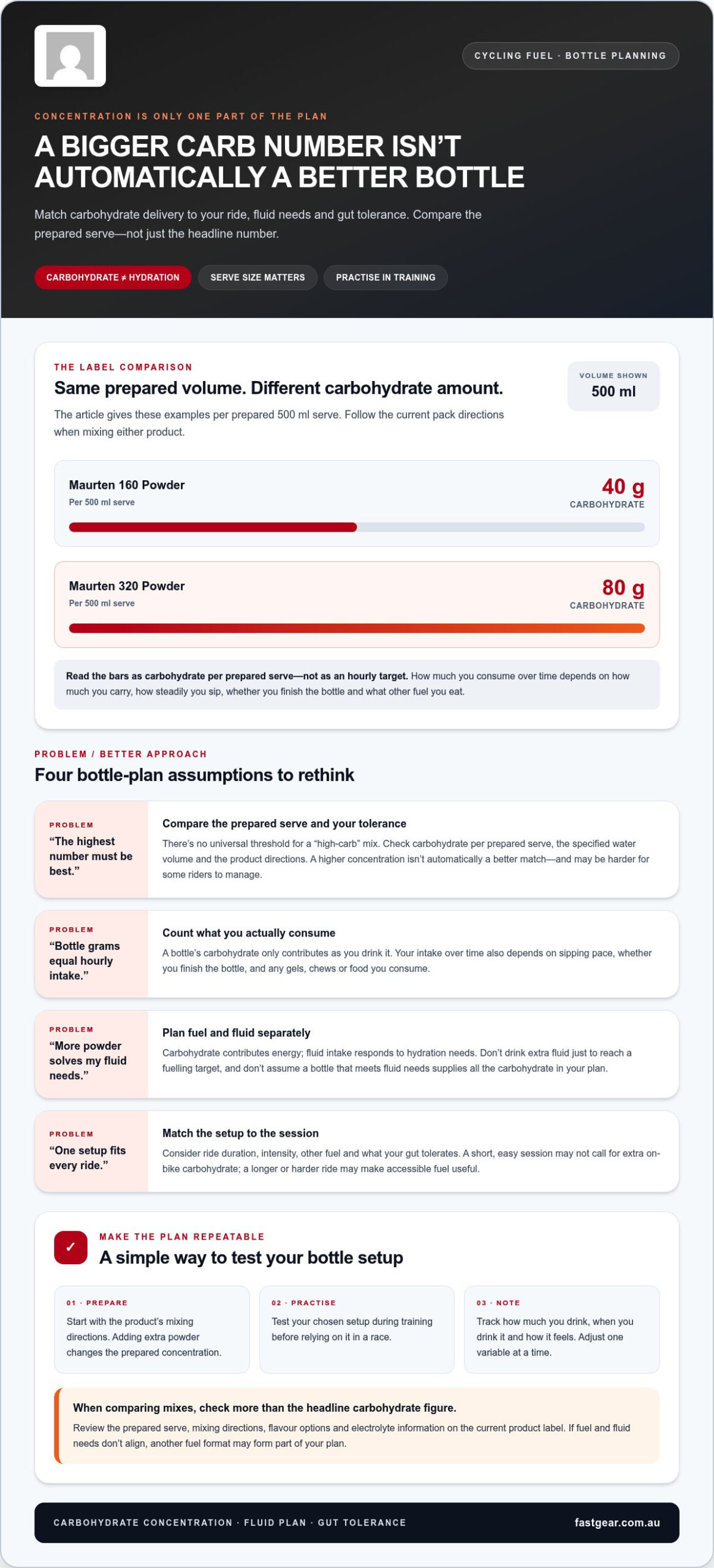
How to choose and practise a high-carb drink mix on the bike
Choose a mix for the ride you’re doing, not an abstract carbohydrate target. A short, easy spin may need no dedicated on-bike fuel, while sustained or race-specific riding can call for a plan that includes drinks, gels, chews or food. Use these steps to match the mix to your session, bottle setup and tolerance.
- Define the ride. Note its expected duration and intensity. Is it an easy session, a sustained training ride or a race-specific effort? The longer or harder the ride, the more useful it may be to plan how you’ll take in fuel.
- Count your other fuel. List the gels, chews and food you expect to carry and use. Include these in your total plan so you don’t overlook carbohydrate from other formats.
- Check the prepared serve. Follow the current label for the powder amount and water volume. Make sure the resulting concentration suits your fuelling approach and the bottle you’ll carry.
- Match fuel and fluid. Consider how much you plan to drink and how often you’ll sip. Don’t force extra fluid to reach a carbohydrate target; plan other fuel sources if your fluid needs and drink-mix concentration don’t align.
- Trial it in training. Practise the same preparation and carrying setup you expect to use on event day. Record what you drank, when you drank it and how it felt.
Match the mix to the ride and your fuelling routine
A concentrated option may suit a sustained ride where you want a larger share of planned carbohydrate in your bottle, but it won’t suit every session. Review the whole routine: ride demands, planned fluid intake, bottle capacity and other fuel sources. Broader endurance sports nutrition principles can help put drink-mix choices in context. Keep the plan simple enough to follow while riding.
Test preparation and tolerance before race day
Use a representative training ride to assess flavour, texture, stomach comfort and whether sipping fits your pace and routine. Change one variable at a time, such as concentration or timing, so you can identify what suits you. Avoid trying a new product or preparation method for the first time at an event. Persistent or severe gastrointestinal symptoms warrant advice from a qualified health professional.
Build a repeatable routine, then adjust it based on your training experience and the label directions. To compare options for your next ride, explore cycling drink mixes at Fastgear Australia.
Explore high-carb cycling drink mixes at Fastgear Australia
There’s no single mix that suits every cyclist or session. Compare preparation directions and carbohydrate per serve with your ride plan, bottle capacity and personal tolerance. Fastgear Australia stocks Maurten 160 Powder, Maurten 320 Powder and Tailwind Powder. Assess each against your needs rather than treating any mix as an automatic solution or guaranteed performance improvement.
Compare the confirmed powder options against your ride plan
Maurten 160 Powder provides 40g of carbohydrate per 500ml serve, while Maurten 320 Powder provides 80g per 500ml serve. Use current product labels and manufacturer preparation directions, including for ingredient and electrolyte details.
For Tailwind Powder, use the current product details for carbohydrate per serving, required water volume and preparation directions. Don’t assume it matches either Maurten option based on category alone. Compare the prepared concentration with the fluid you plan to drink, and consider whether the mix fits your preferred taste, texture and gut tolerance. Product details can narrow your options, but your ride plan determines what’s practical.
As you compare the range, focus on the details that affect your setup:
- How much carbohydrate does the prepared serve provide?
- What volume of water does the manufacturer specify?
- How does that concentration fit your bottle and planned fluid intake?
- What other fuel will you carry, and how comfortable are you with the mix?
These checks make a high carb drink mix for cycling australia a considered choice rather than a guess based on the largest number on a pack. Follow the current product label for serving details. Explore cycling drink mixes at Fastgear Australia to compare the powder options.
Build a repeatable setup for training and events
Before a key ride, use a simple checklist: chosen mix, correctly prepared bottle, other planned fuel and practice history. Keep the product and preparation consistent while testing, then note how the taste, texture and drinking routine feel. If you change the powder, concentration or timing, change one variable at a time. This makes it easier to identify what suits you and what needs adjusting.
Practise the carrying setup you intend to use for an event, including how the bottle fits alongside gels, chews or food. Rehearse the plan during training rather than making a first attempt on race day. Follow the manufacturer’s current directions, and keep your fluid plan separate from your carbohydrate target if the two don’t align. A repeatable setup comes from deliberate testing, not assuming a product will work the same for everyone.
Ready to compare options for your training setup? Shop endurance nutrition at Fastgear Australia.
Make your next ride a fuelling test
Your next training ride is a chance to turn product research into a practical decision. Choose one mix to trial, prepare it as directed and note whether it fits the effort, bottle setup and routine you want to use. A clear record gives you a better basis for adjusting your approach than making a last-minute change before an event.
If you’re weighing up a high carb drink mix for cycling australia, focus on an option you can prepare consistently and tolerate comfortably. Maurten 160 Powder, Maurten 320 Powder and Tailwind Powder are different products to compare against your needs, not one-size-fits-all answers.
Set your fuelling plan, test it on the road and refine it with experience. Explore cycling drink mixes at Fastgear and take the next step towards a setup you can ride with confidence.
Frequently Asked Questions
How many carbohydrates should I aim for per hour while cycling?
A common starting point is 40-60g per hour for a moderate ride under three hours, and 60-90g per hour for rides longer than three hours. These are broad guidelines, not fixed targets. Your pace, ride demands, food intake and tolerance all influence what’s appropriate. Build up gradually during training rather than trying a high intake for the first time on race day, and seek individual advice if you’re unsure.
Can I use a high-carb drink mix for every bike ride?
No, you don’t need a high-carb mix for every ride. An easy recovery spin or short commute may not require dedicated fuel during the session, especially if you’ve eaten normally beforehand. For a longer or more demanding ride, a mix may be one convenient way to include carbohydrate. Consider the session first, then decide whether you need on-bike fuel and what format suits the ride.
Do I need to drink more water with a concentrated carbohydrate mix?
Not automatically. Drink according to your fluid needs rather than forcing extra water to dilute a mix or meet a carbohydrate target. You might carry a separate water bottle if you want more fluid than your fuel bottle provides. The right plan varies with conditions and the individual. If you’re unsure how to manage hydration, get personalised guidance from a qualified health professional.
Can I mix high-carb drink powder with less water to carry less?
Only prepare it more concentrated if the product’s current instructions allow that method. Using less water changes the concentration and may affect taste, texture and how well the drink suits you. Don’t assume a smaller volume is a like-for-like substitute for the directed serving. Check the label, trial any permitted adjustment during training, and plan separate fluid if your hydration needs call for it.
Is a high-carb drink mix better than gels for cycling?
Neither format is universally better. A drink can be useful if you prefer sipping fuel, while gels can make it easier to carry a measured serving without using bottle space. Your choice may depend on access to fluids, riding conditions and what feels comfortable at your pace. Some cyclists use both. Test your preferred format in training, and check each product’s directions so your plan accounts for its serving size.
Can I combine a carbohydrate drink mix with gels or chews?
Yes, you can combine formats, but count the carbohydrate from all of them towards your planned intake. For example, if you take a gel during a ride, include it alongside what you’ve consumed from your bottle rather than treating the drink as your only fuel. Practise the combination in training. If the total feels uncomfortable, review the timing and amounts instead of automatically adding more fuel.
Should I use a high-carb drink mix in hot weather?
Hot weather doesn’t automatically mean you need a more concentrated carbohydrate drink. Heat can change how much fluid you want or tolerate, so keep hydration needs separate from your fuelling target. Follow the mix’s preparation directions and consider how you’ll carry enough fluid for the conditions. If heat affects your appetite or stomach comfort, test your plan on a training ride and adjust it cautiously.
