
Uncategorized
Compressport Free Belt Pro: The Ultimate Australian Trail and Triathlon Guide
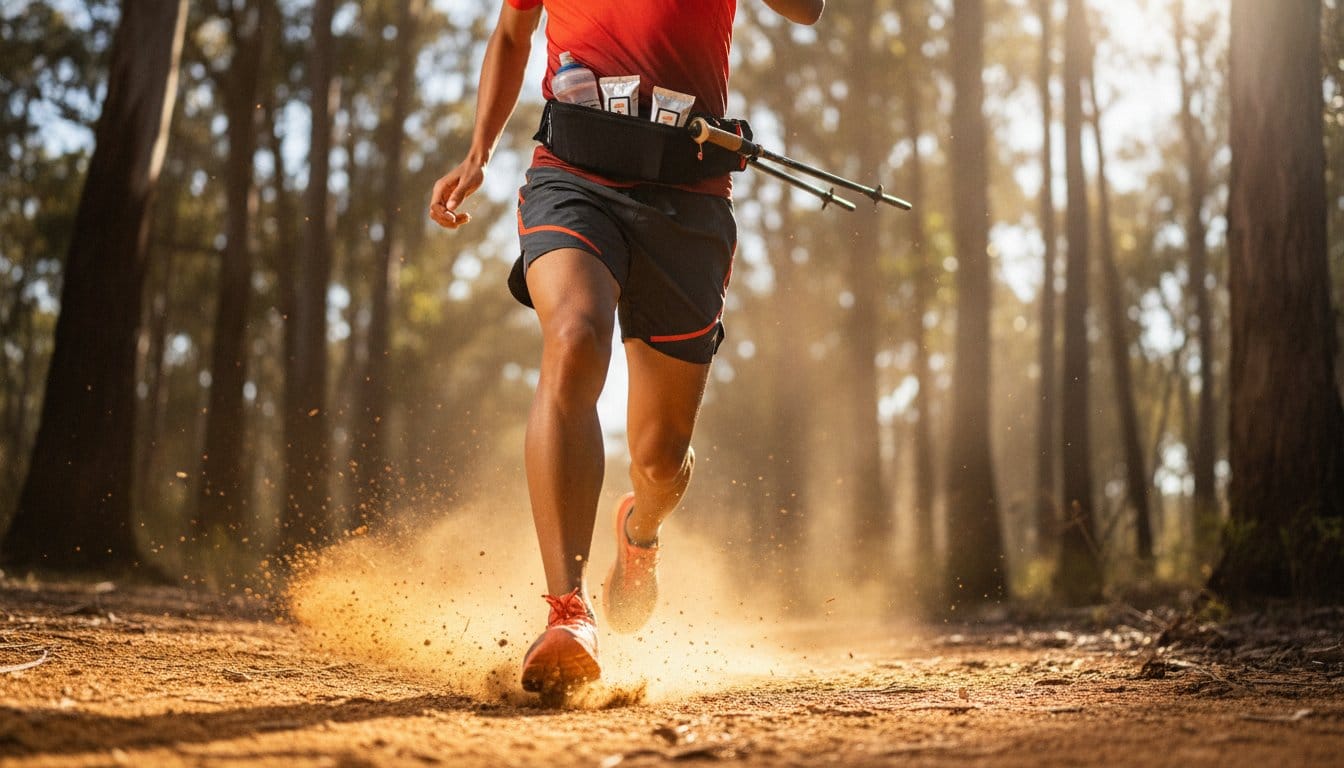
Sep
Your hydration vest isn’t just a piece of gear; it’s a heat trap that’s actively compromising your pace. For most Australian trail runners and triathletes, the relentless bounce and back-drenching sweat of a traditional pack are viewed as unavoidable race-day burdens. You’ve likely endured the persistent skin irritation and the tactical frustration of fumbling for a Maurten gel during a technical ascent in the scorching heat.
The Compressport free belt pro is the high-performance solution that shifts the load from your shoulders to your centre of gravity. This minimalist powerhouse offers a bounce-free, 360-degree storage system designed to keep you cool and streamlined when the intensity peaks. By reading this guide, you’ll discover how to transition away from bulky vests to a more efficient, breathable setup. We’ll break down the technical specifications of the latest 2.0 version, explain the updated A-shaped pole attachment system, and show you how to optimise your gear selection for peak output on the trail or the road.
Key Takeaways
- Understand why shifting gear to your centre of gravity eliminates the bounce and heat traps associated with standard hydration packs.
- Explore the technical advantages of the Compressport free belt pro, featuring ultra-stretchable mesh and advanced thermoregulation for Australian racing conditions.
- Learn to implement the “Hybrid Approach” by integrating a waist belt with a vest to manage mandatory gear during ultra-endurance events.
- Master the packing blueprint to optimise your setup, securing Maurten nutrition, 500ml flasks, and trail poles with zero movement.
- Leverage local expertise to build a performance-tuned gear ecosystem designed specifically for the unique demands of the Australian endurance circuit.
The Evolution of Running Storage: Why the Free Belt Pro Rules the Trail
The shift in high-performance trail running is moving away from the shoulders and down to the hips. For years, the hydration vest was the default choice for endurance athletes, but it came with inherent compromises. The Compressport free belt pro represents a technical evolution in gear organisation, offering a 360-degree ergonomic waist storage system that prioritises speed and thermal efficiency. By centralising your load around your centre of gravity, you improve running economy and protect spinal alignment. This transition isn’t just about aesthetics; it’s about removing the mechanical and physiological barriers created by traditional packs. Modern racing demands gear that moves with you, not against you.
The Problem with Traditional Hydration Packs
Standard hydration vests often act as insulated blankets, trapping heat against your back during intense Australian efforts. This heat buildup forces the body to work harder to cool down, diverting blood flow away from the muscles and reducing your overall ceiling. Additionally, the “bounce factor” of a partially empty rucksack creates a rhythmic disruption that wastes energy on every stride. Perhaps most critically, the restrictive chest straps of a vest can limit ribcage expansion. When your breathing is shallow because of gear constraints, your oxygen intake drops. This restriction is particularly noticeable during the high-intensity climbs common in Australian mountain races where every breath counts.
The Ergonomic Advantage of Hip-Loading
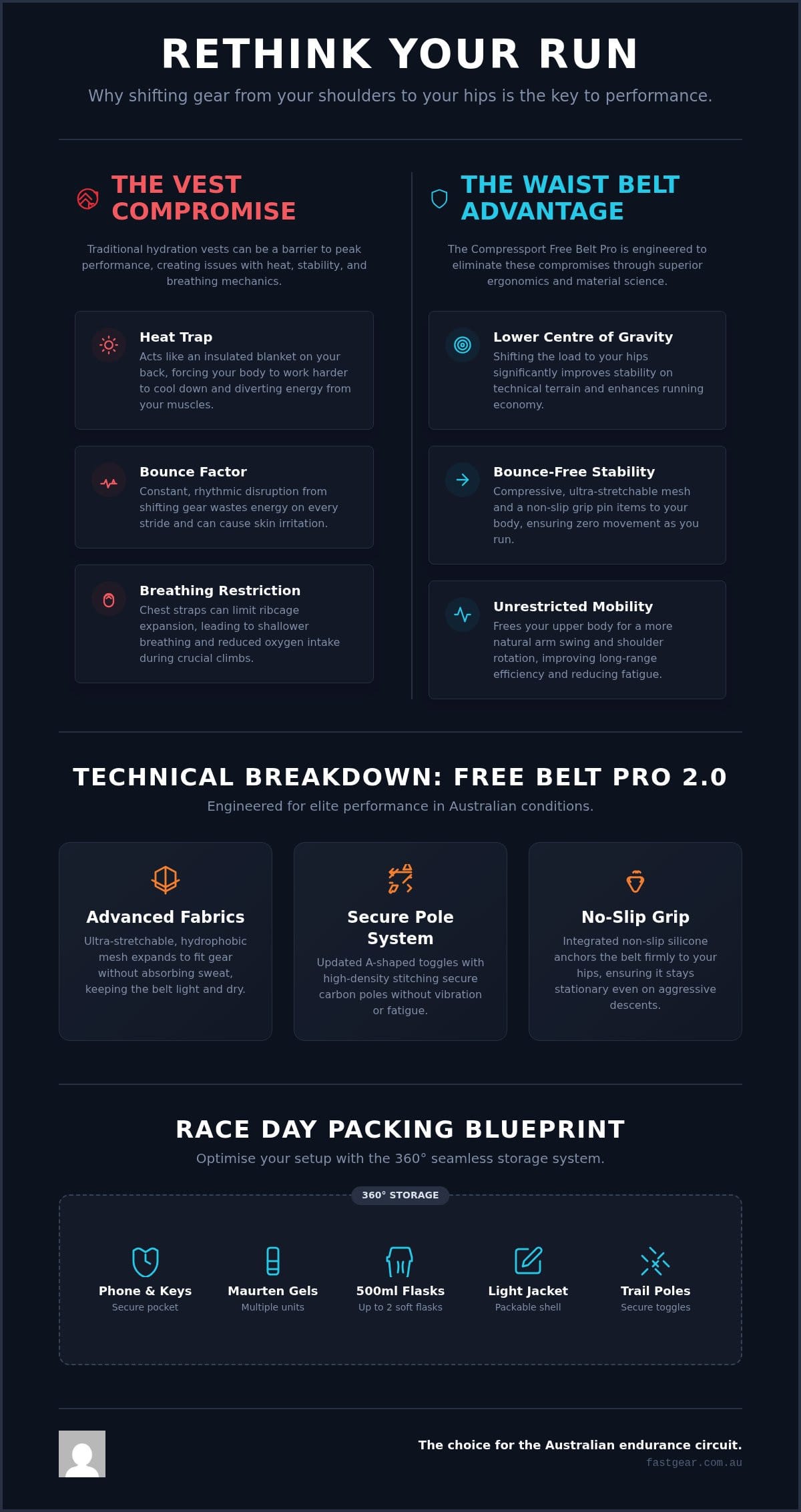
Placing your gear on the hips lowers your centre of gravity, which significantly improves stability on technical descents and uneven terrain. The Compressport free belt pro utilises a wrap-around pocket design that uses compression to pin items against the body, ensuring your nutrition and flasks don’t migrate as you move. This system allows for a more natural arm swing and shoulder rotation, which is vital for long-range efficiency and reducing fatigue in the upper body. The 360-degree pocket functions as a seamless, stitch-free storage zone that eliminates the pressure points often found in multi-compartment belts. This streamlined approach means you can carry everything from 500ml flasks to a lightweight jacket without the bulk or the friction of a traditional pack. By removing the weight from your shoulders, you unlock a level of mobility that a vest simply cannot match.
Technical Breakdown: Fibrers, Fit, and Function
The Compressport free belt pro is a masterclass in textile engineering, designed for athletes who refuse to compromise on speed. Its core architecture relies on an ultra-stretchable mesh that expands to accommodate high-volume items like a packable shell or multiple 500ml soft flasks without losing its compressive integrity. Unlike standard fabrics that sag under load, this specialised mesh maintains constant tension against your hips. The primary material is a high-grade polypropylene fabric, chosen for its exceptional hydrophobic properties. In the punishing heat of an Australian summer, this fabric ensures the belt won’t absorb water or sweat, preventing the “heavy gear” sensation that plagues lower-tier storage solutions.
Stability is non-negotiable on technical terrain. The belt features an integrated non-slip silicone grip on the interior, which anchors the system firmly to the pelvic bone. Even during aggressive vertical kilometres or high-cadence descents, the belt remains stationary. For trail runners, the updated pole toggles are a standout feature. The July 2026 model uses a refined A-shaped attachment system, engineered to withstand the torque and vibration of carbon poles. These loops are reinforced with high-density stitching to prevent fraying or elastic fatigue, ensuring your gear stays secure even after thousands of kilometres of use.
Breathability and Moisture Management
The ventilation zones are strategically mapped to areas of highest heat output. These micro-perforations allow for rapid airflow, ensuring that moisture is wicked away from the skin before it can cause chafing. When compared to traditional neoprene belts, the drying time is significantly faster. Neoprene tends to hold moisture against the skin, creating a humid microclimate that leads to skin breakdown. In contrast, the synthetic fibres in this belt facilitate near-instant evaporation, helping you maintain a stable core temperature during long-range efforts.
Durability and Elasticity Over Long Distances
Long-term performance is what separates professional gear from the rest. The elasticity of the Compressport free belt pro is designed to survive hundreds of wash cycles without stretching out of shape. To achieve the intended performance, precision sizing is critical. The latest version now offers four distinct sizes, S, M, L, and XL, to ensure an exact fit for every athlete. If you’re between sizes, we recommend opting for the smaller size to achieve the necessary “no-bounce” compression. This ensures that your high-performance nutrition, such as maurten gel 100, stays exactly where you placed it until you need it. The reinforced stitching at high-stress points ensures that the belt remains a reliable partner for your most demanding race season yet.
Free Belt Pro vs. Hydration Vests: The Comparison
Choosing between a traditional pack and the Compressport free belt pro requires a tactical assessment of your race duration and mandatory gear requirements. For efforts under two hours, or events with frequent aid stations, a vest is often an unnecessary burden that traps heat and limits mobility. The belt offers a more streamlined alternative for athletes who prioritise speed and efficiency. However, for ultra-endurance events like the UTA100, we recommend a hybrid approach. Using the belt in conjunction with a vest allows you to store mandatory safety gear in the pack while keeping high-frequency items like nutrition and hydration at your waist for immediate access.
Triathletes find the belt particularly advantageous during the run leg of a 70.3 or Ironman. The low-profile design provides significant aerodynamic benefits compared to a bulky vest, which can act as a sail in high winds. Carrying your own specific nutrition ensures you aren’t reliant on aid station offerings that might upset your stomach. For a deeper dive into optimising your race-day setup, consult our High Performance Triathlon Equipment Guide to see how the belt fits into a marginal gains strategy.
Weight and Heat Management Comparison
Thermal regulation is the primary differentiator in the Australian climate. A standard hydration vest covers approximately 35 per cent of your upper torso, creating a massive insulation layer that spikes your core temperature on a 30-degree race day. In contrast, the Compressport free belt pro covers less than 10 per cent of your body’s surface area, leaving your back and chest completely open for maximum airflow. Triathletes prefer this setup for T2 transitions because it’s significantly faster to step into a belt than it is to adjust the multiple straps and buckles of a vest while your heart rate is redlining.
Storage Capacity and Access Speed
Accessing gear at the waist is mechanically superior to reaching behind your shoulders. Grabbing a Maurten gel from a rear vest pocket often requires a break in your running rhythm or significant shoulder flexibility. The 360-degree pocket system allows for a blind grab from any angle without altering your gait. While a vest can carry more total volume, the stability of carrying 1L of fluid (two 500ml flasks) in a belt is surprisingly high due to the lower centre of gravity. The integrated bib toggles also eliminate the need for safety pins or separate race belts, further reducing weight and potential points of friction on race day.
The Packing Blueprint: Optimising Your Race-Day Kit
Efficiency on the trail is won or lost in how you organise your load. To maximise the performance of the Compressport free belt pro, you must adopt a strategic layering technique. Start by placing your heaviest items, such as 500ml soft flasks and your smartphone, closest to your body. Position one flask at the small of your back and another across your lower abdomen to create a balanced weight distribution. This prevents the “pendulum effect” where gear swings away from your centre of gravity during high-cadence efforts. For the ultimate setup, pair this system with the Compressport Trail Racing SS Tshirt, which features a tailored fit that prevents the belt from riding up or causing friction against the skin.
Once your heavy items are anchored, use the remaining 360-degree space for your high-frequency essentials. Your nutrition strategy should dictate the placement of your fuels. For a comprehensive look at how to structure your intake, consult our Endurance Sports Nutrition Guide. By following a logical packing order, you ensure that every item is accessible without breaking your stride or diverting your focus from the technical terrain ahead.
Fueling on the Fly: Packing Maurten and SIS
High-performance hydrogels require secure storage to prevent mid-race loss. You can easily slot multiple sachets of Maurten Gel 100 into the side sections of the belt. The high-tension mesh applies constant pressure to your nutrition, ensuring your gels won’t pop out even during high-velocity descents or technical leaps. Organise your salt tablets and electrolytes in small, waterproof baggies and tuck them into the front fold for rapid access during high-sweat phases. This methodical approach keeps your fueling schedule on track and reduces the cognitive load during the later stages of a race.
Mandatory Gear Solutions for Australian Ultras
Meeting mandatory gear requirements doesn’t have to mean carrying a bulky pack. Most Australian ultra-marathons require a waterproof shell, a space blanket, and a whistle. You can fold a technical lightweight shell into a tight rectangle and slide it into the rear pocket of the Compressport free belt pro. Place the space blanket and whistle in the smaller front sections to keep the profile lean. When the terrain turns vertical, utilise the silicone-lined pole toggles at the rear for rapid deployment. This system allows you to transition from running to power-hiking in seconds, maintaining your momentum on steep Australian climbs. Ready to upgrade your storage? Secure your Compressport Free Belt Pro at Fastgear today.
Why Fastgear is the Choice for Australian Athletes
Fastgear Australia functions as more than just a retailer; we are a dedicated performance partner for the endurance community. We recognise that the Australian environment is a brutal testing ground where standard gear often fails. A waist belt that performs in the European Alps might not handle the extreme humidity of coastal ranges or the dry, abrasive heat of the interior. We curate our selection with this specific reality in mind. The Compressport free belt pro is a cornerstone of our range because it meets the uncompromising standards of elite local athletes who demand reliability when their heart rate is redlining. By choosing a local specialist, you bypass the logistical delays of international shipping and gain access to a team that actively tests every product in the field.
Expert Curation and Support
Our commitment to marginal gains means we only stock equipment that provides a measurable performance advantage. We don’t fill our shelves with every available brand. Instead, we focus on a technical ecosystem where products complement one another. Our team rigorously evaluates everything from the Wove M8 Road / Tri Saddle to the latest hydrogel technologies from Maurten and SIS. This ensures that your kit works as a single, cohesive unit. Whether you’re pairing your belt with a Compressport Trail Racing SS Tshirt or seeking the right electrolyte balance for a desert ultra, we provide the expert dialogue needed to refine your setup. We encourage athletes to reach out for personalised advice to ensure their race-day configuration is perfectly tuned for their specific goals.
Getting Race-Ready with Fastgear
The 2026 racing season requires a methodical approach to gear and nutrition. The Compressport free belt pro is the foundation of a modern storage strategy, offering a level of versatility that traditional packs cannot match across road, trail, and triathlon disciplines. It allows you to maintain a lower core temperature and a more natural running economy, which are critical factors in the Australian climate. When you combine this technical superiority with our rapid national shipping and deep industry knowledge, you’re positioned to start your next event with total confidence. Don’t let inferior storage solutions dictate your pace or comfort. Upgrade your kit and purchase the Compressport free belt pro at Fastgear Australia today to experience the impact of professional-grade curation on your performance.
Master Your Race-Day Efficiency
Transitioning to a hip-loaded storage system is a tactical upgrade that directly impacts your thermal efficiency and running economy. By removing the insulation and restriction of a traditional vest, you unlock better ribcage expansion and a lower centre of gravity. The Compressport free belt pro provides the lightweight, bounce-free stability required for technical Australian trails and high-intensity triathlon run legs. It’s the technical foundation for a streamlined, high-performance kit that prioritises speed over bulk.
Fastgear Australia remains committed to providing the technical tools that drive marginal gains. Trusted by elite Australian trail runners, our curated range ensures you have access to the same equipment used at the front of the pack. With fast national shipping and expert local knowledge, we help you prepare for the 2026 season with precision and confidence. Don’t let your gear be the bottleneck in your performance. Optimise your race-day storage with the Compressport Free Belt Pro at Fastgear Australia and focus entirely on your next PB. See you at the finish line.
Frequently Asked Questions
How do I choose the right size for the Compressport Free Belt Pro?
The latest 2.0 version offers four sizes: S, M, L, and XL. Measure around the widest part of your hips rather than your waist for the most accurate result. If your measurement falls between sizes, we recommend sizing down so you don’t lose that essential compressive fit. Proper sizing is the foundation of the belt’s performance, as a snug fit keeps your gear anchored during high-intensity efforts on technical terrain.
Does the Free Belt Pro bounce when carrying two 500ml soft flasks?
No, the belt is designed to eliminate bounce by pinning the weight against your centre of gravity. The high-tension mesh and internal silicone grip ensure that two 500ml flasks remain stationary. For the best results, place one flask at the small of your back and the other at the front to maintain a balanced load. This distribution prevents gear migration even during aggressive descents so you don’t have to worry about shifting loads.
Can I carry my trekking poles on the Free Belt Pro?
Yes, the belt features dedicated pole toggles at the rear for secure transport. The July 2026 model includes an updated A-shaped attachment system that makes it easier to stow or deploy your poles while moving. These loops are reinforced with high-density stitching to handle the vibration and weight of carbon poles during steep vertical kilometres. This allows for rapid transitions between running and power-hiking, keeping your momentum steady on technical Australian trails.
Is the Free Belt Pro suitable for the run leg of an Ironman?
Absolutely, the Compressport free belt pro is a preferred choice for triathletes looking to maintain an aerodynamic profile. It allows you to carry specific nutrition like Maurten gels without the bulk of a vest. The 360-degree pocket provides quick access to fueling while your heart rate is high. Its breathable, hydrophobic fibres prevent sweat absorption, keeping the kit lightweight and comfortable throughout the marathon run leg of a long-distance race.
How do I wash the Compressport Free Belt Pro without damaging the elastic?
Hand wash the belt in cold water using a mild detergent to preserve the integrity of the technical fibres. Avoid using fabric softeners or bleach, as these chemicals can break down the polypropylene and elastic mesh. Rinse thoroughly and air dry in the shade. Never use a tumble dryer; the high heat will damage the internal silicone grip and compromise the belt’s compressive fit, which is vital for long-term durability and performance.
Will my iPhone Pro Max fit in the Free Belt Pro storage pocket?
Yes, the ultra-stretchable mesh is designed to accommodate large smartphones including the iPhone Pro Max. The 360-degree pocket expands to secure the device firmly against your body, preventing any internal movement. We recommend placing your phone in the rear section or against your hip for maximum comfort. To ensure your device remains in pristine condition despite the rigours of the trail, My IPG offers advanced screen protection insights for active tech users. The constant tension of the fabric ensures your hardware remains protected and stationary, so you don’t have to break your focus on the trail.
The belt is an excellent solution for carrying a significant portion of mandatory safety gear. It easily fits items like space blankets, whistles, and lightweight waterproof shells. For events with extensive gear lists, many athletes use a hybrid setup. They store mandatory equipment in the Compressport free belt pro and use a small vest for hydration, ensuring high-frequency items are always within reach at the waist for maximum race-day efficiency.
Does the belt cause chafing against the skin or technical shirts?
Chafing is virtually eliminated due to the seamless, stitch-free construction of the pocket zone. The hydrophobic polypropylene fabric wicks moisture away rapidly, preventing the damp friction that usually causes skin irritation. When paired with a technical garment like the Compressport Trail Racing SS Tshirt, the belt remains anchored without riding up. This stability ensures there’s no repetitive rubbing against your skin or clothing during long-range efforts in the Australian heat.
