
Uncategorized
Carbohydrate Gels for Endurance: The Science of Fueling Your Next PB
Jul
Your next personal best isn’t just limited by your heart and lungs; it’s limited by your small intestine’s ability to transport glucose under pressure. Mastering the application of carbohydrate gels for endurance is often the deciding factor between a breakthrough performance and a devastating bonk at the 30-kilometre mark. You’ve likely experienced the frustration of hitting the wall or the distracting discomfort of “gut rot” when a fueling strategy fails. It’s a common hurdle that sidelines even the most dedicated Australian athletes during high-intensity sessions.
This article will help you master the science of endurance fueling to ensure you maintain high power output and peak efficiency. We’ll examine the technical absorption mechanics of leading formulations like Maurten, SIS, and GU. You’ll walk away with a definitive strategy to optimise your race-day intake, allowing you to choose the specific brands that suit your gut tolerance and metabolic needs. It’s time to stop guessing your grams per hour and start fueling for results.
Key Takeaways
- Understand how carbohydrate gels for endurance maintain blood glucose levels to delay fatigue and spare critical muscle glycogen.
- Master the science of sugar transport by balancing glucose and fructose to bypass physiological absorption bottlenecks.
- Differentiate between isotonic formulas like SIS GO and concentrated gels to find the right balance for your gut tolerance.
- Develop a data-driven strategy targeting 30g to 90g of carbohydrates per hour based on your specific race intensity.
- Optimise your next competitive effort with performance-tested solutions including Maurten Gel 100 and GU Energy Gels.
Understanding Carbohydrate Gels for Endurance Athletes
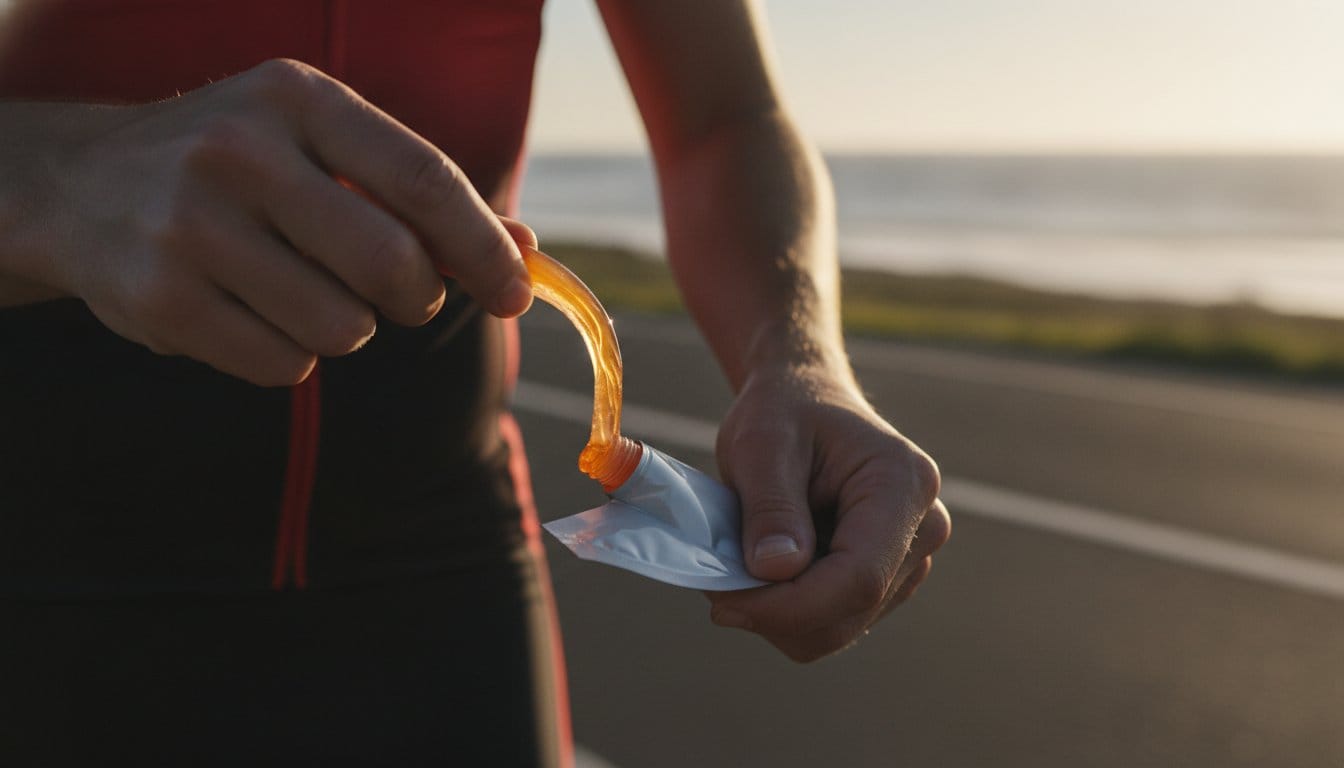
Peak performance is a game of physiological logistics. To maintain high intensities over several hours, your body requires a constant stream of fuel that it cannot always provide from internal stores. An Energy gel is a highly concentrated, portable carbohydrate source engineered for rapid absorption. Unlike standard snacks, these gels bypass the need for heavy mastication and complex digestion. This makes carbohydrate gels for endurance the gold standard for everyone from local parkrun enthusiasts to elite competitors at major endurance events across the country.
The core objective is simple: maintain blood glucose levels. By providing an external energy source, you spare your limited muscle glycogen and delay the onset of fatigue. Solid foods often contain high fibre or fat, which diverts oxygen-rich blood away from your working muscles toward the stomach. Gels eliminate this competition, ensuring your legs get the oxygen they need while your engine gets the sugar it craves.
The Physiology of “The Bonk”
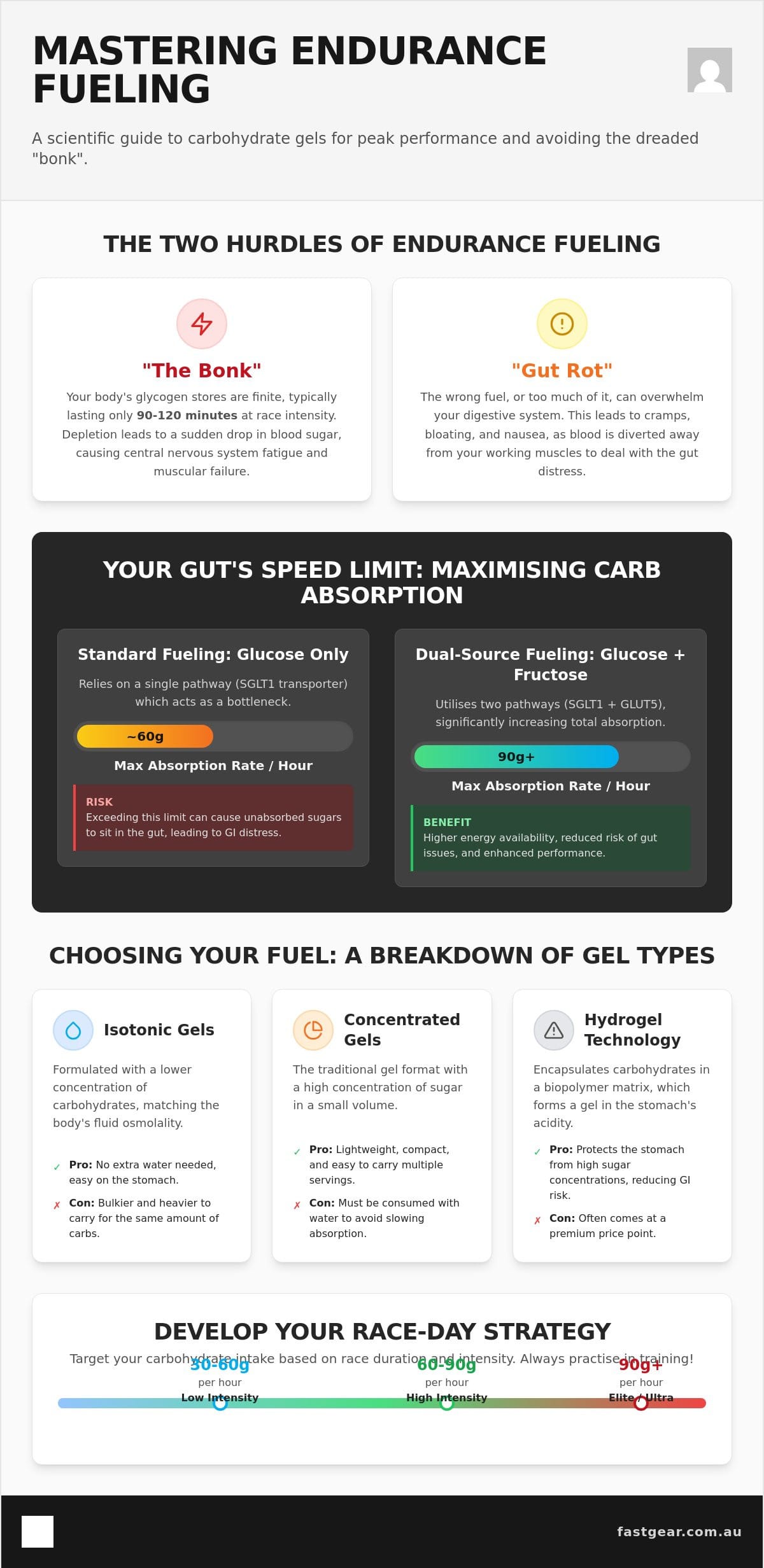
Every endurance athlete has a finite amount of glycogen stored in the liver and muscles. At race intensity, these stores typically last between 90 and 120 minutes. Once they deplete, you experience “the bonk”. This isn’t just muscular failure; it’s central nervous system fatigue. When blood sugar drops, your brain sends signals to shut down power output to protect vital organs. Using carbohydrate gels for endurance acts like a petrol tank extension. It provides the exogenous glucose necessary to keep the brain happy and the muscles firing long after your internal reserves have run dry.
Why Liquid Carbs are the Performance Standard
Digestion is a liability during high-intensity efforts. Solid foods have a slow gastric emptying rate, which often leads to the dreaded “gut rot” or stomach cramps. Gels are designed to be semi-liquid or hydrogel-based, moving through the stomach quickly to reach the small intestine for absorption. Efficiency is also about carriage. You can easily fit several servings of fuel into a Compressport Free Belt Pro without the bulk of bananas or bars. Consistency matters too. When you are breathless and red-lining on a scorching afternoon during an event, swallowing a gel is significantly safer and more efficient than trying to chew solid food. It provides a reliable, metered dose of energy that you can trust under pressure.
The Science of Absorption: How Your Body Processes Racing Fuel
The bottleneck in endurance performance isn’t always your VO2 max or your lactate threshold; it’s often your small intestine. When using carbohydrate gels for endurance, the rate-limiting factor is how quickly your body can transport sugar from the gut into the bloodstream. Standard glucose-only gels rely on the SGLT1 transporter, which typically saturates at approximately 60 grams per hour. Any excess sugar simply sits in the gut, leading to the gastrointestinal distress that ruins many race days across Australia.
To push past this 60-gram ceiling, modern sports science utilises dual-source carbohydrates. By adding fructose, which uses the GLUT5 transporter, athletes can increase their total absorption to 90 grams or even 120 grams per hour. Research on Carbohydrate Intake During Exercise confirms that these specific ratios, often 2:1 or 1:0.8, significantly enhance oxidation rates and sustained power. If you want to push your limits, you can explore our technical fueling range to find these high-performance ratios.
Osmolarity also plays a critical role in how your body processes fuel. This refers to the concentration of particles in the gel. If a gel is too concentrated, it draws water into the stomach, slowing down gastric emptying and causing a heavy “sloshing” sensation. Finding the right balance ensures rapid delivery to the working muscles when you need it most.
Hydrogel Technology: The Maurten Revolution
Maurten Gel 100 changed the game by using hydrogel technology to bypass traditional digestive hurdles. Instead of a standard syrup, the carbohydrates are encapsulated in a biopolymer matrix. This allows the high concentration of sugar to move through the stomach quickly, only releasing once it hits the small intestine. It reduces the risk of irritation and provides a steady stream of energy without the volatile insulin spikes. It’s why Maurten has become a staple for elite performance on the Australian racing circuit.
Slow-Release Carbs: The UCAN Difference
While most carbohydrate gels for endurance focus on rapid glucose delivery, UCAN takes a different approach with its Superstarch technology. This complex carbohydrate provides a slow, steady release of energy over several hours. It’s an ideal choice for ultra-endurance athletes or those sensitive to rapid blood sugar fluctuations. Matching your fuel source to your event duration is vital. A 90-minute half-marathon requires different absorption kinetics than a 12-hour ultra-trail event through the Victorian Alps.
Isotonic vs. Concentrated Gels: Finding Your Gut’s Sweet Spot
Choosing between isotonic and concentrated carbohydrate gels for endurance is a tactical decision based on your race environment and gut sensitivity. Isotonic options, such as SIS GO Isotonic Gels, are formulated to match the osmolarity of human blood. This means they are pre-diluted, allowing for rapid gastric emptying without requiring additional water. Conversely, concentrated gels like GU Energy Gel pack high carbohydrate density into a smaller volume. While they save space in your Compressport Free Belt Pro, they demand precise hydration to avoid the gastrointestinal distress often called “gut rot”.
The trade-off is often physical bulk versus hydration logistics. Isotonic gels are larger and heavier because they contain more water. In the Australian heat, where sweat rates are high, your gut’s ability to process concentrated sugar decreases. If you aren’t drinking enough water to dilute a concentrated gel, you risk osmotic diarrhoea as the body pulls water from the blood into the intestine to process the sugar. Matching your gel type to your expected sweat rate and water access is critical for a successful PB attempt.
When to Choose Isotonic Formulas
Isotonic gels are your best asset during high-intensity efforts where breathing is heavy and drinking from a flask is difficult. They are particularly effective for technical trail sections or the final stages of a marathon when coordination drops. Because they don’t require co-ingestion with water, you can fuel instantly without waiting for the next aid station. This reduces the risk of undigested sugar sitting in the stomach, which is a common cause of mid-race cramping.
Maximising Concentrated Gels
Concentrated options like GU Energy Gel or Clif – BLOKS Energy Chews are ideal when storage space is limited. To use them effectively, time your intake with aid station water stops. Taking a concentrated gel without water creates a hypertonic environment in the stomach, which can stall digestion. To combat flavour fatigue during long sessions, mix sweet profiles with caffeinated variants for a mental edge in the final 10km. Caffeinated gels provide a strategic central nervous system boost that helps you maintain focus when physical fatigue sets in.
Developing Your Race-Day Fueling Strategy
A successful race isn’t just about the kilometres you’ve run; it’s about the logistics of your intake. Transitioning from theory to practice requires a methodical approach to carbohydrate gels for endurance. You need a plan that accounts for intensity, duration, and the specific environmental conditions of your event. Following these five steps will ensure your engine stays fueled from the starting gun to the finish line.
- Step 1: Determine your target. Most endurance athletes should aim for 30g to 90g of carbohydrates per hour. High-intensity racing often demands the upper end of this scale to maintain power.
- Step 2: Test your tolerance. Use your long Sunday sessions as a laboratory. Replicate race-pace efforts to see how your stomach handles your chosen fuel under physiological stress.
- Step 3: Organise your gear. Fumbling with packets costs time and mental focus. Use a Compressport Free Belt Pro to keep your gels accessible, organised, and bounce-free.
- Step 4: Set a fueling alarm. Don’t wait for hunger or fatigue to signal an intake. Set your watch to beep every 20 to 30 minutes to ensure a consistent, metered stream of glucose.
- Step 5: Finalise your kit. Apply the “nothing new on race day” rule. Stick to the exact brands and flavours that passed the test during your peak training blocks.
Training Your Gut
Gut training is the physiological adaptation of the digestive tract to process high-carb loads under stress. Just as you train your legs, you must train your stomach to upregulate the transporters needed for carbohydrate absorption. Start with lower doses and progressively increase your carbohydrate density over a six to eight-week block. If you experience mid-run nausea, don’t immediately abandon the plan. Slow your pace slightly and sip plain water to assist gastric emptying before attempting your next gel. You can build your race-day fueling kit from our curated range of elite nutrition.
Electrolytes and Hydration Synergy
Gels do not work in isolation. Sodium is a critical co-transporter for glucose; without adequate electrolytes, your absorption rates will stall regardless of how many gels you consume. In the Australian heat, maintaining blood volume is paramount to prevent performance drops and overheating. Integrating maurten 320 powder or tailwind powder into your hydration flasks provides a reliable base level of carbohydrates and sodium. This allows your gels to act as the strategic “top-up” for high-intensity bursts or difficult climbs. Balancing fluid intake with your gel strategy ensures the sugar reaches your muscles rather than sitting heavily in your gut.
Premium Fueling Solutions: Why Fastgear is the Performance Choice
At Fastgear Australia, we don’t just sell nutrition; we curate the world’s most advanced carbohydrate gels for endurance for the Australian athletic community. We understand that race day is the culmination of months of sacrifice and disciplined training. Our mission is to ensure your fueling strategy is never the weak link in your performance chain. We only stock brands that have been scientifically validated and performance-tested in the most demanding racing environments. You can trust that every item in our inventory is there because it works when the pressure is on.
Our selection prioritises technical precision and physiological compatibility. From the hydrogel innovation of Maurten to the isotonic reliability of SIS, every product in our warehouse serves a specific purpose in your metabolic engine. We also provide the technical apparel needed to execute your plan with zero distractions. A Compressport Free Belt Pro allows you to carry your full race-day requirement in a streamlined, bounce-free format that won’t compromise your gait. This is professional-grade support provided by athletes who understand the technical specifications of high-performance racing. We’ve tested these products on the road and trail so you don’t have to.
The Fastgear Australia Curated Selection
Versatility is the core of a successful nutrition toolkit. We stock GU Energy Gel because flavour variety is essential for preventing palate fatigue during long-distance sessions in the heat. For those prone to gastrointestinal issues, our curated range of SIS – GO Isotonic Gels offers a pH-balanced solution that is exceptionally easy on the stomach. We help you build a customised strategy that accounts for different event durations and individual sweat rates. Whether you’re attacking a local parkrun or a mountain ultra, we have the specific fuel to match your target power output and gut tolerance.
Ready for Your Next Session?
Stop settling for “good enough” nutrition that leaves you bloated, depleted, or frustrated. Consistency in training is the only way to guarantee success on race day. Buying your maurten gel 100 or ucan gels in bulk ensures that every long run is a perfect dress rehearsal for your next personal best. Don’t leave your fueling to chance at the local petrol station on your way to a ride. You can browse Fastgear Australia’s full range of elite fuels to secure your supply and start training your gut for peak efficiency today.
Fuel Your Breakthrough Performance
Success on the race course is the result of meticulous preparation and physiological adaptation. You’ve learned that mastering carbohydrate gels for endurance requires more than just picking a favourite flavour. It’s about training your gut to handle high-density loads and leveraging dual-source carbohydrates to bypass standard absorption bottlenecks. Whether you choose the hydrogel precision of Maurten or the isotonic ease of SIS, your strategy must be tested and refined long before you reach the start line. Consistency in training is what translates to a dominant performance when the clock is running.
Fastgear is your dedicated partner in athletic optimisation. We are proud stockists of elite brands like Maurten and SIS, offering fast national shipping across Australia to keep your training blocks on track. Don’t leave your next personal best to chance by settling for subpar nutrition or unproven gear. It’s time to apply the sports science and execute your fueling plan with total confidence. Optimise your race-day fuel with Fastgear’s premium nutrition range and unlock your true potential in your next session. Your best performance is waiting.
Frequently Asked Questions
How many carbohydrate gels should I take per hour during a marathon?
Most athletes should aim for one to three gels per hour to hit a target of 30g to 90g of carbohydrates. The exact number depends on the carbohydrate density of your chosen brand. For instance, taking three Maurten Gel 100 servings provides 75g of carbs, which is an ideal mid-range target for sustained marathon intensity.
Do I really need to drink water with every energy gel?
You must drink water with concentrated gels to assist with gastric emptying and absorption. The only exception is an isotonic formula, such as SIS GO Isotonic Gels, which are pre-diluted to match blood osmolarity. Taking concentrated sugar without water can pull fluid from your bloodstream into the gut, leading to dehydration and stomach upset.
Can carbohydrate gels cause stomach cramps or diarrhoea?
Gastrointestinal distress typically occurs when the sugar concentration in your gut exceeds your absorption capacity. This is often caused by taking too much glucose at once or failing to hydrate properly. Using carbohydrate gels for endurance that feature a dual-source glucose and fructose ratio can significantly reduce these risks by utilizing multiple intestinal transporters.
What is the difference between a regular gel and a caffeine gel?
Caffeine gels contain a stimulant designed to reduce your perception of effort and improve mental focus during the later stages of a race. Products like Maurten Gel 100 Caffeine provide this neurological boost alongside standard energy. Regular gels focus exclusively on glycogen replenishment and blood glucose maintenance without affecting the central nervous system.
Are energy gels better than sports drinks for long-distance running?
Gels provide a more concentrated and portable energy source than drinks, making them easier to carry over long distances. While sports drinks are essential for hydration and electrolytes, gels allow you to reach high carbohydrate targets without the “sloshing” feeling of excessive fluid. Many Australian runners use a combination of both to balance fuel and hydration levels.
How long does it take for an energy gel to start working?
You will typically feel the effects of a gel within 5 to 15 minutes of ingestion. The simple sugars are rapidly transported through the small intestine and into the bloodstream. Factors like your current effort level and the gel’s formulation, such as hydrogel technology, can influence how quickly the energy becomes available to your working muscles.
Can I use energy gels for cycling as well as running?
Energy gels are highly effective for cycling and are a staple for road and mountain bike racers. They are particularly useful during high-intensity efforts or technical descents where chewing solid food is impractical. Gels are easy to open with one hand and store conveniently in jersey pockets for rapid fueling on the move.
What should I do if I can’t stand the texture of traditional gels?
If you find traditional syrups unpalatable, consider switching to Clif – BLOKS Energy Chews or hydrogel options. Chews provide a gummy-like texture that feels more like solid food, while Maurten’s hydrogel has a firm, jelly-like consistency. These alternatives eliminate the sticky, cloying mouthfeel that often leads to flavour fatigue during ultra-endurance events.
