
Uncategorized
Sports Nutrition Energy Gels Bulk Pack: How to Choose Your Race-Fuelling Stock-Up
Oct
The smartest sports nutrition energy gels bulk pack is the one that matches your tested fuelling routine, not necessarily the largest pack or an apparent discount. Buying ahead can make race preparation easier, provided you’re confident you’ll use the gels and tolerate them during hard efforts.
Choosing a quantity can feel tricky when your training and event calendar is still taking shape. Labels add another layer: serving size, carbohydrate information and caffeine can vary, making quick comparisons difficult. A bulk order is a practical stock-up, not the time to gamble on flavours or formats you haven’t tried.
This guide will help you estimate how many gels your upcoming sessions and events call for, compare labels and build your order around products you’ve already tested. You’ll also see how Fastgear’s GU, SIS, Maurten and UCAN gel options can fit different fuelling preferences. The aim is to stock up with purpose, avoid excess and head into your next event with a plan you know works.
Key Takeaways
- Plan your sports nutrition energy gels bulk pack around upcoming sessions and events, rather than choosing by pack size alone.
- Use your proven gel use per session to estimate a practical quantity and reduce the chance of overbuying.
- Compare each product’s current label for serving size, carbohydrate information, caffeine and directions.
- Keep race-day stock to gels you’ve already used successfully in relevant training.
- Compare Fastgear’s GU, SIS, Maurten and UCAN gels against your preferences, then organise your stock by planned use.
Why buy sports nutrition energy gels in a bulk pack?
A planned supply makes fuelling easier to organise. Set aside gels for upcoming sessions, keep race stock separate and reduce the need for repeat orders as your training block progresses. The benefit is less last-minute scrambling, not automatically a lower cost per gel.
A larger order makes sense when you’re likely to use its contents and already know how they work for you. Flavour, texture and how a gel fits into your routine all matter. A discounted unit price has little value if the gels stay in the cupboard or don’t suit you during exercise.
An Energy gel is designed as a portable source of fuel for endurance activity, but products and directions vary. Treat each option as part of your fuelling plan, not as an interchangeable item. Before committing to more stock, use training to settle on a preferred choice and check the product’s current label.
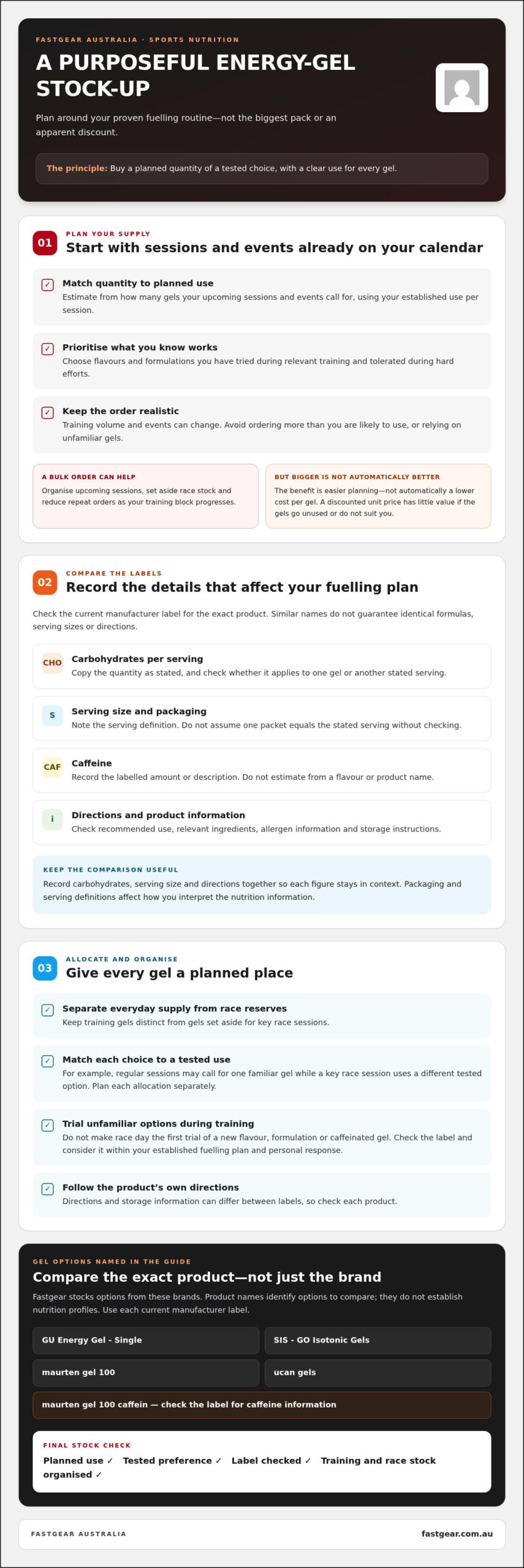
A practical gel stock-up is a planned quantity of a tested choice, with a clear use for every gel.
Use this simple check before ordering:
- Planned use: Match the quantity to sessions and events already in your calendar.
- Known preference: Prioritise flavours and formulations you’ve tried during relevant training.
- Separate reserves: Keep everyday training supply distinct from gels reserved for key race sessions.
When does buying more energy gels make sense?
A larger supply is most useful when you have a training block or endurance event scheduled and can estimate your established use. For example, if your regular sessions call for one familiar gel and a key race session uses a different tested option, plan each allocation separately. Don’t make race day the first trial of an unfamiliar flavour or formulation. Test it during training first.
What can go wrong with an oversized gel order?
Training volume can shift, events can change and an order sized for the original plan may outlast your likely use. You may also find that a flavour or texture you expected to enjoy doesn’t suit you during exercise. Start with products you know, then build your stock around your actual schedule. Read each product’s directions and storage information, as these can differ between labels.
Fastgear stocks gel options from GU, SIS, Maurten and UCAN for athletes to compare with their established preferences. The right stock-up isn’t defined by the largest order. It’s the quantity you can use with confidence across planned training and events, without relying on untested choices.
How to compare energy gels before choosing a bulk pack
Labels turn a broad product comparison into a practical decision. Before choosing a sports nutrition energy gels bulk pack, record the details that affect how each gel fits your fuelling plan. Don’t assume similar names mean identical formulas, serving sizes or directions. Compare the current manufacturer labels for the exact products you intend to buy.
Use a simple comparison sheet. Add one row for each gel you’re considering, then record:
Carbohydrates per serving: Copy the quantity exactly as stated on the label. Check whether the figure applies to one gel or another stated serving.
Serving size: Note the serving definition and packaging details. Don’t assume one packet equals the stated serving without checking.
Caffeine: Record the labelled amount, or note how the label describes the product. Don’t estimate from a flavour or product name.
Directions: Capture recommended use, relevant ingredients, allergen information and storage instructions from the manufacturer.
This side-by-side view can reveal differences that a quick glance at the front of a packet misses. For broader context on how gels can fit into an endurance fuelling approach, explore this endurance sports nutrition guide. Then use product labels to make your specific comparison. Keep your shortlist focused on the details that matter to your established routine, rather than trying to compare every feature at once.
Which label details matter when comparing gels?
Start with the current label for each product, not a value remembered from an older packet or another version. Record carbohydrate quantity per serving, serving size and directions together so the figures stay in context. Check ingredients and allergens against your own needs, and note storage information to help organise your supply. Packaging and serving definitions affect how you interpret nutrition information, so read the full label.
Fastgear stocks options from GU, SIS, Maurten and UCAN, including GU Energy Gel – Single, SIS – GO Isotonic Gels, maurten gel 100 and ucan gels. Use those product names to identify options for comparison, not to assume their nutrition profiles. Check each current manufacturer label before making your shortlist.
How should caffeine affect your gel selection?
Keep caffeinated and non-caffeinated options distinct in your comparison. Fastgear stocks maurten gel 100 caffein as well as other gel choices, but the product name alone doesn’t establish caffeine content. Read the label, then consider that information within your established fuelling plan and personal response. If a caffeinated gel is new to you, trial it during training rather than introducing it on race day.
Once you’ve recorded the label details, compare your shortlist with your proven routine and browse Fastgear’s energy gel options. A clear comparison makes the next decision more precise: choose by label, not assumption.
Which energy-gel types belong in your training and race stock?
Your gel stock should reflect the sessions you actually do, not a generic idea of what a race kit needs. Think about how you’ll use each product: which gels are familiar, which are reserved for sessions that rehearse race fuelling, and which are still new. The most reliable race supply is the one you’ve rehearsed in training.
That distinction matters when building a sports nutrition energy gels bulk pack. A mixed selection can help you compare options across different sessions, but a larger quantity of an unfamiliar gel can leave you with stock you don’t want to use. Decide what belongs in your established routine before setting aside a race reserve.
How should you separate training gels from race gels?
Use familiar products in sessions where you practise your planned race routine, including how and when you take them. Set aside gels you’ve used successfully for key rehearsals and event stock. Keep experimental flavours or formulations in a separate trial group, and don’t add them to an untested race-day plan. Follow the directions on each product’s label.
A simple stock system can keep the distinction clear:
- Regular sessions: Allocate gels you already use as part of your normal training routine.
- Race rehearsals: Use the familiar choice you intend to take during your event, following its label directions.
- New trials: Separate unfamiliar gels until you’ve tested them in training and know whether they suit you.
Keep these groups physically distinct in your cupboard or training kit. A short note on the storage container can help you identify trial stock and avoid grabbing an untested product for an important session. Rotate products according to their label information rather than letting race reserves sit unnoticed.
How can a mixed selection reduce bulk-buying risk?
Before choosing one option for every session, compare the gel types available and consider what you’ve already tested. Fastgear stocks GU Energy Gel – Single and SIS – GO Isotonic Gels, as well as maurten gel 100, maurten gel 100 caffein and ucan gels. These are options to assess, not a reason to assume one format suits every athlete or session.
For each product, use the current label to check the information relevant to your routine, including directions and any details you need to account for. Names alone don’t establish a product’s formulation or intended use. If you’re considering a different gel, trial it in a suitable training session before adding more to your regular supply.
A mixed selection is most useful when it supports deliberate testing, not when it creates a cupboard full of choices with no clear role. Keep the familiar option as your reference point; add a new one only when you have a session planned to assess it. Once you know which gels suit your training and race rehearsals, you can reserve those choices with more confidence.
How to calculate the right quantity for a sports nutrition energy gels bulk pack
Build your order around the sessions you expect to fuel, using your own established gel use as the baseline. This ties the estimate to your calendar and routine, rather than a generic race target. Count gels you’ve planned to use, not every session on the schedule.
A simple four-step stock calculation
- List planned use. Write down upcoming training sessions and events where you already intend to use gels. Leave out sessions where gels aren’t part of your plan.
- Apply your tested amount. For each session, note how many gels you’ve used successfully in comparable training. Keep different session types separate if your established use varies.
- Add the event allocation. Include gels for scheduled events and race rehearsals, based on your practiced routine. For example, if your plan uses two gels in each of three sessions, that block calls for six, before adding any other planned use.
- Consider a modest reserve. Once the planned total is clear, add only a small, reasoned contingency for a likely schedule change or event-day need. Don’t use a large buffer to disguise uncertainty about how much you’ll use.
The example shows a calculation method, not a recommendation. Your number depends on your sessions, event plans and tested use. If an event or training block uses a different product, calculate that allocation separately so your total reflects the gels you’ll actually reach for.
For brand-specific context, the Maurten gel fuelling guide can help you explore Maurten gels as part of your product research. Use current product labels for directions and details, and include a product in your quantity estimate only when it fits your plan.
How should you manage and store your gel supply?
Make the estimate useful after your order arrives. Keep products organised by intended use, and place race-day gels apart from products you’re still assessing. That reduces the chance of mixing an experimental option into your event allocation. Follow the storage instructions on each product’s packaging, as requirements can differ.
Rotate stock by checking product dates and using older stock in line with the label. Keep a simple record of what you have, what’s allocated to upcoming sessions and what’s left after each event. This gives you a real basis for your next estimate, rather than relying on memory.
Recalculate when plans change. A cancelled event, training interruption or change in preferred product can shift the quantity you need. Update your session list and remaining stock before placing another order. To compare gel options against your plan, browse Fastgear’s energy gels and use the labels to guide your selection.
Choose your energy gels at Fastgear Australia and plan your next step
Your final choice should connect three things: gels you’ve practised with, the events and sessions on your calendar, and the details on each current product label. That keeps your decision grounded in your real fuelling routine rather than a guessed consumption target or assumed pack size. A sports nutrition energy gels bulk pack should represent products you expect to use, in a quantity that makes sense for your plans.
Which Fastgear energy gels can readers compare?
Fastgear stocks options from GU, SIS, Maurten and UCAN. Compare the listed gels against your preferences and the products you’ve already tested:
- GU Energy Gel – Single
- SIS – GO Isotonic Gels
- maurten gel 100 and maurten gel 100 caffein
- ucan gels
Use these names to identify products to assess, not to infer ingredients, nutrition values, caffeine content or directions. Check current product information for those details before deciding how a gel fits your routine. A familiar brand name doesn’t replace a label check, especially when comparing different options or returning to a product after a break.
What should you decide before placing your order?
Make the last check against your upcoming training and race calendar. Confirm that each planned product has been practised in relevant sessions, and that the quantity reflects how many gels you’ve allocated to those sessions and events. Keep any untested choice separate from your race reserve until you’ve tried it in training.
- Tested choice: Select gels you’ve used successfully in relevant sessions.
- Label details: Review the current product information and directions.
- Planned quantity: Match your stock to scheduled use, then add only a modest contingency.
- Product rotation: Organise stock by intended use and follow packaging dates and storage instructions.
This checklist gives each gel a clear purpose. For instance, allocate a familiar option to planned race rehearsals and keep a new product in a separate training-trial group. If your event plans or preferences change, revisit the allocation before choosing more stock. That way, your order stays aligned with what you’ll use rather than what simply looks convenient to buy.
To compare gels with your tested routine, event schedule and label requirements, explore Fastgear’s endurance nutrition range.
Make your next fuelling plan count
Your next training block is a chance to refine your routine. Use it to confirm which gels you reach for, how they fit your sessions and what you want ready for your next event. A sports nutrition energy gels bulk pack should support that plan, not set it for you.
Fastgear brings together gel options from GU, SIS, Maurten and UCAN for endurance athletes across Australia. Use upcoming sessions to guide your choice, and let your own experience shape what you stock next. A deliberate order makes preparation simpler and keeps your attention on the work ahead.
Explore Fastgear’s endurance nutrition range to choose gels that fit your tested routine and build your next training supply with purpose.
Frequently Asked Questions
Can I buy energy gels in bulk for marathon training?
Yes, a larger supply can suit marathon training if it reflects your planned use and consists of gels you’ve already tried. For a useful sports nutrition energy gels bulk pack, estimate gels for scheduled long runs, race rehearsals and the event itself, then compare that total with the product options available. Revisit the estimate if your plan changes, rather than ordering extra based only on the marathon date.
How many energy gels do I need for a race?
There’s no single gel count that fits every athlete or event. Use your own rehearsed plan, taking account of the event, its expected duration and the specific products you’ve practised with. For example, if your race rehearsal used a particular number of gels successfully, use that experience as a planning reference, then check the product directions. Don’t make race day the first test of a different gel or fuelling approach.
Should I test energy gels before buying a bulk pack?
Yes, try the exact product during training before building a larger order around it. A flavour or formulation can seem appealing before a session but feel different during exercise. Test one new option at a time, follow its label directions and note afterwards how it fits your routine and preferences. If you’re considering multiple products, assess each separately so you know which choice worked for you.
What should I compare on an energy gel label?
Compare carbohydrate quantity per serving, serving size, ingredients, allergen information, caffeine details where relevant and the manufacturer’s directions. Check the exact product’s current label, as a similar name or different packaging doesn’t guarantee identical information. A small comparison table can make differences easier to spot. Record the serving definition beside each nutrition figure so you don’t confuse a per-serving value with information for another amount.
Are caffeinated energy gels suitable for every athlete?
No, a caffeinated gel won’t suit every athlete or every fuelling routine. Read the label for its caffeine information and consider it alongside your existing caffeine use and personal response. If you want to try one, do so during training and follow the manufacturer’s directions rather than making it a race-day experiment. If you have health concerns or questions about caffeine, seek advice from an appropriately qualified health professional.
How should I store energy gels bought in bulk?
Follow the storage directions and date information printed on each product’s packaging. To keep stock manageable, arrange gels so older products are easiest to use first, and mark any set aside for a future event. Keep products awaiting a training trial distinct from gels already assigned to your race plan. After a change to your events or training, review what remains and whether it still has a planned use.
