
Uncategorized
No-water-needed energy gels in Australia: a practical buying guide

Oct
A gel that’s easier to take without a drink doesn’t replace your hydration plan. If you’re comparing no water needed energy gels Australia has to offer, focus on the directions for each product rather than assuming every gel works the same way.
Fuel that’s quick to take can be useful on course, especially when carrying extra water or timing a drink is difficult. “No water needed” generally describes how a gel is formulated and consumed. It doesn’t mean you can skip fluids. Isotonic, hydrogel and more concentrated formats can differ in texture, directions and how they feel during exercise.
This guide shows you what to compare on the label, including carbohydrate per serving, serving size, ingredients, caffeine and consumption instructions. It also covers how to test a gel against your preferences and event conditions. Fastgear Australia stocks gels from SIS, GU, Maurten and UCAN, so you can compare options against your fuelling plan and practical needs. Practise with your chosen gel during training, then plan hydration separately before race day.
Key Takeaways
- For no water needed energy gels Australia offers, follow the current packet directions instead of relying on a format name alone.
- Compare carbohydrate per serving, ingredients and consumption instructions to see how a gel fits your fuelling plan.
- Keep hydration separate from gel choice. Taking a gel without a water chaser doesn’t remove the need to manage fluids during exercise.
- Test shortlisted gels during training at a realistic effort and timing, then refine your race-day choice based on comfort and preference.
- Compare SIS GO, GU Energy Gel, Maurten Gel 100 and UCAN gels by checking their labels and considering how they suit your fuelling and carrying needs.
No-water-needed energy gels: what the claim means for Australian athletes
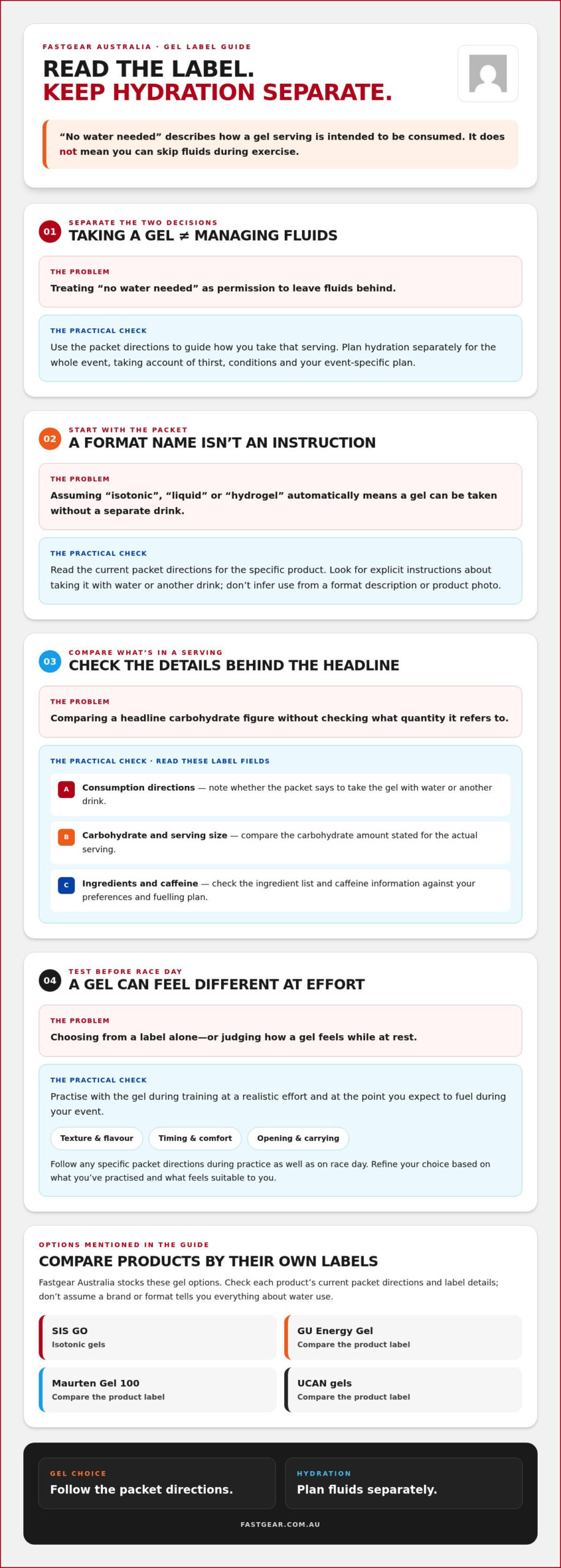
“No water needed” means the gel is intended to be consumed without a separate mouthful of water to wash it down. It describes how to take that serving, not what your body needs across a run, ride or race. Treat the phrase as a product-use cue and read the packet directions before deciding how the gel fits your fuelling plan.
Energy gels provide portable carbohydrate for endurance exercise, but products vary in formulation, texture and serving instructions. The general Energy gel overview explains how gels are used in endurance sports. For a specific product, its own label is the practical reference. A broad category description can’t tell you how a gel will feel at race effort or whether its directions suit you.
A gel’s consumption directions tell you how to take that serving. Your hydration strategy still needs to account for the whole event.
Does no-water-needed mean no hydration is required?
No. It means you may not need a separate drink to consume the gel as directed. Fluids taken to help swallow a concentrated gel are a different consideration from the fluids you plan to consume throughout exercise. Don’t treat a no-water-needed claim as permission to ignore thirst, conditions or your event-specific plan. Heat, effort and event duration can affect what feels practical, so avoid relying on a universal drinking schedule.
Think of taking a gel while moving and managing fluids across the rest of the course as two separate decisions. The first depends on the product’s consumption instructions; the second is part of your broader hydration approach. A gel doesn’t replace that approach, and choosing one that can be taken without a water chaser doesn’t mean you should leave fluids behind.
Why do some gels have different consumption directions?
Gel formats and formulations vary, so consistency and use instructions can vary too. Some gels are thinner, while others are more concentrated. Those descriptions alone don’t establish whether a particular product should be taken with water. Check the packet’s current directions, then test the gel in training for comfort, ease of opening and carrying, and how it feels at your intended effort.
Make the test realistic. Take the gel at the point in a training session when you expect to fuel during your event. Notice whether its texture, flavour and timing suit you. A product that seems manageable at rest may feel different when you’re working hard. If the label gives specific consumption directions, follow them during practice as well as on race day.
When comparing no water needed energy gels australia, the useful distinction isn’t simply “gel with water” versus “gel without water”. It’s whether the packet directions, your personal tolerance and your event hydration plan work together. Start with the label, test the gel under training conditions, then refine your race-day selection based on what you’ve practised.
How to assess an energy gel label before taking it without water
Start with the packet’s preparation and consumption instructions. Look for explicit directions about taking the gel with water or another drink. If the wording is unclear, don’t infer the answer from a product photo, retailer category or short descriptor on the front. The current label is the best guide to how that product is intended to be used.
Before you buy, compare the consumption directions, serving size, carbohydrate amount per serving, ingredients, caffeine information and stated format.
These details help you assess whether a gel fits your fuelling plan, but they don’t make two products interchangeable. Sports Dietitians Australia’s guidance on sports foods offers broader context on using products such as gels as part of sports nutrition.
Which label details matter most?
Read the directions first, then compare the nutrition information panel and ingredient list. Check carbohydrate per serving alongside serving size: a larger sachet or a different serving may change how much carbohydrate you get from one use. Don’t judge a product by a headline number without checking what quantity it refers to.
- Consumption directions: note whether the packet specifically instructs you to take the gel with water or another drink.
- Carbohydrate and serving: compare the amount stated for the actual serving, not just the product name or pack description.
- Ingredients and caffeine: check the ingredients and any caffeine information against your preferences and fuelling plan.
How should athletes interpret gel format terms?
Terms such as isotonic, liquid and hydrogel describe product formats or formulations. They’re useful context, but they aren’t universal guarantees that a gel can be consumed without a separate drink. A thinner texture may feel different from a more concentrated gel, but texture alone doesn’t establish the product’s directions. Check the manufacturer’s current packet instructions for the specific gel.
Apply the same checks across brands. Fastgear Australia stocks SIS GO isotonic gels, GU Energy Gel, Maurten Gel 100 and UCAN gels. Compare their labels rather than assuming a brand or format tells you everything about water use. For related context on hydration and endurance fuelling, read the electrolytes for athletes performance hydration guide. The gel packet remains your reference for consumption directions.
When searching for no water needed energy gels australia, build a shortlist from the label, then consider taste, portability and how each serving fits your planned fuelling. Even a product that looks simple on paper needs to work for you in training. Compare endurance fuelling options with those label details in mind.
Isotonic, liquid or standard gels: compare options for no-water use
Format can help narrow your choices, but it can’t settle the water question by itself. An isotonic label, a liquid consistency or a hydrogel description may offer clues about a product’s formulation. The packet’s directions remain the reference for how that specific gel is intended to be consumed.
Use the comparison below to organise your shortlist, not as a substitute for reading the label. Consistency can vary between products, even when they share a format description. For broader fuelling context, the endurance sports nutrition guide can help you consider where gels fit within your overall approach.
| Format description | What it may indicate | Directions to check | Texture and carrying considerations |
|---|---|---|---|
| Isotonic | A formulation described by the manufacturer as isotonic. | Check whether the packet gives specific instructions about water or another drink. | Consistency varies by product. Consider whether the sachet is practical to open and carry in your usual kit. |
| Liquid | A product described as having a liquid format or consistency. | Follow the product’s stated consumption directions; the word “liquid” isn’t a use instruction. | Assess how the texture feels during training and whether the packaging suits your storage setup. |
| Standard gel | A general description, not a consistent formulation across brands. | Look for explicit guidance on whether to take it with water. | Texture can differ between products. Practise opening and consuming it while moving. |
| Hydrogel | A description associated with a particular formulation or technology. | Use the manufacturer’s current directions for the specific product. | Don’t infer texture or carrying convenience from the term alone; assess the product itself. |
What distinguishes isotonic and liquid gels?
“Isotonic” and “liquid” aren’t interchangeable terms, and neither guarantees a particular water-use instruction. Manufacturers may use them to describe different aspects of a product. SIS GO isotonic gels are one example to compare; check the current packet directions for the specific product rather than assuming the name alone establishes how to take it. Compare the consistency and instructions of the products on your shortlist.
How do standard and hydrogel products fit the comparison?
“Standard” and “hydrogel” don’t answer the water question on their own either. Maurten Gel 100 gives you a named product to include in a label-to-label comparison. Use its current manufacturer directions to establish how it’s intended to be consumed. The Maurten gel fuelling guide explores that product category in more depth.
There’s no universal winner. For no water needed energy gels australia, match packet directions with a manageable texture, packaging that works with your kit and a fuelling plan you’ve practised. A short training comparison can reveal more than a format label alone.
How to choose and test no-water-needed gels before race day
A gel earns a place in your race kit through practice, not packaging claims alone. Use this process to move from label check to a tested choice. It helps you assess how the gel works with your fuelling routine, equipment and event conditions before race day.
- Review the directions. Read the current packet instructions, including whether they recommend taking the gel with water or another drink. Follow those directions during training and note whether you want a separate drink for comfort.
- Shortlist suitable formats. Compare products by stated format, serving information, ingredients and caffeine details. Keep the shortlist manageable and assess each option against the same fuelling plan, rather than changing several products at once.
- Test during training. Choose a session that reflects your event and planned fuelling conditions. Take the gel at a similar point and effort to when you expect to use it in competition. Don’t make race day your first trial.
- Refine your race-day choice. Use your notes to select a gel that suits your preferences, carrying setup and established routine. Practise opening and consuming it while moving, and keep hydration decisions part of the wider event plan.
How can you trial a gel in training?
Make the trial realistic and controlled. Follow the packet directions and change one variable at a time, such as the gel or timing, so the comparison stays useful. Record the taste, texture, ease of opening, comfort and whether you wanted a separate drink. Repeat a trial if the effort or conditions differed from what you expect at your event.
Your notes can be brief: what you took, when you took it, how hard you were working and how it felt. That record makes it easier to distinguish a product preference from the effects of a different session or fuelling schedule.
How should you match a gel to your event?
Consider event duration, when you plan to fuel, where you’ll carry each sachet and how easily you can reach it while moving. A gel that fits your training routine may be less practical if your race kit makes it difficult to access. Practise with the same carrying setup where possible, then choose based on what you’ve tested.
Keep fluid decisions separate. A gel you can take without a water chaser doesn’t remove the need to plan fluids for the event. Your conditions and personal needs matter. The athlete hydration and electrolytes guide provides broader context for that part of your preparation.
For no water needed energy gels australia, choose an option whose directions, taste and practical use you’ve tested and can fit into your fuelling and hydration plans. Explore energy gels for your training trials and compare them using your notes.
Compare no-water-needed energy gels available from Fastgear Australia
Fastgear Australia stocks gels from SIS, GU, Maurten and UCAN. Use them as options to compare, not as products that automatically meet a no-water-needed claim. Check each product’s current packet for consumption directions, serving information, ingredients and caffeine details. Product names can help you identify a format, but they can’t replace those checks.
Which Fastgear gel options should readers compare?
Start with the gels that suit your fuelling preferences and compare them using the same label-led approach. SIS – GO Isotonic Gels, GU Energy Gel – Single, maurten gel 100 and ucan gels are listed options. The SIS name includes “Isotonic”, but the format label alone doesn’t establish whether a particular gel can be consumed without a separate drink. Follow the current manufacturer directions for each product.
| Listed option | What to compare on the current label |
|---|---|
| SIS – GO Isotonic Gels | Consumption directions, serving information, ingredients and stated format. |
| GU Energy Gel – Single | Whether directions mention water, plus serving and ingredient details. |
| maurten gel 100 | Packet instructions and nutrition information for the specific product. |
| ucan gels | Consumption directions, serving information and ingredients. |
Before comparing carbohydrate figures, check what each number refers to, such as the stated serving. If caffeine matters to your plan, review the product’s current ingredient and nutrition information rather than assuming all versions are alike. Texture, taste and ease of carrying are personal considerations to assess in training, not qualities you can infer from a brand or format.
What should athletes do before choosing a race-day gel?
Use the label checklist to narrow your options to gels whose directions suit your intended use. Then trial a preferred candidate during training, following the packet instructions and noting how it feels at realistic effort. Record whether it’s easy to open and consume while moving, and whether you’re comfortable with its taste and texture. These practical details can make a difference to how well the gel fits your established fuelling routine.
Choose based on the combination of label directions and personal experience, not a universal “best” or the assumption that a particular category needs no water. A gel’s consumption instructions don’t replace your hydration plan. Keep fluids in your race preparation as a separate consideration.
Compare these options against your fuelling plan, then explore endurance nutrition at Fastgear Australia as you prepare for your next event. For no water needed energy gels australia, let current packet directions and a training-tested preference guide your choice.
Turn your gel shortlist into a race-day routine
Make your choice part of a repeatable routine. Before your next key session, select a gel, check its current directions and practise using it with the kit you plan to carry. Note what works, then make adjustments in training rather than under race pressure. Keep your fuelling decisions deliberate and your hydration plan in place.
Fastgear Australia’s online range brings together gels from SIS, GU, Maurten and UCAN for endurance athletes across Australia. Use product details and your training experience to find an option that fits your preferences and event preparation. The phrase no water needed energy gels australia can help you discover options, but your practised routine should guide your race-day choice.
Explore endurance nutrition at Fastgear Australia and take the next step towards a more considered fuelling setup. Choose with purpose, practise with confidence and arrive ready to race.
Frequently Asked Questions
Can you take energy gels without water?
Yes, some gels can be consumed without a separate water chaser, but follow the directions for the specific product. If you’re carrying a gel on a run where bottle access is limited, check the packet before relying on it. The phrase no water needed energy gels Australia can help you find options, but it doesn’t tell you how every product should be used or remove the need to plan fluids for your activity.
Do isotonic energy gels need water?
Not necessarily, but the product’s own instructions matter. Isotonic gels are commonly marketed for use without a separate water chaser, yet don’t assume every brand or serving has identical directions. Check the current packet, then try the gel during a familiar training session. You can assess its taste and texture before deciding whether it suits your routine and event conditions.
What does no-water-needed mean on an energy gel?
It generally means the gel’s directions allow you to consume it without a separate mouthful of water to wash it down. It doesn’t mean the product supplies all the fluid you need during exercise. Consider how you’ll carry the gel and whether you can open it easily while moving. If it’s new to you, try it in training and notice how it feels at your intended effort.
Can you take a regular energy gel without water?
It depends on that gel’s directions and how you tolerate it. If the packet says to take it with water, follow that instruction rather than relying on your experience with another gel. A concentrated texture may feel different during hard exercise than during an easy session, so trial the product in a relevant workout. When comparing options, keep the gel and your fuelling schedule consistent while assessing comfort.
Are no-water-needed energy gels better for running?
Not for every runner. A gel that can be taken without a separate chaser may be convenient if you’re carrying minimal equipment, but texture, flavour and individual comfort still matter. Consider the course and how you’ll access your fuel, then test your preferred option at a realistic running effort. A gel that fits your routine and feels manageable in training may be more practical than one selected by format alone.
Do energy gels replace water or electrolytes?
No. Don’t treat a gel as a substitute for fluids or electrolytes unless its label clearly states what it provides. Even then, consider those details within your wider plan. A gel you can take without a chaser won’t determine how you manage drinking during a longer event. Check the product information and account for your activity and conditions when planning hydration.
How should I test a no-water-needed gel before a race?
Read the directions, then trial the gel in a training session that resembles your event. Practise opening and taking it while moving, using the same pocket or belt you expect to race with. Note the taste, texture and comfort, as well as when you took it and how hard you were working. Change only one part of your fuelling routine at a time, so it’s easier to tell what suited you.
