
Uncategorized
Ultramarathon Hydration: 2026 Guide for Aussie Runners

Aug
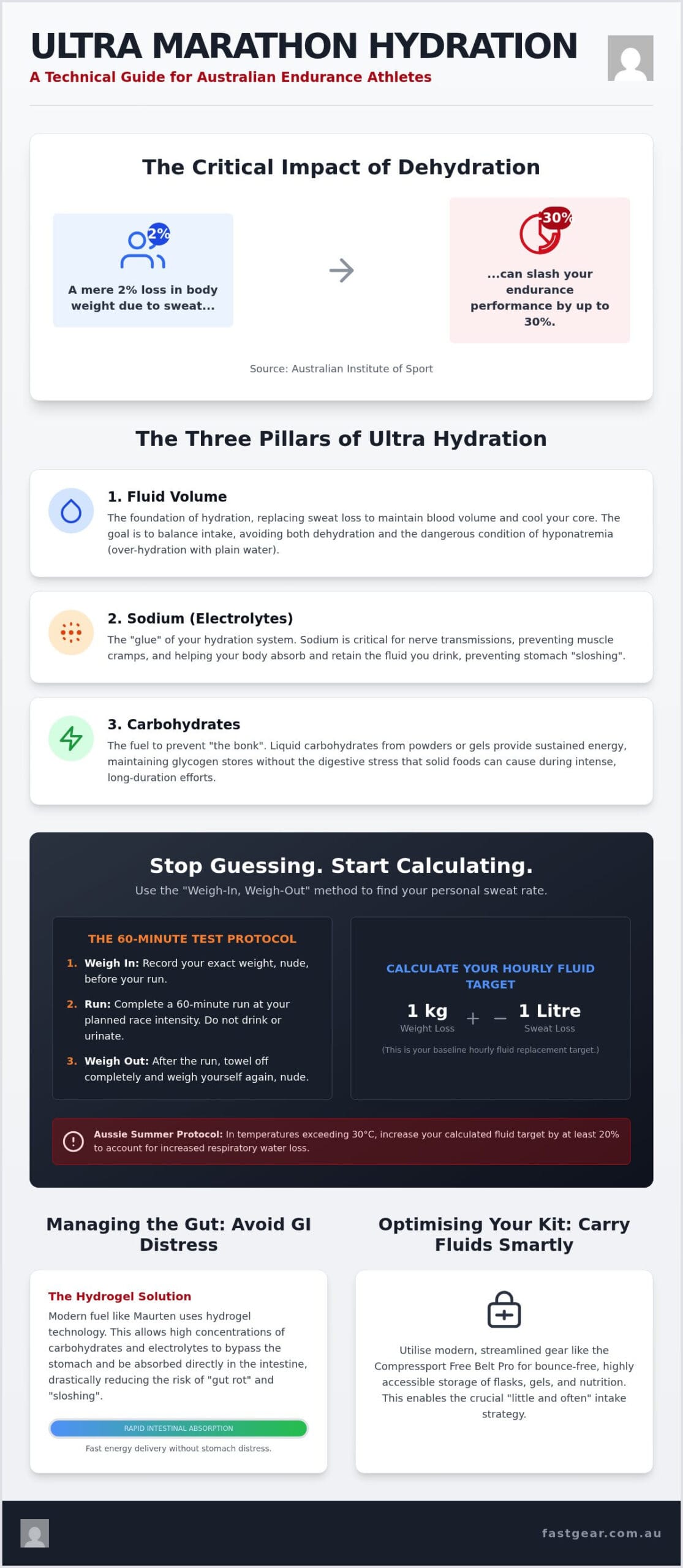
A body weight loss of just 2% can slash your endurance performance by up to 30%, according to the Australian Institute of Sport. For an Aussie runner tackling gruelling ascents or exposed coastal tracks anywhere in our vast country, these aren’t just numbers; they’re the difference between a personal best and a DNF. You already know that surviving a long haul requires more than just sipping water. Yet, many athletes still struggle to dial in a precise ultra marathon hydration strategy that doesn’t result in the dreaded stomach sloshing or debilitating leg cramps during the final quarters.
It’s time to stop guessing and start engineering your output. This 2026 guide delivers a repeatable hydration protocol designed for the unique demands of the Australian climate. You’ll master the science of sodium ratios, learn why hydrogel technology like Maurten is the gold standard for gut stability, and discover how to manage your kit weight with high-performance gear like the Compressport Free Belt Pro. From meeting mandatory 2-litre requirements to avoiding the “bonk” on remote trails, we’re providing the technical roadmap you need to conquer the track with total confidence.
Key Takeaways
- Build a resilient ultra marathon hydration strategy that evolves beyond standard marathon plans to handle the physiological demands of efforts exceeding six hours.
- Master the “weigh-in, weigh-out” method to calculate your specific sweat rate and prevent sodium-related muscle failure in harsh Australian conditions.
- Utilise hydrogel technology to bypass the stomach, eliminating “gut rot” and ensuring rapid intestinal absorption of high-performance carbohydrates.
- Optimise your kit with streamlined solutions like the Compressport Free Belt Pro for bounce-free, highly accessible fluid and nutrition storage.
- Implement a strict “little and often” protocol to maintain steady electrolyte levels and core temperature during high-intensity trail races.
What is an Ultra Marathon Hydration Strategy?
A successful ultra marathon hydration strategy is a precision-engineered system. It’s the managed intake of fluids, electrolytes, and carbohydrates designed to keep your internal engine running for hours on end. While a standard marathon plan might get you through four hours of road running, those strategies often fall apart once you’ve been on the track for six hours or more. Understanding what an ultramarathon is requires acknowledging that the sheer duration changes your physiology. Your gut becomes more sensitive, your sweat rates fluctuate, and your glycogen needs skyrocket.
You’re constantly balancing on a knife-edge between “the bonk” and “the slosh.” The bonk occurs when your glycogen stores hit zero, leaving you physically and mentally depleted. Conversely, “the slosh” is the result of gut rot, where fluid sits heavy in your stomach because your body can’t absorb it. A professional ultra marathon hydration strategy ensures your gut stays stable while your muscles stay fuelled. You must test every element during your training blocks. If you haven’t trialled your protocol during a four-hour Sunday long run, don’t expect it to work at the 80km mark on race day.
The Three Pillars: Fluid, Sodium, and Carbs
Fluid volume is only one piece of the puzzle. Drinking excessive plain water is actually dangerous; it can lead to hyponatremia, a condition where blood sodium levels become dangerously diluted. Sodium acts as the “glue” in your system. It keeps water in your bloodstream rather than letting it slosh in your stomach, and it’s vital for the nerve transmissions that prevent severe cramping. Finally, carbohydrates provide the raw energy. By using liquid fuel like maurten 320 powder or tailwind powder, you can maintain your glycogen stores without the digestive stress of solid food.
Why Aussie Conditions Demand a Custom Approach
Australian runners face some of the harshest environments on earth. In dry heat, like the interior of the Northern Territory, sweat evaporates so quickly you might not even feel wet, leading to rapid, unnoticed dehydration. In the humid coastal forests of Queensland, evaporation stops entirely, and your core temperature can redline in minutes. Look for the “salt crust” on your gear after a session. If your Compressport Trail Racing SS Tshirt is caked in white lines, you’re a high-sodium sweater and need to adjust your electrolyte intake accordingly. Remember, many Aussie trails are remote. When aid stations are 15km apart, your strategy must include the capacity to carry enough fluid to bridge the gap safely.
The Science of Sweat: Sodium and Fluid Balance
Ditch the generic “drink to thirst” advice. In the heat of the Australian bush, thirst is a lagging indicator that usually arrives after your performance has already started to tank. A professional ultra marathon hydration strategy relies on hard data gathered during your training blocks. Sodium is the electrical conductor of your body. Without adequate levels, your nervous system cannot effectively signal your muscles to contract; this leads to the catastrophic cramping that ends races in the final quarters. Osmolarity is the measure of solute concentration in a fluid, determining the speed of gastric emptying and how quickly your body can access the nutrients provided.
Most elite runners utilise a mix of hypotonic and isotonic solutions. Hypotonic drinks have a lower concentration of salt and sugar than your blood, allowing for rapid water absorption. Isotonic solutions, like SIS – GO Isotonic Gels, match your blood’s concentration for a balanced delivery of energy and fluid. Balancing these ensures you stay hydrated without the bloat. For a deeper look at managing these levels, this practical hydration guide for runners offers evidence-based benchmarks for electrolyte replacement.
Calculating Your Hourly Fluid Target
Perform a sweat test to find your baseline. Weigh yourself naked before a 60-minute run at race intensity. Do not drink or use the bathroom. After 60 minutes, towelling off completely and weigh yourself again. Every 1kg of weight lost equals roughly one litre of sweat. In the Australian summer, where temperatures frequently exceed 30°C, you should increase this target by 20% to account for increased respiratory loss. Monitor your body during the race. Dark urine signals a need for more fluid, while swollen fingers or a “sloshing” stomach suggest you’re over-hydrating or lacking the sodium required to pull water into your bloodstream.
Electrolyte Powders: Tailwind vs Maurten vs SIS
Your choice of fuel dictates your gut comfort. Tailwind powder is a popular “all-in-one” solution for Aussie trails because it combines calories, electrolytes, and hydration in a single flask, simplifying your logistics at aid stations. If you have a sensitive stomach, maurten 320 powder is the gold standard. It uses hydrogel technology to encapsulate high concentrations of carbohydrates, allowing them to pass through the stomach unnoticed before being absorbed in the intestine. For high-intensity sections where you need immediate energy without a heavy fluid load, SIS – GO Isotonic Gels provide a quick hit that doesn’t require extra water to digest. You can find the full range of tailwind powder and other elite nutrition to dial in your race-day protocol.
Managing the Gut: Avoiding GI Distress on the Trail
Gut rot is a race-killer. When you push your body for ten hours across the Blue Mountains, blood flow is diverted from your digestive system to your working muscles. Your stomach effectively shuts down. Any fluid or fuel sitting in the gastric chamber begins to ferment, leading to the nausea, bloating, and vomiting that derails even the fittest athletes. Solving this requires more than just “eating through it.” You need a strategy that prioritises intestinal absorption over gastric processing.
Hydrogel technology has revolutionised the modern ultra marathon hydration strategy. Products like maurten 320 powder use a pH-sensitive biopolymer that turns into a gel once it hits the acidic environment of the stomach. This gel encapsulates the high concentration of carbohydrates, allowing them to bypass the stomach entirely. They are then released and absorbed in the small intestine, where the body can actually use them. This mechanism significantly reduces the risk of GI distress, even when you are redlining on a steep climb.
You must also implement nutritional periodisation during your build-up. Just as you train your legs for vertical gain, you must train your gut to handle high carbohydrate loads. Start with 30g of carbs per hour in early training and gradually increase this to your race-day target. Testing these limits during your long runs ensures your digestive system is resilient enough to handle the stress of competition.
The Liquid Fuel Advantage
In the Aussie bush, drinking your calories is often safer and more efficient than chewing solid food. It’s difficult to chew a dry bar when your heart rate is 150 bpm and the humidity is soaring. Aim for a steady 60-90g of carbohydrates per hour. You can scale this easily using maurten 160 powder for cooler, lower-intensity sections and switching to maurten 320 powder when the energy demands peak. This liquid-first approach ensures a constant drip-feed of glycogen to your muscles without the “heavy” feeling of a full stomach.
Troubleshooting Mid-Race Nausea
If nausea strikes, don’t panic. Use the “sip and spit” method to reset your palate. Often, the cloying sweetness of gels causes a sensory overload that triggers the gag reflex; simply rinsing your mouth with plain water and spitting it out can trick the brain into lowering its guard. Switch to plain water for 20-30 minutes to allow your gut to clear any backlog. When you’re ready to re-engage, use maurten gel 100 caffein strategically. The caffeine provides a critical mental lift, while the hydrogel delivery keeps the stomach stable. For texture variety, Clif – BLOKS Energy Chews offer a semi-solid option that provides a psychological break from liquids without the bulk of a full meal.
The Aussie Summer Protocol: Timing and Temperature
Success in a hot-weather race begins 24 hours before you cross the start line. Pre-loading is a critical phase of a professional ultra marathon hydration strategy. Aim to consume an extra 500ml to 1000ml of electrolyte-rich fluid the day before the event to expand your plasma volume. This creates a buffer against the rapid fluid loss you’ll experience in the first few hours of an Aussie summer morning. Starting “dry” is a recipe for early-onset cramping and reduced cardiac output.
Once you’re on the track, implement the “little and often” rule. Set a vibrating alert on your watch for every 10 to 15 minutes. This constant drip-feed of fluid prevents the stomach from becoming overwhelmed by large volumes, which often triggers nausea. External cooling is just as vital as internal hydration. Use ice bandanas at aid stations and keep your Compressport Trail Racing SS Tshirt damp to facilitate evaporative cooling. Chilled fluids move through the gastric system faster than lukewarm liquids, acting as an internal heat sink while accelerating rehydration.
Aid Station Logistics
Efficiency at aid stations is what separates the podium finishers from the pack. Organise your drop bags with pre-measured sachets of maurten 320 powder or tailwind powder. This eliminates the “faff factor” of measuring scoops while you’re exhausted. Follow the “In-and-Out” rule: arrive with empty flasks, refill immediately, and keep moving. Be wary of flavour fatigue. After 10 hours of sweet, high-carb drinks, your palate will likely reject them. Pack a few plain water options or salty alternatives to ensure you don’t stop drinking altogether due to sensory overload.
Night-Time Hydration Adjustments
As the sun sets over the outback, your physiological needs shift. Sweat rates typically drop as the temperature falls, meaning you can often reduce your fluid volume slightly to avoid frequent bathroom stops. However, the transition from a scorching day to a freezing desert night is a shock to the system. This is the time to integrate maurten gel 100 caffein strategically. It provides the mental alertness needed for technical night sections without the massive heart rate spikes associated with high-dose stimulants. Keep your core warm and your hydration steady to maintain blood flow to your extremities. You can shop the full range of Maurten and Tailwind to prepare your drop bags for your next big event.
Optimising Your Kit: How to Carry Your Hydration
Heavy, bulky backpacks are becoming a relic of the past on the Australian trail circuit. A modern ultra marathon hydration strategy prioritises streamlined efficiency and immediate accessibility. If you have to break your stride or stop to wrestle with a bladder, you simply won’t drink enough. Elite runners are shifting toward waist-based systems and front-facing soft flasks to keep their centre of gravity low and their fluid intake constant. This transition reduces upper-body fatigue and eliminates the heat-trapping effect of a large pack against your spine.
The Compressport Free Belt Pro is a game-changer for this minimalist approach. It provides 360-degree storage that allows for bounce-free housing of 500ml soft flasks alongside your nutrition and mandatory gear. When paired with the Compressport Trail Racing SS Tshirt, you achieve peak moisture management. The shirt’s technical fibres pull sweat away from the skin, facilitating the evaporative cooling required for high-intensity efforts and preventing the overheating that leads to rapid fluid depletion.
Soft Flasks vs Bladders
Soft flasks offer a significant tactical advantage over traditional bladders: you can actually see your intake. Monitoring your fluid levels is impossible when your reservoir is hidden in a backpack. Carrying two separate flasks also allows you to run a dual-mix protocol. Dedicate one flask to a high-carb solution like tailwind powder and the other to plain water. This setup gives you the flexibility to wash down gels or clear your palate if you experience flavour fatigue. To avoid “flask funk,” always rinse your gear with a bicarb soda solution immediately after your training runs to keep the silicone fresh.
The Minimalist Ultra Kit
Distributing weight across the hips with a technical belt keeps your shoulders fresh for the final 20km of a race. Use the accessible pockets of the Compressport Free Belt Pro to stash emergency salt tabs and GU Energy Gel – Single units. This ensures your primary fuel source is always within reach, even when your cognitive function begins to dip in the later stages of the event. By refining your gear to match your physiological needs, you eliminate the friction between your plan and your performance. Organise your ultra kit with Fastgear’s premium racing range and ensure your gear works as hard as your engine.
Elevate Your Performance on the Trail
Mastering a precise ultra marathon hydration strategy is the ultimate force multiplier for endurance athletes tackling the Australian bush. You now have the technical roadmap to calculate your specific sweat rate, bypass gut rot with hydrogel technology, and streamline your kit for maximum accessibility. Every gram of sodium and millilitre of fluid you track during training builds the resilience required to conquer remote sections and harsh temperature shifts with total confidence.
Fastgear is your dedicated performance partner and an authorised stockist of Maurten and Tailwind. We provide expert-tested technical gear designed to survive the rigours of Australian trails, supported by fast national shipping to get your race-day essentials to your door. Don’t leave your finish line success to guesswork; equip yourself with the science-backed solutions used by the pros.
Optimise your race-day fuel with our curated Endurance Nutrition range. The track is waiting; go out and own it.
Frequently Asked Questions
How much water should I drink per hour during an ultra marathon?
Aim for a baseline of 400ml to 800ml per hour. This volume depends on your individual sweat rate, the track intensity, and the ambient temperature. In the Australian summer, you may need to push toward the higher end of this range. Always adjust your intake based on the data you’ve gathered during your long training runs in similar conditions.
What is the best way to prevent stomach cramps while running?
Maintain a strict sodium balance to ensure fluid moves efficiently from your stomach into your bloodstream. Avoid overloading your gut with large volumes of plain water, which can cause sloshing and distress. Utilising hydrogel technology allows your body to absorb carbohydrates in the small intestine, bypasses the gastric chamber, and significantly reduces the risk of the cramps that derail long efforts.
Do I really need electrolytes, or is plain water enough?
Plain water is rarely sufficient for efforts exceeding three hours. You need electrolytes, specifically sodium, to facilitate fluid absorption and maintain essential nerve function. Drinking only water during a long race can lead to hyponatremia, where your blood sodium levels become dangerously diluted. A robust ultra marathon hydration strategy always prioritises a balanced electrolyte mix to replace what you lose through sweat.
How do I know if I am over-hydrating (hyponatremia)?
Watch for early warning signs like swollen fingers, a bloated stomach, or a “sloshing” sensation when you move. These indicators suggest you’re consuming more fluid than your body can process or that your sodium levels are too low. Severe over-hydration leads to confusion, headaches, and nausea. If you notice your weight increasing during an event, you should slow your fluid intake and increase your salt consumption.
Can I use the same hydration strategy for a 50k and a 100-miler?
No, you must adapt your protocol as the race duration increases. A 50k allows for higher intensity and a simpler fuelling plan because the effort is shorter. For a 100-miler, your gut becomes significantly more sensitive over 20 or more hours of racing. You’ll need to transition toward more stable, intestinal-absorbing fuels and potentially lower your hourly fluid volume as your pace slows during the night.
What should I do if I can’t stomach any more sweet sports drinks?
Switch to plain water for 20 to 30 minutes to reset your palate and allow your gut to clear. You can also use the “sip and spit” method to rinse the sweetness from your mouth without swallowing. Integrating salty options like Clif – BLOKS Energy Chews or switching to a less sweet powder can help you overcome flavour fatigue while still maintaining your essential electrolyte levels.
How do I test my sweat rate at home in Australia?
Perform a 60-minute run at race intensity after weighing yourself naked. Don’t drink or use the bathroom during the session. Towel off completely and weigh yourself again immediately afterwards. Every 1kg lost represents roughly one litre of fluid loss. Testing in conditions that mimic your race environment, such as a humid coastal morning or a dry afternoon, provides the most accurate data for your plan.
Are energy gels better than hydration powders for long-distance running?
Neither is objectively superior; they serve different tactical roles in your ultra marathon hydration strategy. Hydration powders like maurten 320 powder provide a steady, consistent drip-feed of carbs and fluid. Gels like SIS – GO Isotonic Gels are excellent for quick energy bursts on steep climbs. Many Aussie runners find powders easier on the stomach over long durations because they maintain a more stable concentration of nutrients.
