
Uncategorized
The Ultimate Running Race Day Kit: An Australian Performance Guide (2026)
Aug
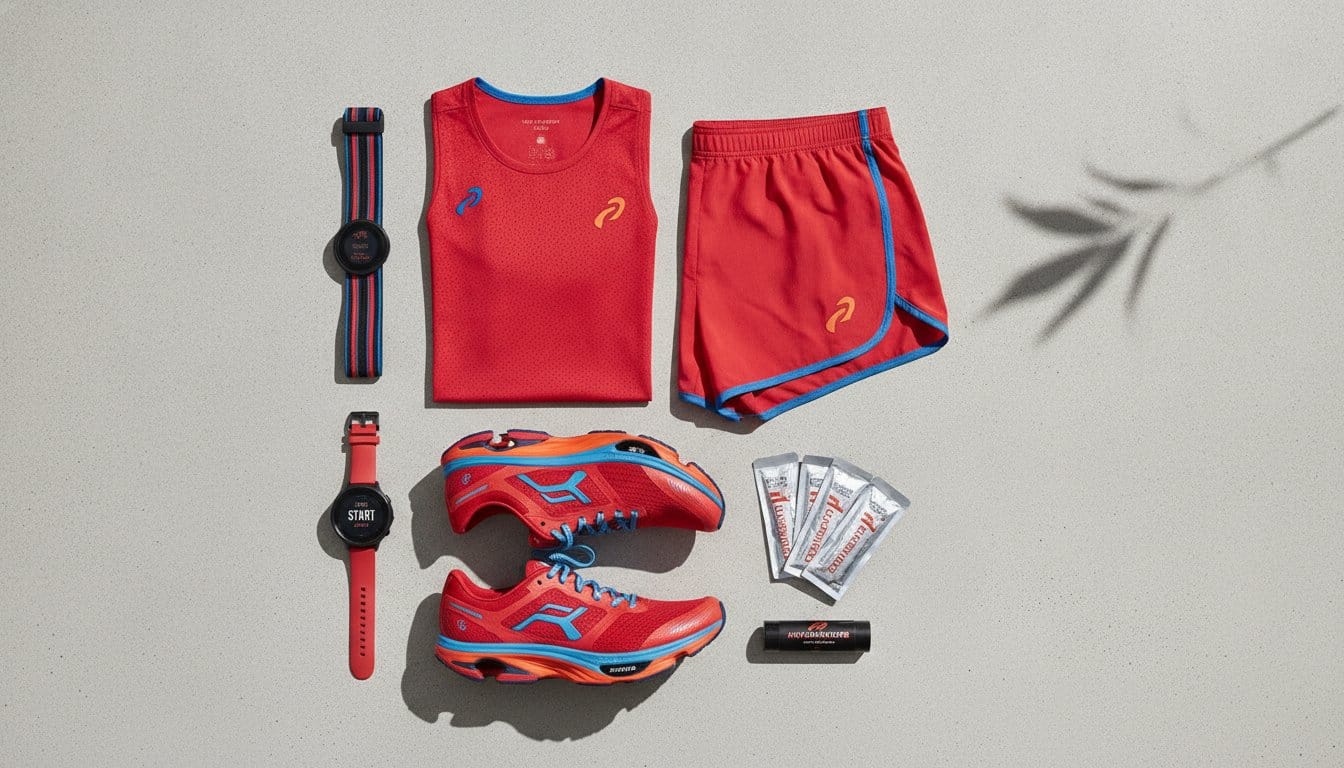
A Personal Best is rarely won in the final kilometre; it is secured months earlier through technical precision and equipment reliability. You understand that physical conditioning is only half the equation. The other half is an uncompromising running race day kit Australia athletes can rely on when the humidity spikes and the pace intensifies. We recognise the frustration of a sub-four attempt derailed by gastrointestinal distress or the searing distraction of severe chafing in harsh coastal conditions. These failures are often the result of gear that lacks the necessary engineering for our local environment.
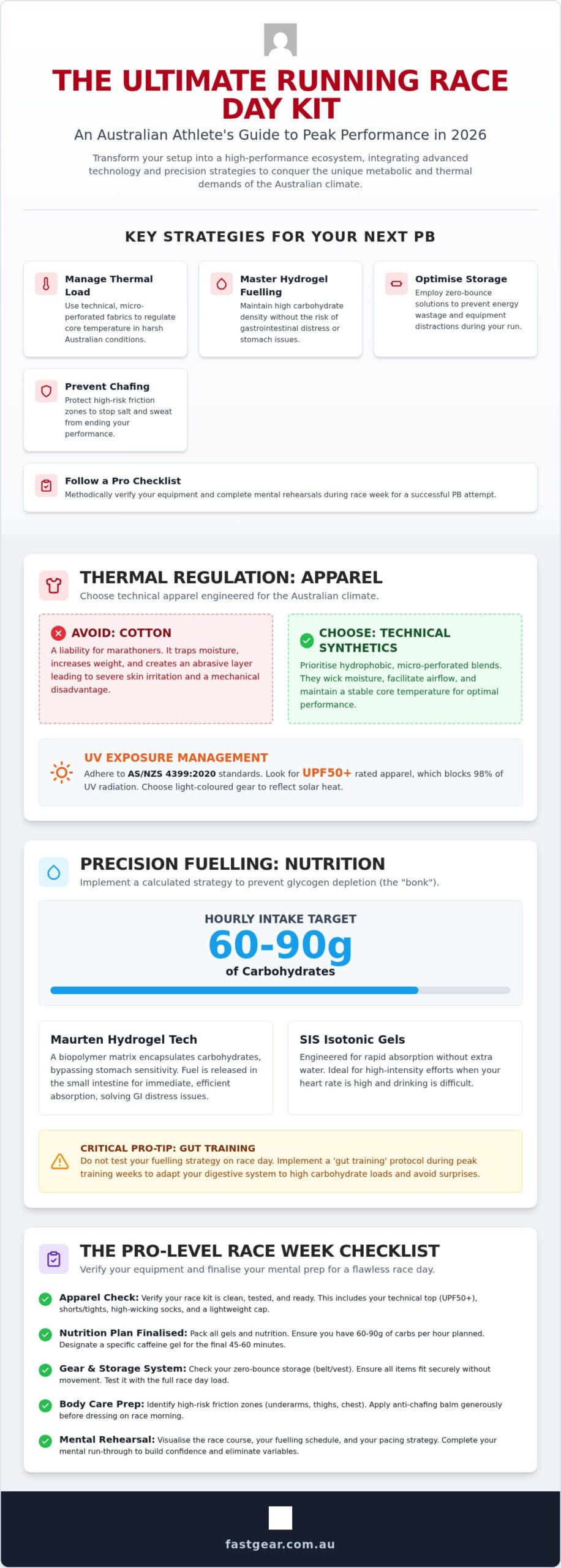
This guide promises to transform your race day setup into a high-performance ecosystem. You will learn to integrate advanced hydrogel technology with ergonomic storage solutions to ensure your power output remains optimal from the starting gun to the finish line. We provide a technical deep-dive into AS/NZS 4399:2020 apparel standards, precision fuelling strategies using Maurten and SIS, and the specific equipment required to conquer the unique metabolic and thermal demands of the Australian climate in 2026. Eliminate the variables. Focus purely on your performance.
Key Takeaways
- Understand how technical micro-perforated fabrics manage thermal regulation and core temperature during high-intensity Australian race conditions.
- Master the science of hydrogel fuelling to maintain high carbohydrate density without the risk of gastrointestinal distress or stomach sensitivity.
- Optimise your running race day kit Australia with zero-bounce storage solutions that prevent energy wastage and equipment distractions.
- Identify and protect high-risk friction zones to ensure salt and sweat don’t lead to performance-ending chafing in humid environments.
- Follow a methodical race-week checklist to verify your equipment and complete your mental rehearsal for a successful PB attempt.
Thermal Regulation: Technical Apparel for the Australian Climate
Cotton is a liability for the Australian marathoner. It traps moisture, increases garment weight, and creates an abrasive layer that leads to severe skin irritation. For a high-performance long-distance running event, every gram of sweat retention is a mechanical disadvantage. Your running race day kit Australia must prioritise hydrophobic synthetic blends that move moisture away from the dermis immediately. This technical shift ensures you remain light and focused during the closing stages of your race.
Micro-perforated fabrics are the benchmark for 2026 performance gear. These materials use precision-engineered ventilation to facilitate constant airflow across the torso. It’s about maintaining a stable core temperature to prevent the heart rate drift associated with overheating. While loose-fit gear offers superior airflow in extreme humidity, compression remains the choice for athletes seeking to reduce muscle oscillation and fatigue. Regardless of fit, your socks must feature high-wicking properties and reinforced friction zones to eliminate the moisture that causes debilitating blisters.
The Compressport Trail Racing SS Tshirt Advantage
The Compressport Trail Racing SS Tshirt represents a significant leap in apparel anatomy. It features seamless construction to remove the friction points that typically cause underarm chafing during high-intensity efforts. Targeted ventilation zones are woven directly into the fabric to accelerate sweat evaporation in high-heat areas like the back and chest. This ergonomic ‘race fit’ provides a streamlined silhouette that stays in place, providing a psychological sense of speed and readiness while ensuring the fabric doesn’t flap or distract you at pace.
Managing UV Exposure and Humidity
The Australian sun is a primary factor in performance degradation. Heat stress forces the cardiovascular system to work harder, which compromises your ability to sustain a target pace. Adhering to the AS/NZS 4399:2020 standard for sun protective clothing is essential. Gear with a UPF50+ rating provides excellent protection, blocking 98% of UV radiation. White or light-coloured technical apparel is a strategic choice to reflect solar heat rather than absorbing it. Pair your shirt with a lightweight, breathable cap to manage sweat runoff and protect your face. Integrating these thermal regulation tools into your running race day kit Australia ensures that environmental variables don’t dictate your final result.
The Science of Fuelling: Hydrogels and Isotonic Nutrition Systems
Nutrition isn’t just food; it’s a technical component of your running race day kit Australia. The ‘bonk’ is the physiological result of glycogen depletion, where your body exhausts its readily available fuel and hits a metabolic wall. To prevent this, carbohydrate density is paramount. Fueling your run requires a calculated strategy that balances aggressive energy intake with gastric comfort to ensure every gram of glucose reaches your working muscles.
The hydrogel revolution has redefined endurance performance. Traditional gels often cause gastrointestinal distress because high concentrations of sugar sit in the stomach, drawing in water and causing bloating. Maurten Gel 100 solves this by using a biopolymer matrix that encapsulates the carbohydrates. This hydrogel bypasses the stomach’s sensitive environment and releases the fuel in the small intestine for immediate absorption. For the final stages of a race, timing your Maurten Gel 100 CAF (caffeine) for the last 45 to 60 minutes provides the neurological stimulation needed to maintain power when physical fatigue peaks.
Understanding the difference between isotonic and hypertonic solutions is critical for absorption rates. SIS – GO Isotonic Gels are engineered to be absorbed quickly without the need for additional water, making them ideal for high-intensity efforts where your heart rate is redlining. Hypertonic options provide more concentrated energy but require careful fluid management to process. You can optimise your fuelling strategy by selecting technical nutrition that matches your specific intensity and sweat rate.
Building Your Personal Fuelling Plan
Target an intake of 60 to 90 grams of carbohydrates per hour. This isn’t a metric you should test for the first time on the start line. Implement a ‘gut training’ protocol during your peak training weeks to adapt your digestive system to high carb loads. Mixing formats prevents palate fatigue and keeps you motivated. Use SIS gels for rapid hits, Clif – BLOKS Energy Chews for a tactile change in texture, or tailwind powder for a consistent stream of energy through your handheld bottle or hydration bladder.
Electrolytes and Hydration Precision
Hydration is a precise balance, not a volume game. Over-hydration can lead to hyponatremia, a dangerous dilution of blood sodium levels that compromises performance and safety. High-density liquid options like Maurten 320 or Maurten 160 allow you to combine fluid and fuel in one efficient delivery system. Sodium remains the critical link in muscle function. It facilitates the electrical signals required for contraction; without it, you risk cramping and a significant drop in power output. Focus on replacing what you lose through sweat to keep your physiological systems firing.
Zero-Bounce Storage: Optimising Your Race Day Ergonomics
Every centimetre of vertical movement in your gear is energy diverted from forward propulsion. Bounce is a mechanical inefficiency. If your flasks or phone are shifting, you’re fighting your equipment instead of the course. Your running race day kit Australia must function as a seamless extension of your anatomy. Research from Deakin University into how temperature affect running indicates that metabolic heat production increases with effort; carrying poorly secured loads only amplifies this physiological strain. For road marathons, a technical waist belt provides a lower centre of gravity than a vest, which is critical for maintaining an efficient, aerodynamic profile at high speeds.
Accessibility is the second pillar of race day ergonomics. You don’t want to be fumbling with zippers when your heart rate is at threshold. Your storage solution must allow for blind access to nutrition. This ensures you can maintain your cadence and focus on the road ahead. Streamlining your profile isn’t just about wind resistance; it’s about reducing the cognitive load of managing your gear. When everything has a dedicated, secure place, you can commit 100% of your mental energy to your pace strategy.
Why the Compressport Free Belt Pro is Essential
The Compressport Free Belt Pro is the definitive solution for high-capacity, zero-bounce storage. Its 360-degree tubular pocket system facilitates balanced weight distribution across your hips. You can stow multiple Maurten gels, a mobile phone, and even a lightweight jacket without the rhythmic slapping typical of inferior belts. For Australian trail events, the integrated silicone toggles secure folding poles with zero lateral movement. The medical-grade elasticity ensures the belt won’t sag when wet with sweat, keeping your nutrition exactly where you can reach it during high-intensity efforts.
Transition Mastery for Triathletes
Performance ergonomics for triathletes begin long before the run leg starts. The Wove M8 Road / Tri Saddle features a precision-engineered cutout to eliminate soft tissue compression. This design is critical for maintaining blood flow and nerve function during aggressive, aero-tucked riding. By reducing saddle-induced fatigue, you ensure a faster, more fluid transition into your running race day kit Australia during T2. A flawless transition isn’t about rushing; it’s about the technical synergy between your bike setup and your run gear. Eliminate the friction, and you’ll find the speed.
Preventing the DNF: Chafing and Open-Water Essentials
The Australian climate introduces a specific biological challenge known as the sandpaper effect. As sweat evaporates in high humidity, it leaves behind abrasive salt crystals that act as a mechanical irritant against the skin. This friction is a primary cause of Did Not Finish (DNF) results in endurance events across the country. High-risk zones like the underarms, inner thighs, and the posterior neck require targeted protection. While these irritations start as minor hotspots, they quickly consume the mental focus required for a successful PB attempt. Your running race day kit Australia must include preventative measures that withstand hours of repetitive motion and heavy perspiration.
Minor irritations have a cumulative effect on your physiology. A small rub at kilometre five becomes a debilitating wound by kilometre thirty, triggering a stress response that elevates your heart rate and degrades your form. Protecting these areas is as vital as your fuelling or hydration strategy. You can browse our range of anti-chafe solutions and technical accessories to secure your performance against environmental variables. Integrating these protective layers into your running race day kit Australia ensures that your mental energy remains focused on your splits, not your skin.
Mugiro Neck Protectors: The Invisible Saviour
Lubricants and anti-chafe creams are often insufficient for long-duration events. They inevitably wash away with sweat or salt water, leaving your skin exposed to the abrasive edges of a wetsuit or technical garment. The Mugiro – Neck Protector provides a high-performance physical barrier that is essential for multisport athletes. Its technical design prioritises superior elasticity and salt-water resistance, ensuring the protector remains secure during the swim and through the transition. By preventing wetsuit burn early in the race, you preserve your skin integrity for the subsequent run leg. This physical shield outperforms topicals by maintaining its position regardless of movement intensity or moisture levels.
Swimming Goggles and Open-Water Clarity
Visual clarity is a critical performance metric that is often overlooked. In the harsh Australian morning sun, the intense glare off the water can lead to significant sighting errors and increased eye strain. High-quality Swimming Goggles with mirrored or polarised lenses are a non-negotiable requirement for open-water legs. These specialised lenses filter out the horizontal light, allowing you to maintain precise sightlines to the buoys and other competitors. Advanced anti-fog technology ensures you won’t need to break your stroke to clear your vision. A comfortable, leak-proof seal prevents the distraction of water ingress, allowing for a focused and efficient transition into the running phase of your event.
The Pro-Level Race Week Checklist: Final Preparation
Technical readiness is the final stage of your taper. At T-Minus 7 days, you must conduct a comprehensive audit of your gear inventory. This is the deadline for identifying depleted nutrition stocks or worn-out apparel. If you’re low on Maurten Gel 100 or need a fresh technical layer, ensure your order is placed immediately. Fastgear Australia prioritises national delivery to meet these critical timelines, ensuring your running race day kit Australia is complete before you travel to the event. If your racing schedule takes you to the United States, you can discover GAATCO to coordinate reliable vehicle transport for your support crew. Verify your nutrition strategy one last time to ensure you have enough Maurten and GU Energy Gels to sustain your target power output for the entire duration.
The charging protocol is equally vital. Verify that your GPS watch, heart rate monitor, and electronic shifting systems are at 100% capacity. A dead battery at kilometre 30 is a preventable failure that compromises your pacing strategy. Once your hardware is ready, perform the ‘Flat Runner’ ritual. Lay out every item on the floor. This visual confirmation serves as a mental rehearsal; it reduces pre-race anxiety and ensures no technical component, from your Mugiro protector to your specific race socks, is left behind. Seeing your setup finalised instils a sense of focused determination and readiness.
Beyond the technical essentials, many athletes use creative outlets to manage pre-race nerves, such as designing custom race-day nail art; you can discover PoscART for inspiration on using precision paint markers to add a unique, durable flair to your look.
The Night Before the Race
Precision is paramount during the final hours. Pin your race bib to your shirt or race belt with care. Ensure it’s flat and doesn’t obscure any ventilation zones or the timing chip. Prepare your hydration flasks using Maurten 320 or tailwind powder to ensure the solutes are fully dissolved. This prevents clumping and ensures a consistent delivery of carbohydrates from the first sip. Finally, organise your ‘Bag Drop’ for post-race recovery. Include a dry change of clothes and a recovery shake to begin the metabolic repair process immediately after crossing the line.
Race Morning Execution
Success on race morning is a matter of timing. Consume your pre-race meal, such as ucan gels or a Maurten 160 drink, approximately two to three hours before the start. This provides a steady release of energy without the insulin spike associated with simple sugars. Conduct a final physical check of your running race day kit Australia. Ensure your Compressport Free Belt Pro is snug and the weight of your gels is balanced across your hips. Use the act of putting on your gear as a psychological trigger. Each piece of technical equipment is a tool designed for a specific performance goal. When the kit is on, the transition from athlete to competitor is complete.
Dominate the Course with Technical Precision
Your success on the start line is a direct reflection of the technical choices you make during your taper. Mastering your running race day kit Australia requires more than just picking fast shoes. It’s about the seamless integration of micro-perforated apparel for thermal regulation and the precision of hydrogel fuelling to bypass gastric distress. When you eliminate the friction of poor storage and the distraction of chafing; you free your mind to focus entirely on the split times that lead to a Personal Best.
Fastgear Australia serves as your technical partner; providing a curated selection of world-leading brands like Maurten and Compressport. We offer expert advice for endurance athletes and fast national shipping across Australia to ensure your gear arrives before your final race-week rehearsal. Don’t leave your performance to chance. Build your elite race day kit at Fastgear Australia and step onto the course with absolute confidence. Your strongest performance is within reach.
Frequently Asked Questions
How many energy gels do I actually need for a marathon?
Target a carbohydrate intake of 60 to 90 grams per hour to maintain glycogen levels. For a four-hour marathon effort, this typically equates to 8 to 12 gels depending on the specific carbohydrate density of your chosen fuel. It’s essential to calculate your total burn rate during training to ensure your running race day kit Australia is stocked with sufficient Maurten or GU units to avoid a metabolic deficit during the final ten kilometres.
What is the best way to prevent chafing during an Australian summer race?
Deploy physical barriers alongside technical apparel to combat the sandpaper effect caused by salt crystal accumulation. While anti-chafe creams provide temporary relief, a Mugiro Neck Protector and seamless Compressport garments offer permanent protection against repetitive friction. This dual-layer strategy is the most effective way to maintain skin integrity during high-humidity Australian events where sweat rates are extreme and traditional lubricants often wash away.
Should I use a running belt or a hydration vest for a half-marathon?
Choose a technical waist belt like the Compressport Free Belt Pro for half-marathon distances to maintain a lower centre of gravity and maximum aerodynamic efficiency. Vests are typically unnecessary for 21.1km road races where aid stations are frequent. A belt provides ample storage for your primary fuel and mobile phone without the added thermal load or vertical bounce associated with a full-back hydration system.
How does Maurten hydrogel differ from standard energy gels like GU?
Maurten utilises hydrogel technology to encapsulate high concentrations of carbohydrates within a biopolymer matrix. Standard gels like GU rely on simple sugars that can sit in the stomach and cause osmotic distress or bloating. Maurten’s system bypasses the sensitive gastric environment and releases the fuel in the small intestine for immediate absorption, allowing for higher energy intake without the risk of gastrointestinal failure.
What is the benefit of a technical running shirt over a standard gym top?
Technical shirts feature targeted ventilation and moisture-wicking properties designed specifically for sustained high-intensity efforts. Standard gym tops often lack the seamless construction required to prevent long-distance chafing and can become heavy when saturated with sweat. Elite gear like the Compressport Trail Racing SS Tshirt is engineered to meet Australian sun protection standards, ensuring you manage UV exposure while maintaining a stable core temperature.
Can I use triathlon-specific gear for a standard road marathon?
Technical triathlon equipment is highly effective for road marathons due to its intense focus on weight reduction and moisture management. Many elite athletes integrate the Compressport Free Belt Pro or Mugiro protectors into their running race day kit Australia to leverage their superior ergonomics and salt-water resistance. These tools are designed for the extreme rigours of multisport racing, making them more than capable of handling a standalone marathon.
How do I clean my technical Compressport gear to ensure it lasts?
Wash your technical apparel in cold water on a gentle cycle to preserve the integrity of the medical-grade elastic fibres. Avoid fabric softeners; these chemicals coat the technical pores of the fabric and significantly degrade its moisture-wicking and breathability performance. Always air dry your gear in the shade to prevent UV damage to the high-performance synthetic blends and maintain the garment’s compression properties.
Why is the Wove M8 saddle recommended for athletes doing both cycling and running?
The Wove M8 saddle is engineered to eliminate soft tissue pressure and preserve nerve function during the cycling leg of a race. This technical advantage is crucial because it prevents the numbness and localised fatigue that often hinder the start of the run. By maintaining physiological health and blood flow on the bike, you ensure your transition into a high-performance running state is fluid, efficient, and free from mechanical discomfort.
