
Uncategorized
Hydrogel Sports Fuel Australia: How to Choose in 2026
Oct
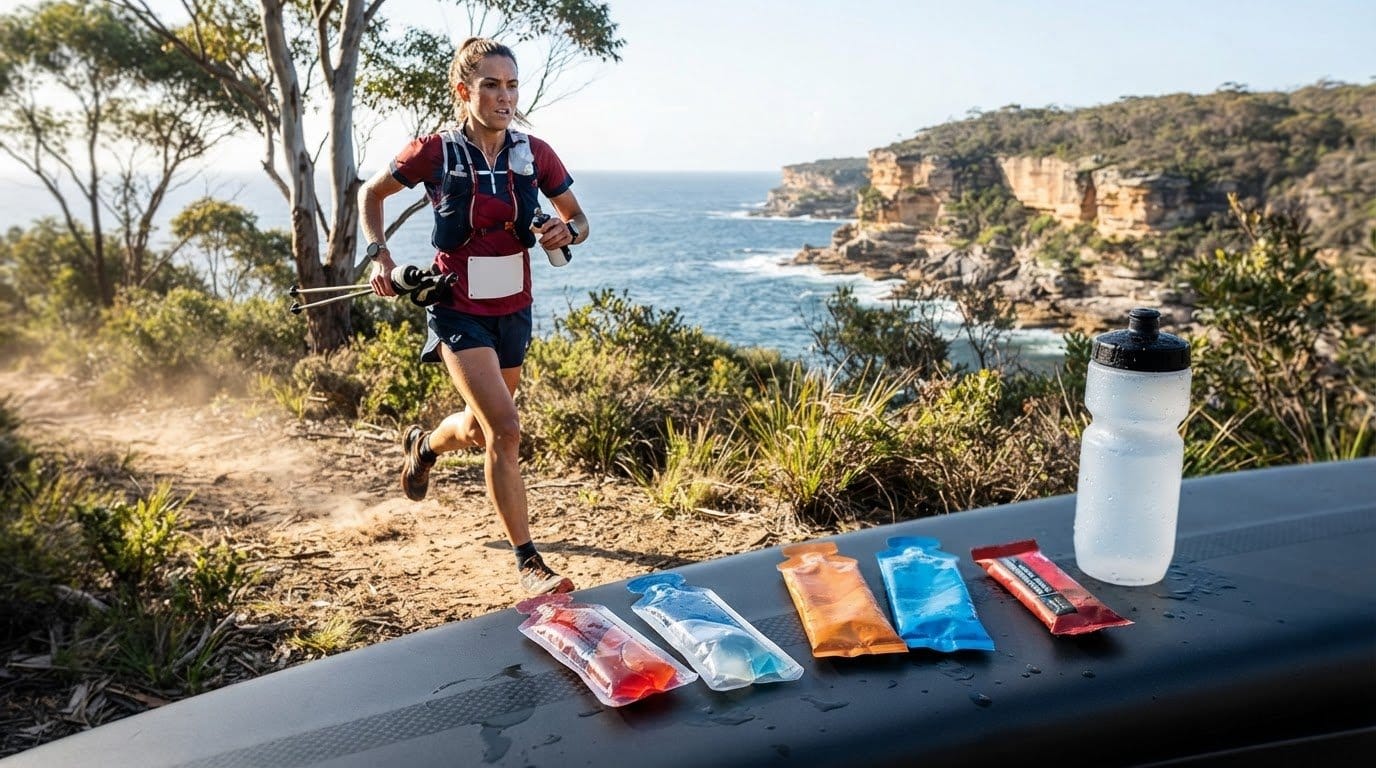
What if the best endurance fuel for your event isn’t the one with the most advanced-sounding technology? If you’re comparing hydrogel sports fuel Australia options, focus on whether the format fits your fuelling plan, gut tolerance and race demands, rather than what the label promises.
It’s reasonable to look for fuel that feels comfortable, stays palatable during long sessions and is practical to carry. Hydrogel products are designed to handle carbohydrates differently from conventional gels, but that doesn’t guarantee better comfort or performance for every athlete. Your own response matters.
This guide explains what hydrogel fuel is, how to interpret its claims and how it compares with gels, chews and drink mixes. You’ll also learn what to check on labels, how to match a format to your event and how to practise your plan in training so race day isn’t the first test.
Key Takeaways
- Hydrogel describes a fuel format, not a complete fuelling strategy. Judge its potential benefits against evidence and your own response.
- Compare carbohydrate information, serving format and carrying practicality across gels, chews and drink mixes.
- Choose hydrogel sports fuel Australia options according to your event’s duration, intensity, access to fluids and gut tolerance.
- Use product labels to compare options, then practise your planned fuelling approach during training before race day.
- Compare established formats such as Maurten gels and powders, GU and SIS gels, Clif BLOKS chews and Tailwind powder to build a shortlist that suits your needs.
What is hydrogel sports fuel, and when might endurance athletes use it?
Hydrogel describes a fuel format or technology, not a complete fuelling strategy. Whether it belongs in your kit depends on your event, your tolerance and how it fits your overall plan.
Hydrogel sports fuel is an endurance fuel designed to form a gel-like polymer network around or within its carbohydrate mixture, with the aim of changing how that fuel behaves as it moves through the digestive system. The term describes a structure, not proof of a particular performance or gut-comfort benefit.
What does hydrogel mean in sports fuel?
A hydrogel is a network of polymers that can hold water; hydrogel technology describes this broader material science. In sports nutrition, manufacturers use the term for particular fuel formulations and explain how their structures are intended to behave during digestion. Keep that proposed mechanism separate from demonstrated outcomes. It doesn’t establish that a product will be absorbed faster, feel gentler or improve performance for every athlete.
Maurten is one retail example associated with hydrogel fuel. Not every energy gel uses hydrogel technology, and products within a brand’s range may have different formulations. Check current product information for ingredients and serving directions rather than inferring details from the word “hydrogel” alone.
Who might consider hydrogel fuel for endurance sport?
Runners, cyclists and triathletes may consider this format when planning carbohydrate intake during sustained exercise. A sachet may suit one athlete’s routine, while another may prefer chews or a drink mix. Event duration and intensity, access to fluids, carrying capacity and personal tolerance all affect what’s practical.
There’s no universal winner. Test your chosen fuel during training and pay attention to taste, ease of use and how it sits while exercising. Treat the result as one part of your fuelling plan, not a substitute for planning when and how much to consume. For broader context on building that plan, read the endurance sports nutrition guide.
A search for “hydrogel sports fuel australia” can bring up products with different formats and label information. Compare those details, then judge a fuel by how well it works for your session and your gut, not by its technology claim alone.
How hydrogel fuel works: separate the technology from the performance claims
Hydrogel claims usually describe a proposed delivery mechanism. That’s different from evidence that a fuel improves performance or reduces gut discomfort. Keep three evidence levels in view: what a manufacturer says about its formulation, what controlled research measures and what you experience during your own sessions.
What happens after an athlete consumes hydrogel fuel?
During exercise, the digestive system breaks down and absorbs carbohydrate, which the body can use to support energy needs. Maurten describes its hydrogel approach as using alginate and pectin to form a gel structure around carbohydrates. The proposed mechanism is that the structure changes as it passes through the digestive tract, where carbohydrates become available for digestion and absorption. That is a product explanation, not proof of a unique absorption route or a guaranteed stomach benefit.
Response can vary with the fuel, the session and the athlete. A formulation that feels comfortable for one person may not suit another. Read manufacturer descriptions as explanations of design, then assess practical value through evidence and careful testing.
What can the evidence tell athletes about hydrogel claims?
A 2026 randomised controlled study of amateur marathon runners, as summarised in the available research, found no significant overall finish-time improvement for sodium alginate hydrogel gels compared with traditional gels. The hydrogel group showed more consistent pacing in the latter part of the race and more stable blood glucose levels. Those findings are worth noting, but they don’t establish that all athletes or events will produce the same results. A study of amateur marathon runners also can’t settle how the fuel performs across different sports, formulations or individual gut responses.
Manufacturer statements explain intended design. Controlled studies test specific outcomes under defined conditions. Athlete reports can offer insight into taste, handling and comfort in real sessions, but they’re personal experiences, not universal proof. Consider all three without treating a technology label as a performance guarantee.
A technology label alone cannot predict an individual athlete’s performance, comfort or tolerance. If you’re comparing hydrogel sports fuel Australia options, check current product information and test your chosen format in training before relying on it during an event. For a brand-specific explanation, read the Maurten hydrogel fuelling guide. You can also compare established endurance-fuel formats through Fastgear’s range of gels, chews and powders.
Hydrogel gels vs conventional gels, chews and drink mixes: what should you compare?
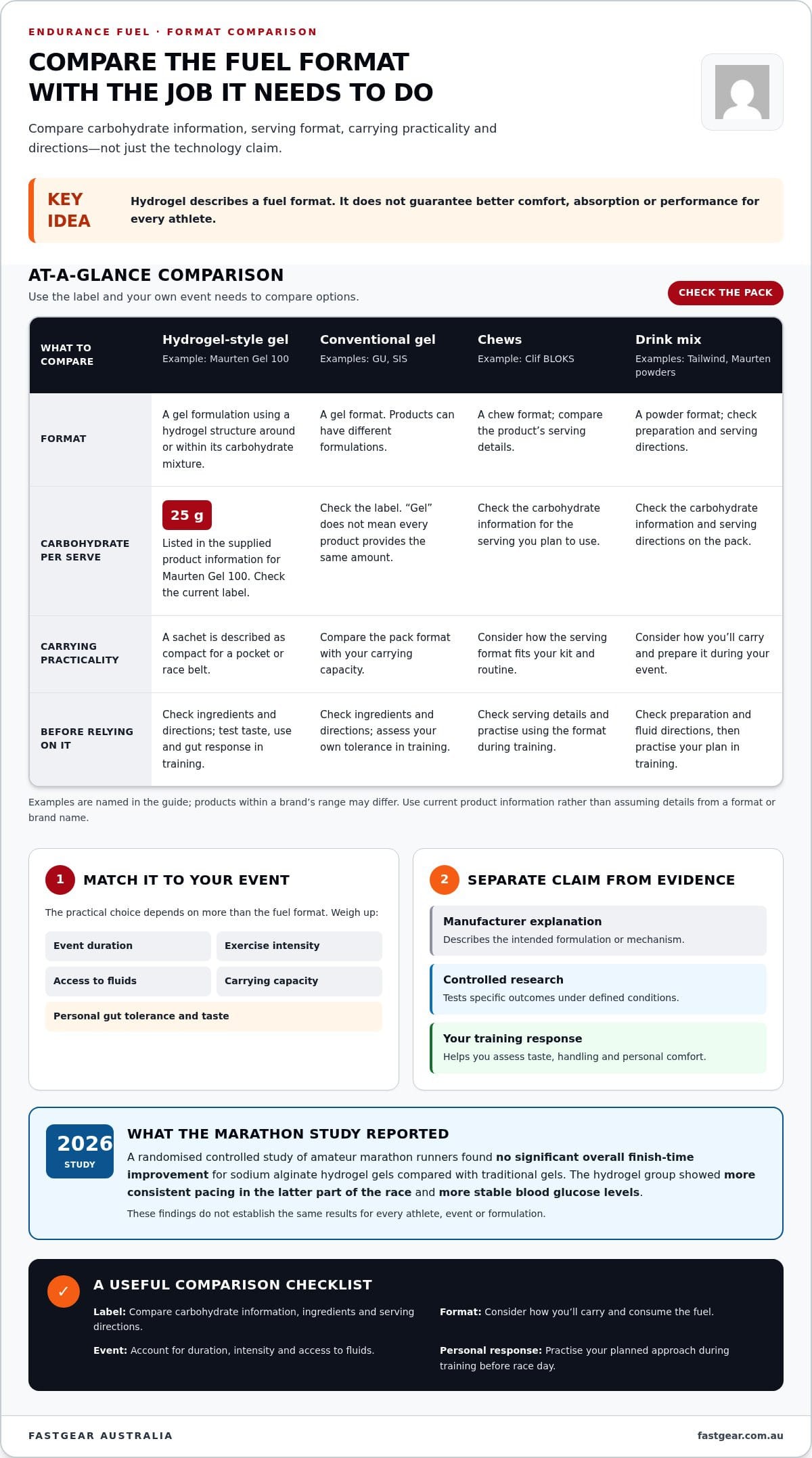
Choose according to the job the fuel needs to do. Compare carbohydrate per serving, how you’ll carry and consume it, the serving directions and whether you also need fluid. “Gel” doesn’t mean every product has the same composition or provides the same amount of carbohydrate.
| Format and examples | What to check on the label | Carrying practicality and likely use |
|---|---|---|
| Hydrogel-style gel, such as Maurten Gel 100 | Carbohydrate per sachet, ingredients and serving directions. The supplied product information lists 25 g of carbohydrate for Gel 100. | A sachet is compact for a pocket or race belt. Consider it if a ready-to-use gel suits your intake plan. |
| Other gels, such as GU Energy Gel and SIS GO Isotonic Gels | Check each product’s carbohydrate amount, ingredients and instructions. Don’t assume these match one another or a hydrogel gel. | Individual servings can be easy to carry and access during exercise. Practise opening and consuming your chosen format at your intended pace. |
| Chews, such as Clif BLOKS Energy Chews | Check carbohydrate per serving and how the label defines a serving. | Chews let you take fuel in pieces, but handling and chewing may be less convenient during hard efforts or transitions. |
| Drink mix, such as Tailwind powder | Check carbohydrate, electrolytes, mixing directions and the prepared serving information. | Useful if you prefer taking fuel in a bottle, but requires water and a suitable container. |
Gels and label differences
Texture and serving directions vary between gels. Some products are intended to be taken with water; others have different directions. Follow the specific label rather than applying one rule to every sachet. Maurten Gel 100, GU Energy Gel and SIS GO Isotonic Gels are useful examples to compare, but brand or format alone doesn’t establish a performance advantage. Check the current packaging and label details before setting your intake plan.
Match the format to the session
On a run, compact packaging may matter most. On a bike, a bottle-based mix may fit your setup, while chews or gels offer other ways to portion fuel. During a triathlon, consider what you can carry and consume safely around transitions. You can use different formats across training and racing, provided you practise each one.
Fuel and hydration are related, but they aren’t interchangeable. Electrolyte content and fluid provision depend on the individual product and its directions. For the distinction, see this electrolytes and performance hydration guide. Compare hydrogel sports fuel Australia options against your session demands, label details and preferences, not a universal ranking.
How to choose and test hydrogel sports fuel for your event
A reliable fuelling choice starts with the session, not the product claim. Define the event demands, compare the label, choose a practical format, then practise and review. There’s no single carbohydrate target that suits every athlete or session, so base your plan on current guidance and your individual needs.
- Define the demands: Consider duration, intensity, likely conditions and when you’ll have access to fluids.
- Check the label: Compare carbohydrate per serving, ingredients and directions. Note whether the product is intended to be taken with water.
- Choose for practicality: Think about where the fuel will sit, how easy it is to open or consume while moving and how much you can carry.
- Practise and review: Test the format during training, record how it goes and adjust before race day.
Match the format to running, cycling or triathlon demands
Sport alone doesn’t dictate the right format. A runner might prioritise a compact sachet, while a cyclist may find a bottle mix practical. In triathlon, consider how fuel fits your equipment and what you can manage around transitions. Compare access to water and aid stations with product directions, and plan how you’ll carry enough fuel for the session.
Heat can change an event’s demands and your practical plan. Consider expected conditions, fluid access and how you’ll transport fuel, rather than assuming one format works best in hot weather. For more event-specific context, see the hot-weather ultramarathon fuelling guide.
Practise tolerance and refine your race-day plan
Trial one change at a time during a comparable training session. If you change the fuel, timing and fluid approach together, it’s harder to identify what worked. Follow the product’s current label directions and avoid introducing an unpractised option on race day.
After each session, make a brief note of when you took the fuel, perceived tolerance, fluid intake, flavour and any handling issues. Reassess after several relevant sessions, rather than relying on one isolated experience. If you have medical concerns or need nutrition advice tailored to your circumstances, speak with a qualified sports dietitian.
Use your training feedback to assess hydrogel sports fuel Australia choices against the event you’re preparing for. To compare practical options, explore endurance gels, chews and drink mixes.
Compare hydrogel sports fuel options at Fastgear Australia
Build your shortlist around format and session demands, not a search for one fuel that works for every athlete. Fastgear brings gels, chews and drink powders together, so you can compare how each might fit your routine. Treat product names as a starting point, then check the current manufacturer label for ingredients, carbohydrate per serving and directions.
Compare options by format
- Hydrogel-associated gels: Maurten Gel 100 and Maurten Gel 100 Caffeine are options to consider if you’re exploring this format. Check each current label for ingredients, serving information and any caffeine details relevant to your plan.
- Other gels: GU Energy Gel, SIS GO Isotonic Gels and UCAN gels offer alternatives to compare. Don’t assume they share the same composition, texture or serving directions. The label is your reference.
- Chews: Clif BLOKS Energy Chews provide a chew format for athletes who prefer to portion fuel rather than take a gel. Check the serving definition and carbohydrate information on the current packaging.
- Drink powders: Maurten 160 and 320 powders, alongside Tailwind powder, are options for athletes who prefer to carry fuel in a drink. Compare mixing instructions and prepared serving details on each product label.
These categories don’t rank from best to worst. A sachet may suit a runner who wants compact fuel; a drink mix may fit a cyclist’s bottle setup; chews may appeal if you prefer taking fuel in smaller portions. Your event, carrying capacity, access to fluids and personal tolerance all matter. Check whether the product provides electrolytes or has specific fluid instructions rather than assuming every fuel also covers hydration.
Build a shortlist you can trust
Compare the same details across each option: carbohydrate per serving, ingredients, serving instructions and how the format fits your intake routine. If caffeine is relevant, check the label’s caffeine information too. Product labels can change, so base your plan on current manufacturer details rather than remembered specifications or assumptions about a brand.
For an important event, choose a format you’ve already practised. Trial it in a comparable training session, then review taste, tolerance, timing and how practical it was to carry and consume. If the fit isn’t right, adjust during training and test again. No gel, chew or powder can guarantee a particular performance outcome.
Ready to compare hydrogel sports fuel Australia options with other endurance formats? Explore endurance fuel at Fastgear and shortlist gels, chews or powders that align with your plan.
Make your next fuelling choice with confidence
Hydrogel is a fuel format, not a guaranteed shortcut to better performance or gut comfort. The right choice depends on your event, personal tolerance and fuelling plan. Compare current labels across gels, chews and drink powders, then practise your preferred option in training before race day.
Fastgear offers endurance formats including Maurten Gel 100, GU Energy Gel and SIS GO Isotonic Gels. Use the product information to build a shortlist that fits your routine, then test and refine it through experience.
Frequently Asked Questions
What is hydrogel sports fuel?
Hydrogel sports fuel is a carbohydrate fuel formulated to create a gel-like polymer structure. The term describes a format or technology, not a complete fuelling plan or a guaranteed performance benefit. Maurten is one example of a brand associated with hydrogel gels. Check the current product label for ingredients, carbohydrate per serving and directions, as formulations and serving details can differ between products.
Is hydrogel fuel better than regular energy gels?
Not necessarily. Hydrogel and conventional gels differ in formulation, but the technology label alone doesn’t prove one will improve performance or feel better for you. Research findings apply to the products, participants and conditions studied, while individual tolerance varies. Compare current labels, including carbohydrate content and directions, then test your preferred option during training. A familiar gel that fits your plan may be more practical than an untested alternative.
Can hydrogel sports fuel cause stomach problems?
Yes. Any sports fuel, including hydrogel gels, may cause discomfort for some athletes. Response can depend on the product, the session and your individual tolerance. Hydrogel claims don’t guarantee freedom from gut symptoms. Introduce a product during training, follow its label directions and note how it feels during exercise. If you have persistent symptoms or a medical concern, seek advice from a qualified health professional or sports dietitian.
How do I use hydrogel gels during a race?
Plan your intake around the event and practise that routine in comparable training sessions. Check the gel’s current label for serving instructions and whether it should be taken with water. Consider race duration, intensity, access to fluids and how you’ll carry and open each sachet. Don’t rely on a new product or an improvised fuelling schedule on race day. If your needs are individual, consult a qualified sports dietitian.
Do hydrogel gels replace water or electrolytes?
No, don’t assume a hydrogel gel replaces water or electrolytes. Its role and contents depend on the specific product, so read the label for ingredients, fluid directions and any electrolyte information. Plan hydration separately according to your event and needs. A gel may contribute carbohydrate without providing the fluid or electrolytes you require. Check your complete fuelling and hydration setup before relying on it during exercise.
Can I use hydrogel sports fuel for running, cycling and triathlon?
Hydrogel sports fuel can be considered for running, cycling or triathlon, but the practical choice depends on the session and your preferences. Runners may prioritise compact packaging; cyclists may prefer fuel that works with their bottle setup; triathletes can consider carrying and using it around transitions. These are considerations, not fixed rules. Test the format during training and check its label directions before including it in your race plan.
Should I try hydrogel fuel for the first time on race day?
No. Test hydrogel fuel during training before using it in an event. Trial it in a session that reflects your race demands, and change one part of your fuelling routine at a time. Record timing, perceived tolerance, fluid intake and any handling problems. Use the results to refine your plan and follow current product directions. A race is not the right time to discover whether an unfamiliar fuel suits you.
Explore endurance sports fuel at Fastgear to compare gels, chews and powders for your next training session.
