
Uncategorized
How to tell if your Ironman fueling is working on race day
Nov
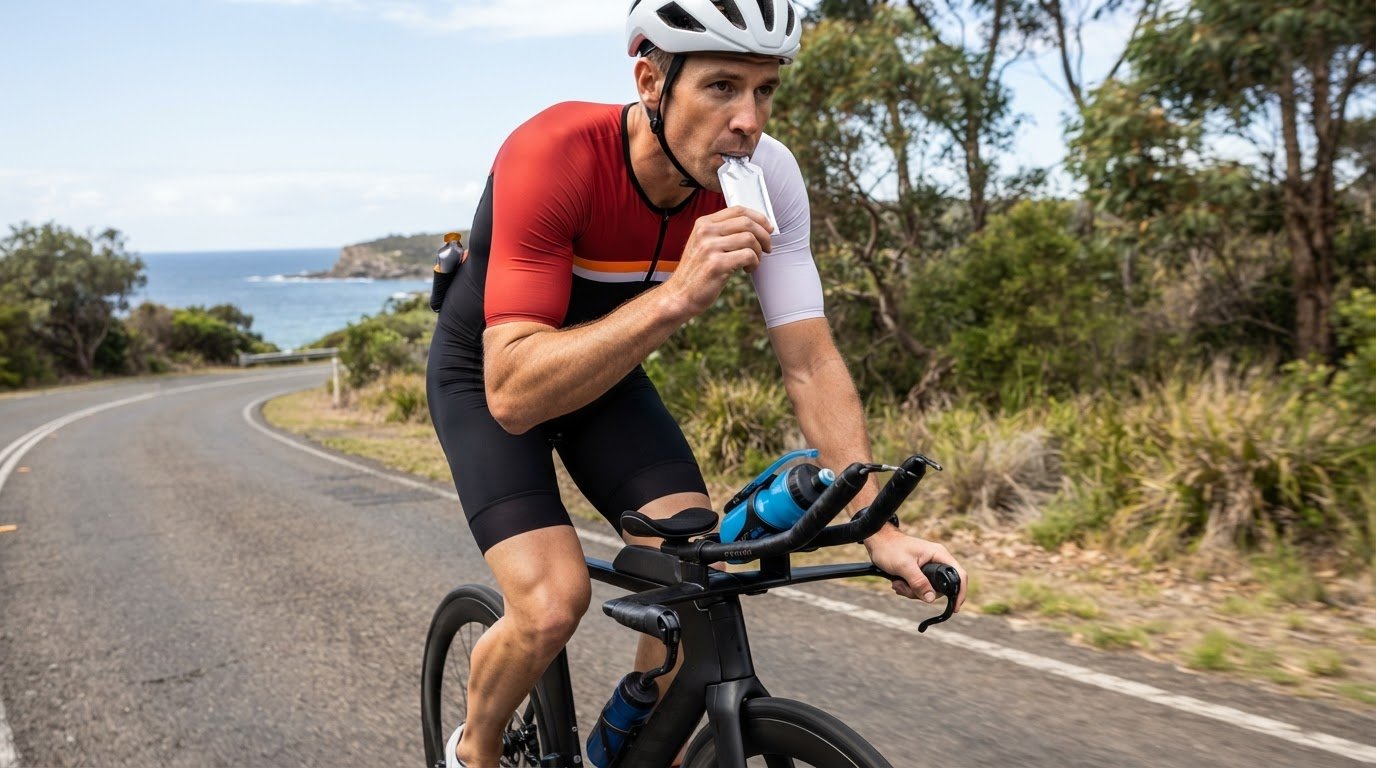
The most effective fuelling strategy to prevent bonking in an Ironman isn’t simply choosing gels over real food. It’s following a plan your gut can tolerate and taking in carbohydrates consistently, before your energy and pace start to drop. For the bike leg, a common target is 60-90 grams of carbohydrate per hour, built around what you’ve practised in training.
If you’re wondering whether your race-day fuelling is working, look beyond how much you’ve packed. Difficulty concentrating, unusual hunger, heavy legs, irritability or a fading pace can signal that something is off. Planning ahead matters: waiting until you feel hungry can make it harder to stay on schedule.
This guide explains how to assess your fuelling during the race, train your gut with your full nutrition plan and choose a race-morning breakfast that fits your tested routine. It also compares real food, gels and sports drinks to help you build a practical plan for an Australian Ironman.
Key Takeaways
- Adjust carbohydrate intake between the bike and run to match what you can tolerate at each stage, rather than trying to catch up after missed fuel.
- Practise your complete race nutrition during long rides and race simulations so you can assess how your gut responds before race day.
- Plan a familiar race-morning breakfast and use heart rate alongside pace and how you feel to spot when effort may be affecting your fueling.
- Choose between real food, gels and sports drinks based on practicality, tolerance and the demands of each race segment.
1. How Do I Know If My Fuelling Is Working On Race Day?
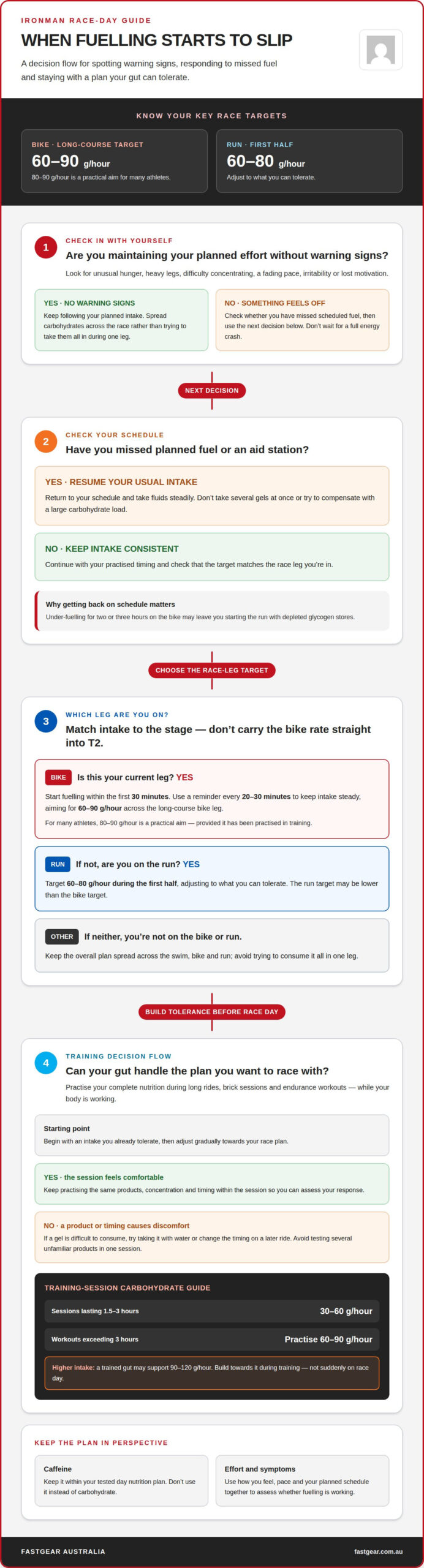
Fuelling is working when you can maintain your planned effort without unusual hunger, heavy legs or difficulty concentrating. A fading pace, irritability or lost motivation can also signal that carbohydrate intake is falling behind. Under-fuelling for two or three hours on the bike may leave you starting the run with depleted glycogen stores. Don’t wait for a full energy crash: if you miss an aid station, return to your schedule rather than taking several gels at once.
For the swim, bike and run, spread carbohydrate intake across the race rather than trying to consume it all in one leg. The bike is the main opportunity to take in fuel consistently: a long-course target is 60-90 grams per hour, with 80-90 grams per hour a practical aim for many athletes. On the run, target 60-80 grams per hour during the first half, adjusting to what you can tolerate.
Start fuelling within the first 30 minutes on the bike, then use a reminder every 20-30 minutes to keep intake steady. For sessions lasting 1.5-3 hours, aim for 30-60 grams of carbohydrate per hour; for workouts exceeding 3 hours, practise tolerating 60-90 grams per hour. A trained gut may support 90-120 grams per hour, but build towards higher intake during training, not suddenly on race day.
Assess the course and your response as the race progresses. If you’ve missed planned fuel, resume your usual intake and take fluids steadily; don’t attempt to compensate with a large carbohydrate load. The run target may be lower than the bike target, so don’t simply carry the bike’s hourly rate into T2. Keep caffeine within your tested day nutrition plan, but don’t use it instead of carbohydrate. A consistent, practised approach is central to a fuelling strategy to prevent bonking in an Ironman.
2. Gut training
Gut training means practising race nutrition while your body is working, not simply eating more before race day. During long rides, brick sessions and endurance workouts, practise the same foods, drinks and timing you plan to use on course. This lets you notice how your stomach responds while cycling and running, when movement and effort can make eating feel different.
Build the routine progressively. Start with a carbohydrate intake you already tolerate, then adjust gradually during training towards your race plan. Keep the product, concentration and timing consistent within each session so you can identify what causes discomfort. If a gel is difficult to consume, try taking it with water or changing the timing on a later ride. Avoid testing several unfamiliar products in one session.
Rehearse the transitions, too. In a brick session, practise taking fuel on the bike and continuing once you start running. Use a timer or familiar course landmarks as reminders, then note any missed opportunities, stomach comfort and whether your effort stayed controlled. During a race simulation, pack the nutrition you intend to carry and practise collecting or using fuel at an aid station. Aim for a repeatable sequence, not a perfect one-off workout.
Conditions matter. If heat is part of your target race, include appropriately warm training when it can be done safely; Ben Greene practised race nutrition indoors at 30 degrees Celsius to prepare for hot conditions. Record the session, nutrition, timing and any stomach symptoms after each key workout. Use those notes to make one adjustment at a time, then test it again. For a practical way to organise race nutrition, plan your training fuel around the products and schedule you have rehearsed.
3. What Should I Eat For My IRONMAN Race-Morning Breakfast?
Choose a familiar breakfast you’ve rehearsed during training, rather than testing new foods on race day. A main meal of 1-2 grams of carbohydrate per kilogram of body weight, eaten 3-4 hours before the start, gives you a practical planning point. Breakfast may need to happen around 3:30 a.m. for an early swim start. Sip 500-750 millilitres of water or sports drink in the 2-3 hours before racing.
Late in the race, heart rate can help you assess effort, but it doesn’t measure carbohydrate intake. Compare it with your planned pace and how you feel. If your heart rate is higher than expected while your pace fades, heat, stress or rising effort may be factors. Check your race-day nutrition schedule, too, rather than relying on heart rate alone to decide whether to fuel.
Heat and humidity change the demands of racing in Australia. For hot conditions, a bike plan may include 750-1000 millilitres of fluid and 500-1000 milligrams of sodium per hour, adjusted for sweat rate. Dehydration can accelerate fatigue and reduce carbohydrate delivery to working muscles. Take caffeine only as practised; one race-fuelling recommendation is to wait until two to three hours into the event.
Australian race rules affect where athletes can carry and receive nutrition, so build your plan around the event’s permitted arrangements and aid stations. The cost of gels, sports drink and electrolytes depends on the products and quantities you use. Calculate it from your planned race-day consumption rather than assuming one standard total.
Use body weight to guide breakfast carbohydrate, then set race intake around your tested pace and stomach tolerance. Use training observations of sweat rate and race conditions to adjust fluid and sodium. Overfuelling can cause stomach discomfort, while dehydration can worsen fatigue; excessive fluid intake also raises concern about exercise-associated hyponatraemia. Treat carbohydrate, fluid and sodium as distinct parts of your plan, not interchangeable fixes.
4. Real food, gels and sports drinks
Real food, gels and sports drinks each suit different moments on the course. Solid food can add variety during the bike leg, while gels are compact and easy to carry. Sports drinks combine fluid with carbohydrate, making them practical when you want to drink and fuel at the same time. Choose based on comfort, access and your planned carbohydrate intake, not format alone.
Use long rides to test each option at race effort. Note whether solid food stays comfortable as the distance builds and whether gels are easy to take while handling your bike. Sports drinks can simplify fuelling, but their carbohydrate counts towards your hourly total. Include it alongside gels and food rather than treating it as a separate target.
Hydration and sodium are related to your overall fueling plan, but they are not substitutes for carbohydrate. Track what you drink and consume during training, then adjust for conditions and your response. During the final 30-45 minutes of the bike leg, shifting towards liquid nutrition and reducing solid food can make the transition to running more manageable. Practise that change in a brick session before race day.
Aid-station menus vary between Australian events and across the course. Check the event’s race-day guide for the gels, sports drinks and foods available, then build your plan around those options and carry familiar alternatives where permitted. Don’t rely on an unfamiliar item as your only source of carbohydrate.
Keep the system simple: use familiar solids when they suit the bike, gels for portable fuel, and drinks when they fit your hydration and carbohydrate schedule. For a race plan built around products you can practise with, explore endurance nutrition options.
Fastgear Australia
Fastgear Australia helps endurance athletes equip a practised race-day nutrition plan with gels, energy chews and race accessories. If you’re testing portable carbohydrate options for long rides or brick sessions, GU Energy Gel – Single and Clif – BLOKS Energy Chews offer formats to include in training and assess for personal tolerance. The Compressport Free Belt Pro is another race accessory in the range.
Choose nutrition you can practise with consistently, then organise your race-day setup around the products and routine you’ve tested. Fastgear Australia’s endurance range helps athletes assemble their fuelling kit; it doesn’t replace individual training or a personalised nutrition plan.
Contact Fastgear Australia to discuss your endurance nutrition and race gear.
Make your next race plan more precise
Your next training block is a chance to turn race-day decisions into a routine. After each key session, record what you planned to consume, what you actually used, and how your stomach and pace responded. Comparing the two can show what to adjust before your next event.
A fueling strategy to prevent bonking in an Ironman needs to work under fatigue, not just look convincing on paper. Keep tested products easy to access and make each adjustment deliberately. Fastgear Australia offers endurance nutrition and race accessories to help you assemble a setup that suits your practised approach.
If you’re selecting products for your race kit, contact Fastgear Australia to discuss the available options. Take your next session as an opportunity to refine the plan, then race with purpose.
Frequently Asked Questions
How Do I Know If My Fueling Is Working On Race Day?
Compare your actual intake with your planned schedule at each course checkpoint. If you miss a feed, return to your usual rhythm rather than doubling up at the next opportunity. Watch for changes in concentration, mood or ability to hold your intended effort. These observations can help distinguish a missed fuelling opportunity from a pace or heat issue, and provide useful notes for your next race simulation.
What Should I Eat During An IRONMAN?
Use carbohydrate sources you’ve already tested, chosen to suit the discipline and your stomach. For example, you might rely on portable options while cycling, then choose fuel that’s easier to take during the run. Count carbohydrate from drinks as part of your intake, not as extra on top of your plan. Practising the same combination in training helps you avoid relying on unfamiliar food mid-race.
How many calories should I consume per hour in an IRONMAN?
A commonly cited target is 300-400 calories per hour, primarily from carbohydrate. Treat calories as a way to describe energy intake, not as a substitute for tracking carbohydrate grams. The amount you can sustain depends on pace, duration and gut tolerance. Test your planned hourly intake during long sessions, and use the nutrition label to calculate how drinks and food contribute together.
How much fuel do you need?
For the Ironman bike leg, a general carbohydrate target is 60-90 grams per hour. On the run, a target of 60-80 grams per hour during the first half is suggested. Your total depends on how long each leg takes and what you’ve trained your gut to handle. Add up the carbohydrate in each planned serving to map intake across your expected course time.
Should I use real food or gels in an IRONMAN?
Either can work, and many athletes use a mix. Real food can provide a change in texture on the bike, while gels are compact and convenient when handling solid food is less practical. Choose based on what you’ve tolerated during race-effort training, and count every source towards your carbohydrate target. If one format becomes difficult late in the race, rehearsed alternatives give you options.
What Is Bonking?
Bonking is a sudden drop in available energy that can make it difficult to maintain your planned effort. Signs may include heavy legs, a slowing pace, unusual weakness, dizziness or trouble concentrating. On an Ironman course, these symptoms can affect decision-making and movement. If you miss a planned feed, resume your usual nutrition and fluid schedule rather than trying to catch up all at once.
