
Uncategorized
Long course triathlon fueling supplies Australia: a packing reference
Nov
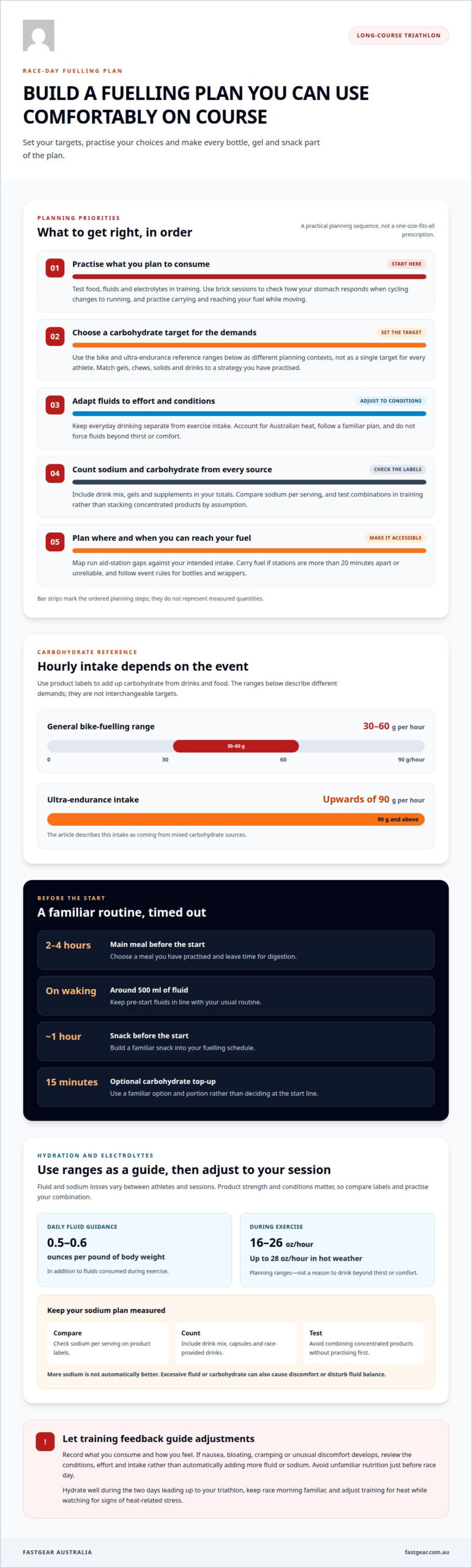
The biggest fuelling decision isn’t just what goes in your pack; it’s what you can use comfortably on course. For long-course triathlon fuelling supplies in Australia, plan fluids and electrolytes around your race conditions, then match gels and solids to a carbohydrate strategy you’ve practised. A general bike-fuelling range is 30-60 g of carbohydrate per hour; ultra-endurance intake can be upwards of 90 g per hour from mixed carbohydrate sources.
You already know that a long-course race takes more than a last-minute handful of gels. The challenge is coordinating hydration, electrolytes and carbohydrate intake across the swim, bike and run, without relying on unfamiliar products on race day.
Use this packing guide to make practical choices about everyday hydration, fluids during exercise, carbohydrate intake and on-course fuel. It explains how to plan your supplies, practise your nutrition in training and prepare for Australian race conditions.
Key Takeaways
- Build hydration into the two days before racing, then adapt your fluid plan to exercise conditions and Australian heat.
- Plan electrolyte replacement alongside fluid intake, and use training sessions to learn what your body tolerates.
- Match carbohydrate sources to each race leg, and practise your chosen gels and solids before race day.
- Pack fuel you can access and consume comfortably on course, especially when run aid stations are more than 20 minutes apart or unreliable.
Daily and during-exercise hydration
Plan hydration around your everyday needs and the fluid you lose during exercise. Keep regular daily drinking separate from race and training intake, then adapt your approach to the conditions and effort.
Sodium Concentration and Hydration
Sodium concentration is the amount of sodium in a given volume of fluid. It matters because you lose both water and sodium through sweat, and concentration determines how much sodium each drink provides. Sweat losses vary between athletes and sessions, so a single drink strength won’t suit every situation. Compare sodium per serving on product labels, and don’t combine concentrated electrolyte products without testing the plan. More sodium isn’t automatically better: excessive intake can upset fluid balance and cause discomfort.
Too much fluid can also disturb fluid balance, while excessive carbohydrate may cause gastrointestinal discomfort during a race. Don’t force fluids beyond your plan or add gels and drink mix without counting their carbohydrate. If nausea, bloating or unusual discomfort develops during training, review your intake rather than pushing through blindly.
Nutrition and Hydration Practice
Practise your race-day food and fluid routine during training. Use brick sessions to see how your stomach responds when you move from cycling to running, and record what you consume and how you feel. Practise carrying and accessing bottles, gels and other fuel while moving. Heat changes a session’s demands, so adjust your training intensity, follow your drinking plan and watch for signs of heat-related stress. Avoid trying unfamiliar nutrition just before race day.
Daily fluid intake is advised at 0.5-0.6 ounces per pound of body weight, in addition to fluids consumed during exercise. During exercise, the general recommendation is 16-26 ounces per hour, with up to 28 ounces per hour in hot weather. These are planning ranges, not a reason to drink beyond thirst or comfort. Hydrate well during the two days leading up to your triathlon, and keep your race-morning routine familiar.
For pre-race hydration and nutrition, have your main meal 2-4 hours before the start and drink around 500 ml upon waking on race day. Choose a meal you’ve practised, and leave time for digestion before lining up. Keep pre-start fluids measured against your usual routine, rather than trying to compensate for missed drinking with a large last-minute volume.
Electrolyte replacement and cramp prevention
Plan electrolytes around minerals lost through sweat and the conditions, effort and products you’ve practised with. A familiar approach can help keep your race routine consistent.
Electrolyte Supplementation
Electrolyte supplementation means taking minerals, particularly sodium, in a drink or other product during exercise. Compare sodium per serving on product labels, then count every source in your setup, including drink mix and capsules. Sweat loss and tolerance differ, so don’t add products simply because the course is long. Test the combination during training and note how it feels at different intensities.
Don’t assume that preventing cramps means taking extra sodium. Coordinate effort, fluid and nutrition; a sudden increase in any one can disrupt a familiar routine. If you cramp during training, record the conditions, intensity and intake. These details can guide adjustments without treating every cramp as proof that you need more electrolytes.
On-course Electrolyte Drinks
An on-course electrolyte drink is a race-provided fluid that contains electrolytes, often alongside carbohydrate. Treat it as part of your intake, not an automatic addition to everything you carry. If you plan to use it, practise with a similar drink and consider how its flavour, concentration and carbohydrate content fit your fuelling plan. Avoid unintentionally doubling up with concentrated bottles or supplements.
Rules for carrying and disposing of fuelling supplies vary by Australian event. Secure your supplies, keep used wrappers with you until you reach a designated bin, and follow the organiser’s directions for discarded bottles and packaging.
In Australia, specialist endurance-sports retailers sell gels, chews and hydration products. Choose formats that suit your carrying setup and tested intake, then read the labels to understand each product’s sodium and carbohydrate contribution.
Carbohydrate intake during endurance events
Carbohydrate intake is the fuel consumed to support sustained exercise. Planning long-course triathlon fuelling supplies in Australia means setting an hourly target, then choosing gels, chews, solids or drinks to meet it. A general bike-fuelling range is 30-60 g per hour. In ultra-endurance events, intake can reach upwards of 90 g per hour from mixed carbohydrate sources. These ranges reflect different demands, not a single target for every athlete.
Calculate your total using product labels. Add the carbohydrate in your drink mix to the amount in each gel before packing extra fuel. A drink can provide both fluid and carbohydrate, so include its carbohydrate in your hourly total. For long-course triathlon fuelling supplies in Australia, a mix of formats can help organise intake across the race legs.
Build pre-start fuel into the schedule. Have a snack around one hour before the start, then consider a carbohydrate top-up 15 minutes before the gun. Use familiar options and portions from training. This gives each item a planned role instead of leaving you to make last-minute fuelling decisions at the start line.
On the run, aid-station spacing affects what you carry. Fuel yourself if stations are more than 20 minutes apart or unreliable. Map those gaps against your intended intake, then position supplies where you can access them. Planning long-course triathlon fuelling supplies in Australia also means checking serving sizes and carbohydrate amounts to avoid miscounting. Some guidance frames exercise intake as 120-180 calories per hour for most athletes. Calories and carbohydrate grams are different measures, so don’t treat them as interchangeable. Use training sessions to establish a tolerable rhythm, and adjust timing or format before race day.
On-course gels and solids
On-course fuel is any gel, chew, drink or solid you can access and consume during a race leg. Choose formats that fit your carbohydrate plan, carrying setup and transition routine.
Available Nutrition Brands and Products
Triathlon nutrition products in Australia include gels, chews, drink powders and compact solids. Options include GU Energy Gel – Single, Clif – BLOKS Energy Chews, SIS – GO Isotonic Gels, Maurten gel 100 and gel 100 caffein, Maurten 160 and 320 powders, Tailwind powder and UCAN gels. Maurten GEL 100 and GEL 100 CAF 100 each provide 25 g of carbohydrate; Maurten GEL 100 CAF 100 also contains 100 mg of caffeine per serving.
Maurten Solid 160 is another portable format: each pack provides 40 g of carbohydrate, divided into two 20 g servings. Australian prices vary by product format and pack size, so compare the labelled serving and carbohydrate amount when budgeting. Aid-station products vary by event; use the event’s athlete information to identify what will be available rather than building your plan around an assumed brand.
Carrying Fuel on the Bike and Run
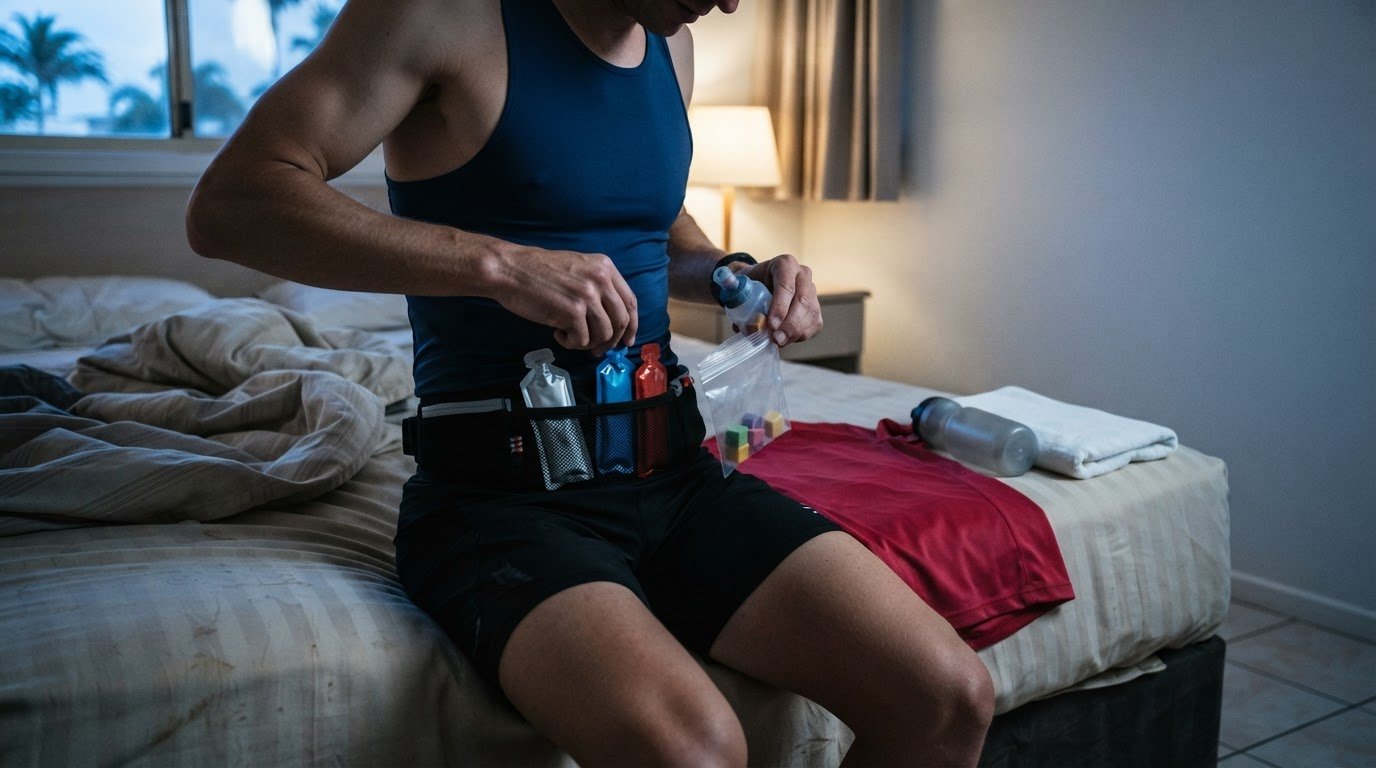
A fuel-carrying setup arranges bottles and portable food so you can reach them during each leg. Secure bottles in bike cages and place gels or chews in accessible pockets or a race belt. Test access during training, including the bike-to-run transition, so packaging doesn’t disrupt your routine or prove difficult to handle.
Map each item to a point in your race plan. Keep bike fuel separate from run supplies, and carry enough for gaps between aid stations, especially if stations are more than 20 minutes apart or unreliable. Collect used wrappers until a designated bin; don’t discard them on course.
For a practical starting point, explore gels and energy chews and select formats that fit your tested race plan.
Fastgear Australia
Fastgear Australia offers practical race-day nutrition and carrying supplies to support a plan you’ve already tested. For portable carbohydrate options, choose GU Energy Gel – Single or Clif – BLOKS Energy Chews, then arrange your fuel so each item is accessible on the bike and run.
The Compressport Free Belt Pro offers another way to carry race essentials, while the Compressport Trail Racing SS Tshirt is a technical apparel option for your kit. Choose products based on the formats you tolerate, the carbohydrate you need and how you’ll carry supplies through transitions. When your fuelling plan is ready, Fastgear Australia can help you turn it into a considered packing list.
Contact Fastgear Australia to discuss your race-day supplies.
Make your race plan ready to pack
Turn your tested routine into a practical packing list. Decide which supplies need to be accessible on the bike, which belong in your run kit and what you’ll carry through each transition. A clear layout simplifies race morning and helps you focus on execution.
For long-course triathlon fuelling supplies in Australia, Fastgear Australia offers selected nutrition and race gear, including GU Energy Gel – Single, Compressport Free Belt Pro and Compressport Trail Racing SS Tshirt. Give each item a specific role instead of adding gear without a purpose. Aim for a kit that supports your plan and feels familiar before the start.
Contact Fastgear Australia about fuelling supplies as you prepare your race-day setup. Make your decisions early, practise with your chosen kit, and arrive ready to race with focus.
Frequently Asked Questions
What fuel and hydration supplies are needed for a long-course triathlon?
Pack fluids, electrolyte sources and portable carbohydrate to suit your race plan. A practical kit might include bike bottles, gels or chews, and run fuel in an accessible pocket or belt. Include familiar options for each leg and supplies for gaps between aid stations. Check event information for course-provided drinks, then account for them alongside what you carry.
How many grams of carbohydrate per hour should athletes consume in a long-course triathlon?
A general bike-fuelling range is 30-60 g of carbohydrate per hour; ultra-endurance events can involve upwards of 90 g per hour from mixed sources. Treat these as different planning ranges, not interchangeable targets. Add the carbohydrate from gels, chews, solids and drink mixes to calculate your hourly total. Your chosen intake should also match what you can comfortably consume at race effort.
How much fluid and sodium should athletes take per hour during a triathlon?
The general exercise-fluid range is 16-26 ounces per hour, with up to 28 ounces per hour in hot weather. Sodium needs don’t have a single hourly figure in this guide. Build your sodium plan from the electrolyte content of drinks or supplements, accounting for conditions, exercise intensity and your other fuel sources. Avoid adding multiple sodium products without including each label’s serving information.
How should athletes plan and test a long-course triathlon fuelling strategy?
Turn your strategy into a leg-by-leg schedule, then test each item against your pace, kit and transitions. After sessions, record the product, timing, intake and any stomach discomfort. Change one part of the setup at a time, such as gel format or bottle placement, to identify what helped. Use your notes to finalise quantities and pack positions before race day.
How much do Australian triathlon gels, drink mixes, bars and electrolyte products cost?
Prices vary by product format and pack size. When budgeting, compare the serving and carbohydrate amount shown on each label.
