
Uncategorized
Polarised Open Water Swim Goggles: Choosing a Tint and Lens
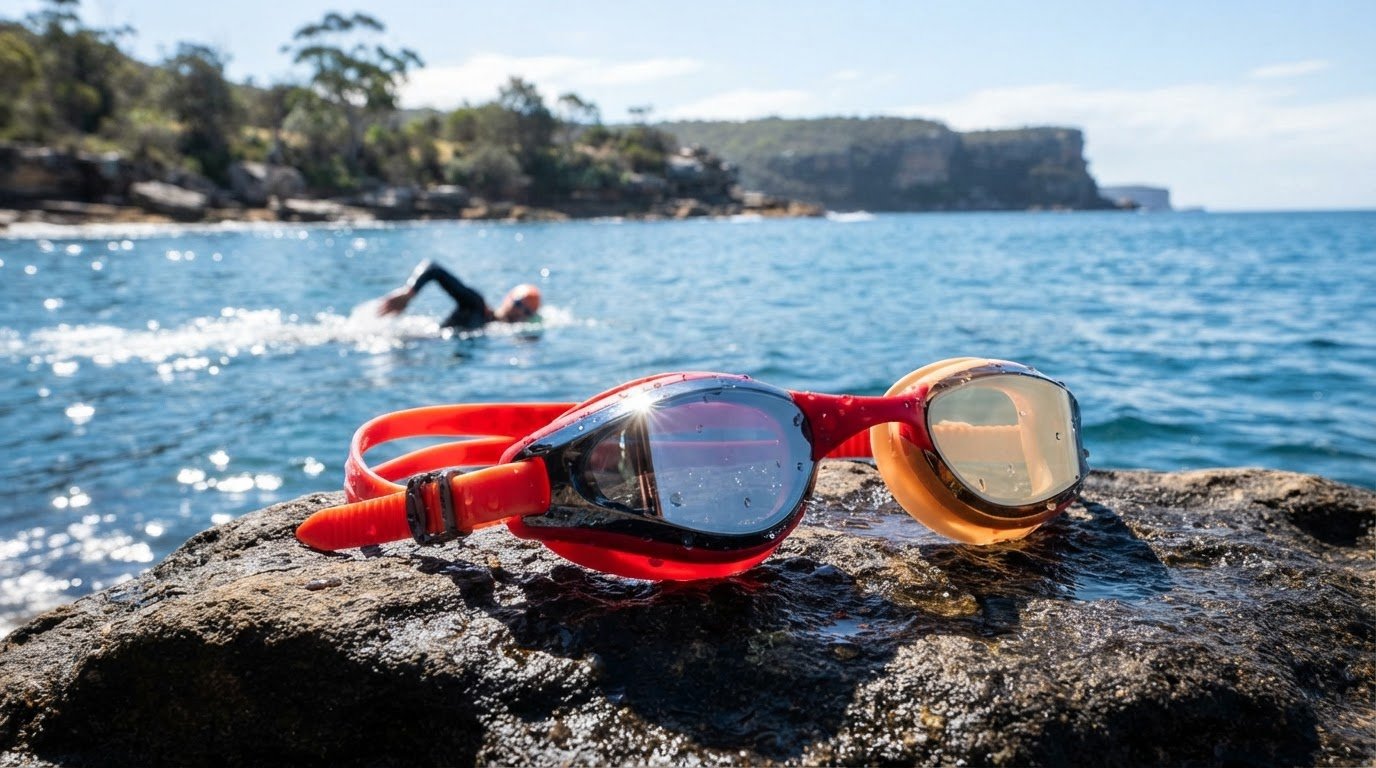
Oct
The darkest lens isn’t automatically the best choice for open water. When choosing polarised open water swim goggles in Australia, match the tint to the light: darker lenses suit bright, sunny conditions, while lighter or higher-contrast tints can help when light is subdued. Polarised lenses reduce reflected glare; mirrored lenses help cut brightness. The right option depends on the conditions you expect to swim in.
Glare, changing light and a secure fit all affect how confidently you can sight and hold your line. Choosing goggles involves more than picking a lens colour or finish.
This guide compares common tints and explains how polarised and mirrored lenses differ, including what to consider for triathlon swimming. You’ll also find practical fit and lens-care tips, plus a decision guide to help narrow down goggles for your swim conditions.
Key Takeaways
- For surf swimming, choose a slim goggle that sits in the eye socket; larger snorkelling-style goggles suit open-water cruising better.
- Match lens tint to the light, then weigh whether reducing reflected glare or lowering overall brightness matters more for your swim.
- Prioritise a comfortable fit before entering the water. An adjustable nose clip or junior goggles can help suit different face shapes.
- Keep goggles out of hot places, and use a simple spit-and-rinse method to help create a fog-resistant barrier before swimming.
What is the best swim goggle tint for open water swims?
Choose a tint for the light and water conditions you expect, then prioritise a stable fit. For Australian open-water swimming, lens colour is only one part of the decision.
Outdoor UV protection
Goggle tints for outdoor swimming
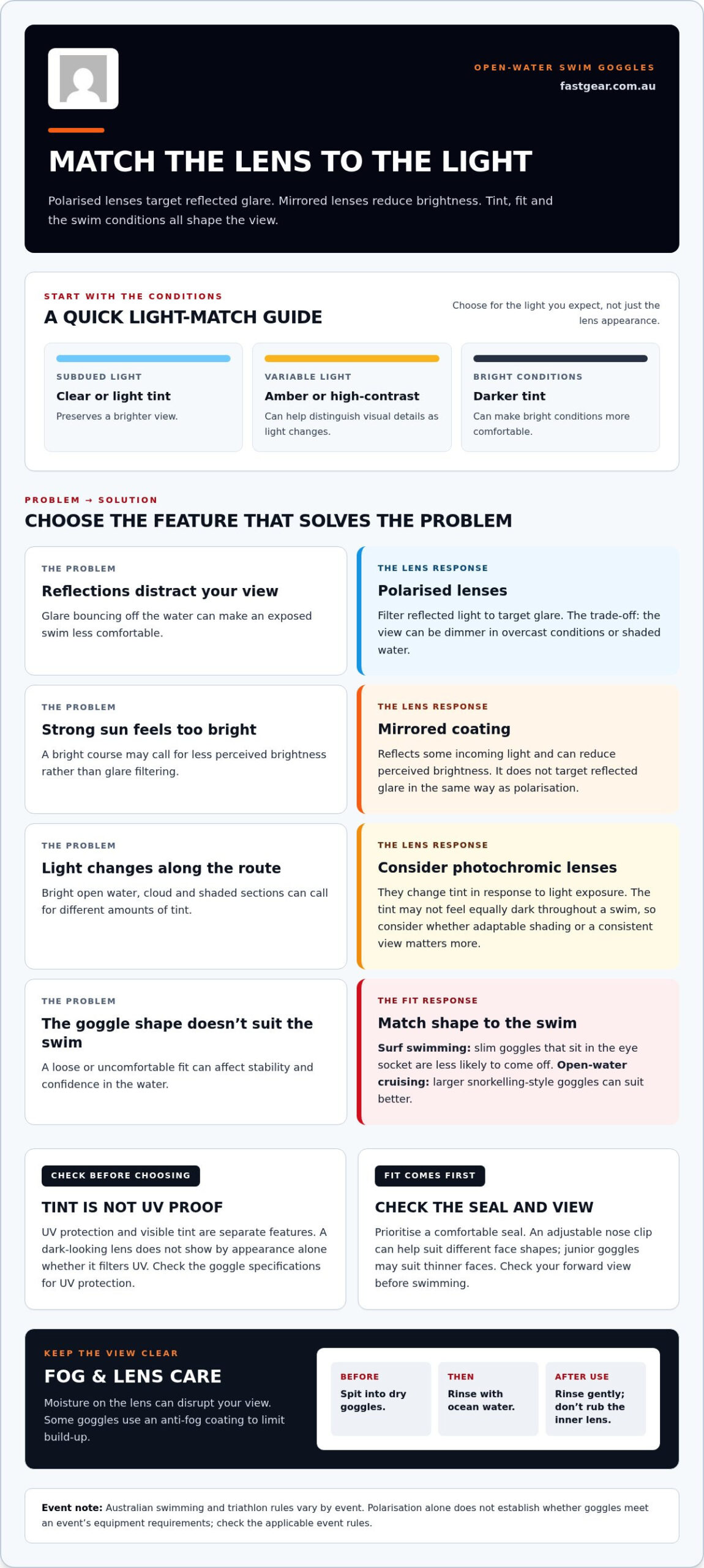
Clear or lighter lenses suit subdued light, while darker tints can make bright conditions more comfortable. Amber or other high-contrast tints can help distinguish features as light changes. Polarised lenses target reflected glare, while a mirrored finish reduces brightness. Compare these features with the conditions you expect, rather than choosing a tint based on appearance alone.
| Option | Light conditions | Key consideration |
|---|---|---|
| Clear or light tint | Low or changing light | Preserves a brighter view |
| Amber or high-contrast tint | Variable light | Can make visual details easier to distinguish |
| Dark tint | Bright conditions | Reduces perceived brightness |
| Polarised or mirrored lens | Glare or strong brightness | Compare glare reduction with overall light level |
For surf swimming and body surfing, slim goggles that sit in the eye socket are less likely to come off than larger snorkelling-style goggles. Larger designs suit open-water cruising better. Adults and children should choose a comfortable seal; an adjustable nose clip can help with fit, while junior goggles may suit thinner faces.
Australian swimming and triathlon rules vary by event. Polarisation alone doesn’t establish whether goggles meet an event’s equipment requirements, so use the applicable event rules as your guide.
In Australia, goggle prices vary with lens treatment, frame construction and brand. Compare those features directly; polarisation alone isn’t a complete measure of value.
Choose by light first, then match the goggle shape and fit to your swim.
Polarised and mirrored open-water lens options
Polarised lenses reduce reflected glare, mirrored lenses cut brightness, and standard tints alter how much light reaches the eye. Both glare-control options can suit ocean swimming in bright Australian sunlight, but darker views may make sighting harder as conditions become dim.
Polarised lenses
Polarised lenses filter reflected light, which can make glare off the water less intrusive. This may help keep your eyes comfortable while swimming into bright reflections. Unlike a standard tint, polarisation targets glare rather than simply changing light transmission. Its drawback is a dimmer view in overcast conditions or shaded water, so consider how the lens performs across your usual swim conditions.
Mirrored lenses
A mirrored coating reflects some incoming light and can reduce perceived brightness in strong sun. It differs from polarisation: the mirror finish manages brightness, while polarisation specifically targets reflected glare. For an exposed ocean swim, mirrored lenses may suit a bright course; for changing cloud or shade, a lighter lens can help preserve a clearer view.
Tinted lenses
A tinted lens changes the colour and amount of light passing through, without necessarily filtering glare. Clear lenses suit subdued light, while darker tints can feel more comfortable in bright conditions. Amber or other contrast-enhancing colours may help distinguish features when light varies. Compare the tint with your route and sighting needs, then choose for the conditions you typically encounter.
Lens treatment is only one part of the setup. Frame shape and seal affect comfort and stability, while a lens that’s too dark can make buoys or changing water conditions harder to pick out. Before swimming, fit the frame and check your forward view. To create a fog-resistant barrier without chemicals, spit into dry goggles and rinse them in ocean water before wearing them.
Polarized and mirrored lenses for glare reduction
Lens treatments address different light problems. Polarisation targets reflected glare, mirrored coatings reduce brightness, and photochromic lenses adapt their tint as light changes.
Polarised and mirrored lenses
Polarised lenses filter reflected light from the water’s surface, which can make glare less distracting during an exposed swim. The trade-off is a dimmer view when cloud, shade or late-day light reduces brightness. A mirrored coating reflects some incoming light instead, making it useful in strong sun. It doesn’t target glare in the same way, so compare the view rather than treating the finishes as interchangeable.
Photochromic lenses for changing light
Photochromic, also called photochromatic, lenses change tint in response to light exposure. They can suit a route that moves between bright open water and shaded sections, reducing the need to swap goggles as conditions shift. The lens response depends on the light reaching it, so its tint may not feel equally dark throughout a swim. Consider whether a consistent view or adaptable shading matters more for your course.
Preventing fog on lenses
Fog forms when moisture collects on a lens, disrupting your view while swimming. Some goggles use an anti-fog coating to limit this build-up. Protect the inner lens surface: avoid rubbing it with your fingers or a towel, and rinse goggles gently after saltwater use. If fog returns, use a method suitable for the lens coating rather than scrubbing it clean. Careful handling helps preserve the treatment.
For a bright, open-water course, mirrored lenses can reduce brightness; choose polarisation when reflected glare is the main distraction. Photochromic lenses are an option for changing light, while a standard tinted lens provides a more consistent view. Before committing, compare the view in conditions resembling your swim and check that buoys and landmarks remain easy to sight. The right choice balances glare control, usable brightness and a clear view across the course.
Open-water and triathlon goggle recommendations
Choose goggles to suit your course, sighting demands and fit. For open water and triathlon, a stable seal matters as much as lens treatment.
The right polarised goggles sit comfortably and seal evenly without constant adjustment. Try them on before entering the water; an adjustable nose clip can help tailor the fit.
Swimming goggles are sold by specialist swim shops, multisport retailers and online sports stores in Australia. Polarised lenses are a specific feature, so distinguish them from mirrored or simply tinted options.
Open-water goggle recommendations
For open-water swimming, prioritise a stable frame and a view that keeps buoys and landmarks easy to sight. Polarisation can help when reflected glare is distracting, while a lighter lens may suit overcast stretches. Surf swimmers should favour slim goggles that sit in the eye socket; larger snorkelling-style designs are better suited to cruising than breaking surf.
Triathlon goggle recommendations
Fit, seal and anti-fog performance
Press the cups gently against your face before entering the water. They should sit evenly without needing a tight strap to hold them in place. If the goggles feel uncomfortable on land, adjust the nose clip or try junior goggles for a thinner face. To create a fog-resistant barrier without chemicals, spit into dry goggles and rinse them in ocean water before wearing them.
Choose for the swim first: slim goggles for surf, a secure seal for triathlon, and a lens that keeps sighting clear in expected light. Test the fit before your swim, not once you’re already in the water.
Fastgear Australia: Compressport Trail Racing SS Tshirt
Fastgear Australia is a useful next step when you’re building out your wider endurance kit alongside choosing swimming goggles. Its range includes the Compressport Trail Racing SS Tshirt and race-fuelling options such as GU Energy Gel – Single and Clif – BLOKS Energy Chews. The Compressport Free Belt Pro is another option for organising essentials during training or racing. These products support different parts of an endurance setup; they don’t replace well-fitting goggles matched to your swim conditions.
Explore Fastgear Australia’s endurance gear to find equipment and fuelling options for your next event.
Make your next swim a sharper test
Turn your next open-water session into a practical lens trial. Before setting off, note the light and water conditions. Afterward, consider whether glare distracted you, whether landmarks stayed easy to spot, and whether your goggles remained comfortable throughout the swim. These observations give you a clearer basis for choosing your next pair than colour or coating alone.
When choosing polarised open-water swim goggles in Australia, focus on the conditions you actually encounter and the view you need to sight confidently. If you’re also refining your wider endurance setup, Fastgear Australia offers gear and fuelling products for training and racing.
Contact Fastgear Australia for advice as you prepare for your next session. Choose deliberately, get your kit ready, and head into the water focused.
Frequently Asked Questions
What features should I look out for in swim goggles?
Look for an even seal, a comfortable nose bridge, adjustable straps and lens information suited to your swim. Check that the cups sit evenly without painful pressure, then move your head to see whether the frame shifts. For outdoor use, read the UV-protection labelling rather than judging by lens darkness. Also inspect the anti-fog care instructions before cleaning the lenses.
What’s the difference between pool and open-water goggles?
Pool goggles are usually chosen for lane swimming, where walls and lane markings provide fixed visual references. Open-water goggles need to support sighting across a changing view that includes shorelines, buoys and other swimmers. For example, a narrow pool lens may feel familiar during laps but offer less peripheral awareness outside. Choose according to where you’ll swim most, then test visibility before relying on them in a race.
What are the best polarised open-water swimming goggles available in Australia?
There isn’t one best pair for every face and course. When choosing polarised open-water swim goggles in Australia, compare lens treatment, fit and clarity in the light you expect. Fastgear Australia lists Speedo Opal Mirror Goggles – Adult, with mirror-finish lenses and three interchangeable nose bridges. They’re mirrored, not identified as polarised, so distinguish that option from goggles specifically labelled polarised.
What lens tint is best for open water swimming in Australia?
Choose a tint that keeps course markers distinct in your usual swimming conditions. In a bright midday session, assess whether the view remains comfortable without losing detail; for a dawn swim, make sure buoys and shoreline features stay visible. If your sessions span both conditions, compare lenses in each setting rather than relying on how they look indoors.
How should you choose the right size and fit for open-water swim goggles?
Test the fit before swimming: position the cups over your eyes and press gently, without tightening the strap. They should seal evenly, without pinching at the nose or leaving gaps near the temples. Adjust the nose bridge and strap, then turn your head to check stability. If the frame still presses unevenly, try another size or shape rather than forcing the fit.
Which polarised swim goggles offer the best fit, seal and anti-fog performance?
Choose goggles that sit comfortably and seal evenly without a tight strap or constant adjustment. To create a fog-resistant barrier without chemicals, spit into dry goggles and rinse them in ocean water before wearing them.
