
Uncategorized
Trail Running Apparel Online Australia: Choose Your Race-Day Kit in 2026
Oct
The best trail kit isn’t automatically the most technical one. If you’re shopping for trail running apparel online australia, start with the run you’re preparing for: its duration, conditions and comfort demands. A short, warm session and a long outing with changing weather call for different clothing priorities.
Before buying online, focus on the details that help you judge whether a garment suits your session. Product descriptions, sizing information and care instructions can guide your decision, while the event’s own gear list is the place to check any race-specific requirements.
This guide shows you how to compare trail apparel by the conditions you expect and the comfort priorities that matter on the move. You’ll build a practical shortlist for different runs, learn which product details to compare, and see how the Compressport Trail Racing SS Tshirt available at Fastgear fits into your search. Choose for the session first, then assess each garment by its listed details.
Key Takeaways
- Match apparel priorities to your run’s duration, pace, terrain and expected conditions instead of relying on a one-kit-fits-all approach.
- When choosing trail running apparel online australia, compare the fit, seams, fabric description, garment weight and care instructions stated on each product page.
- Build a shortlist by session type, then consider the role of tops, bottoms and any additional layers you may need.
- Use product descriptions and available size information to guide your comparison. Don’t assume details that aren’t stated.
- Explore Fastgear’s Compressport Trail Racing SS Tshirt. Free shipping applies to orders over $100.
Trail running gear: what your kit needs to do on the trail
Trail apparel is clothing chosen for comfort and movement on off-road runs. The right shortlist depends on what the session asks of you, not on a trend or a standard outfit. Distance, time on the move, pace and terrain all affect what to prioritise.
Uneven ground can mean climbs, descents and changing effort. You might heat up on a climb, then slow down on a technical section. Think about how a garment fits and feels through the movements your route involves. These are practical selection factors, not guarantees of faster running or better performance.
Keep the categories clear. Apparel means clothing such as tops, bottoms and layers. Footwear supports your contact with the trail, while carry equipment is a separate part of your kit. This section focuses on clothing choices. For a general overview of the activity and its characteristics, see What is trail running?
How trail apparel differs from everyday running clothes
Off-road routes can involve variable footing and shifting effort, so fit and construction may matter more over a long session than during a brief run. Read the product information and consider how the garment’s stated details align with your movement and comfort preferences. Don’t assume a feature or benefit that the listing doesn’t mention.
For a short training run in familiar conditions, a simple clothing shortlist may be enough. A longer session could prompt closer attention to comfort over time and whether an additional layer suits the expected conditions. The choice depends on the run, not on a claim that one garment will feel the same for everyone.
Start with your run, not a shopping trend
Before browsing trail running apparel online australia, note your planned distance, approximate duration, intended intensity and expected conditions. Add the terrain if it’s relevant to your route. This quick session profile gives each product detail a purpose and helps you compare garments on more than appearance alone.
- Distance and duration: Consider how long you’ll wear each garment and what comfort means for that session.
- Intensity: Think about how your effort may vary across the route, rather than judging the kit by pace alone.
- Terrain: Consider the movement your route involves and whether the garment’s stated fit suits it.
- Conditions: Use the expected weather and session timing to decide whether to include another layer in your shortlist.
These answers narrow your options, but they don’t dictate a universal outfit. Two runners covering the same route may have different fit preferences and comfort priorities. Compare garments by their stated details, then decide what suits your session.
The right trail apparel is clothing that suits your run, your comfort priorities and the conditions you expect.
How to assess trail running apparel: fit, fabric and garment details
A product page is your main source of information when comparing clothing online. Read the listed details closely, then match them to your fit preferences and the movements your run involves. Don’t fill gaps with assumptions based on a product name, brand or apparel category.
What to look for in fit and construction
Fit should allow the movement you expect without creating distractions. Review the size information and garment measurements on the product page, then compare them with a garment you already find comfortable. Check how the cut and stated construction align with your intended use. Seam placement and fabric feel are also worth considering, particularly if rubbing tends to bother you during longer wear.
A size label alone may not tell you how a garment will sit on your body. Use any available measurements and sizing guidance together, and consider how you prefer clothing to feel while running. A close fit or a looser fit can suit different preferences, so focus on the information provided rather than assuming one cut works for every runner.
- Fit and sizing: Read the size guide and compare any displayed measurements with a garment that suits you.
- Movement: Consider whether the stated cut appears suitable for the range of movement in your session.
- Seams: Look for construction details and consider where seams may sit against your skin.
- Fabric feel: Use the product description to understand what is stated, without guessing how the material will feel.
- Weight and care: Compare any listed garment weight and care instructions with your preferences and routine.
How to read fabric and care information
Fabric composition helps you compare garments, but it doesn’t prove a particular level of breathability, warmth or durability. Look for the material details actually given, and don’t extend performance language beyond its wording. The NIST guide to textile compliance and material standards provides background on apparel information. Use it as general context, not as a substitute for the details on an Australian product page.
Care instructions are another useful comparison point. They tell you how the garment is intended to be maintained, which can help you decide whether its care routine suits your preferences. If the listing gives a fabric composition but no specific performance detail, keep your comparison to what’s stated. Don’t infer moisture management, thermal regulation or hard-wearing construction from a fibre name alone.
For a consistent comparison, note each garment’s listed fit or measurements, seams or construction details, fabric description, weight and care instructions. If a detail isn’t provided, leave it out rather than treating it as a feature.
Before ordering, compare the stated fit, seams, fabric, garment weight and care instructions, then prioritise the details that suit your needs.
Use this checklist as you browse trail apparel options, including Fastgear’s Compressport Trail Racing SS Tshirt. Assess each item against the information shown on its product page.
Trail running apparel compared: match clothing to the session
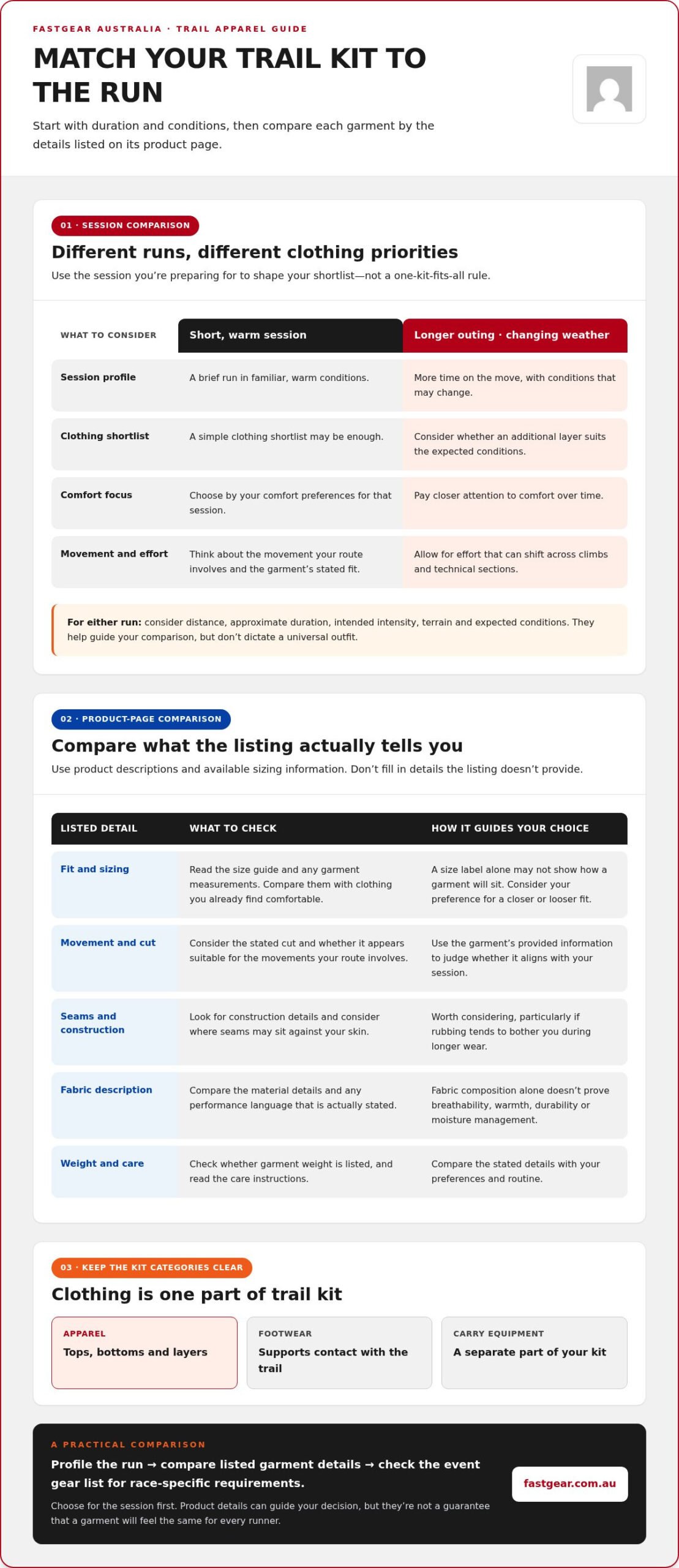
The same clothing priorities won’t suit every trail session. A brief run, a long outing and race day each raise different questions about comfort and conditions. Use the comparison below to focus your shortlist. Tops, bottoms and additional layers are clothing roles to consider, not a fixed kit or a recommendation that every runner needs each item.
| Session | Tops | Bottoms | Additional layers | Questions to ask |
|---|---|---|---|---|
| Short training run | Would a familiar top suit the effort and expected conditions? | Can you move comfortably over the route? | Does the forecast or session timing suggest another layer? | What will you be doing, and for how long? |
| Long trail outing | Will the fit remain comfortable over more time on foot? | Are the cut and construction comfortable for your movement? | Could conditions change during the outing? | How might pace, terrain and duration shape your comfort priorities? |
| Race day | Have you worn the intended top during training? | Does your planned clothing feel familiar in motion? | Does the event’s gear list call for specific clothing or layers? | What does the event require, and what have you already tested? |
Short training runs versus long trail outings
A shorter session may call for a simple clothing choice, particularly if the route and conditions are familiar. With more time on foot, comfort becomes a bigger part of the comparison. Consider how the garment sits, whether its construction could cause rubbing and whether you’re comfortable in it as your effort changes. Runners tackling tougher distances often also look at targeted athletic gear, such as performance compression and grip socks from SZOKZ, to maintain comfort and stability on uneven ground. Pace, route and conditions still matter, and there’s no universal fabric or outfit for every runner.
Training kit versus race-day apparel
Race day is a poor time to discover that a clothing choice distracts you. Wear your intended apparel during training first, and notice how it fits and feels while you move. Check the event’s own gear requirements too, since apparel priorities can depend on the race. A familiar choice is useful only if it suits the conditions and requirements you expect.
Fastgear sells the Compressport Trail Racing SS Tshirt, a specific option to assess as you build your kit. Compare its product-page details with your session needs rather than assuming specifications from its name. For more product-specific context, look for Review: Compressport Trail Racing SS Tshirt Performance Australia 2026 alongside this comparison.
Use the table to shape your search for trail running apparel online australia: decide which clothing roles matter for the session, then compare the listed details for each option. Ask practical questions. What will you wear for the expected duration? Does it suit your movement? Have you tested it in a similar session? This helps you build a kit around the actual run, not a one-size-fits-all template.
Buying trail running apparel online in Australia: a practical checklist
A clear process makes online shopping more deliberate. Define the session first, then use each product page to compare only the details it provides. This keeps your shortlist tied to what you need from the clothing, rather than assumptions based on a product name or category.
A five-step online apparel selection process
- Define the run. Note the distance, expected duration, intensity, terrain and conditions. If you’re preparing for an event, include its apparel requirements in your planning.
- Shortlist garment roles. Decide whether you’re looking for a top, bottoms or an additional clothing layer. Focus on the roles relevant to that session rather than defaulting to a complete outfit.
- Compare stated details. Read each garment’s product name and description. Compare the information actually provided, such as fabric composition, construction, listed weight or care instructions. Don’t transfer a feature from one item to another.
- Review sizing information. Use the size guide or garment measurements displayed on the product page. Compare them with clothing you already find comfortable, and consider your preferred fit for running.
- Make your selection. Choose the item whose stated details and sizing information best align with your priorities. If an important specification isn’t given, don’t treat it as a confirmed feature when making your decision.
Check the product information before checkout
Before placing an order, pause on the individual product page. Confirm the garment name, then read its description from start to finish. Review the sizing information and care details shown there, and keep those details attached to that garment alone. A description for one top, for example, doesn’t establish the fit or fabric properties of another.
This is especially useful when comparing trail running apparel online australia. A consistent checklist helps separate facts from assumptions: record the listed details, note which matter for your session, and leave unstated properties out of the comparison. If two products describe different details, compare only what both pages actually say and consider how each item fits your needs.
Fastgear offers free shipping on orders over $100. Keep that threshold in mind as you plan your order, but choose apparel based on the session and product information rather than adding items solely to reach a shipping threshold.
Ready to put your shortlist into action? Browse Fastgear’s online range and assess each option against the details that matter for your next run.
Shop trail running apparel online in Australia with Fastgear
Fastgear Australia is an online retailer serving endurance athletes and outdoor-adventure enthusiasts across Australia. When building a clothing shortlist, start with the session, decide which garment role you need, then assess the details shown for that item. A focused comparison is more useful than choosing by label alone.
Fastgear sells the Compressport Trail Racing SS Tshirt, giving you a specific trail shirt to consider as you apply the selection checklist. Use its product page for the information shown there, and judge those details against your fit preferences and intended run. Don’t assume a fabric, fit or performance feature that isn’t described.
A confirmed trail-shirt option from Fastgear
Start with the product name, then read the item’s description and any sizing or care information on its page. This keeps your decision grounded in details for this shirt, rather than specifications you may have seen for another garment. If it suits the role you’re shopping for, compare the information provided with your session needs before choosing.
That approach makes browsing trail running apparel online australia more purposeful. You’re not just scanning product names; you’re checking whether the garment’s stated information helps you make a considered choice. For the Compressport Trail Racing SS Tshirt, use its product page for the item details and keep your evaluation specific to that listing.
Make your next online apparel choice
Bring your shortlist together in a clear order: define the session, identify the garment role, review fit and sizing information, then compare the stated product details. This sequence helps separate your priorities from assumptions and makes it easier to identify which information matters most for the run you’re preparing for, whether that’s a training outing or an event.
Fastgear sells directly through its website as a national online retailer, making its online store available to endurance athletes across Australia. Before completing your order, review the product information for the specific item you’ve selected. Free shipping applies to orders over $100, so keep the threshold in mind as you plan your purchase.
Choose with purpose. Match the garment to the session, use the details shown on its product page, and select based on your own comfort priorities. Shop trail running apparel at Fastgear.
Make your next kit choice count
Your next run can help sharpen the clothing choices you make after it. Notice what felt comfortable, what distracted you and whether the conditions matched your expectations. Use those observations to refine your shortlist over time, rather than trying to solve every apparel decision in one purchase.
That’s a practical way to approach trail running apparel online australia: shop with a clear session in mind, then choose clothing based on the details that matter to you. Fastgear’s Compressport Trail Racing SS Tshirt is one option to consider. Review its product page and let the stated information guide your decision.
Ready to choose your next trail-running top? Shop trail running apparel at Fastgear and take your next step with confidence.
Frequently Asked Questions
Is trail running apparel different from road running apparel?
Not always. Many garments can suit both, but trail routes may involve more varied movement and changing effort than a familiar road loop. That can make fit, comfort and how a garment feels over time useful comparison points. You don’t need a separate outfit just because you’ve left the road. Consider the route, session length and conditions, then choose clothing that suits those demands and your preferences.
Can I wear regular running clothes on a trail?
Yes. Regular running clothes can suit a trail run if they’re comfortable for the route and conditions. Try your usual running top and bottoms on a shorter, familiar off-road loop first. Notice whether they move comfortably as you climb, descend or change pace. If something distracts you, use that observation to guide your next clothing choice rather than replacing your whole kit at once.
What should I wear for trail running in changing weather?
Choose clothing with the expected conditions and the possibility of change in mind. Check the forecast close to your run, consider how long you’ll be out and decide whether an additional layer makes sense. For an organised race, consult its specific gear requirements, as required items can vary. Don’t assume a garment offers weather protection unless its product information explicitly describes that property.
How should trail running apparel fit?
Trail apparel should feel comfortable and allow the movements you expect on your route. Check the product’s size guide and any measurements against clothing you already wear comfortably. Consider how the garment sits when you raise your arms, bend or take a longer stride. Personal preference matters: a fit that feels right to one runner may not suit another, so use the available sizing information alongside your own experience.
How do I reduce chafing when trail running?
Start by identifying where rubbing occurs, such as beneath an arm, around a waistband or near a seam. Check whether the garment shifts or presses against that area as you move. A short test run can reveal trouble spots before a longer outing. If you’re choosing online, pay attention to the stated cut, construction and sizing details, but don’t assume a particular seam design will prevent chafing.
What should I check when buying trail running apparel online?
Read the individual product page before deciding. Check the garment name, description, available sizing information and care instructions, then compare those details with what you need for your session. If fabric composition or garment weight is stated, use it as a comparison point, not proof of an unstated benefit. For trail running apparel online australia, base your choice on the listed information rather than assumptions.
Where can I buy trail running apparel online in Australia?
Fastgear Australia is a national online retailer for endurance athletes and outdoor-adventure enthusiasts. You can shop directly through its website and consider the Compressport Trail Racing SS Tshirt as a trail-shirt option. Read the product page for the details provided, then assess them against your fit preferences and intended use. It’s a clear place to start when building a trail-running clothing shortlist.
