
Uncategorized
Fast Carbohydrate Gels Australia: 2026 Buyer’s Guide
Oct
The gel with the boldest “fast” claim isn’t automatically your best race-day fuel. When comparing fast absorbing carbohydrate gels australia-wide, look beyond the marketing: serving size, carbohydrate per serve, format and your own gut tolerance all matter.
Comparing options can be tricky because labels present serving sizes and carbohydrate amounts differently. A gel that works for one athlete may not suit another’s fuelling plan or gut tolerance. Start with the session you’re preparing for, compare the information on each product label and practise your preferred option in training.
This buyer’s guide explains what to compare on the label, how gel formats differ and how to assess whether an option fits your event. Fastgear Australia stocks gel options from GU, SIS, Maurten and UCAN. Rather than treating “fast” as a guarantee of how a gel will feel or perform, use the product details to narrow your choices, then trial your preferred option during training before relying on it on event day.
Key Takeaways
- Compare carbohydrate per serve, serving size and directions to see what each gel contributes to your fuelling plan.
- For fast absorbing carbohydrate gels australia, focus on the product format and label details, not a “fast” claim alone.
- Compare GU, SIS, Maurten and UCAN gel options by session needs, caffeine preference and the information on current packaging.
- Practise with one option during training and note how it fits your routine and gut tolerance before race day.
- Build a race-day shortlist around your session, planned carbohydrate intake and training-tested choice, then review the directions before use.
What does “fast-absorbing carbohydrate gel” mean for endurance athletes?
A fast-absorbing carbohydrate gel is a portable source of carbohydrate intended for use during exercise. However, the phrase is a buying description, not a guarantee that every athlete will absorb or tolerate a gel in the same way. Look beyond the headline and compare the carbohydrate source, amount per serve, format and directions on the product label. These details are more useful than a speed claim on its own.
There’s also a practical sense of “fast”: a sachet that’s easy to carry and consume while moving can make fuelling more convenient. That doesn’t prove its carbohydrates will be absorbed faster in your body than those in another gel. Product composition matters, as do your individual response and the exercise context, including how hard you’re working and what else you’re consuming.
How to read “fast-absorbing” on a gel product page
Treat the wording as a prompt to inspect the nutrition panel and directions, not as a performance ranking. Check what counts as one serve, how much carbohydrate it provides, which carbohydrate sources are listed and whether the instructions mention water. Compare like with like, and don’t assume one gel is faster than another without comparable, verified evidence.
Responses can vary between athletes and from session to session. A product that feels comfortable during a controlled training effort may feel different at race intensity. Use label details to narrow your choices, then include your own training experience in the comparison. Broader sports nutrition principles provide context for understanding carbohydrates as part of an endurance fuelling approach, rather than as a promise of immediate energy.
Who might be comparing fast carbohydrate gels?
Runners, cyclists and triathletes may compare gels when looking for a compact, convenient carbohydrate source for sustained exercise. The right option depends on the session and the athlete, not on a universal “fastest” choice. Training gives you a chance to practise carrying, opening and consuming a gel, and to see how it fits your routine. Avoid making a first-time product trial on race day, when you’re already managing the demands of an event.
Keep your decision specific: consider the label, how the format works for your sport and whether you’ve practised with the product. Fastgear Australia’s gel range includes options from GU, SIS, Maurten and UCAN, giving you different products to compare against those criteria. For broader context on planning endurance fuelling around your sport and sessions, see the endurance sports nutrition guide.
Choose for the session and your own tolerance, not the most confident-sounding claim. The label helps you compare what’s in a serve and how to use it; training helps you judge whether it suits you.
Which gel label details help you compare carbohydrate options?
Use the label, not the product headline, as your comparison tool. Start with the carbohydrate amount per serve, then check the serving size, directions and whether the product contains caffeine. These details help you compare what you’ll actually carry and consume. Formulations and packaging can change, so refer to current Australian pack information before choosing.
Carbohydrate per serve and pack directions
Find the nutrition information panel and note the carbohydrate value for one serve. Then check the serving size and pack contents. If products provide different amounts per serve, they may take different roles in your fuelling plan. Don’t compare headline numbers without checking what each one represents. Follow the pack directions rather than assuming all gels are used in the same way.
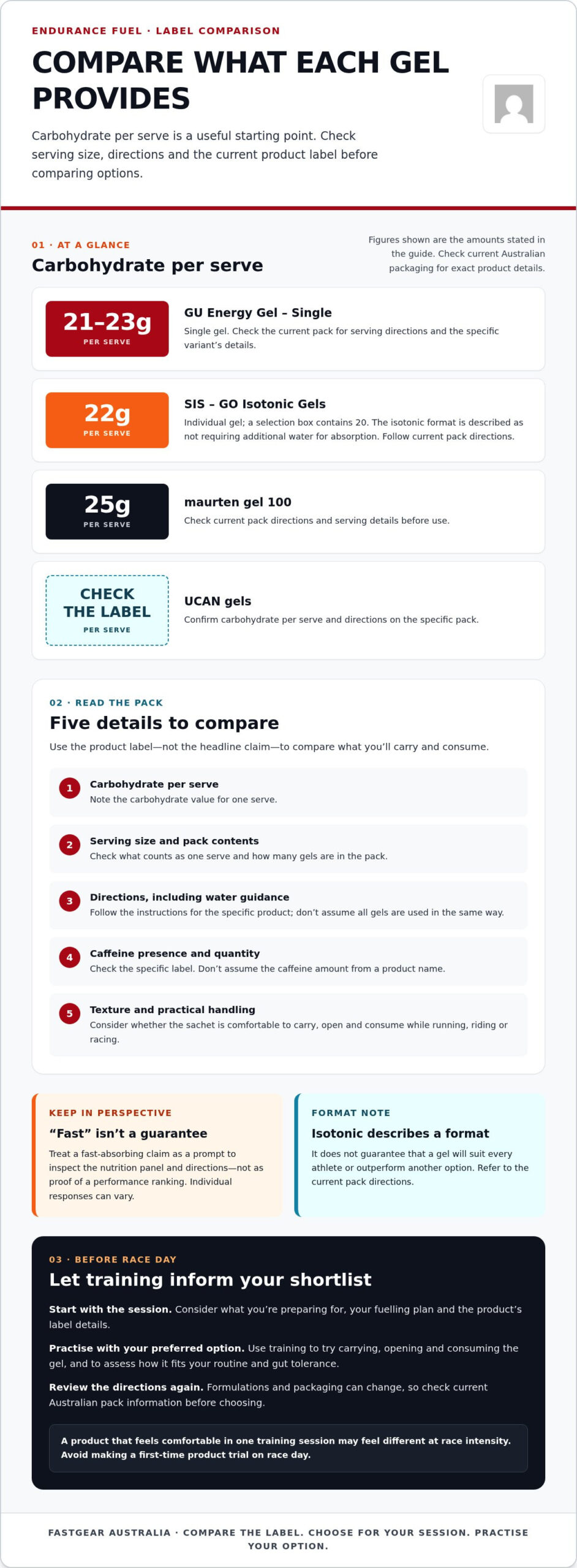
| Gel | Verified carbohydrate per serve | Serving and directions to note |
|---|---|---|
| GU Energy Gel – Single | 21-23g | Single gel. Check the current pack for serving directions and the specific variant’s details. |
| SIS – GO Isotonic Gels | 22g | Individual gel; a selection box contains 20. The isotonic format is described as not requiring additional water for absorption. Follow current pack directions. |
| maurten gel 100 | 25g | Check current pack directions and serving details before use. |
| ucan gels | Check the current product label | Confirm carbohydrate per serve and directions on the specific pack. |
Isotonic describes a product format. It doesn’t guarantee that a gel will suit every athlete or outperform another option. Keep the term in perspective as you compare products, and focus on the practical details on the pack.
Caffeine, texture and packaging as buying factors
Check the specific product label for caffeine presence and quantity. A caffeinated product name tells you caffeine is part of that option, but don’t assume the amount from the name alone. For example, compare the caffeinated Maurten option with a non-caffeinated choice using the information printed on each current pack. If the quantity isn’t clear, don’t rely on an assumed figure in your plan.
Texture and packaging matter in practice, too. Consider whether you can carry the sachet comfortably and open it while running, riding or racing. A flavour or texture you prefer may make a product easier for you to use, but preference isn’t evidence of faster absorption or better performance.
To compare fast absorbing carbohydrate gels australia options, use a simple checklist: carbohydrate per serve, serving size, directions, caffeine details and practical handling. The gel range at Fastgear Australia includes options from GU, SIS, Maurten and UCAN. Check the current Australian packaging as part of your comparison, especially before an event.
How do gel types and brands compare for different sessions?
There’s no universal winner. Make a useful comparison by matching each product’s verified details with the demands of your session: how long you’ll be moving, what else you plan to consume and which format you can manage in motion. Treat the figures below as label-level comparison points, not a performance ranking. Check current Australian packaging before use, as product details can change.
Match gel format to the session
A shorter training session and a longer ride or race create different planning contexts, but neither automatically calls for a particular gel. Consider how you prefer to carry and consume fuel. Some athletes prefer gels; others may choose chews or a drink mix as part of their fuelling setup. For cycling-specific considerations, the cycling nutrition guide offers useful context for planning around the demands of a ride.
Compare confirmed Fastgear gel options
Fastgear’s range includes options from GU, SIS, Maurten and UCAN. The table highlights available comparison points. Details that depend on the specific variant or current pack should be confirmed on its label.
| Option | Verified comparison detail | Practical point |
|---|---|---|
| GU Energy Gel – Single | 21-23g carbohydrate; sodium varies from 60-125mg. | Check the specific flavour or variant label for its nutrition details and directions. |
| SIS – GO Isotonic Gels | 22g carbohydrate and 20mg sodium per gel. Described as isotonic. | Follow the current pack directions. “Isotonic” identifies a format, not a promise of an identical response for every athlete. |
| Maurten Gel 100 | 25g carbohydrate per gel. | Use the current pack for serving directions and other product details. |
| UCAN gels | Check carbohydrate and other nutrition details on the specific product label. | Don’t assume all gel options have the same formulation or serve size. |
| Maurten Gel 100 Caffeine | Caffeinated option; check the current label for caffeine quantity and carbohydrate details. | Assess it separately from the non-caffeinated gel when planning caffeine use. |
These products aren’t interchangeable. Carbohydrate amounts, sodium, caffeine and directions differ or depend on the specific option. Compare the pack details with your session plan instead of choosing by brand alone. For more detail on Maurten’s gel range, the Maurten gel Australia guide provides brand-specific context.
Fastgear also stocks energy chews and hydration powders, giving you other formats to consider alongside gels. Keep your shortlist simple: choose a format you can use comfortably, check its current label and practise with it in a suitable training session before relying on it during an event.
How can you trial a fast-absorbing gel before race day?
A gel earns a place in your race kit through practice, not packaging claims. Test one product during training, follow its current directions and note how it fits the session. That gives you a clearer basis for deciding whether to use it again. Don’t make race day your first trial: event conditions already demand focus, and a new product adds another unknown.
A practical training-session trial
Choose a training session that resembles your event in duration and intensity, then trial one gel within your usual routine. Keep other fuelling choices as consistent as practical so you can make sense of your observations. A single trial provides useful information, but it can’t guarantee how you’ll respond in every session.
- Select one product. Read its current label and directions before the session. Note the product and any variant details, including caffeine if applicable.
- Practise during training. Use the gel in a comparable session, following the pack directions rather than improvising a serving method.
- Record the context. Write down when you took it, what fluid you had alongside it, the session conditions and your subjective comfort.
- Reassess before changing anything. Review your notes after the session. If you want to test another gel or alter another part of your fuelling, change one thing at a time.
What to do if a gel doesn’t suit you
Individual tolerance varies. If you feel unwell after taking a gel, stop using it and prioritise your safety. Don’t assume another product will prevent the same response or that one gel is universally gentle. If symptoms persist or concern you, discuss them with an appropriately qualified health professional before continuing to experiment with fuelling.
Race-kit trial checklist: Use this quick review before packing a gel for an event. It’s a practical prompt, not a substitute for the product’s directions.
- You’ve checked the current label, serving details and directions.
- You’ve practised using this product during training, not for the first time on event day.
- You’ve recorded timing, accompanying fluid and subjective comfort.
- You’ve considered how you’ll carry and open the gel during your sport.
- You’ve reviewed your notes and decided whether it fits your personal fuelling plan.
Keep your trial controlled. If one gel doesn’t suit your routine, review the product and your session notes rather than drawing a broad conclusion from its “fast” wording. Explore the gel options available from Fastgear to shortlist a product for your next training trial. On event day, rely on a choice you’ve tested, not a last-minute experiment.
Choose your carbohydrate gel and build a race-ready shortlist
A race-ready shortlist should make decisions simpler, not leave you sorting through marketing claims at the start line. Begin with the demands of your session, then narrow your options by the current label, whether you want caffeine and how the product felt in training. A gel that suits one event or athlete may not be the right fit for another.
Fastgear Australia’s gel range includes options from GU, SIS, Maurten and UCAN. Compare them using current pack information and your own experience, rather than assuming products from different brands are interchangeable. Keep the shortlist focused: one familiar option may be more useful than several untested products in your kit.
A quick gel-buying checklist
Before adding a gel to your event kit, run through these points. They turn a broad search for fast absorbing carbohydrate gels australia into a practical choice based on your session and tested routine.
- Confirm carbohydrate per serve. Read the current label and check the serving size so you know what the stated amount applies to.
- Review caffeine details. If you’re considering a caffeinated option, check the specific product label rather than inferring a quantity from the name.
- Read the directions. Check how the product is intended to be used and follow the current packaging.
- Consider pack format. Think about where you’ll carry it and whether you can manage the packaging during your sport.
- Choose a tested option. For important race-day use, prioritise a gel you’ve already practised with during training.
Build variety into your fuelling kit
Gels aren’t the only format to consider. Depending on your event and carrying setup, energy chews or a drink mix may also fit your fuelling plan. Fastgear stocks energy chews and hydration powders alongside its gel options, so you can compare formats without assuming one approach suits every session.
Variety only helps if you’ve practised with the products and can use them consistently. If you rotate formats, keep the plan familiar and follow each product’s directions. Don’t add an untested item simply because it seems convenient on event day. For an ultramarathon in hot weather, the hot-weather ultramarathon fuelling guide can provide event-specific context for reviewing your setup.
Keep your final shortlist clear: session fit, verified label details, caffeine preference and training-tested tolerance. Check the packaging and directions again before use, as product information can change. Ready to compare options? Browse the Fastgear Australia gel range and build your shortlist around the products that fit your plan.
Make your next fuelling choice a tested one
Let your next training session guide your shortlist. Choose an option that fits how you carry and use fuel, then practise with it before relying on it in an event. A clear plan beats a last-minute guess. Keep the current pack directions close and make adjustments based on your own experience.
If you’re comparing fast absorbing carbohydrate gels australia options, Fastgear lists gels from GU, SIS, Maurten and UCAN. Energy chews and hydration powders are also available if you’re considering different formats. Start with the product that best matches your session and preferences, then put it to the test in training.
Browse Fastgear’s carbohydrate gel range and choose your next training option. Build confidence one session at a time, and take a race-day choice you’ve already practised.
Frequently Asked Questions
What makes a carbohydrate gel fast absorbing?
“Fast-absorbing” is often a product or marketing description, not a guaranteed result for every athlete. Searches for “fast absorbing carbohydrate gels australia” can bring up products with different formats and formulations, so look beyond the headline. Check the current label, serving directions and carbohydrate sources, then consider how the gel fits your activity. Individual responses and exercise conditions vary, so a claim alone can’t establish which gel will work fastest for you.
Are isotonic gels absorbed faster than regular gels?
Not necessarily. “Isotonic” describes a product format; the word alone doesn’t prove that you’ll respond faster to that gel than to another type. Compare the current label and directions for each product, including any instructions about fluid. Two gels may be intended for different uses, even if both are convenient during exercise. Your response can also vary by session, so don’t treat one format as a universal solution.
Can you take a carbohydrate gel without water?
It depends on the product, so follow the directions on its specific pack rather than assuming all gels are used the same way. Your fluid needs are also part of your wider hydration and fuelling plan, which may change with the activity and conditions. Practise the product’s directions during training and note how the approach feels. A general rule about water is no substitute for checking the label or planning your hydration.
How much carbohydrate is in an energy gel?
There’s no single carbohydrate amount for every energy gel. It depends on the product and serving size, so check the current Australian label and compare equivalent serves. A pack may distinguish between a serving and the full contents, which makes the serving information important. Don’t choose based on a number taken from another product or an older label. For an individual intake target, seek advice from a qualified sports nutrition professional.
Can you use a caffeine gel during every training session?
A caffeine gel is a distinct option, not a default choice for every workout. Check the specific product’s current label for caffeine content and directions, and consider your personal circumstances, timing and total caffeine intake from other sources. If you choose to use one, trial it in training rather than introducing it at an event. Seek advice from an appropriately qualified health professional if you have health circumstances that could affect caffeine use.
What happens if a gel upsets your stomach during a run?
If you feel unwell after taking a gel, stop using it and prioritise your safety. When you’re able, note the product, when you took it, any fluid alongside it and the session context. These details may help you review your experience, but they can’t diagnose the cause. Don’t assume another gel will resolve the issue. If symptoms persist or concern you, speak with an appropriately qualified health professional.
Should you try a new energy gel on race day?
Trial a new gel during training before relying on it in an event. That gives you a chance to follow the label directions and assess practical details, such as taste and handling, alongside your personal response. Choose a session that gives you time to notice how the product fits your routine. Keep your event plan consistent with what you’ve already tested; no gel can guarantee a particular performance or comfort level.
