
Uncategorized
Signs of Bonking in an Ultra Marathon: Body and Mind Clues

Nov
Your legs aren’t the only warning system when an ultra starts to unravel. The signs of bonking in an ultra-marathon can include a sudden energy drop, heavy limbs and difficulty thinking clearly. Bonking is acute fatigue primarily associated with depletion of glycogen, the body’s stored carbohydrate fuel.
It’s easy to read a slowdown as ordinary fatigue, but the pattern matters. “Hitting the wall” describes a marked late-race loss of pace, while bonking points to the fuel-related fatigue behind it. The body stores about 1,800 to 2,000 calories of glycogen in the muscles and liver, so prolonged racing can put those reserves under pressure.
Fatigue can build over the distance, but bonking may feel like a sudden change. This guide covers physical and cognitive clues, how glycogen depletion relates to hitting the wall, and why it matters to notice changes in how you feel. Use the warning signs to review your fuelling and pace, rather than guessing when your race begins to unravel.
Key Takeaways
- Bonking is linked to low glycogen, but one symptom alone won’t tell you what’s happening; look for a change across both body and mind.
- Learn how glycogen depletion relates to “hitting the wall” and why a sharp pace drop can be a warning sign.
- Use physical and cognitive clues together to spot when fatigue may be affecting your running and decision-making.
- Plan how to carry fuel for long efforts with options such as GU Energy Gel – Single or Clif – BLOKS Energy Chews.
1. How to tell if glycogen is depleted?
Bonking is acute fatigue primarily associated with depleted glycogen, the body’s stored carbohydrate fuel. During sustained running, working muscles draw on glycogen to support movement and intensity. As muscle glycogen falls, maintaining your usual pace can become harder. The change may feel abrupt, even though fuel use has been building throughout the run.
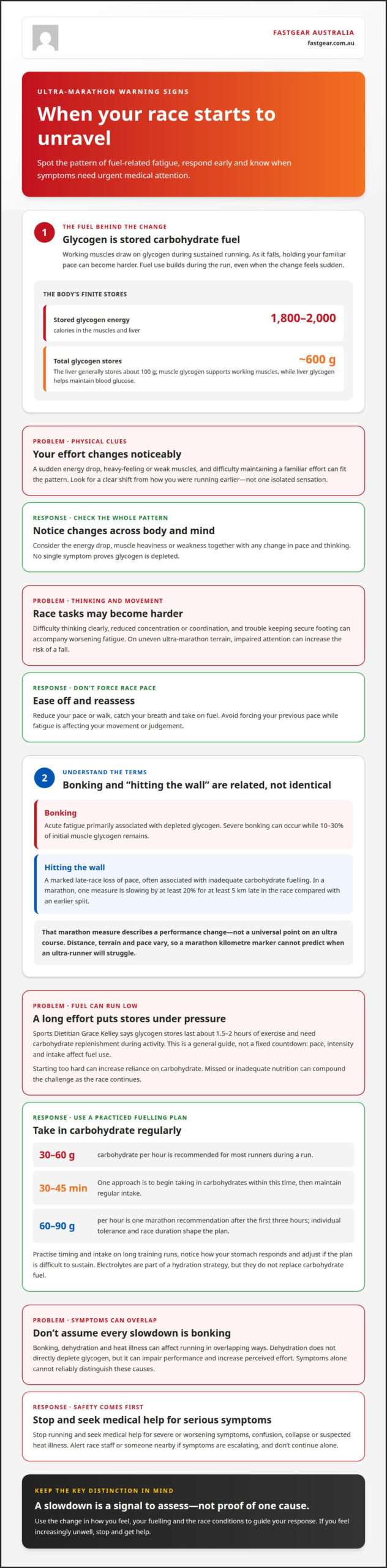
The body stores about 1,800 to 2,000 calories of glycogen in its muscles and liver. It can hold around 600 grams in total, with the liver generally storing about 100 grams. Muscle glycogen supports working muscles directly, while liver glycogen helps maintain blood glucose. These stores are finite, and prolonged effort can leave less readily available fuel.
There isn’t one symptom that proves glycogen is depleted. A sudden loss of energy, heavy-feeling muscles, unusual weakness and a pace drop can fit the pattern, especially after prolonged running. The signs of bonking in an ultra-marathon may also include difficulty sustaining effort at a familiar intensity. Severe bonking can happen while 10 to 30 per cent of initial muscle glycogen remains.
Distance offers context, not a diagnosis. Runners’ glycogen stores typically begin to run low around the 28 to 32 km mark in a marathon, but pace, body mass and effort affect fuel use. An ultra extends well beyond that distance, so the race profile and carbohydrate intake matter. Reaching a particular kilometre doesn’t mean every runner will bonk.
Bonking, dehydration and heat illness can overlap in how they affect running. Bonking is primarily linked to glycogen depletion; dehydration doesn’t directly deplete glycogen, but it can impair performance and increase perceived effort. Symptoms alone can’t reliably distinguish these causes, so consider the conditions and how symptoms are changing. If you suspect heat illness or feel increasingly unwell, stop running and seek urgent medical help.
2. What constitutes hitting the wall?
During a run, muscles use carbohydrates and fat for energy. Carbohydrates can support higher-intensity work, while fat also contributes fuel during endurance exercise. As carbohydrate availability falls, holding pace may become harder. The effort feels increasingly costly, and fatigue can force you to slow down.
Sports Dietitian Grace Kelley says glycogen stores last about 1.5–2 hours of exercise and need carbohydrate replenishment during activity. That’s a general guide, not a fixed countdown: pace, intensity and intake affect how quickly stored fuel is used. Marathon runners commonly hit the wall around 18–22 miles, but the point varies between runners. The term describes a pronounced late-race slowdown, often associated with inadequate carbohydrate fuelling.
Carbohydrate loading aims to start a marathon with fuller glycogen stores. It involves increasing carbohydrate intake during the 24 to 48 hours before a race while slightly reducing training load. It isn’t simply eating as much as possible. Runners should use familiar foods and follow a deliberate plan, rather than making a sudden change before race day.
During a run, most runners are recommended to consume 30 to 60 grams of carbohydrate per hour. Another approach is to begin taking in carbohydrates within the first 30 to 45 minutes, then maintain regular intake. For a marathon, one recommendation is 30–60 grams per hour during the first three hours, increasing to 60–90 grams per hour afterwards. Individual tolerance and race duration shape the practical plan.
Practise your fuelling plan during training, not for the first time on race day. Use long runs to rehearse timing and intake, and notice how your stomach responds. Adjust the plan if it’s difficult to sustain. This makes race-day fuelling a familiar routine rather than a last-minute experiment.
3. Bonking and hitting the wall in ultra-marathons
In a marathon, “hitting the wall” can be identified as slowing by at least 20% for at least 5 kilometres late in the race, compared with an earlier split. That measure describes a performance change, not a universal point on the course. An ultra’s distance, terrain and pace vary, so a marathon kilometre marker can’t predict when an ultra-runner will struggle.
Starting too hard increases reliance on carbohydrate and uses glycogen faster. Missed or inadequate nutrition can compound the problem as the race continues. Electrolytes are part of a hydration strategy, but they don’t replace carbohydrate fuel. A steep climb, technical trail or prolonged effort can also make a change in pace harder to interpret.
If you’re hitting the wall, reduce your pace or walk, catch your breath and take on fuel. One recommendation for bonking during a run is 30–60 grams of fast-acting carbohydrates. Rest for 10 to 15 minutes if possible, then reassess how you feel before resuming. Avoid trying to force your previous pace while fatigue is still affecting your movement or judgement.
Continuing at race pace as fatigue worsens can further affect concentration, coordination and secure footing. On uneven ultra-marathon terrain, impaired attention can increase the risk of a fall. Respond to a deteriorating feeling rather than treating a slowdown as something to push through at all costs.
Stop running and seek medical help for severe or worsening symptoms, confusion, collapse or suspected heat illness. These signs can’t safely be explained by assuming depleted glycogen, and continuing the race can delay care. If symptoms are escalating, alert race staff or someone nearby, and don’t continue alone.
4. Physical and cognitive signs of bonking
Bonking can show up as more than a slower split. You may feel a sharp drop in energy, heavy or weak muscles, or unusual difficulty maintaining a familiar effort. These changes can happen together or emerge gradually. The useful clue is a clear shift from how you were running earlier, not one isolated sensation.
Notice whether basic race tasks become harder. You might struggle to keep a steady rhythm, lift your feet over trail obstacles or follow a familiar route. These physical changes matter more when they arrive alongside a sudden loss of drive. A difficult hill alone doesn’t establish that glycogen is depleted, but a growing cluster of changes deserves attention.
Mental clues can be less obvious. Losing track of when you last ate, repeatedly forgetting your fuelling routine or finding a simple course decision unusually difficult may signal that fatigue is affecting your focus. For example, you might pass a planned nutrition point without noticing, then realise later that your routine has slipped. Compare your attention with how you were managing earlier in the race.
Use a quick check: has your pace fallen unexpectedly, do your legs feel markedly weaker, and is it harder to concentrate? Several changes together are more informative than a single symptom, but they still don’t prove the cause. Dehydration, heat illness and other problems can also affect performance, so don’t label every deterioration as bonking.
If your movement or thinking is worsening, slow down and reassess rather than forcing your target pace. Confusion, collapse or suspected heat illness calls for stopping and seeking medical help. For milder fatigue, take a deliberate pause, attend to your fuelling plan and notice whether your ability to move and focus changes. Explore endurance fuelling options as you prepare your race-day plan.
Fastgear Australia
Fastgear Australia helps endurance runners prepare their race fuelling with sports nutrition and technical racing gear. If you’re building a plan for long training runs or an ultra, GU Energy Gel – Single and Clif – BLOKS Energy Chews are carbohydrate options to practise with before race day. Individual tolerance and your fuelling routine matter, so use familiar products rather than relying on a new option when fatigue sets in.
The Compressport Free Belt Pro and Compressport Trail Racing SS Tshirt round out the selection with race gear for trail runners. Choose products that suit your planned setup, then rehearse your routine during training. For questions about products for your ultra fuelling and race kit, contact Fastgear Australia.
Build a race plan you can trust
Turn what you’ve learned about the signs of bonking during an ultra-marathon into a plan you can rehearse. Decide how you’ll carry fuel, when you’ll take it, and what change in movement or concentration will prompt you to slow down and reassess. Practising during training can make it easier to act deliberately when fatigue affects your judgement.
Keep the plan simple enough to follow on tired legs. Use familiar fuelling options and race gear, and avoid last-minute changes on event day. The aim isn’t to force your way through every difficult patch. It’s to recognise when your condition is changing and respond with care.
For help choosing endurance nutrition and race gear for your preparation, contact Fastgear Australia today. Set your plan, practise it, and approach your next ultra with focused confidence.
Frequently Asked Questions
What is bonking?
Bonking is a sudden, pronounced fatigue during endurance exercise, usually associated with the body’s carbohydrate fuel becoming depleted. A runner may find a previously manageable pace feels unsustainable, even on familiar terrain. The term describes an experience, not a precise medical diagnosis. Other causes of feeling unwell during a race can look similar, so consider symptoms in context.
What constitutes hitting the wall?
Hitting the wall describes a substantial late-race decline in running performance, often linked to insufficient carbohydrate availability. It means a noticeable slowdown relative to your earlier pace, not simply feeling tired at one point. A tough climb or technical section can also slow you down, so compare pace and effort across similar parts of the course where possible.
Fast or slow, who suffers most?
Runners at faster paces may face a greater performance cost when they hit the wall, because maintaining high intensity relies heavily on carbohydrate fuel. Slower runners can also bonk, particularly during long events if their fuelling doesn’t keep pace with effort. Neither speed nor experience guarantees protection. Pacing, race duration and your ability to take in carbohydrates all influence the outcome.
How can you tell if glycogen is depleted?
You can’t confirm depleted glycogen from one feeling alone. Look for a combination of an unexpected pace fade, unusually heavy legs and difficulty carrying out familiar race tasks. Consider whether the change followed missed or delayed fuelling, while also accounting for terrain and conditions. If symptoms include confusion or become severe, don’t assume glycogen is the cause; stop and seek medical help.
What does it mean when you bonk?
To bonk means your ability to sustain effort has sharply deteriorated, commonly alongside a marked loss of energy. It doesn’t mean every glycogen store in your body is completely empty. In practical terms, your current pace and fuelling may no longer be working together. Treat the change as a cue to ease off and reassess, not as a reason to push harder.
Why do some runners “hit the wall”?
Bonking can happen when carbohydrate use outpaces the fuel available during prolonged effort. Starting too hard can increase carbohydrate reliance, while missed or inadequate intake means less fuel is coming in. These factors can combine: an aggressive opening pace followed by skipped fuelling may make a late-race slowdown more likely. A consistent pacing and nutrition strategy helps address those pressures.
