
Uncategorized
How to Stop Leg Cramps During a Triathlon by Understanding Their Causes
Nov
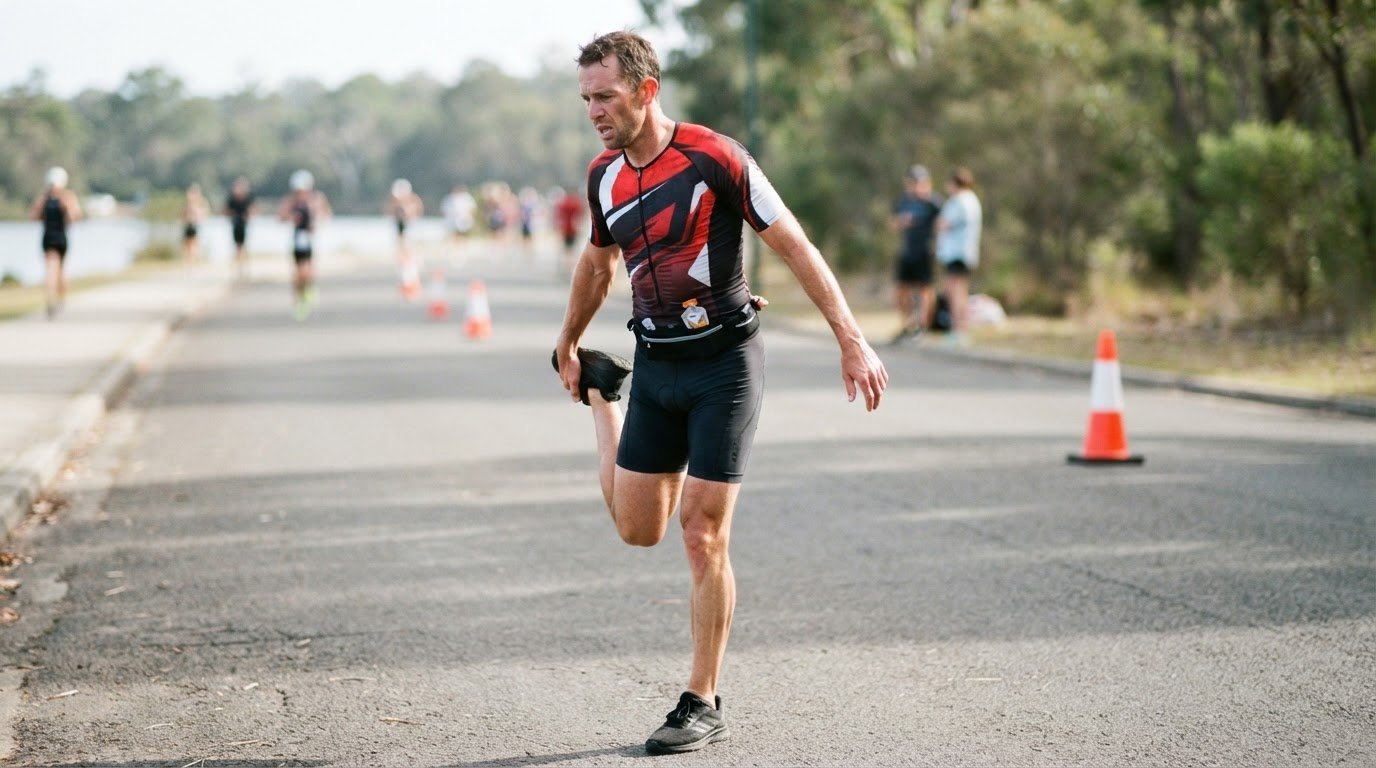
A quad cramp mid-race calls for an immediate reset: ease off and gently draw the affected foot towards your glutes until the muscle releases. To understand how to stop leg cramps during a triathlon, look beyond hydration alone. Muscle fatigue, race intensity, fuelling and fluid balance can all play a part.
It’s easy to assume cramps mean you need more electrolytes. But causes can vary between athletes and across the swim, bike and run, so one fix may not suit every race.
Learn what may trigger quad cramps, how hydration and electrolytes relate to muscle function, and how to test prevention strategies in training. You’ll also see why pacing, preparation and race-day fuelling matter, so you can build a plan around your own responses rather than relying on guesswork.
Key Takeaways
- Quad cramps can arise across the swim, bike and run, with fatigue, pacing and fuelling all worth considering.
- Electrolytes support muscle function, but adding more isn’t automatically the answer to a cramp.
- Hydration and electrolyte needs vary, so consider your fluid intake alongside effort, conditions and how you feel.
- Test prevention changes during training and note what you changed and how your body responded before race day.
What causes cramping in quads?
Understanding how to stop leg cramps during a triathlon starts with identifying what preceded the spasm. Cramps can occur during any leg. In Australia, follow the event’s athlete information and officials’ directions if you need to stop or receive assistance, as procedures can vary between events.
Cramp triggers across swim, bike and run legs
Each triathlon leg loads the legs differently. Kicking during the swim, sustained quadriceps effort on the bike and the impact of running can all contribute to muscle fatigue. Sweating across the swim, bike and run can disrupt electrolyte balance, while inadequate fuelling before or during the event may leave muscles short of essential nutrients.
The timing can offer clues. A quad cramp on the run may follow hard cycling, while a cramp earlier in the race may reflect the demands of that discipline. These patterns help identify which part of racing to examine in training.
Possible causes of exercise-associated cramps
Exercise-associated muscle cramps are linked with fatigue, pain and changes in the central nervous system. Overexertion during any triathlon stage can add to muscle fatigue. Runners who cramp have been found to start the first half too fast compared with runners who don’t cramp, making early pacing one factor to review.
Preparation matters, too. Runners who cramp during competition tend to have over-trained in the three days before the event. For casual riders cycling less than 5 hours a week, a lack of sodium is probably not the cause. That makes a single electrolyte imbalance explanation too narrow.
To work out how to stop leg cramps during a triathlon, record where the cramp starts, what effort came before it and how you fuelled. Compare your notes across training sessions. A repeated pattern, such as quad cramps after hard bike efforts, suggests a more useful adjustment than guessing at a single cause.
Electrolytes relevant to muscle function
Sodium, potassium, calcium and magnesium are electrolytes involved in muscle function. They help regulate processes that allow muscles to contract and relax. Magnesium also plays a role in muscle function, but a painful cramp doesn’t prove you’re deficient in any one mineral.
Table salt contains about 40% sodium and 60% chloride. These minerals matter, but exercise-associated muscle cramping isn’t explained by electrolytes alone. Fatigue, pain and changes in the central nervous system are also associated with cramps. That’s why responding to every cramp by taking more salt may miss the bigger picture.
Can slowing down or changing pace help stop triathlon cramps? Yes. Reducing effort can ease the demand on an overworked muscle, especially if a cramp starts during a hard push. Adjust your pace, then assess whether the contraction eases instead of trying to maintain race intensity through painful symptoms.
For a quadriceps cramp, gently draw the affected foot towards your glutes to stretch the front of the thigh. Bending the knee brings the hamstrings, which oppose the quadriceps’ knee-straightening action, into the movement. Avoid forcing the stretch; let the muscle release before building effort again.
Conditioning matters as much as the race-day plan. A cyclist accustomed to 20, 30 or 40 kilometres may be more likely to cramp during a 100-kilometre mountain race if their muscles aren’t prepared for the distance. Build training towards the demands of your event. Overexertion at any stage can drive fatigue, so pacing and preparation support muscle function alongside hydration and electrolyte intake.
Dehydration and electrolyte imbalance
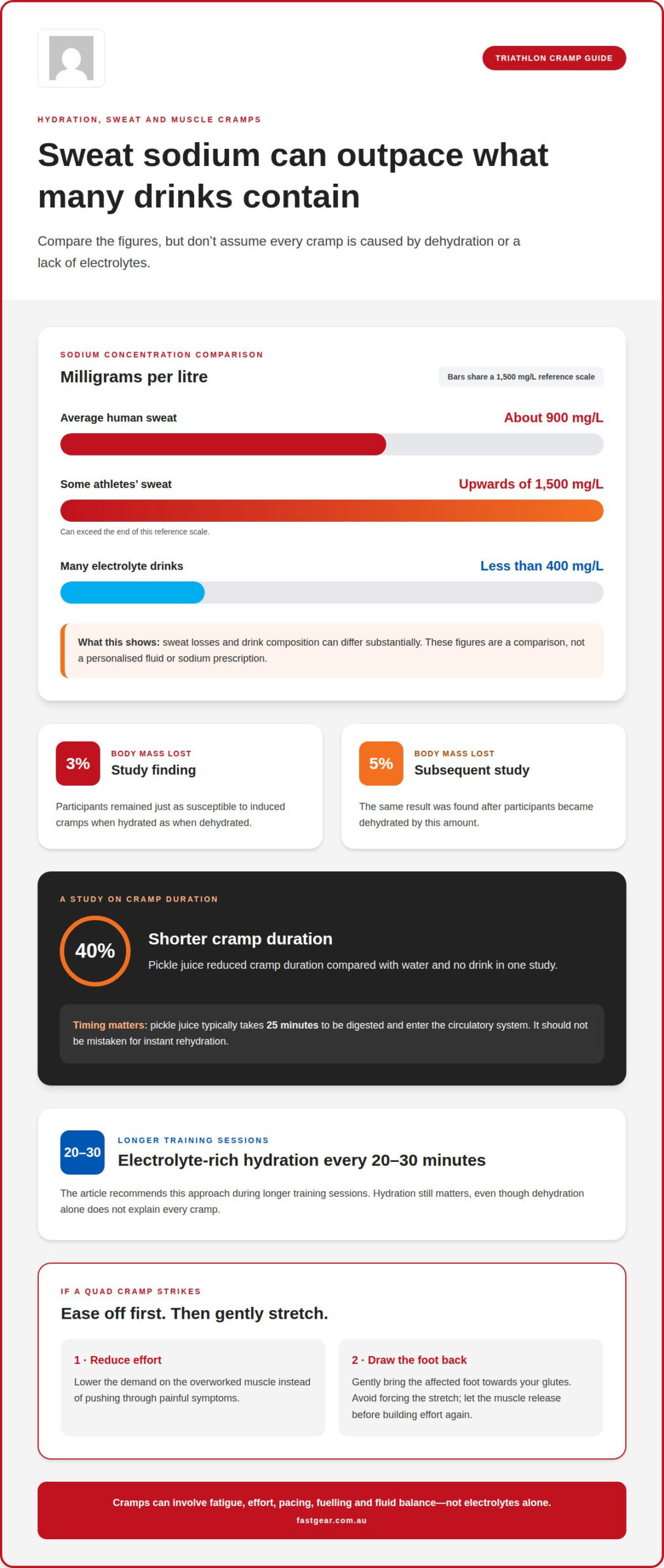
Fluid loss and electrolyte imbalance can accompany triathlon cramping, but dehydration alone doesn’t explain every episode. Research comparing hydrated and dehydrated participants found similar susceptibility to induced cramps.
Dehydration and cramping
In one study, participants who lost 3% of body mass through sweating remained just as susceptible to induced cramps when hydrated as when dehydrated. A subsequent study found the same result after participants became dehydrated by 5%. These findings challenge the idea that dehydration is always the direct cause.
That doesn’t make hydration irrelevant during racing. Heat, sweating and fluid intake still affect an athlete’s fluid and mineral balance. Sip electrolyte-rich fluids during a race rather than treating a cramp as proof that you need plain water alone.
Fatigue alongside dehydration
Dehydration can occur alongside fatigue, heavy exertion and poor race-day nutrition, so several factors may converge. Historical research found cramps were more likely in hot weather and when people drank large amounts of plain water. That association makes both conditions and fluid choices relevant when reviewing a cramp.
During longer training sessions, use electrolyte-rich hydration every 20-30 minutes. Average human sweat contains about 900mg of sodium per litre, while some athletes’ sweat contains upwards of 1,500mg per litre. Many electrolyte drinks contain less than 400mg of sodium per litre, so sweat losses and drink composition can differ substantially.
A study found pickle juice reduced cramp duration by 40% compared with water and no drink. However, pickle juice typically takes 25 minutes to be digested and enter the circulatory system. It shouldn’t be mistaken for instant rehydration. If a quad cramp strikes, reduce effort and gently stretch the muscle to help relieve the contraction, while considering your hydration and nutrition plan.
Testing personal cramp-prevention strategies
Build a prevention plan from repeatable training observations, not one-off fixes. Compare your responses to pacing, fuelling and hydration across similar endurance sessions.
Pickle juice, sports drinks and magnesium
Pickle juice, sports drinks and magnesium have different roles, so test them against a clear goal. Research has examined pickle juice for cramp relief, but relief during an episode doesn’t prove it prevents cramps during racing. Sports drinks can provide electrolytes, including sodium and potassium, but more fluid or minerals aren’t automatically better for every athlete.
Magnesium, calcium and other electrolytes play a role in muscle function. That alone doesn’t show that magnesium supplements prevent exercise-associated cramps. Keep a simple record of what you consumed, the session’s effort, when symptoms appeared and whether the change helped. Test one adjustment at a time so you can interpret the result.
Training and race-day risk reduction
Training and race-day risk reduction means preparing muscles for the event’s actual demands. Increase weekly training by no more than 10%, build leg strength with attention to calves, quadriceps and hamstrings, and warm up for 10-15 minutes before training. Reduce training load and avoid intense sessions in the days leading up to the race.
On race day, start at a controlled pace, follow a fuelling and hydration approach practised in training, and ease effort if a cramp starts. During longer sessions, electrolyte-rich fluids every 20-30 minutes help restore mineral balance. Compare similar sessions and record conditions, pace, nutrition and cramp timing. Change one factor in the next comparable session, then assess whether symptoms shift.
After a cramp, allow the quadriceps 24-48 hours before another intense session. If cramps persist frequently, seek a physiotherapist or sports physician. To organise your race-day fuelling, explore endurance nutrition options.
Fastgear Australia
Fastgear Australia helps triathletes prepare race-day fuelling and gear alongside a training-tested cramp-prevention plan. If you’re refining your nutrition choices, options include GU Energy Gel – Single and Clif – BLOKS Energy Chews. Practise using them as part of your fuelling strategy in training rather than introducing an untested change on race day.
For athletes organising their race kit, the range also includes the Compressport Trail Racing SS Tshirt and Compressport Free Belt Pro. Choose gear and fuelling that suit your event plan, then keep testing them in relevant sessions. Products support preparation, but they don’t replace pacing, conditioning or appropriate hydration. If you’d like help finding suitable race-day gear and nutrition, contact Fastgear Australia.
Make your next race a learning opportunity
Your next event can help sharpen the plan for the one after it. Use your training notes to spot patterns, then carry forward the changes that suited your effort and race conditions. A practical way to learn how to stop leg cramps during a triathlon is to refine one part of your preparation at a time, rather than changing everything at once.
Fastgear Australia can help you explore endurance nutrition and racing gear as you prepare. Consider how your fuelling choices and kit fit the approach you’ve practised, then keep race day consistent with your preparation. For help finding suitable options, contact Fastgear Australia. Stay disciplined, trust your preparation, and take that focus into your next start.
Frequently Asked Questions
Can changes in the central nervous system contribute to cramping?
Yes. Exercise-associated muscle cramps are associated with changes in the central nervous system, as well as fatigue and pain. This helps explain why cramping can’t be reduced to a simple shortage of one mineral. During a race, note which muscle cramps, what effort preceded it and whether the same pattern appears in later sessions. Those details can guide a more targeted prevention plan.
Which electrolytes matter most for endurance athletes?
Sodium, potassium, calcium and magnesium are all electrolytes involved in muscle function. No single electrolyte explains every cramp, and focusing on one mineral can distract from other race demands. For example, an endurance athlete reviewing a cramp after a hard run should consider effort, fuelling and fluid intake alongside electrolyte sources, rather than treating one supplement as a complete prevention strategy.
What should you do immediately when a leg cramp starts during a triathlon?
Ease your effort and gently stretch the affected muscle. For a quadriceps cramp, draw the affected foot towards your glutes until the contraction releases. Don’t force the movement or try to maintain race intensity through a painful spasm. Once the cramp eases, resume gradually and pay attention to whether it returns as your pace increases.
How can you safely stretch and massage a cramped leg while racing?
Use a gentle stretch that targets the cramped muscle, rather than bouncing or forcing the joint. For a quadriceps cramp, bring your heel towards your glutes and stop increasing the stretch as the muscle releases. Medical staff can help by massaging affected muscles with ice or cooling spray. If you need assistance, prioritise getting help over trying to push through the cramp.
How much sodium or electrolytes should triathletes take to prevent cramps?
There isn’t one sodium amount that suits every triathlete; sweat losses and fluid intake differ between athletes and sessions. A useful plan accounts for the duration and intensity of exercise, conditions and what you tolerate during training. Don’t assume that adding salt or taking more electrolytes will prevent a cramp. Test your race-day nutrition in training and adjust based on your response.
Do dehydration, salt loss, fatigue or pacing cause exercise-associated muscle cramps?
They can be contributing factors, but no single one explains every exercise-associated cramp. Fatigue and overexertion can increase muscle load, while sweating affects fluid and electrolyte balance. Starting the run too fast may also put extra demand on tired legs. If a cramp occurs, consider what happened across the whole race, including earlier effort and fuelling, rather than blaming dehydration alone.
