
Uncategorized
Caffeinated running gels in Australia: caffeine, timing and water
Nov
Water isn’t a compulsory chaser for an energy gel. For runners comparing caffeinated running gels around 100 mg in Australia, each Maurten Gel 100 CAF sachet contains 100 mg of caffeine and can be taken without water, although maintaining hydration during exercise still matters.
Consider both caffeine and fluids before taking a gel. The right timing and amount depend on your session and fuelling plan, so practise your approach in training instead of trying it for the first time on race day.
Learn how caffeine amounts differ, when to take a gel and how to plan water alongside it. This guide also explains how to choose running gels in Australia to suit your race-day fuelling strategy.
Key Takeaways
- Compare the caffeine listed per sachet: gel strengths vary, so the product name alone won’t tell you the dose.
- Match gel timing to your session’s duration, intensity and fuelling needs, then practise your plan in training.
- Separate the question of taking a gel with water from your wider hydration strategy during exercise.
- When choosing where to buy, compare caffeine content and gel format with the rest of your race-day fuelling plan.
Caffeine content in gel variants
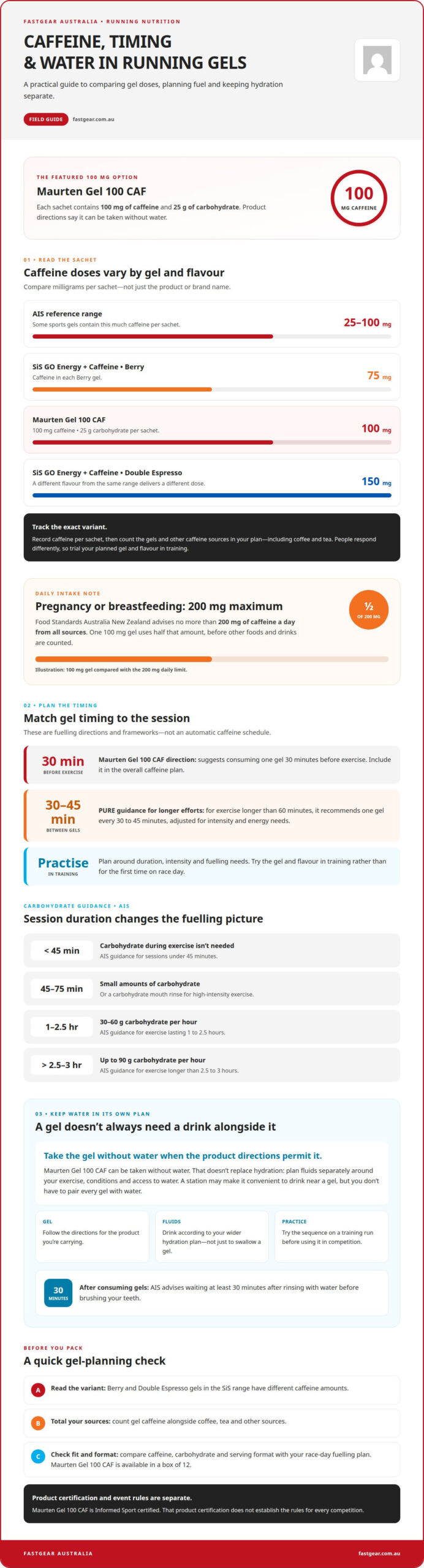
Caffeine content varies by gel and flavour, so compare the milligrams per sachet before choosing. The AIS says some sports gels contain 25 to 100 mg of caffeine per sachet. That range is a useful reference, but individual products can sit outside it: SiS GO Energy + Caffeine provides 75 mg in its Berry gel and 150 mg in its Double Espresso gel.
For a 100 mg option, each Maurten Gel 100 CAF sachet contains 100 mg of caffeine and 25 g of carbohydrate. That makes the label’s caffeine figure a direct starting point for planning. The SiS examples show why flavour matters: two gels in the same range can deliver different doses. Check the exact variant, not just the brand name, and add the caffeine from each sachet you plan to consume.
For adults, count caffeine from gels alongside coffee, tea and other sources when planning daily intake. Food Standards Australia New Zealand advises pregnant or breastfeeding people to consume no more than 200 mg of caffeine a day from all sources. One 100 mg gel uses half that amount, before other foods and drinks are counted.
Australian sports or anti-doping rules are a separate question from a gel’s caffeine content. Maurten Gel 100 CAF is Informed Sport certified, but that product certification does not establish the rules for every competition. Distinguish product testing from event regulations when planning race-day nutrition.
A practical risk during exercise is taking more caffeine than intended by combining gels with other caffeinated products. A gel’s stated caffeine amount gives you a clear unit to track, but your total intake includes everything you consume that day. People respond differently, so trial your planned gel and flavour during training. Notice how you feel, and don’t automatically add another source of caffeine.
Use a simple check before packing: read the variant, record its caffeine per sachet, then total the gels and other caffeine sources in your plan. A 75 mg Berry gel, a 100 mg Maurten Gel 100 CAF and a 150 mg Double Espresso gel are not interchangeable doses.
Recommended gel timing during exercise
Set gel timing around the session, not simply the start line. PURE recommends energy gels for exercise lasting longer than 60 minutes or very high-intensity shorter sessions. During a longer effort, PURE recommends one gel every 30 to 45 minutes, adjusted for intensity and energy needs. Treat that interval as a fuelling framework, not an automatic caffeine schedule.
For a caffeinated gel with a pre-exercise direction, timing may differ. Maurten Gel 100 CAF suggests consuming one gel 30 minutes before exercise. That gives you a clear timing option when following that product’s directions. Include the gel in your overall caffeine plan, rather than adding it on top of a routine without accounting for other sources.
Session duration also shapes carbohydrate timing. AIS guidance says carbohydrate during exercise isn’t needed for sessions under 45 minutes. For high-intensity exercise lasting 45 to 75 minutes, it recommends small amounts of carbohydrate or a carbohydrate mouth rinse. For exercise lasting 1 to 2.5 hours, its guidance is 30 to 60 g of carbohydrate per hour. For exercise longer than 2.5 to 3 hours, intake can reach up to 90 g per hour.
Build a simple schedule before training:
- Record your session duration and intensity.
- For exercise over 60 minutes, plan gel timing around the 30 to 45-minute interval and your energy needs.
- For shorter, high-intensity work, consider the AIS guidance on small carbohydrate amounts.
- If following Maurten Gel 100 CAF directions, schedule its gel 30 minutes before exercise.
Product directions may allow one or two more gels towards the end of an endurance exercise period. Treat these as part of your fuelling plan, not an unplanned extra. Practise the timing in training, noting when you take each gel and how it fits your session. A written schedule can help you fuel deliberately when pace, terrain or race demands change.
Whether gels require water
A gel doesn’t always need a drink alongside it. Product directions state that the gel can be consumed without water or other fluid. Maurten Gel 100 CAF can also be taken without water. That answers the immediate question, but it doesn’t replace your wider hydration plan during exercise.
Treat gel intake and hydration as separate parts of race fuelling. You can take a gel on its own and drink according to your fluid plan and the conditions. A water station may make it convenient to drink around the same time, but you don’t have to pair every gel with water. Don’t force yourself to drink just to swallow a gel.
Use a simple routine during training:
- Follow the product directions for the gel you’re carrying.
- Take it without water if that suits your plan and the directions permit it.
- Keep hydration in your overall exercise plan, rather than treating a gel as a fluid source.
Practise the sequence on a training run before using it in competition. For example, take a gel at your planned fuelling point, then drink when your hydration plan calls for it. This separates the decisions and helps you repeat a deliberate routine. Conditions and access to fluids can affect your run, so factor them in when planning your route.
Water also matters after the gel. According to the AIS, wait at least 30 minutes after rinsing with water before brushing your teeth after consuming gels. This is a useful detail for post-run routines, especially when you finish and head straight into your usual clean-up.
In short, water isn’t a required chaser for every gel, including Maurten Gel 100 CAF. Hydration still has its own role during exercise. Keep your gel instructions, fluid plan and race logistics distinct, then practise them together so each step feels familiar on the course.
Buying running gels in Australia
Choose by caffeine amount and purpose, not flavour alone. Compare the caffeine per sachet with the amount you plan to use. Then check the carbohydrate content, serving format and fit with your wider fuelling plan. A clear label makes it easier to track caffeine from gels alongside coffee, tea and other sources.
Packaging also affects how you plan a purchase. Maurten Gel 100 CAF is available in a box of 12, which suits runners planning repeated sessions or stocking up for training. Check that the product name and caffeine amount match the variant you want. Similar product ranges can have different caffeine strengths, so don’t assume every sachet from one brand contains the same dose.
For pregnancy or breastfeeding, Food Standards Australia New Zealand advises consuming no more than 200 mg of caffeine a day from all sources. A caffeinated gel contributes to that daily total. Young athletes and people sensitive to caffeine shouldn’t assume a caffeinated gel is suitable; consider caffeine-free fuelling options instead.
Use this buying checklist before selecting a gel:
- Match the caffeine amount per sachet to your planned intake.
- Compare carbohydrate content with the rest of your fuelling strategy.
- Read the exact variant and serving details on the pack.
- Account for caffeine from drinks and other products across the day.
Buying online in Australia makes it easier to compare product details and formats in one place. Choose based on the label and how the gel fits your planned session, rather than assuming a higher caffeine amount is better. Stick with the fuelling routine you’ve practised, especially before an event.
Ready to choose gels for your next training block? Browse endurance nutrition options and compare the formats available for your race-day plan.
Fastgear Australia: Compressport Trail Racing SS Tshirt
Fastgear Australia brings endurance nutrition and race gear together, including the Compressport Trail Racing SS Tshirt. Once you’ve planned your caffeine, timing and hydration, choose fuel and equipment to suit your event. GU Energy Gel – Single comes in a single-gel format, while Clif – BLOKS Energy Chews offer a chew format for your fuelling mix. The Compressport Free Belt Pro adds a race accessory to your setup.
These products support different parts of preparation, from apparel and carrying gear to on-course fuel. Compare each with your established routine, and don’t assume products have caffeine unless their labels say so. When you’re ready to browse endurance gear and nutrition for training or race day, explore Fastgear Australia’s range.
Visit fastgear.com.au to explore the range.
Make your next run a race-day rehearsal
Use your next training session to practise the full routine, not just choose your fuel. Decide where each item will go, how you’ll access it while moving and what you’ll do if your plan changes. Familiar steps make a routine easier to repeat. Keep your setup simple enough to follow when race conditions demand your attention.
If you’re still comparing caffeinated running gels around 100 mg in Australia, focus on how each option fits your own race plan. Choose deliberately, then practise that choice before relying on it during an event. A considered setup can help you start with greater clarity and stay focused on the effort ahead.
For help exploring endurance nutrition and racing gear, contact Fastgear Australia. Set your plan, test your routine and take the next start line ready to perform.
Frequently Asked Questions
Do I need water with energy gels?
Some gels can be taken without water, but keep hydration as a separate part of your run plan. You might take a gel on a section of your route without a water station, then drink at your next planned opportunity. Follow the directions for the specific gel you’re carrying, and practise your routine before race day.
How many gels do I need for a half marathon?
That depends on your expected finish time, fuelling needs and how well you tolerate gels. Estimate how long you’ll be running, then plan your intake around the session duration, not just the half-marathon distance. If your race lasts longer than an hour, use your established training routine to decide how many gels to carry, including a practical reserve.
How much caffeine is in a caffeine gel?
It varies by product and flavour. For example, Maurten Gel 100 CAF contains 100 mg per sachet, while SiS GO Energy + Caffeine provides 75 mg in Berry and 150 mg in Double Espresso. Read the precise variant label before packing. That small check helps you avoid treating gels from the same product range as identical caffeine doses.
What Australian retailers sell 100 mg caffeine running gels?
Fastgear Australia sells maurten gel 100 caffein, a 100 mg-per-sachet option. If you’re comparing caffeinated running gels around 100 mg in Australia, look at the product variant and caffeine amount on the listing, not just the brand. Match the item name to the pack you intend to buy so your training and race fuelling plan stays consistent.
How much do 100 mg caffeine running gels cost in Australia?
There isn’t one fixed Australian price across retailers; the amount depends on the seller and pack format. Compare the cost per sachet as well as the total pack cost, because a box and a single gel are different purchase formats. Check that the listing is for the 100 mg caffeine variant, rather than a related gel with another dose.
Which brands offer 100 mg caffeine per gel, and what are the packet sizes?
Maurten Gel 100 CAF is the 100 mg option identified here, and it’s available in a box of 12 sachets. The caffeine amount applies per sachet, not per box. Before ordering, confirm that the product name includes CAF and that the pack quantity suits your needs, particularly if you’re trying a new gel during training.
