
Uncategorized
Triathlon Shop Australia for Swim, Bike and Run Gear
Nov
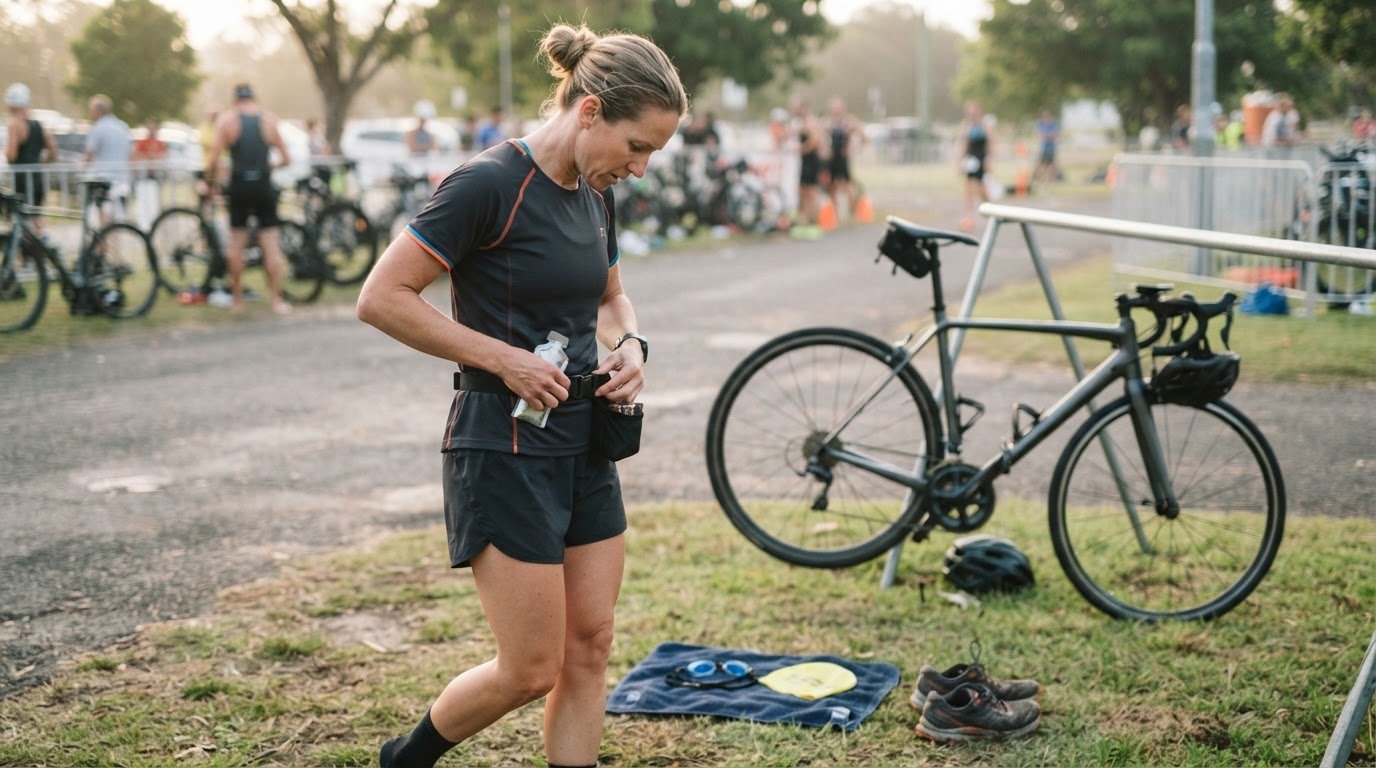
Race readiness starts with the essentials. For your first sprint triathlon, pack swimming goggles, a bike and helmet, running shoes and a race belt for your number. Events usually supply the swim cap. A triathlon shop in Australia can help you find gear for each leg.
Choosing what to wear and carry through the swim, bike and run can feel like a gear puzzle, especially when comfort in one leg affects the next. This guide covers equipment and apparel to consider, from swimwear and triathlon suits to cycling and running essentials. It also explains Australian shipping costs and the free-shipping threshold, so you can plan your order alongside your race kit.
We’ll cover each discipline, explain the role of transition-friendly apparel and note why event rules matter for neoprene accessories. Use the checklist to focus on practical choices, avoid packing unnecessary gear and prepare for a smoother race day.
Key Takeaways
- Use a leg-by-leg checklist to organise essential swim, bike and run equipment before race day.
- Compare changing options, including a triathlon suit, with the comfort and transition needs of your race.
- Factor Australian shipping costs and the free-shipping threshold into your gear order.
- Explore race-day apparel and accessories such as the Compressport Trail Racing SS Tshirt, Free Belt Pro and energy products.
Triathlon equipment by swim, bike and run discipline
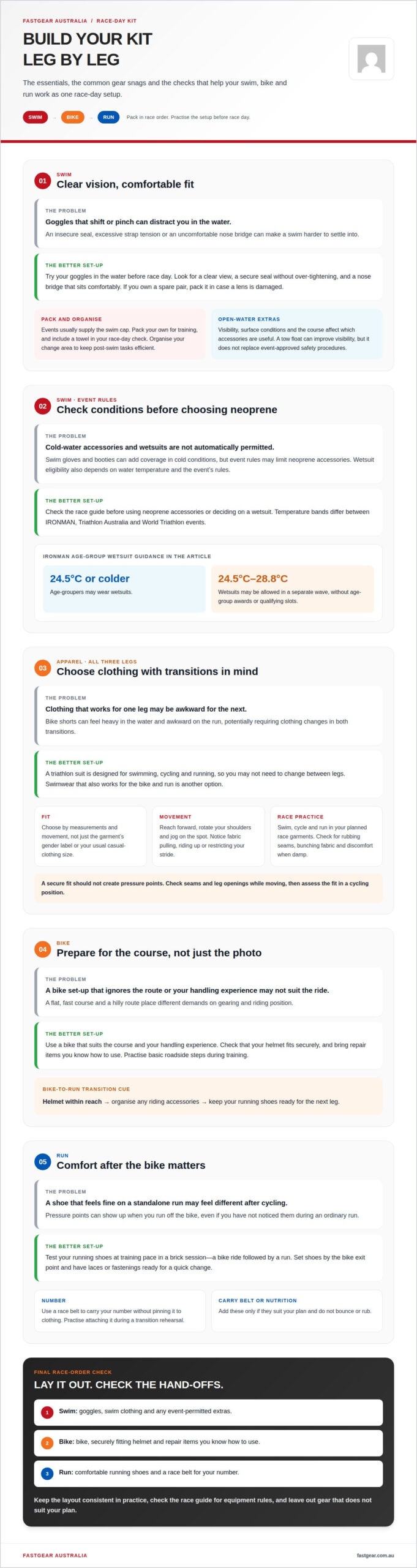
Build your kit around each leg, then check how every item works during transitions. A sprint-race setup needs swim, bike and run essentials, while conditions and event rules determine which extras make sense. Lay everything out in race order before packing to spot anything missing.
Swim gear and open-water accessories
Start with goggles that give you a clear view and stay comfortable when you turn your head. Try them in the water before race day. A secure seal should hold without excessive strap tension, and the nose bridge should sit comfortably. If you already own a spare pair, pack it in case a lens is damaged.
Events usually supply the swim cap, but pack your own for training and include it in your pre-race check. Add a towel and organise your change area to keep post-swim tasks efficient. For open-water training, visibility, surface conditions and the course affect which accessories are useful. A tow float can improve visibility, but it doesn’t replace event-approved safety procedures.
Swim gloves and booties can add coverage in cold conditions. Neoprene accessories may be limited by event rules, so check the race guide before using them. Wetsuit eligibility also depends on water temperature and the event’s rules. At IRONMAN races, age-groupers may wear wetsuits at 24.5°C or colder. Between 24.5°C and 28.8°C, wetsuits may be allowed in a separate wave, without age-group awards or qualifying slots. Triathlon Australia and World Triathlon events use their own temperature bands.
Choose swim clothing with the next transition in mind. A triathlon suit is designed for swimming, cycling and running, so you may not need to change between legs. Swimwear that works for the bike and run is another option. Bike shorts, by contrast, can feel heavy in the water and awkward on the run, potentially requiring changes in both transitions. Practise your setup before race day.
Bike equipment
The bike leg requires a bike and helmet. Check that the helmet fits securely and that the bike suits the course and your handling experience. A flat, fast course and a hilly route place different demands on gearing and riding position, so choose equipment for the course, not just its appearance. Bring repair items you know how to use, and practise basic roadside steps during training.
Plan the bike transition in sequence: put your helmet within reach, organise any riding accessories, then keep your running shoes ready for the next leg. A race belt holds your number, while a small belt can also carry personal essentials during training. Keep your layout consistent in practice to reduce last-minute searching.
Run equipment
Running shoes should feel secure at your training pace and stay comfortable after cycling. Test them in a brick session, which combines a bike ride with a run. It can reveal pressure points that may not show up during a standalone run. Set your shoes by the bike exit point and have laces or fastenings ready for a quick change.
Use a race belt to carry your number without pinning it to clothing, and practise attaching it during a transition rehearsal. Add nutrition or a carry belt only if it suits your plan and doesn’t bounce or rub. Keep your checklist focused on each leg: swim visibility and clothing, bike control and helmet, then run comfort and number placement.
Men’s and women’s apparel
Triathlon apparel needs to work across swimming, cycling and running, not just fit well in a change room. Men’s and women’s garments come in different cuts, but the practical test is the same: the fit should suit your body, feel comfortable in motion and support an efficient transition. Choose by measurements and movement rather than assuming a gender label guarantees the right fit.
Choose a suit for all three legs
A triathlon suit is designed for swimming, cycling and running, helping athletes avoid changing clothes during transitions. Its practical purpose is to reduce clothing changes, minimise chafing, wick away moisture and support comfort and performance. Men’s and women’s suits can differ in construction and cut, so assess how each garment fits across your torso, shoulders and hips.
Check the suit with movements that reflect race demands. Reach forward as if holding handlebars, rotate your shoulders as you would during a swim stroke, then jog on the spot. Notice whether fabric pulls across the shoulders, rides up at the waist or restricts your stride. A suit that feels fine standing still may shift with repeated movement.
The fit should feel secure without creating pressure points. Check the leg openings and seams while moving, then sit in a cycling position to assess the fit around your waist and hips. For women, check the fit across the chest and torso during an overhead reach. For men, make sure the front and leg panels remain comfortable when bending forward. These checks can reveal fit issues before race day.
Test fit, seams and movement
Test apparel in a short training session under realistic conditions. Swim, cycle and run in the garments you plan to race in. Notice whether seams rub, fabric bunches or damp clothing feels uncomfortable during the bike-to-run change. Practising also shows whether the fit stays consistent when the suit is wet.
Compare sizing information with your body measurements, then follow the brand’s guidance instead of choosing solely by your usual casual-clothing size. If you fall between sizes, consider how a tighter or looser fit affects movement across all three disciplines. Choose a fit that allows full arm recovery in the water and a natural running stride without constant adjustment.
Apparel details can affect how practical a suit feels. Check seam placement, leg length and how the garment sits when you lean forward. If a design has pockets, see whether their position feels comfortable on the bike and during a run. Don’t assume every suit has the same features; compare its details with your race-day needs.
Plan for conditions and transitions
Race conditions influence what you wear over or under a suit. In cooler weather, athletes may consider an extra layer before the start, while warmer conditions may favour lightweight race apparel. Choose for the event and test your kit in training. Comfort matters across the full course, not just at the swim start.
Some athletes choose swimwear that also works for cycling and running instead of a dedicated triathlon suit. Test the combination through a complete session. Bike shorts can feel heavy in the water and awkward during a run, so they may require clothing changes in both transitions. Practise your exact setup and note where adjustments slow you down.
Before race day, check your apparel: confirm the fit in a cycling position, move your shoulders through their full range, then run in the same kit. Check the seams and garment placement afterwards. This helps you choose men’s or women’s apparel for its performance fit, not appearance alone.
Fastgear Australia: Compressport Trail Racing SS Tshirt
Fastgear Australia brings together selected apparel, race accessories and sports nutrition for athletes preparing their kit. The Compressport Trail Racing SS Tshirt is an option for your run-leg clothing. The Compressport Free Belt Pro can help you organise what you carry as you put together your race setup.
Nutrition options include GU Energy Gel – Single and Clif – BLOKS Energy Chews. See how they fit your existing race plan, and practise using your chosen products during training instead of introducing unfamiliar nutrition on race day. These products complement your equipment checklist but don’t replace your swim, bike and run essentials.
Explore the range at fastgear.com.au.
Set your next race plan in motion
Turn your kit choices into a race-ready system by testing them together in training. A complete practice session can reveal whether your apparel stays comfortable, transitions feel organised and essentials are easy to reach. Make adjustments before race day, while there’s time to get familiar with your setup.
Choosing a triathlon shop in Australia also means finding gear suited to the job. Fastgear Australia offers selected apparel, race accessories and sports nutrition, including the Compressport Trail Racing SS Tshirt, GU Energy Gel – Single and Compressport Free Belt Pro. Explore the range to refine your setup or add a specific item to your training kit.
Contact Fastgear Australia to take your next step. Keep your preparation focused, trust the kit you’ve tested and get ready to race with purpose.
Frequently Asked Questions
What do you need for each leg of a triathlon?
Each leg needs suitable equipment and a transition plan that keeps your kit easy to find. Think through how you’ll move between activities. For example, rehearse changing from cycling shoes into running shoes, then arrange your transition area in the same order. Check the event guide for specific requirements before packing.
What kit do I need for a sprint, Olympic, 70.3 or IRONMAN triathlon?
The basic kit categories remain similar across sprint, Olympic, 70.3 and IRONMAN events, but longer race distances demand more planning for comfort and fuelling. Build your setup around the event guide, course conditions and what you’ve practised in training. Avoid adding unfamiliar apparel or nutrition on race day. A tested setup helps you identify what to carry and where to place it.
What are the best triathlon shops in Australia?
There isn’t one best shop for every athlete; the right fit depends on the gear you need. Fastgear Australia is an online retailer of endurance sports nutrition and racing gear. Its range includes the Wove M8 Road / Tri Saddle, Swimming Goggles and products such as GU Energy Gel – Single. Match a retailer’s product range to your specific equipment or nutrition needs.
What are the shipping costs and delivery times for Australian triathlon shops?
Delivery charges and estimated arrival times can vary by address and shipping option. Check the shipping total and delivery estimate shown at checkout before completing your purchase, especially if you’re ordering close to race day.
Which Australian triathlon shops offer returns, exchanges, and warranty support?
Returns, exchanges and warranty support depend on the retailer’s published terms and the product. Before buying, read the terms for eligibility, time limits, condition requirements and how to report a fault. Keep your order confirmation and product details together so you have a clear record if you need to follow up.
