
Uncategorized
Endurance Sports Fuel in Australia: Carbs and Electrolytes

Oct
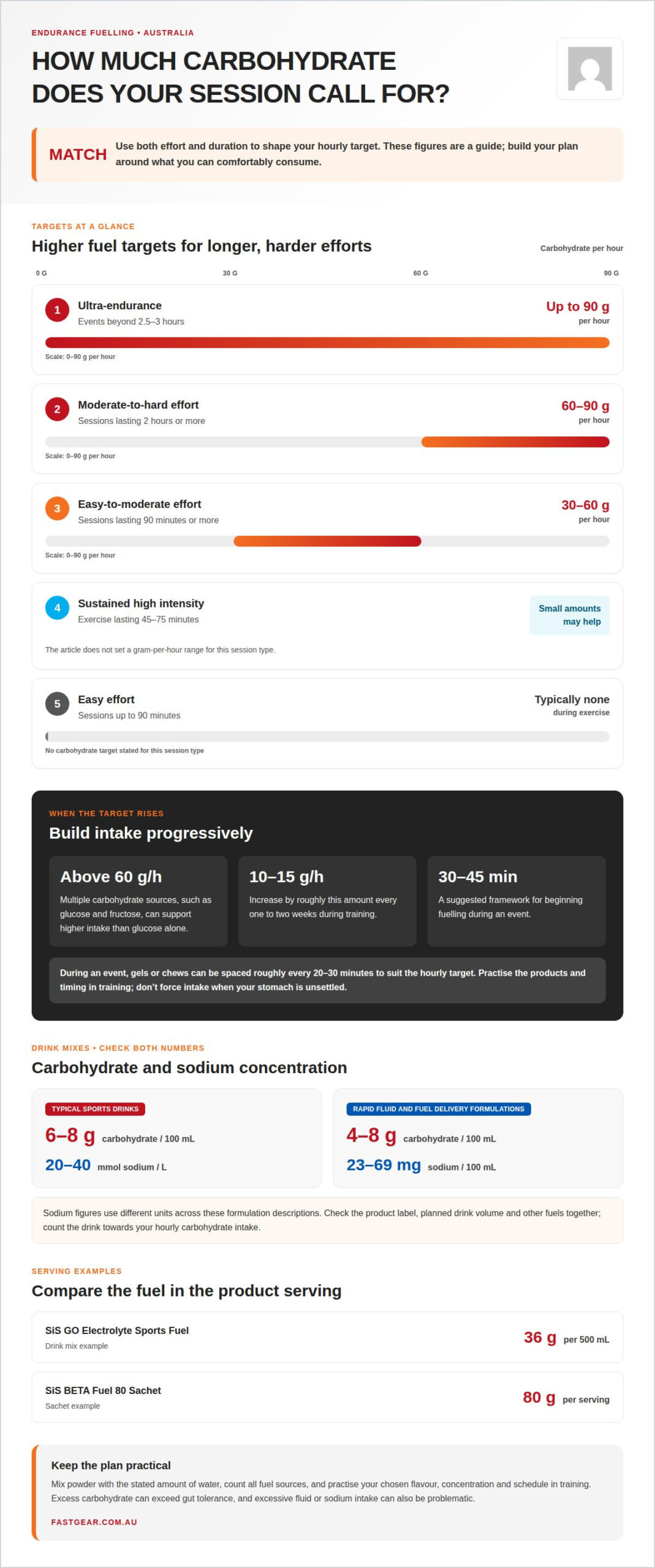
Race-day fuelling needs more than a carbohydrate target. For endurance sports electrolyte and carb mixes in Australia, match intake to effort: aim for 30-60 grams of carbohydrate per hour during easy-to-moderate sessions lasting 90 minutes or more, or 60-90 grams per hour for moderate-to-hard efforts lasting two hours or more. Typical sports drinks contain 6-8 grams of carbohydrate per 100 millilitres and about 20-40 millimoles of sodium per litre.
It’s easy to focus on carbs and overlook the electrolytes in your bottle. But drink composition matters: it affects how much fuel and sodium you take in as you race. Choose a plan that suits the event’s duration and intensity, and the products you can comfortably consume.
This guide explains how to set an hourly carbohydrate target, build a practical race-day fuelling plan and understand the role of electrolytes in sports drinks. You’ll also learn how to choose between drink mixes, gels and chews, so your strategy is clear before race day.
Key Takeaways
- Match your carbohydrate target to effort and duration: easy-to-moderate endurance sessions of 90 minutes or more call for 30-60 grams per hour, while moderate-to-hard efforts lasting two hours or more call for 60-90 grams per hour.
- Compare the carbohydrate in gels, drinks, bars and sachets to build an hourly plan that suits how you prefer to fuel.
- For higher intake targets, combining glucose and fructose can help you take in more carbohydrate than relying on glucose alone; build tolerance gradually during training.
- Check both carbohydrate and sodium concentrations in sports drinks, then count the drink towards your race-day fuelling plan.
How Much Carbohydrate Do You Need, by Duration and Intensity?
A carbohydrate target is the amount of fuel to consume each hour during exercise. For sustained high-intensity exercise lasting 45-75 minutes, small amounts may help. At easy effort, sessions up to 90 minutes typically need no carbohydrate during exercise. From 90 minutes at easy-to-moderate effort, aim for 30-60 grams per hour. For moderate-to-hard exercise lasting two hours or more, target 60-90 grams per hour. Ultra-endurance events beyond 2.5-3 hours may call for up to 90 grams per hour.
Multiple transportable carbohydrates combine sources such as glucose and fructose for absorption through different pathways. Above 60 grams per hour, products using multiple carbohydrate sources can support gut comfort, carbohydrate oxidation and performance better than glucose-based products alone. Increase intake progressively in training rather than making race day your first high-fuel test.
Australian sports drink options include powder mixes and ready-to-drink products, alongside gels and chews. SiS GO Electrolyte Sports Fuel provides 36 grams of carbohydrate per 500 millilitres. A SiS BETA Fuel 80 Sachet provides 80 grams per serving. When choosing an electrolyte and carb mix for endurance sports in Australia, compare its serving size with your planned intake.
Drink concentration describes how much carbohydrate and sodium a drink provides for its volume. Typical sports drinks contain 6-8 grams of carbohydrate per 100 millilitres and about 20-40 millimoles of sodium per litre. Formulations designed for rapid fluid and fuel delivery generally contain 4-8 grams of carbohydrate and 23-69 milligrams of sodium per 100 millilitres. Compare the label with your planned hourly intake when selecting an endurance sports electrolyte and carb mix in Australia.
Use product nutrition information to compare carbohydrate and sodium content. Sports certification is a separate programme claim. SiS products are certified through the Informed Sport programme.
Too much carbohydrate can exceed your gut tolerance, while excessive fluid intake can dilute blood sodium. Excess sodium can also be problematic, so avoid stacking products without accounting for their combined intake. Build your plan around the event’s effort and duration, and the amounts you can tolerate.
How to Build Your Endurance Fuelling Strategy?
Build your plan around the event’s demands, then practise the timing and delivery method in training. For race day, map each fuel intake to the course and your chosen hourly target.
Glucose and Fructose Dual-source Fuelling
Dual-source fuelling combines glucose and fructose to supply carbohydrate through different absorption pathways. This approach can support intake towards 90-120 grams per hour, while glucose alone typically offers no extra performance benefit above about 60 grams per hour. Begin fuelling within the first 30-45 minutes of an event, then space gels or chews roughly every 20-30 minutes to suit your hourly target. Treat the schedule as a framework, not a reason to force intake when your stomach is unsettled. During training, build carbohydrate intake by roughly 10-15 grams per hour every one to two weeks. This gradual gut training lets you practise the chosen products and rhythm before race day.
Hydration and Fuelling Across Sports
A sports drink combines fluid and carbohydrate in a format you can sip during exercise. For a long training session, calculate the drink’s contribution from its label and the volume you plan to consume, then count gels or chews separately. Mix powder with the stated amount of water; changing the ratio also changes the drink’s concentration. Electrolyte carb mixes can suit running, cycling, triathlon and other endurance sports. Match the format to access: a bottle may work well on the bike, while a runner may prefer fuel that’s easy to carry and open on the move. In triathlon, plan how you’ll access fluids and fuel after each transition.
Testing Mixes and Managing Stomach Upset
Electrolytes in endurance sports drinks
Electrolytes and carbohydrate play different roles in a sports drink: electrolytes provide minerals, while carbohydrate supplies fuel. Check both figures on the label before deciding how a drink fits your race plan.
Electrolyte Components in Sports Drinks
Electrolytes are minerals that carry an electrical charge when dissolved in fluid. Sodium is a key electrolyte to assess in endurance drinks, while potassium and chloride may also be included. Check the label for the amount per serving and compare it with how much drink you plan to consume. Your total intake includes every bottle, gel or other product used during exercise.
Typical sports drinks contain about 20-40 mmol/L of sodium. Sodium concentrations of about 10-25 mmol/L can enhance palatability and voluntary fluid consumption during exercise. These ranges describe different formulation considerations, not a universal target for every athlete. A drink’s carbohydrate concentration also affects the overall mix: sports drinks range from 2% to 14% carbohydrate. Select a formulation that fits your fuelling plan, rather than choosing by sodium alone.
Australian Mix Costs per Serving
Cost per serving varies by product format, pack size and number of servings. A powder sachet, tub, ready-to-drink bottle and single-serve mix can each have a different cost per use, so compare the serving directions and pack quantity.
For a useful comparison, divide the product’s Australian retail price by the number of servings stated on its pack. Then consider what each serving provides: carbohydrate, sodium and, where relevant, fluid. A lower cost per serving doesn’t automatically make a mix the better race choice if its concentration or format doesn’t suit your plan. Assess the label against the event demands and your tested intake schedule.
What carbohydrate and electrolyte intake per hour is recommended for endurance sports?
An hourly carbohydrate target is the amount of carbohydrate consumed during each hour of exercise. For endurance exercise lasting 1-2.5 hours, aim for 30-60 grams per hour. For ultra-endurance events lasting more than 2.5-3 hours, intake may reach 90 grams per hour. Match the target to duration and effort, then include every drink, gel and chew in your calculation.
For hard endurance efforts lasting two and a half hours or more, the stated target is 80-120 grams per hour, best reached with dual-source products. Glucose-based intake above about 60 grams per hour typically adds no performance benefit on its own. Combining glucose and fructose supports higher total carbohydrate absorption, towards 90-120 grams per hour. These figures describe different effort and fuelling contexts, not one universal race target.
An electrolyte concentration is the amount of a mineral dissolved in a set volume of drink. Typical sports drinks contain about 20-40 mmol/L of sodium. Concentrations around 10-25 mmol/L can enhance palatability and voluntary fluid consumption during exercise. The amount of sodium consumed per hour depends on both the drink’s concentration and how much fluid you drink. Read the product label and account for all drinks in your plan.
To calculate hourly carbohydrate from a drink, multiply its carbohydrate per serving by the servings consumed that hour. Add the carbohydrate from gels or chews, then compare the total with your target. For example, a 500-millilitre serving providing 36 grams contributes 36 grams to that hour’s total. Keep fluid and carbohydrate calculations distinct: a sodium concentration is not itself an hourly intake recommendation.
Fastgear Australia: Compressport Trail Racing SS Tshirt
Fastgear Australia brings endurance nutrition and technical racing gear together for athletes preparing their race-day setup. The Compressport Trail Racing SS Tshirt is an apparel option for trail racing, while GU Energy Gel – Single and Clif – BLOKS Energy Chews are portable fuel formats to consider alongside your planned intake.
For carrying essentials, the Compressport Free Belt Pro is another option in the range. Choose gear and fuel to match your event format, carrying needs and tested fuelling routine. Include gels or chews only where they fit the carbohydrate plan you’ve practised, and organise your kit so fuel is accessible during the race.
Contact Fastgear Australia to explore these endurance racing options.
Make your next race plan ready to execute
A fuelling plan is useful only if it works in your race-day routine. Before your next event, decide how you’ll carry fuel, access it on course and keep your intake schedule practical. Think through transitions, bottle placement and when you’ll take each item. Small logistical choices can make a tested plan easier to follow under pressure.
Use your next training sessions to refine those details rather than overhaul everything at once. Keep a simple record of what you carry and how the setup works at race pace. This gives you a clearer basis for choosing an endurance sports electrolyte and carb mix in Australia, along with a format that suits your event. Keep the final setup familiar, accessible and consistent with the approach you’ve rehearsed.
For product options to support your race-day kit, contact Fastgear Australia about fuelling products. Build your setup with purpose, then head to the start line ready to execute.
Frequently Asked Questions
How Do You Put a Fuelling Strategy Together for Race Day?
Start with the event schedule and map where you can carry, access and consume each fuel. Assign drinks, gels or chews to specific race segments, including triathlon transitions. Check each item’s carbohydrate contribution against your planned hourly intake, then pack only what the schedule requires. Practise opening and carrying products at race pace during training so handling them doesn’t disrupt your effort.
How much sodium should endurance athletes consume per hour in hot conditions?
Set sodium intake by considering your sweat losses, fluid intake and the drink’s sodium concentration, rather than applying the same hourly amount to every hot-weather event. Check the label for sodium per volume, then calculate how much sodium your planned drink intake provides. Account for sodium in other products too. Heat, effort and individual sweat patterns all affect the overall plan, so practise your chosen approach in comparable training conditions.
Compare Australian endurance drink mixes by carbohydrate-to-sodium ratio and ingredients
Typical sports drinks provide 6-8 g of carbohydrate per 100 mL and 20-40 mmol/L of sodium; rapid-delivery formulations provide 4-8 g of carbohydrate and 23-69 mg of sodium per 100 mL. Check each label for sodium and carbohydrate sources; sodium, potassium and chloride may feature, and the SiS BETA Fuel range uses a maltodextrin-to-fructose ratio of 1:0.8.
