
Uncategorized
Ironman Bike Nutrition Setup Australia: Fuel and Hydration Reference
Oct
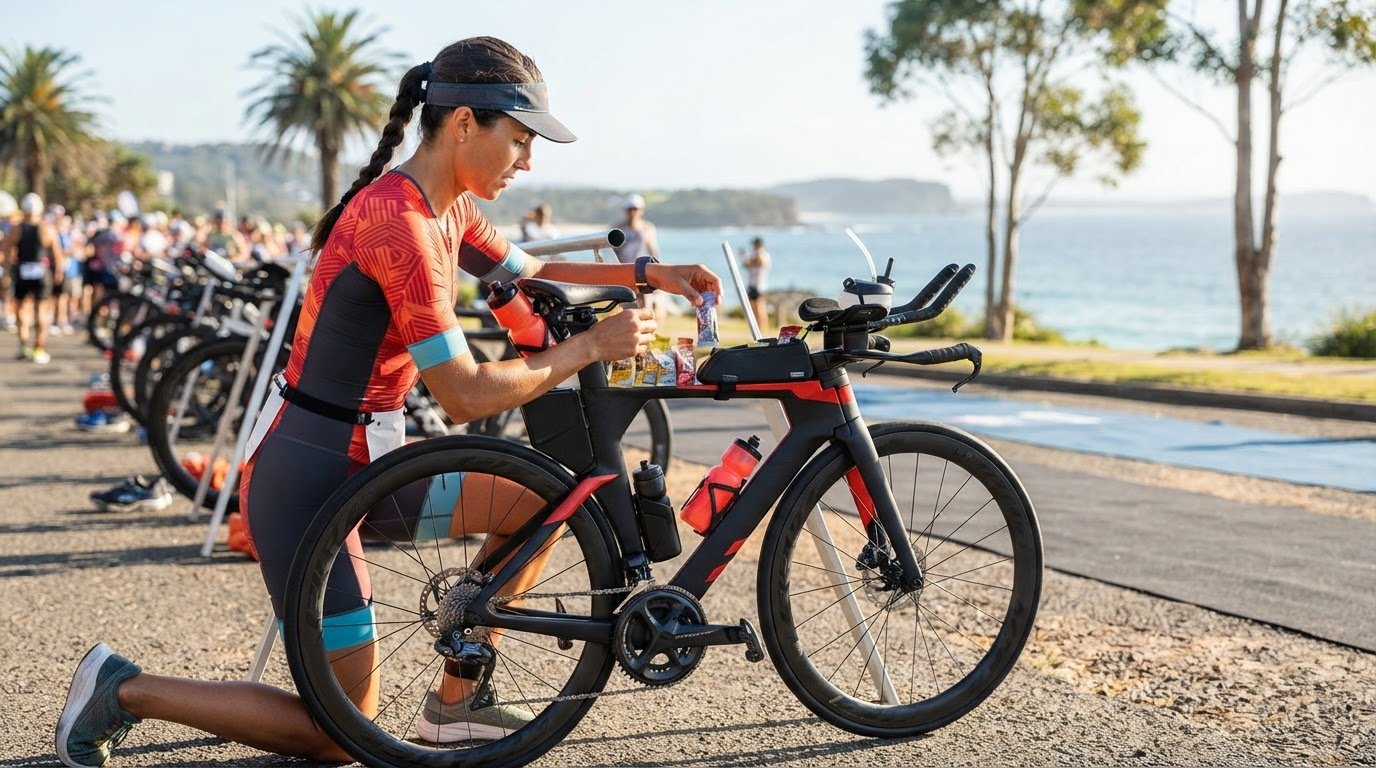
The swim-to-bike transition can make or break a nutrition plan. Sports Dietitians Australia recommends 1-1.2 grams of carbohydrate per kilogram of body weight per hour during an Ironman race. For an ironman bike nutrition setup in Australia, plan fuel and fluid to move smoothly from transition onto the bike, then adjust hydration for heat and your sweat losses.
You’ve done the work to get to the bike. Now make your setup practical under race pressure: fuel you can reach while riding, fluids suited to the conditions and a clear plan for aid stations. If race day is hot and sunny, reassess your nutrition plan rather than relying on a routine built for cooler weather.
This guide covers the swim-to-bike handover, bike-leg fuelling, hydration adjustments and using course bottles and run cups. It also explains how to organise portable fuel and fluids so your plan remains manageable through the ride and into the run.
Key Takeaways
- Adjust your hydration plan to race-day heat and your individual sweat losses, rather than relying on a fixed routine.
- Set up your swim-to-bike transition so fuel and fluid are easy to access as you start riding.
- Plan how you’ll use on-course bottles on the bike and paper cups at run aid stations.
- Build your bike fuel plan around manageable portions, with course-station Maurten gels as a possible back-up at IRONMAN Western Australia.
Adjusting hydration for hot weather and sweat losses
Hydration planning means matching fluid intake to race conditions and your individual losses. For an ironman bike nutrition setup in Australia, consider heat, your sweat losses and access to course fluids separately.
Hot-weather hydration adjustments
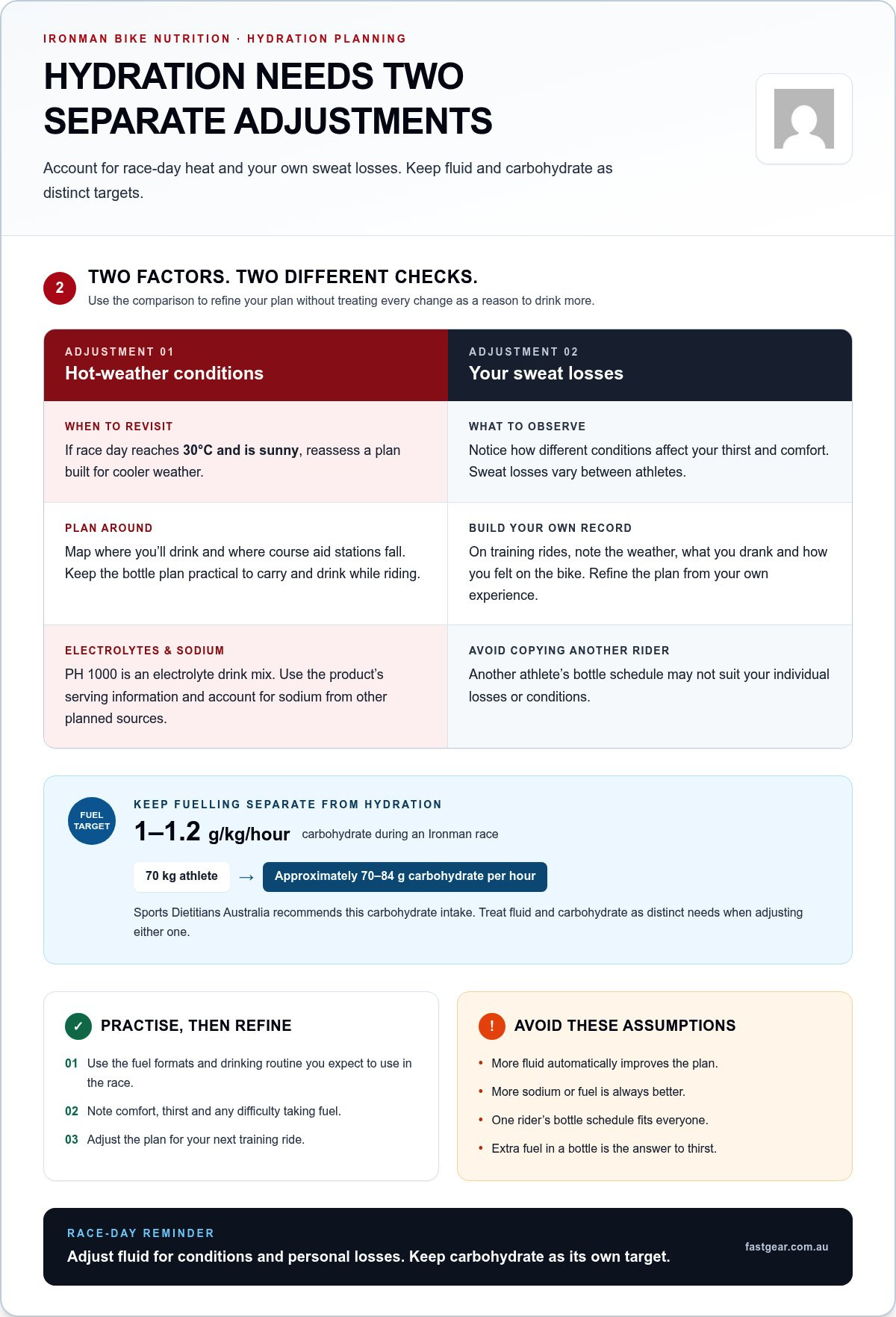
Hot-weather hydration adjustment means adapting fluid intake to warmer race conditions. Revisit your plan if race day reaches 30 degrees and is sunny. Heat can increase fluid losses, so map where you’ll drink and where course aid stations fall. Don’t simply add more fuel to a bottle to solve thirst. Precision Fuel & Hydration PH 1000 is an electrolyte drink mix; include its sodium content in your plan using the product’s serving information. Consider how much sodium you’ll take from other sources, too. A bottle plan should remain practical to carry and drink while riding.
Sweat-loss adjustments
Sweat-loss adjustment means tailoring fluid intake to the fluid you lose while exercising. Use training rides to observe how different conditions affect your thirst and comfort, then refine your race plan. Record the weather, what you drank and how you felt on the bike. Sweat losses vary between athletes, so another rider’s bottle schedule may not suit you. Sports Dietitians Australia recommends 1-1.2 grams of carbohydrate per kilogram of body weight per hour during an Ironman race. For a 70-kilogram athlete, that is approximately 70-84 grams of carbohydrate per hour. Treat carbohydrate and fluid as separate targets when changing either one.
Separating hydration from fuelling
Separating hydration from fuelling means planning fluid and carbohydrate as distinct needs. This lets you adjust one without automatically changing the other. Australian options include gels, drink mixes and electrolyte products from brands such as Maurten, GU, SIS and Tailwind; prices vary by product and pack format. For PH 1000, account for the sodium listed for its prepared serving alongside other sodium sources. Practise your bike nutrition plan during training, using the same fuel formats and drinking routine you expect to use in the race. Note comfort, thirst and any difficulty taking fuel, then adjust the plan for the next ride. Risks include drinking beyond sweat losses, overlooking sodium from multiple products, or taking carbohydrate faster than you can tolerate. Avoid assuming that extra fluid, sodium or fuel automatically improves your plan.
Fuel and fluid at the swim-to-bike transition
The swim-to-bike transition is the handover from the swim course to the bike leg. In an Ironman, it connects a 3.8-kilometre swim with a 180-kilometre ride, so plan the first moments on the bike before race day.
Lay out what you need in the order you’ll use it. Keep bike fuel within easy reach and secure fluids in their usual holders. A clear setup means less searching and handling once you’re moving. Practise the whole sequence in training, including putting on your helmet, collecting your bike and starting to ride before taking fuel.
Your pre-race meal also affects what you need to carry through transition. The suggested meal is eaten about 2-2.5 hours before the race and contains 1.5-2 grams of carbohydrate per kilogram of body weight. Treat that meal as preparation, not a replacement for your bike-leg fuelling plan. At transition, use the products and containers you’ve practised with, rather than adding a new format on race morning.
Use this sequence to keep the handover deliberate:
- Before the swim: Arrange bike fuel and fluid so each item has a set place.
- At your bike: Put on your helmet and collect your bike before moving towards the bike course.
- Once riding: Start your planned fuelling and drinking routine when it’s practical and safe.
Keep your first actions on the bike simple. A gel, chew or drink mix may suit your plan, depending on what you’ve practised and how you’ll carry it. Make sure you can reach each item without compromising bike handling. Don’t rely on remembering a complicated sequence after the swim.
Include the transition in a full-course rehearsal, not just a separate bike session. Practise moving from swim gear to cycling equipment, then follow your intended first-bike routine. For IRONMAN Western Australia, the bike leg leads into a 42.2-kilometre run, so avoid using transition to improvise a plan that should already be familiar.
On-course bottles and run-course cups
On-course bottles are fluids supplied at bike aid stations; run-course cups are drinks served at run aid stations. At IRONMAN Global Series events, PH 1000 is served pre-mixed in bottles on the bike and in paper cups on the run.
Bike-course bottles
A course bottle can replace some fluid you carry from transition. Plan around the event’s aid-station locations and the bottle format provided, rather than assuming every station offers the same setup. Include PH 1000 in your hydration plan, accounting for its sodium alongside any other planned sources.
Practise collecting and handling a bottle during training rides. Know where you’ll stow it and how you’ll drink while keeping control of your bike. If you’re also carrying your own drink, decide how course bottles fit into the plan. This helps you avoid treating an aid-station bottle as an unplanned extra.
Run-course cups
A run-course cup is a paper cup of drink supplied at a run aid station. At IRONMAN Global Series events, switching from bike bottles to run cups means adapting your drinking routine after transition.
Practise taking a cup, drinking while moving and disposing of it safely during training. Based on what you’ve rehearsed, decide whether to slow briefly or drink at your usual pace. A paper cup won’t offer the same grip or control as a bike bottle. Keep planned run fluids and fuel distinct, with a clear role for each.
Build the handover into your race plan:
- Match your bike fluid plan to the event’s bottle stations.
- Practise bottle handling on the bike before race day.
- Rehearse drinking from a paper cup during a run.
- Account for PH 1000 and other planned sodium sources together.
Course supplies are part of the plan, not a reason to improvise. Treat the bike bottle and run cup as separate formats, then practise each one in conditions that reflect your race. That preparation makes it easier to use the supplied PH 1000 as intended and carry your hydration strategy through both legs.
What nutrition should you take on the bike leg of an Ironman?
Bike-leg fuelling is a planned intake of carbohydrate during the ride. For a 70-kilogram athlete, that is approximately 70-84 grams hourly. Spread your target across fuel formats you’ve practised, rather than relying on one large serving.
Maurten GEL 100 provides 25 grams of carbohydrate per sachet, while Maurten Gel 160 provides 40 grams per serving. Maurten GEL 100 and GEL 100 CAF 100 use a fructose-to-glucose ratio of 0.8:1. Each GEL 100 CAF 100 serving contains 100 milligrams of caffeine. One pack of Maurten Solid 160 contains 40 grams, divided into two 20-gram servings. These formats let you build a combination around your hourly target.
For example, a 70-kilogram athlete targeting 70-84 grams could combine gels, drink mix or chewable fuel, then total the carbohydrate from each serving. Check serving information and keep the arithmetic simple enough to follow while riding. Don’t count a product twice if it contributes to both your drink and fuel plan.
At IRONMAN Western Australia, athletes can collect Maurten gels from on-course fuel stations. Treat them as planned fuel or back-up, not an unexpected bonus. Decide how a course gel fits your intake and whether it replaces fuel you’re carrying. That way, you can keep track of your carbohydrate intake when swapping in a course serving.
Practise your chosen combination on training rides. Test the product format, timing and access while riding, then note what you consumed and how manageable the routine felt. Adjust your choices if carrying or opening a product interrupts your ride. Keep the plan straightforward enough to follow on race day, and account for course-station gels as alternatives.
Build your race-day combination from familiar fuel formats and clear serving totals. Explore bike-leg energy options to compare formats for your setup.
Fastgear Australia: Compressport Trail Racing SS Tshirt
Fastgear Australia brings together endurance nutrition and racing gear to help you build the setup you’ve planned. For bike-leg fuelling, consider GU Energy Gel – Single and Clif – BLOKS Energy Chews as portable options alongside your practised carbohydrate plan. Choose products you’ve tested in training and organise them so they’re easy to reach during the race.
The Compressport Free Belt Pro is an option for carrying essentials, while the Compressport Trail Racing SS Tshirt adds apparel to your race kit. Choose what fits your plan and race-day needs. Practise carrying and accessing your chosen fuel before competition so you’re familiar with your setup.
Explore Fastgear Australia’s endurance nutrition and gear to put together your race setup.
Make your race plan ready for the next ride
Turn your race strategy into a routine you can follow without second-guessing. On your next training ride, rehearse the full sequence, from collecting your bike to reaching for fuel and managing course-style drinks. Note what felt straightforward and what disrupted your rhythm. Then refine one part at a time, so you can tell which changes make the routine easier to follow.
A dependable ironman bike nutrition setup in Australia comes from deliberate preparation, not last-minute changes. Keep your chosen products and equipment consistent as race day approaches, and give every item a clear place in your setup. You’ll have a practical routine ready to take into competition.
Fastgear Australia offers endurance nutrition and racing gear to help you prepare your kit. Explore Fastgear Australia’s nutrition and racing gear as you finalise your setup. Stay focused, keep practising, and take your plan to the start line with confidence.
Frequently Asked Questions
How much fluid and sodium should you take per hour during an Ironman bike leg?
There’s no single hourly fluid or sodium target that suits every athlete. Base your plan on your sweat losses, race conditions and the sodium in your drinks or fuel. In hot, sunny weather, reassess the plan rather than automatically increasing intake. Add up sodium from each product, including electrolyte mixes, to understand how the overall plan fits together.
How can you calculate an Ironman bike nutrition plan from sweat rate and race conditions?
Use a representative training ride to estimate your sweat rate and adapt your plan to race conditions. Weigh yourself before and after the ride, and record what you drank and any urination to help interpret the change. Note the temperature, sun exposure and how manageable drinking felt. Repeat in different conditions, then use the closest match to guide race-day fluid planning.
How should you set up and carry bottles, gels and nutrition on an Ironman bike?
Secure bottles in their intended holders and store gels or chews where you can reach them without searching. Before each ride, check that lids are closed and packets won’t shift or obstruct your movement. Keep wrappers with you until you can dispose of them appropriately. Practise accessing each item while riding in a safe training environment, so the setup feels familiar on race day.
What nutrition rules and bottle-discarding rules apply during Ironman bike legs in Australia?
Follow your event’s athlete guide for course rules and disposal arrangements. Carry wrappers to a designated disposal point, and don’t discard bottles or packaging on the course. Plan your nutrition around permitted products and aid-station procedures. If course instructions specify where you can discard items, build that location into your race plan before the start.
What bike nutrition products are available in Australia and how much do they cost?
Australian options include gels, drink mixes and electrolyte products from Maurten, GU, SIS and Tailwind. Prices vary by product and pack format.
