
Uncategorized
Aero Saddle for Long Distance Triathlon: Buyer’s Guide

Oct
The most comfortable road saddle may become a liability when you rotate forwards onto the aerobars. In a long-course race, your pelvis and contact points change. Choosing an aero cycling saddle for long distance triathlon means matching support to a position you can sustain, not chasing a popular shape or a bold product claim.
If extended time in aero brings pressure, discomfort or uncertainty about sizing, you’re not alone. Saddle choice is personal, and a new model can’t compensate for a position that doesn’t suit you. Fit, anatomy and riding posture all matter.
This guide gives you practical criteria for shortlisting saddles, comparing specifications and planning a structured test well before race day. You’ll learn what to consider in saddle shape, relief features and adjustment, and how to assess comfort in training rather than relying on a brief first impression.
Fastgear Australia offers the Wove M8 Road / Tri Saddle as one option to assess against your fit and setup. Check its current product specifications, then validate your choice in the aero position you plan to race in.
Key Takeaways
- Choose support for the aero position you can hold, rather than assuming an aerodynamic shape will suit every rider.
- Compare saddle width, nose shape, padding and cut-out against your fit needs. Treat these as features to assess, not guaranteed comfort fixes.
- Use the same checklist when comparing an aero cycling saddle for long distance triathlon, and verify product specifications before drawing conclusions.
- Test progressively and record saddle position and ride conditions to make more reliable adjustments before race day.
- Assess the Wove M8 Road / Tri Saddle against your setup and check its current specifications before deciding if it’s suitable.
Why an aero cycling saddle for long-distance triathlon must suit your race position
Holding an aero position for the bike leg of a long-course triathlon takes more than a low front end. You need to stay stable and supported through extended riding, without repeatedly sitting up, shifting forwards or searching for relief. A saddle’s aerodynamic profile matters only if you can maintain your intended position on it.
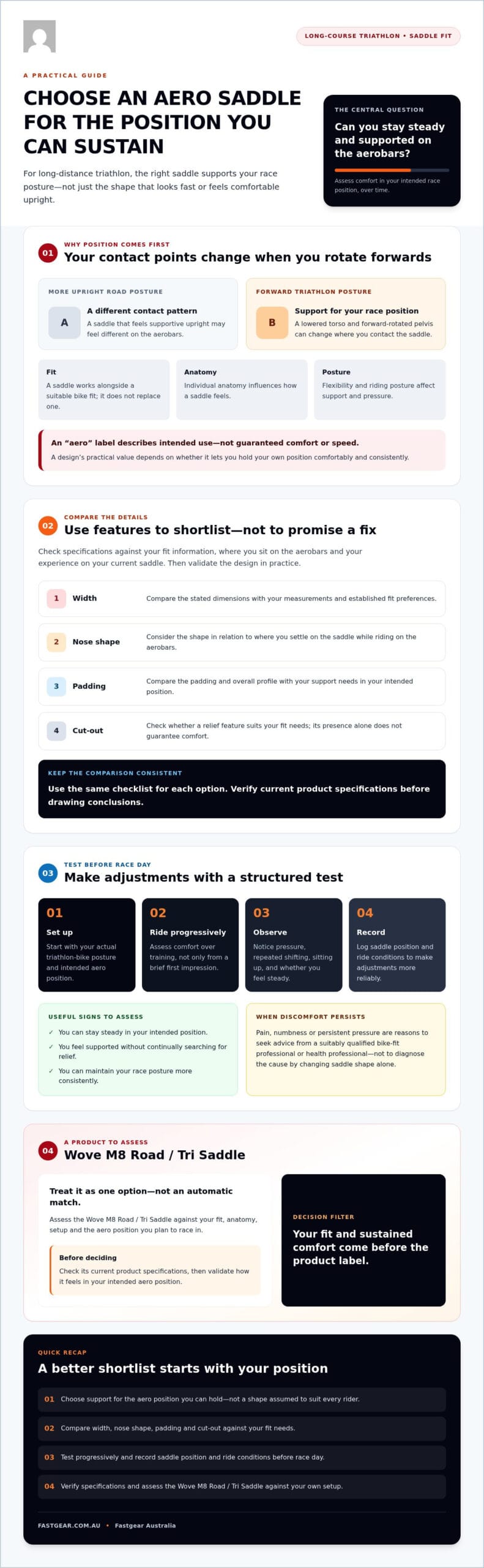
A triathlon-specific aero saddle is designed for a lowered torso and a pelvis rotated forwards, as riders commonly sit on aerobars. That posture changes where your body contacts the saddle compared with a more upright road position. Saddle shapes and features vary, so an aero label describes intended use, not a guarantee of comfort or speed. For bicycle saddle basics, including how common components and designs differ, see this overview of bicycle saddle design.
What makes a saddle suitable for long-distance triathlon?
Start with your actual triathlon-bike posture, not a product photo or a shape that works for another rider. Consider how far forwards you rotate your pelvis, where you settle on the saddle and whether you can hold your position without persistent pressure. A saddle that feels acceptable while sitting upright may feel quite different once you’re on the aerobars.
Discomfort can disrupt your rhythm. You may shift repeatedly, sit up more often or struggle to stay steady, making it harder to maintain a consistent race position. The right choice is individual: anatomy, flexibility and posture all influence how a saddle feels over time.
Saddle selection works alongside a suitable bike fit; it doesn’t replace one. If your position places uncomfortable pressure on the saddle, changing the saddle alone may not address the cause. Assess the contact point as part of your overall setup.
Is an aero saddle automatically faster?
No. A product label alone can’t establish how fast you’ll ride in real-world conditions. An aerodynamic design may be intended to support a forward riding posture, but its value depends on whether that shape lets you hold your own position comfortably and consistently. If discomfort keeps pulling you out of the aero position, the design intent may not translate into a useful outcome for you.
“A saddle’s aerodynamic intent is a design claim; your position and individual fit determine its practical value.”
Use that distinction to guide your shortlist. Assess an aero cycling saddle for long distance triathlon against the position you can sustain, not its name or appearance alone. Comfort isn’t a bonus feature. It’s part of the fit decision.
How saddle shape and your aero position affect long-distance comfort
Saddle shape only makes sense in relation to how you ride. In an aero position, your torso lowers and your pelvis may rotate forwards, changing how your weight is distributed across the saddle. The amount of rotation and resulting contact points vary between riders, so there’s no single ideal posture or saddle profile to copy.
Why aero-position fit can differ: An upright road posture and a forward triathlon posture place your body on the saddle differently. A shape that feels supportive while sitting upright may feel quite different once you settle onto the aerobars.
How does a triathlon position change saddle support needs?
Consider where you feel supported in the position you intend to race in, not just while sitting on the bike in the workshop. A rider who rotates further forwards may contact the saddle differently from someone with a more relaxed torso position. Neither posture is automatically right. The useful question is whether your setup lets you stay steady and supported.
Assess fit in your intended aero position. Note where pressure builds and whether you keep shifting. If you experience pain, numbness or persistent pressure, seek advice from a suitably qualified bike-fit professional or health professional rather than trying to diagnose the cause by changing saddle shape alone.
Which saddle features should you compare?
Use specifications to narrow the options, then assess how each design feels in practice. Compare width with your measurements and established fit preferences. Consider the nose shape in relation to where you sit on the aerobars, and check whether the overall profile supports that contact point.
- Width and shape: Compare stated dimensions with your fit information and current saddle experience. A wider or narrower option isn’t automatically better.
- Padding: Consider how its firmness and distribution feel under your contact points. More padding doesn’t guarantee greater comfort over a long ride.
- Cut-out or channel: Check its position and dimensions against where you experience pressure. A relief feature may suit one rider and feel unsuitable to another.
- Surface texture: Consider whether the cover helps you stay stable without restricting the small position changes you need during a ride.
Specifications help shortlist saddles; testing in your race position informs fit. Treat pressure-relief features as comparison points, not promises of comfort. Judge an aero cycling saddle for long distance triathlon by how its shape works with your posture over time.
Fastgear Australia offers the Wove M8 Road / Tri Saddle as one option to assess. Review its current specifications against your fit criteria, then explore the Wove M8 Road / Tri Saddle as part of your shortlist.
Compare aero cycling saddles for long-distance triathlon without chasing a “best” list
A useful comparison starts with your bike setup, not a universal ranking. Write down the position you plan to hold, your current fit measurements and any saddle features you already know work for you. Compare every candidate against the same checks. Separate measurable specifications from comfort impressions and marketing claims: a listed feature can help you shortlist, but it can’t prove that a saddle will fit or make you faster.
Which specifications matter when comparing triathlon saddles?
Check dimensions and installation details in the product’s current specifications. Compare width and length with your fit needs, and confirm the rail and clamp compatibility with your seatpost. Check whether the available fore-aft and tilt adjustment allows you to achieve your current setup. If a detail isn’t published, mark it for confirmation rather than assuming compatibility.
| Criterion | What to check | Question to ask |
|---|---|---|
| Fit dimensions | Published width, length and shape | Do these suit my measurements and established fit preferences? |
| Position support | Design details relevant to your intended aero posture | Can I assess support where I’ll sit on the aerobars? |
| Construction | Confirmed materials, padding and relief features | Which details are verified, and which are promotional descriptions? |
| Compatibility and adjustment | Rail dimensions, clamp requirements and adjustment range | Will it fit my seatpost and allow my required position? |
Apply the same checks to every option, including the Wove M8 Road / Tri Saddle, which Fastgear Australia sells. Its dimensions, construction and compatibility details aren’t specified here, so check the current product information before comparing those features or deciding whether it suits your setup.
How should you weigh comfort, support and aerodynamics?
Prioritise compatibility first, then your fit requirements and support in your planned aero position, followed by your comfort impressions from riding. Use previous fit experience to identify promising shapes, but treat reviews and design language as context, not proof of your personal outcome. A saddle described as aerodynamic still needs to work with your posture during sustained efforts.
For other equipment decisions that support your race setup, see this high-performance triathlon equipment guide. A clear shortlist makes the next step practical: confirm the specifications, then test suitable options in your own position.
How to fit and test an aero saddle before a long-distance race
A saddle needs to prove itself in training, in the position you plan to race. Use a staged process rather than making several changes at once. This gives you clearer feedback and time to reassess your setup before race day.
- Confirm your fit needs. Note your current saddle position, intended aero posture and the features or dimensions you’re seeking. Check that the shortlisted saddle’s confirmed specifications suit your seatpost and clamp. If key details aren’t listed, confirm them before purchase.
- Install it correctly. Follow the saddle and bike manufacturers’ installation instructions. Record the saddle’s height, fore-aft position and tilt so you can return to the original setup if needed. Don’t assume a new saddle should sit in exactly the same position as the old one.
- Test progressively. Start with a manageable ride, then build towards longer sessions in your intended aero position. Assess comfort and stability both on the aerobars and when changing position. Avoid making a race simulation your first test.
- Review and adjust. After each ride, note what you felt and change one setup variable at a time where practical. Repeat a similar ride before judging the effect of an adjustment.
What should you check during a saddle test?
Pay attention to where pressure occurs, whether it builds as the ride continues and how often you shift or sit up. Record the saddle position, ride duration, terrain, effort and time spent in the aero position. Keeping conditions as consistent as practical makes it easier to compare sessions and spot patterns. A new saddle may feel unfamiliar, but don’t treat persistent discomfort as something you must push through.
When should you reassess the setup or seek a bike fit?
Reassess if pain, numbness or ongoing pressure continues, or if a position change affects your stability or control. A suitably qualified bike fitter can review how your saddle and riding position work together. Avoid making a first-time saddle change close to an important race. Allow enough training time to evaluate the setup without assuming there’s a fixed adaptation period.
Choose your aero cycling saddle for long distance triathlon with enough time to install, test and review it before race day. Fastgear Australia sells the Wove M8 Road / Tri Saddle. Check its current specifications against your setup before deciding. Review the Wove M8 Road / Tri Saddle.
Is the Wove M8 Road / Tri Saddle right for your long-distance setup?
The Wove M8 Road / Tri Saddle is an option sold by Fastgear Australia, not a universal recommendation. Whether it suits you depends on the current product details and how they match your measurements, bike setup and intended race position. Don’t infer comfort or performance from the product name alone.
How can you assess the Wove M8 against your fit requirements?
Start with the current product listing. Check its published dimensions, construction, rail details and compatibility information, then compare those specifications with your fit notes and seatpost requirements. Assess the saddle in relation to the position you plan to hold on the aerobars, not just your upright posture.
The product information here doesn’t confirm specific Wove M8 dimensions, materials, adjustment range or fit characteristics. If a detail you need isn’t clear in the current listing, contact the retailer to confirm it before ordering. Treat unanswered specifications as a reason to pause, not as a detail to guess.
What should you confirm before buying a triathlon saddle?
Use this quick pre-purchase check before choosing an aero cycling saddle for long distance triathlon:
- Fit: Do the verified dimensions align with your measurements and established fit preferences?
- Position: Does the shape seem appropriate for your intended riding posture, and have you planned a training test?
- Compatibility: Do the saddle’s confirmed rail specifications work with your seatpost and clamp? Check both manufacturers’ information.
- Purchase details: Have you reviewed the retailer’s current product information and applicable purchase terms?
Once those checks are complete, compare the confirmed details with your shortlist and decide whether the Wove M8 is worth assessing in your setup. If key compatibility or fit information remains unclear, ask the retailer before placing an order. That can help prevent a mismatch and keep your race preparation on track.
Saddle selection is one part of the build-up. For a separate look at fuelling considerations, read the cycling nutrition performance guide.
Make your saddle choice part of race-ready preparation
The right saddle supports a sustainable race position. It isn’t necessarily the one with the most compelling claims or the highest ranking. Compare verified dimensions and compatibility with your fit requirements, then test your shortlist in the aero position before race day. Fit and comfort are individual, so use your training experience to guide the final decision.
If you’re considering an aero cycling saddle for long distance triathlon, Fastgear Australia lists the Wove M8 Road / Tri Saddle among its triathlon and endurance sports equipment. Check the current product specifications against your setup before deciding whether it’s suitable.
Explore the Wove M8 Road / Tri Saddle and check whether its specifications suit your setup before making your choice.
Frequently Asked Questions
Is an aero saddle better for a long-distance triathlon?
Not automatically. An aero saddle is designed with a forward riding position in mind, but the label doesn’t prove it will feel comfortable or make you faster. The right choice depends on your anatomy, bike fit and the position you can sustain. Assess a saddle on your triathlon bike in the aerobars, not only while sitting upright. Comfort and support are individual, so there’s no universally best shape.
How do I choose a saddle for long-distance triathlon?
Match verified saddle specifications to your fit requirements and intended race position. Compare width, length, shape, rail compatibility and adjustment options, then consider how padding and pressure-relief features align with your preferences. Use previous saddle experience to build a shortlist, but test suitable options in your aero position before race day. An aero cycling saddle for long distance triathlon should work with your setup, not just look right on paper.
Can I use a road bike saddle for a triathlon?
Yes, if it supports you comfortably in the position you’ll ride during the triathlon and is compatible with your bike. A road saddle that feels fine upright may feel different when your torso lowers and your pelvis rotates forwards on the aerobars. Test your current saddle in that posture before replacing it. If discomfort persists, reassess the overall fit rather than assuming a different saddle alone will solve it.
What saddle width should I choose for a triathlon bike?
Choose a width that suits your measurements and supports you in your intended riding position. Don’t select a saddle by width alone or assume a particular measurement will work for every rider. Check how the manufacturer measures saddle width, compare it with your fit information and established preferences, then assess the saddle on the bike. If you’re unsure how to interpret measurements, seek advice from a qualified bike fitter.
Are short-nose saddles good for long-distance triathlon?
They can suit some triathletes, but a shorter nose isn’t a guarantee of comfort or better support. Saddle shape interacts with your anatomy, pelvic rotation and position on the aerobars. Compare the published dimensions and profile with your fit needs, then test the saddle during training. Pay attention to whether you can stay stable and supported over sustained efforts. Another rider’s positive experience doesn’t confirm it will suit your setup.
How can I test a new triathlon saddle before race day?
Install it according to the manufacturer’s instructions and record its position before riding. Begin with a manageable session, then build towards longer rides in your intended aero posture. Note pressure points, position changes and whether discomfort develops as the ride continues. Keep ride conditions similar and change one setup variable at a time where practical. Start well before race day so you can evaluate the saddle without rushing or relying on a fixed adaptation period.
Does a more expensive aero saddle guarantee better comfort?
No. Price alone can’t confirm that a saddle will fit your body or feel comfortable in your race position. Materials and construction are product specifications, while comfort is an individual experience shaped by fit, posture and personal preference. Compare verified details against your requirements, then test the saddle in training. If you experience persistent pain or numbness, reassess your setup and consider advice from a qualified bike fitter or health professional.
