
Uncategorized
Short Nose Triathlon Bike Seat Australia: A Practical Buying Guide
Sep
Could a shorter saddle make your aerodynamic position less comfortable? It can, if its support doesn’t suit your anatomy and how you sit on the bike. A short-nose design may help some riders rotate their pelvis forwards in an aero position, but it isn’t a guaranteed fix for pressure or discomfort.
If you’re searching for a short nose triathlon bike seat australia, comparing product shapes on a screen can make the choice difficult. Saddle length alone won’t tell you whether the width, support and profile will work for your position or feel comfortable over race distance. Discomfort can also point to saddle height, tilt or another aspect of bike fit, rather than the saddle itself.
This guide offers a practical checklist for assessing saddle shape and fit, including sit-bone support, pelvic rotation and pressure points. You’ll also learn what to check before deciding whether the Wove M8 Road / Tri Saddle belongs on your shortlist. The aim is a more informed comparison, not a one-size-fits-all answer.
Key Takeaways
- Use your intended triathlon position to judge whether a saddle’s support profile and shape suit your contact points.
- Separate confirmed product specifications from personal fit considerations, so assumptions don’t stand in for evidence.
- Before changing saddles, review setup factors such as saddle height and tilt, as well as clothing and adaptation.
- Use a practical checklist to assess fit, compatibility and product details when comparing a short nose triathlon bike seat australia.
- Compare the Wove M8 Road / Tri Saddle with your criteria, then verify its current specifications and manufacturer guidance.
What does a short-nose triathlon bike seat change in an aero position?
Saddle suitability depends on your riding position, contact points and personal fit, not the saddle’s label. In a forward-leaning triathlon posture, you may contact the saddle differently than when sitting upright. Assess how it supports you on the extensions before deciding whether its shape works for you.
How an aero triathlon position changes saddle contact
As your torso lowers and your pelvis rotates forwards, the pressure and contact you feel on the saddle can shift. You may rely more on the forward part of the saddle than in a more upright recreational position. The exact pattern varies with your proportions, mobility, position and setup.
That’s why a saddle that feels comfortable on an easy upright ride may feel different in your race position. There’s no single posture or contact point every triathlete should aim for. Use your intended position as the reference, and notice whether you feel stable and supported without persistent pressure or rubbing.
What “short nose” describes, and what it cannot tell you
A short-nose saddle has a shorter front section than a traditional longer-profile saddle. That describes its shape, not whether it will feel comfortable. Nose length is only one part of the design. Width, profile and support also matter, but compare those details only when the manufacturer’s specifications are available.
A shorter nose alone can’t tell you how the saddle will suit your anatomy or feel over race distance. Two designs described as short-nose may still differ in their overall shape and support. For a foundation in saddle terminology and parts, see this overview of the bicycle saddle.
When comparing options returned by a short nose triathlon bike seat australia search, look beyond the product name and appearance. Check published dimensions and design details, then consider how they relate to your position and contact points. If specifications aren’t clear, don’t assume the shape or fit from a product image.
The practical test is position-specific: assess how you feel in the aero posture you plan to hold, rather than choosing by nose length alone. This gives you a stronger basis for comparing options, while leaving individual fit and comfort to guide the final decision.
Which short-nose saddle features matter for triathlon riding?
Build your shortlist around how a saddle supports you in your intended riding position, not nose length alone. Width, profile and overall shape influence where you make contact, but a specification sheet can’t predict comfort for every rider. Compare documented details with your fit requirements. Treat missing information as something to verify, not guess.
Saddle shape, width and support: what to compare
Use this framework to separate published facts from personal fit questions. For the Wove M8 Road / Tri Saddle, check current product details before drawing conclusions about its shape, dimensions, materials or intended fit.
Attribute: Width. Verify: The manufacturer’s stated dimensions. Fit question: Does the support feel appropriate for your contact points in your aero position?
Attribute: Profile and shape. Verify: The product description, diagrams and measurements. Fit question: Does the form provide stable support without unwanted pressure or rubbing?
Attribute: Support profile. Verify: The manufacturer’s design and intended-use guidance. Fit question: Does it suit your posture and how you sit during triathlon riding?
Wove M8 Road / Tri Saddle: Confirm its shape, width, support and intended-fit details against current product information.
Compare the same attributes across each option. A wider saddle isn’t automatically more comfortable, and a shorter nose doesn’t guarantee better support. Cyclingnews’ guide to triathlon-specific saddles offers another reference point, but your position and fit remain central to the decision.
Compatibility with your bike and riding setup
Fit starts with your body, but the saddle also needs to work with your bike. Before choosing, confirm the rail details and seatpost clamp compatibility against the saddle manufacturer’s information and your bike documentation. Don’t assume compatibility from appearance or from another saddle you’ve used.
Check whether the saddle can be positioned appropriately for your triathlon setup. Review the manufacturer’s guidance on permitted adjustment and installation. If you can’t confirm a fit or compatibility detail, pause before buying and seek clarification from the manufacturer or consult your bike documentation.
For a short nose triathlon bike seat australia shortlist, record each candidate’s confirmed specifications beside your fit questions. Fastgear lists the Wove M8 Road / Tri Saddle among its endurance sports offerings. You can review Fastgear’s endurance-sports range and assess the saddle once its current details are clear.
Will a short-nose triathlon saddle fix discomfort, or is fit the issue?
Not necessarily. A different saddle shape may change where and how you’re supported, but it won’t automatically resolve discomfort. Pressure can relate to the saddle’s shape or width, but your position, setup, cycling clothing and time spent adapting to a new position can also affect how a ride feels. Treat a saddle change as one possible adjustment, not a guaranteed fix.
Signs your current setup needs more than a new saddle
Start by noting what you feel, where it occurs and when it begins. Does discomfort appear only in the aero position, build gradually during a ride, or follow a recent setup change? Record whether it feels like rubbing, concentrated pressure or general discomfort. These notes can help you discuss the issue without assuming saddle length is the cause.
Review your riding position and setup as well as the saddle. Saddle height or tilt, how far forward you sit, and whether you can comfortably hold your intended position may all be relevant. Clothing and adaptation matter too: a different kit or a new position can alter contact and feel. Where practical, change one factor at a time so you can better identify what affects the issue.
If pain, numbness or recurring discomfort persists, seek advice from a qualified bike fitter. Don’t try to diagnose the cause from saddle shape alone. A fitter can assess your position and setup. Ongoing symptoms may also warrant advice from an appropriate health professional.
Short-nose saddle benefits and limitations to weigh
A short-nose design may suit a rider whose triathlon position places them farther forward on the saddle, provided the saddle’s width and support match their needs. That potential advantage is individual. A shape that works for one rider may not provide the right contact or stability for another, and product dimensions alone can’t predict comfort.
Choosing by appearance or nose length won’t establish whether a saddle suits your anatomy, can be positioned correctly on your bike or will feel appropriate over race distance. Confirm the manufacturer’s specifications and compatibility guidance, then assess the saddle in your intended riding position if you can.
When comparing options from a short nose triathlon bike seat australia search, separate what you know from what you need to test. A clear symptom record, a setup review and careful product checks can help you decide whether a new saddle is a sensible next step or whether fit deserves attention first.
How to test and choose a short-nose triathlon bike seat in Australia
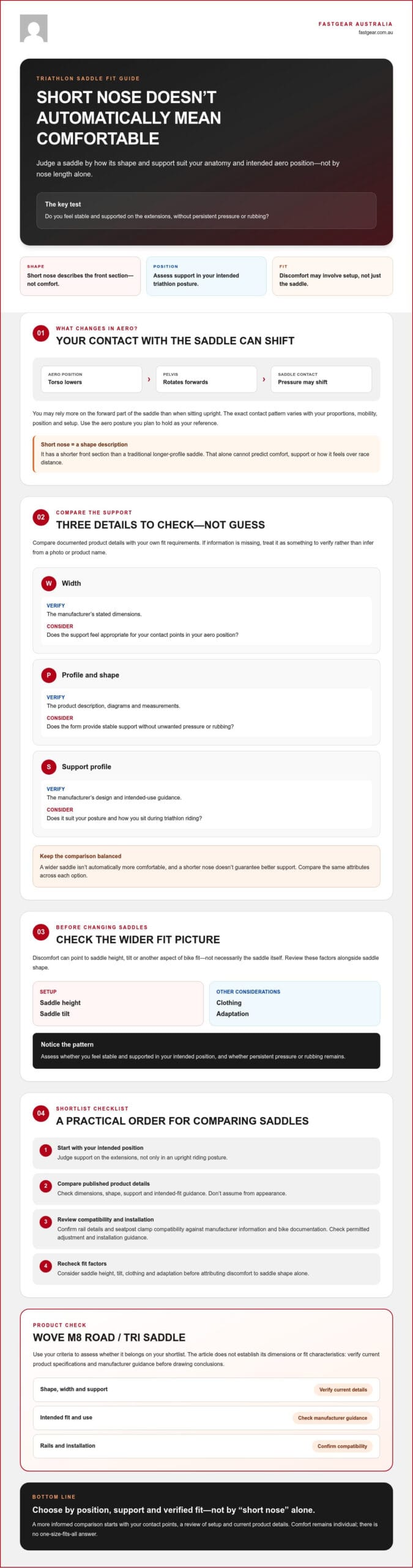
A useful shortlist starts with your riding position, not a product photo. Work through these checks before choosing a short-nose saddle. Confirm details that could affect fit or installation directly with the manufacturer or retailer.
A practical shortlist checklist before you buy
- Describe your setup. Record your bike type, intended triathlon position and how long you typically ride in that position. Note where and when discomfort occurs on your current saddle.
- List your fit priorities. Identify the contact or support issues you want to assess. Separate these from possible contributors such as position or clothing, so you’re clear about what a new saddle might address.
- Compare verified details. Check each candidate’s published dimensions, shape and manufacturer fitting guidance. Use the same criteria for every option, and don’t infer specifications from a product image or name.
- Confirm compatibility. Check rail details, seatpost clamp compatibility and whether the saddle can be positioned as required for your setup. Use the manufacturer’s and bike’s documentation rather than assuming a match.
- Check the purchase conditions. Ask the retailer or manufacturer directly about any trial, return or fitting options. Policies can differ, so confirm the conditions before buying rather than relying on an assumption.
For further equipment context, read this high-performance triathlon equipment guide. Fastgear lists the Wove M8 Road / Tri Saddle among its offerings. Confirm its current specifications, compatibility details and manufacturer guidance before deciding whether it meets your shortlist criteria.
How to assess fit during a controlled test
If you can test a saddle, keep the comparison consistent. Use a familiar bike setup and your intended triathlon position. Make one change at a time, and avoid changing saddle position, clothing and riding posture together. That makes it easier to notice what may be influencing the result.
During and after each ride, note comfort, stability, pressure and rubbing. Repeat the test in comparable conditions, and consider how the saddle feels over the duration you need to assess rather than relying on a brief first impression. A positive result in one posture doesn’t automatically confirm suitability for another.
Stop testing and seek qualified professional advice if pain or numbness persists. Ready to compare your shortlist against confirmed product details? Explore Fastgear’s triathlon equipment, then verify the saddle information and purchase conditions before proceeding.
Is the Wove M8 Road / Tri Saddle right for your shortlist?
The Wove M8 Road / Tri Saddle is a saddle offering from Fastgear Australia, but its name alone can’t tell you whether it suits your body or triathlon setup. Treat it as a candidate to assess, not a guaranteed fit. The deciding factors are whether its verified shape and dimensions align with your contact needs, whether it can be installed and positioned on your bike, and how it feels in your intended riding position.
What to verify about the Wove M8 before deciding
Before comparing it with other options, check current product and manufacturer information. The listing may not provide every detail you need, so don’t infer dimensions, construction, fit features or stock status from the name or descriptions of other Wove saddles. Confirm:
- Dimensions and shape: Find the current measurements and product profile, then compare them with the support and contact area you’re looking for.
- Materials and construction: Check the confirmed materials and construction details rather than assuming a particular rail or shell design.
- Intended use: Look for current manufacturer guidance on whether the saddle is intended for your type of riding and position.
- Bike compatibility: Verify rail and seatpost clamp compatibility, plus whether you can position it appropriately for your setup.
- Purchase conditions: Confirm current availability and ask the retailer directly about any trial or return conditions. Don’t assume a test option or policy.
Compare those confirmed details with your shortlist priorities: your riding position, the contact or pressure concerns you’ve recorded, and any setup constraints. A product can match your checklist on paper and still feel different once you ride it. Suitability depends on fit, position and verified compatibility, not the saddle name alone.
A confident next step for Australian triathletes
If position or discomfort remains unresolved, consider advice from a qualified bike fitter before settling on a new saddle. That can help clarify whether your priority is a different saddle shape, a setup adjustment or a closer assessment of your riding position.
Ready to check the Wove M8 against your shortlist? Review current product information, confirm details that affect your setup, and decide on evidence rather than assumptions. Explore Fastgear’s triathlon equipment and assess whether the Wove M8 Road / Tri Saddle warrants a closer look.
Choose your next saddle with confidence
The right short-nose saddle is the one that works with your position, contact points and bike setup. Nose length alone can’t confirm comfort, and changing saddle shape won’t necessarily resolve discomfort caused by fit or setup. Compare verified dimensions and compatibility details, then assess how the saddle feels in your intended riding position.
If you’re weighing up a short nose triathlon bike seat australia option, keep your shortlist focused on evidence: your fit priorities, manufacturer guidance and any trial or return conditions you’ve confirmed. Persistent pain or numbness is a reason to pause testing and seek qualified advice.
Fastgear specialises in triathlon and endurance sports equipment and lists the Wove M8 Road / Tri Saddle. Check its specifications and current availability before deciding whether it meets your requirements. Explore Fastgear’s triathlon equipment and compare the product details with your shortlist. Make a considered choice, then build your confidence one ride at a time.
Frequently Asked Questions
What is a short-nose triathlon saddle?
A short-nose triathlon saddle has a shorter front section than a traditional longer-profile saddle. The term describes one part of its shape, not a guarantee of comfort or suitability. Width, overall profile and support also affect how it feels. For triathlon, assess those details in your intended riding position, because contact can differ from how you sit on a more upright recreational ride.
Is a short-nose saddle better for a triathlon bike?
Not for every rider. A short-nose shape may suit some athletes who ride in a forward-leaning position, but the right choice depends on individual anatomy, contact points and setup. Compare verified dimensions and manufacturer guidance, then judge whether the saddle supports you in your aero position. A shorter nose alone doesn’t establish comfort, stability or race suitability.
Can I use a short-nose road saddle for triathlon?
Possibly, if its design, fit and compatibility work for your triathlon setup. A saddle labelled for road riding isn’t automatically unsuitable, just as a triathlon label doesn’t guarantee a good fit. Check the manufacturer’s intended-use information, dimensions and installation guidance. If possible, assess it in your aero position and confirm that your bike’s seatpost clamp is compatible before deciding.
How do I know if a short-nose saddle fits me?
Assess it in the position you plan to ride, not by appearance alone. Look for stable support and note any pressure, rubbing or discomfort during the ride. Record where and when sensations begin, and compare the saddle with your current setup. A controlled test can help, but comfort is individual. If you’re unsure about position or setup, consider advice from a qualified bike fitter.
Will a short-nose saddle stop saddle discomfort?
No saddle shape can guarantee discomfort will disappear. Saddle width or profile may be part of the issue, but riding position, setup, clothing and adaptation can also affect comfort. Note the timing and location of discomfort, and review your setup before assuming nose length is the cause. Stop testing and seek qualified advice if pain, numbness or recurring discomfort persists.
What should I check before buying a triathlon saddle online in Australia?
Before buying, check current manufacturer dimensions, shape, materials and intended-use guidance. Confirm rail and seatpost clamp compatibility with your bike documentation, and make sure the saddle can be positioned for your setup. Ask the retailer directly about current availability and any trial or return conditions rather than assuming them. If you’re comparing a short nose triathlon bike seat australia option, use the same checklist for each candidate.
Is the Wove M8 Road / Tri Saddle suitable for every triathlete?
No. The Wove M8 Road / Tri Saddle is listed by Fastgear Australia, but that doesn’t mean it will fit every rider. Suitability depends on your anatomy, riding position and verified compatibility with your bike. Check current product dimensions, shape, materials and manufacturer guidance before deciding. Fastgear specialises in triathlon and endurance sports equipment, but its listing doesn’t confirm specific fit features or specifications.
