
Uncategorized
Ironman Triathlon Gear: The 2026 High-Performance Kit Guide
Sep
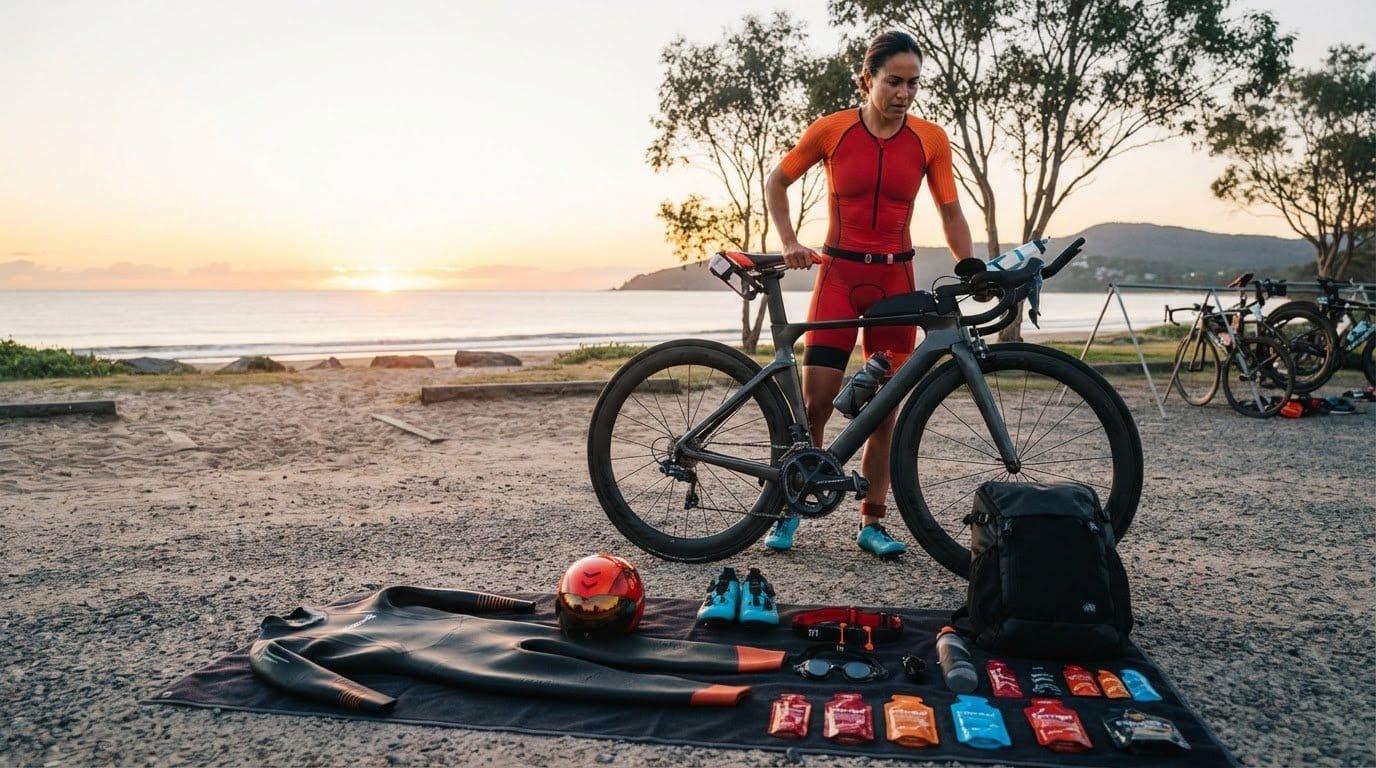
What if your biggest Ironman gain isn’t a harder session, but a better-matched setup? The right ironman triathlon gear works as a system: it helps manage discomfort, keeps nutrition accessible and supports you across all three legs.
An all-day race can expose weak points in your kit. Poor fit may lead to rubbing, an unsuitable saddle can make it harder to stay comfortable on the bike, and an untested fuelling plan may not suit you. Hydrogel and isotonic options serve different purposes, so practise with your chosen products rather than guessing on race day.
This 2026 guide covers swim essentials, technical apparel, tri-specific saddles, transition organisation and practical fuelling considerations, including how to compare hydrogel and isotonic gels. Use it to build a setup that feels comfortable, keeps key items within reach and has been tested in training. The aim isn’t to carry more gear. It’s to choose equipment and nutrition that work together when the race gets demanding.
Key Takeaways
- Choose ironman triathlon gear as a coordinated system, with fit, comfort and access considered across all three disciplines.
- Check swim and bike equipment for fit and function, then practise your setup to make the swim-to-bike transition more straightforward.
- Include race nutrition in your gear plan. Compare formats and practise your strategy before race day.
- Plan how you’ll carry and reach nutrition on the run, when fatigue can make simple tasks harder.
- Look for practical gains in details such as saddle comfort, wetsuit neck protection and an organised race kit.
Essential Ironman Triathlon Gear: Beyond the Basic Checklist
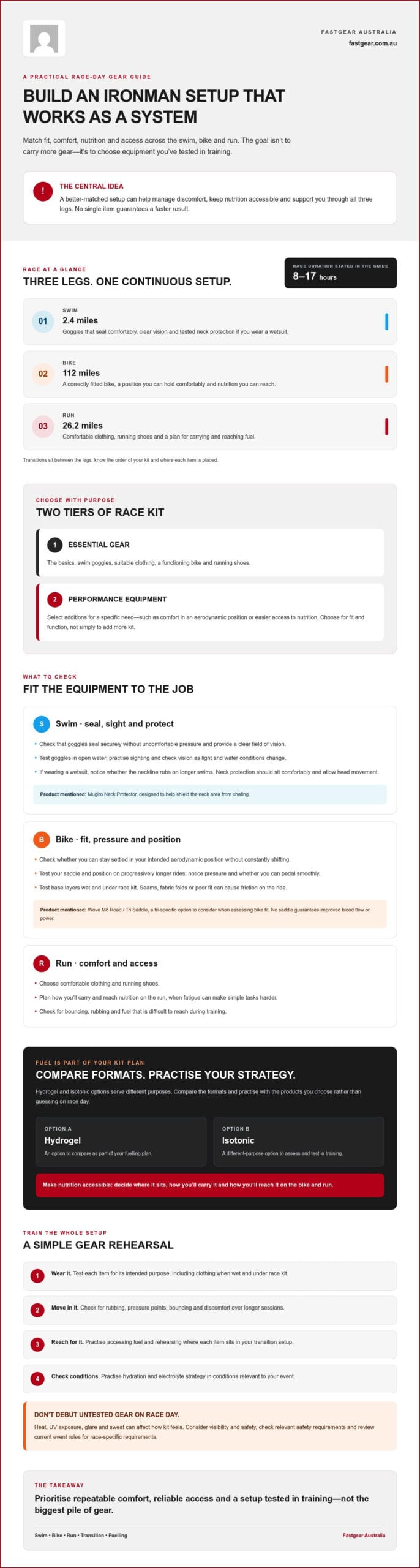
A basic kit may get you to the start line. Performance-focused equipment is selected for fit and function across a race that can occupy 8–17 hours. The Ironman Triathlon combines a 2.4-mile swim, 112-mile bike and 26.2-mile run. Over that distance, a small discomfort can become harder to ignore as the day progresses.
Think of your kit in two tiers. Essential gear covers the basics: swim goggles, suitable clothing, a functioning bike and running shoes. Performance equipment is selected to address specific needs, such as comfort in an aerodynamic position or easier access to nutrition. No item guarantees a faster result. A well-matched setup can, however, help you avoid distractions and maintain comfortable movement for longer.
Technical gear is equipment designed for a particular use, such as managing friction, supporting comfort on the bike or keeping nutrition within reach. Your setup spans all three legs: goggles and swimwear for the water; apparel, a correctly fitted bike and a tri-specific saddle for the ride; then running shoes, comfortable clothing and accessible fuel for the marathon. Transitions matter too. Rehearse the order of your kit and where each item sits, so you’re not searching for it under pressure.
The Performance Mindset for Ironman Gear
Marginal gains start with repeatable comfort, not collecting the most equipment. A saddle that suits your position and neck protection tested during longer swims may help you avoid persistent discomfort. If you plan to ride in an aerodynamic position, check whether you can stay settled without constantly shifting. Use training sessions to test each item for its intended purpose. Check for rubbing, pressure points, bouncing, hard-to-reach fuel and clothing that feels uncomfortable when wet. Don’t debut untested gear on race day.
Australian Racing Conditions and Gear Selection
Heat, UV exposure, glare and sweat can affect how your kit feels on the bike and run. Choose apparel that remains comfortable when damp, and practise your hydration and electrolyte strategy in conditions relevant to your event. No garment replaces an appropriate fuelling and hydration plan, but poor fit or persistent friction can add avoidable discomfort.
Consider visibility and safety alongside aerodynamics. Look for high-visibility details where practical, and check that equipment meets the relevant safety requirements for its intended use. Test fit and visibility in training, then review current event rules for race-specific requirements. Fastgear Australia’s range includes technical apparel, the Mugiro Neck Protector, endurance nutrition and the Wove M8 Road / Tri Saddle for athletes selecting kit to suit their own needs.
Technical Swim and Bike Equipment for Competitive Splits
Swim and bike equipment should work together from the first stroke to the first kilometre on the road. A comfortable base layer can simplify the swim-to-bike change, but test it wet and under your race kit. Seams, fabric folds or a poor fit can cause friction once you’re riding. Practise your transition sequence so each item is easy to find and put on without fuss.
For open water, look for goggles that seal securely without uncomfortable pressure and give you a clear field of vision. Mirrored or polarised lenses may be worth considering in bright glare, while variable light may call for a lens suited to the conditions you expect. The Triathlete’s gear guide offers broader equipment context, but you still need to check fit and visibility during your own swim sessions.
Open Water Swim Mastery: Goggles and Protection
Test goggles in open water, not just at home. Practise sighting and check that your view stays clear as light and water conditions change. If you wear a wetsuit, notice whether the neckline rubs during longer swims. The Mugiro Neck Protector is designed to help shield this area from chafing. Check that it sits comfortably and doesn’t restrict head movement, which you need for sighting and relaxed breathing.
Aerodynamic Bike Optimisation: The Wove M8 Saddle
Bike comfort matters because persistent pressure can make it harder to hold your intended position and pedal smoothly. The Wove M8 Road / Tri Saddle is a tri-specific option to consider when assessing your fit. Saddle shape and setup affect how pressure is distributed, but no saddle guarantees improved blood flow or power. Test your position on progressively longer rides and notice whether you can stay settled in the aero tuck without discomfort.
Good open-water and bike equipment isn’t defined by labels alone. Check fit, stability, visibility and how reliably each item performs in conditions similar to your event. On the bike, include the saddle, contact points and any kit that could shift or rub during a long ride. In the water, check that your goggles stay sealed and your neck remains comfortable through repeated sighting.
Fastgear Australia stocks swimming goggles, the Mugiro Neck Protector and the Wove M8 saddle as part of its triathlon-focused range. If you’re comparing options, explore triathlon gear and endurance nutrition, then use training sessions to establish what works before race day.
Precision Fueling: The "Fourth Discipline" Gear Strategy
Nutrition is part of your ironman triathlon gear, not an afterthought. Choose a format you can carry and use across the bike and run, and that suits your fuelling plan. A product you’ve tested in training is more useful than a theoretically ideal option you haven’t tried.
Gels, chews and drink powders serve different practical roles. Gels are compact and quick to access; chews let you take smaller pieces over time; powders can be mixed into a drink bottle. Compare the carbohydrate and sodium information on each label, then consider what you can comfortably consume and carry. Products aren’t automatically interchangeable, and a more concentrated option may not suit everyone.
Build an hourly carbohydrate and fluid plan around your needs, event conditions and product instructions. Practise it during long sessions, including the timing and combinations you intend to use. Keep track of what you take and how you feel. Sodium needs vary, so use product labels and individual guidance to shape your approach rather than relying on a generic target. Electrolytes can contribute to sodium intake, but shouldn’t be treated as a guaranteed fix for cramping.
Hydrogel and Isotonic Fueling: Maurten and SIS
Hydrogel refers to a biopolymer matrix designed to encapsulate carbohydrates, with the aim of supporting their passage through the stomach. It doesn’t guarantee gastric protection or better absorption for every athlete. Maurten gels use hydrogel technology, while SIS GO Isotonic Gels are formulated as an isotonic gel intended to be taken without extra water. Compare product directions and test each option at race-relevant effort. For a closer look at the range, see Maurten gel Australia.
Sustained Energy and Electrolytes
Drink powders offer another way to carry fuel. Tailwind and Maurten 320 can be mixed for liquid-based fuelling. Check each label for serving information and practise the mix you plan to use. UCAN gels provide a portable alternative to drink-based fuel, while chews offer another texture. Choose a combination you can tolerate and access without disrupting your pace.
Hydration planning can be especially relevant in warm conditions, but sodium replacement should be individualised rather than guessed. Review electrolyte guidance for athletes, then trial your approach in training. Fastgear Australia’s endurance nutrition range includes Maurten hydrogel products, SIS GO Isotonic Gels, Tailwind powders and UCAN gels. Practise your full plan before race day, including how you’ll carry and open each item.
Optimising the Run Leg and Transition Efficiency
The marathon leg changes what you need from your kit. Heat, humidity, accumulated fatigue and sweat can make seams feel harsher and unsecured items more distracting. Choose apparel that stays comfortable when damp and doesn’t restrict your stride. Practise in similar conditions where possible, and adjust your plan for the event forecast. Clothing can support comfort, but it can’t replace sensible pacing, hydration and heat management.
Carry nutrition you’ve already tested rather than making a last-minute change of format. Keep gels or chews secure and easy to reach, and check that you can open the wrappers without breaking rhythm. A belt can help organise fuel, but a poor fit or overloading may cause bouncing and rubbing. Run with your intended setup in training and adjust it until it stays stable without distracting you.
Performance Apparel: Compressport Technology
The Compressport Trail Racing SS Tshirt is an option to assess for long runs and race conditions. Prioritise a fit that allows free arm movement and remains comfortable as your body heats up. Check the seams, how the fabric feels against your skin and whether it becomes uncomfortable when sweaty. A technical label alone doesn’t guarantee ventilation or postural support, so test the shirt before race day.
Carrying Your Fuel: The Compressport Free Belt Pro
A race bib holder is designed to carry a bib, while a running belt can also organise items you need to access on course. The Compressport Free Belt Pro offers a way to carry tested gels or chews. Practise loading it so fuel stays secure and is easy to retrieve without stopping. Avoid carrying more than your plan requires. Explore practical endurance sports nutrition Australia options, then test how your chosen items fit and move in the belt.
Transitions are another opportunity to reduce avoidable stress. Rehearse T1 and T2 in training with your race kit laid out in the order you’ll use it. Keep run shoes, apparel and nutrition in clear, consistent positions. Check that nothing is tangled, difficult to reach or likely to shift when you move. A simple setup means fewer decisions when you’re tired.
Build your run kit around fit, access and comfort, then test it at race pace and during longer sessions. To compare the ironman triathlon gear featured in this section, explore Fastgear’s triathlon apparel and nutrition range.
Curating Your 2026 Ironman Race Kit with Fastgear Australia
A performance-focused race kit isn’t about packing the most gear. Choose equipment and nutrition that serve a clear purpose, work together and have proved comfortable in training. Comparing products by their intended use can help you avoid buying items that don’t suit your race plan.
Fastgear Australia focuses on technical triathlon gear and endurance nutrition, including products from Wove, Compressport and Maurten. These products serve different needs: a tri-specific saddle is a bike contact point, technical apparel is part of your run setup, and nutrition needs to fit your fuelling strategy. They aren’t a guaranteed performance formula. Test each item individually, then practise using your full setup together so you know what fits, feels comfortable and is easy to access.
Why Technical Curation Matters for Ironman
A curated range can help narrow your choices to equipment with a specific use, but your own training remains the test. Trial saddle comfort on long rides, check apparel for rubbing when damp, and rehearse your nutrition plan at race effort. Fastgear’s range brings together options from Wove, Compressport and Maurten. No single brand or product suits every athlete, so use your own fit and experience to guide your choice.
Fastgear offers gear and nutrition, not coaching or training plans. Use your build phase to identify what works, replace unsuitable items early and keep your final setup familiar. The aim is to arrive prepared, not to make last-minute changes based on claims you haven’t tested.
Race-Week Preparation
Before packing, allow time to inspect and trial any new equipment. Race week is for confirming your setup, not introducing untested variables.
Before packing, run through a practical checklist:
- Swim: goggles, race-day clothing and any tested neck protection.
- Bike: your chosen saddle setup, kit and planned nutrition.
- Run: comfortable apparel, shoes and fuel you’ve practised carrying.
- Transitions: lay out each item in order and check that key gear is easy to reach.
Fastgear’s focus is technical equipment and endurance nutrition for Australian athletes selecting their race kit. For options across those categories, explore Ironman race gear at Fastgear Australia. Choose carefully, test thoroughly and start race day with a familiar setup.
Build a Race Kit You’ve Tested and Trust
Your strongest setup is the one you’ve rehearsed. Choose ironman triathlon gear for a clear purpose, then test fit, comfort and access to fuel during training. A settled saddle, clothing that stays comfortable when damp and a familiar nutrition plan can help reduce distractions across the race.
Fastgear Australia curates technical endurance gear and nutrition, including products from Maurten and Compressport, as well as Wove tri-specific saddles. Explore the range early enough to inspect and trial anything new before your event.
Race day rewards preparation, not last-minute experimentation. Review your setup, organise your transitions and commit to the equipment and fuelling strategy you’ve practised. Explore Fastgear Australia’s triathlon gear and endurance nutrition range as you prepare for race day.
Frequently Asked Questions
What is the most essential piece of Ironman gear for a first-timer?
A comfortable, correctly fitted bike is a core priority because you’ll spend a long time riding it before starting the run. But no single item replaces a complete, tested setup. Choose ironman triathlon gear for all three legs, then practise with it during training. Check clothing for rubbing, make sure your goggles seal, and rehearse how you’ll carry and access nutrition.
How many energy gels should I carry for an Ironman bike leg?
There’s no universal gel count. Work out your bike-leg fuelling plan using the carbohydrate content on each product label, your intended intake and what you’ve practised tolerating. Include fuel from any drink mix or chews rather than counting gels in isolation. Pack enough for your planned schedule and check how you’ll carry it securely. Don’t try a new product or higher intake for the first time on race day.
Is a specialised triathlon saddle like the Wove M8 worth the investment?
It may be worth considering if your current saddle makes it difficult to stay comfortable in your intended riding position. Saddle comfort is personal, so assess fit and pressure during progressively longer rides, not just a brief test. The Wove M8 Road / Tri Saddle is a tri-specific option available through Fastgear Australia. It can’t guarantee better blood flow, power or speed, so use your own comfort and fit as the guide.
Can I use regular running shirts for an Ironman marathon?
Yes, a regular running shirt can work if it stays comfortable during a long run and doesn’t restrict your movement. Test it in warm conditions and when damp, checking for rubbing at the seams, underarms and neckline. A technical shirt is another option, but the label alone doesn’t guarantee better ventilation or comfort. Practise in the exact shirt you plan to wear so race day brings no surprises.
What is the difference between Maurten and standard energy gels?
Maurten gels use hydrogel technology, while gel formulations vary across brands. Hydrogel is designed to form a matrix around carbohydrates in the stomach, but that doesn’t guarantee better absorption or comfort for every athlete. Compare the carbohydrate content, serving directions and texture on the labels. Try your chosen gel during training and assess how it fits your fuelling plan. Maurten products are one option in Fastgear Australia’s endurance nutrition range.
How do I prevent wetsuit neck chafing during a 3.8km swim?
Check your wetsuit fit and practise swimming in it before race day. Notice any rubbing around the neckline, especially when you turn your head to sight or breathe. A neck protector, such as the Mugiro Neck Protector, may help reduce friction where the suit contacts your skin. Test it during training to confirm it stays comfortable and doesn’t restrict neck movement. Don’t wait until the event to find out how the combination feels.
Should I use hydration powder or energy gels for the bike leg?
Either can fit your bike fuelling plan, and some athletes use both. Powder mixed into a drink provides fuel in liquid form, while gels offer a portable option to take separately. Check labels for carbohydrate and sodium content, and account for all sources in your plan. Practise the combination with the fluid you’ll drink during training. Choose what you can carry, access and tolerate comfortably.
How do I choose the right swimming goggles for open water racing?
Start with fit: goggles should seal securely without uncomfortable pressure and stay in place when you move your head. Test them in open water so you can check visibility while sighting, not just in a pool. Consider the light conditions you expect. Mirrored or polarised lenses may suit bright glare, while changing light may call for a different lens choice. Practise before race day and bring a familiar pair.
