
Uncategorized
Maurten vs GU Energy Gel: Which Performance Fuel Wins in 2026?
Jul
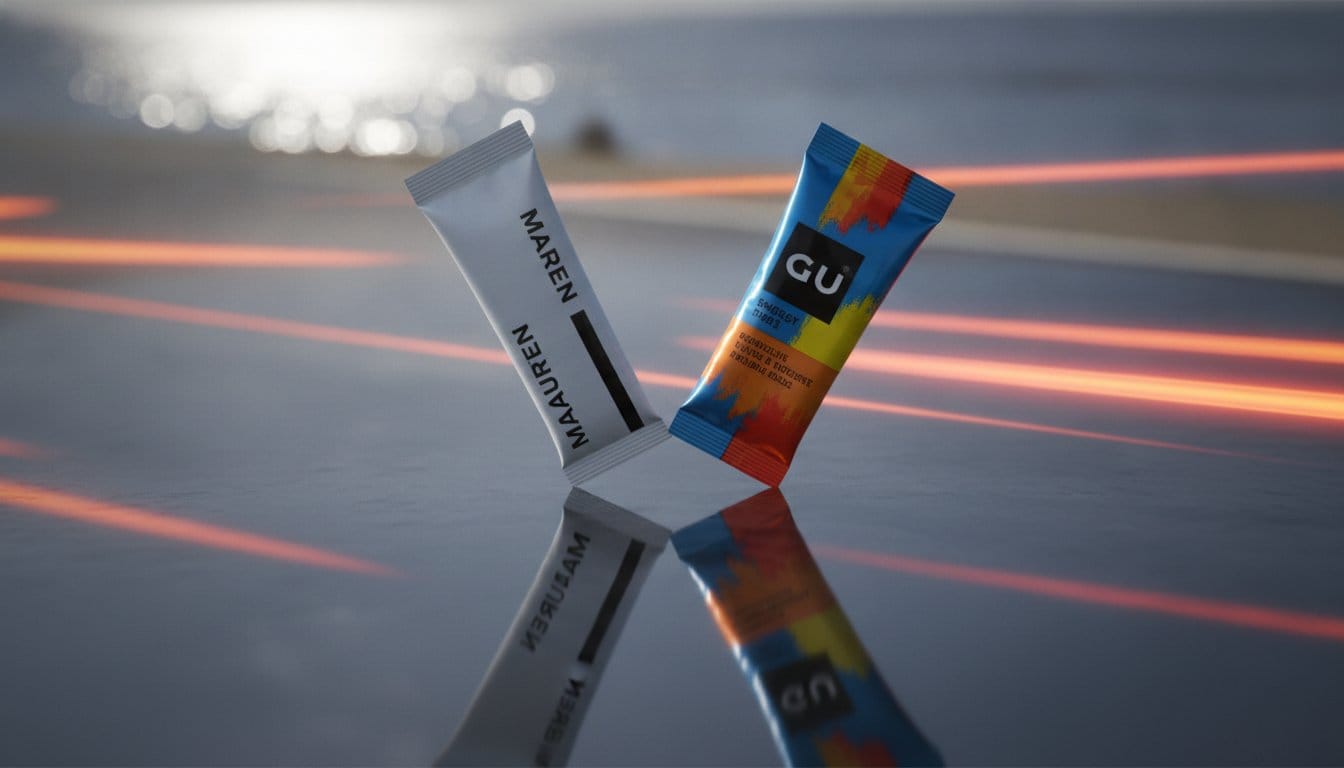
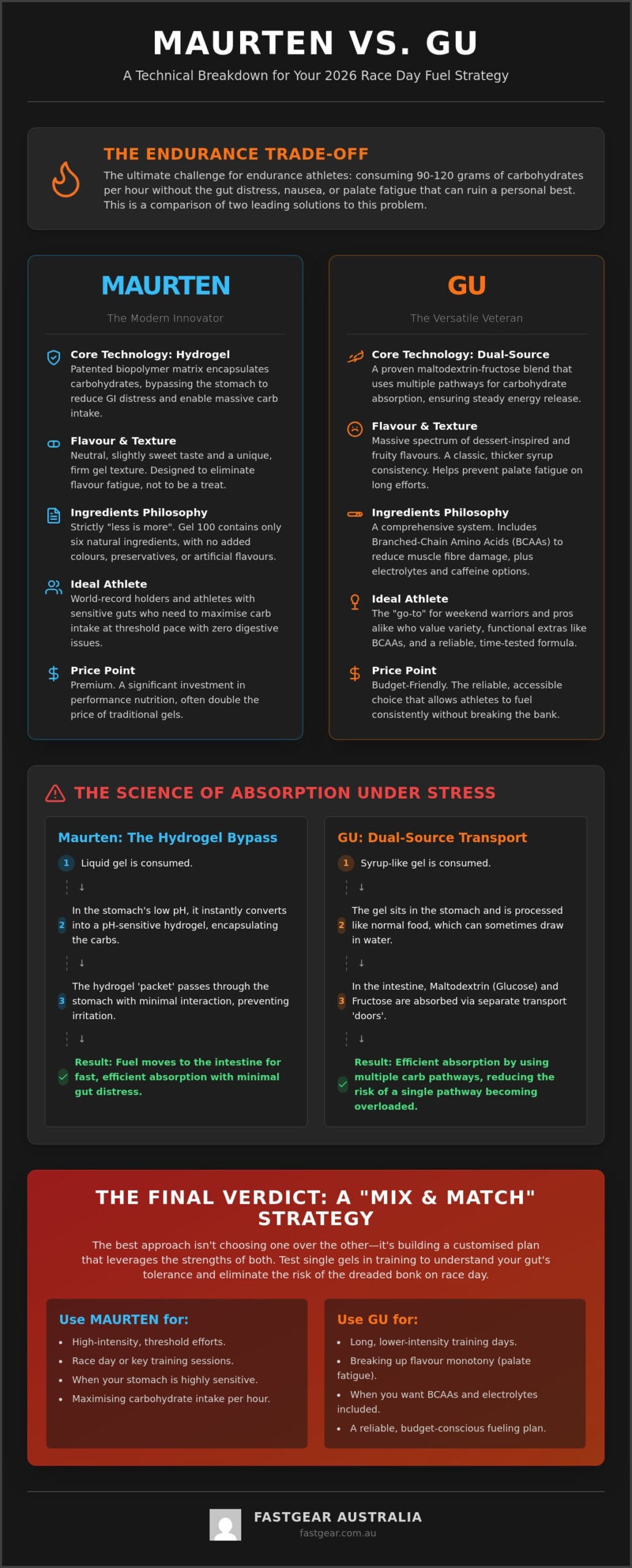
Paying double the price for a single gel might feel like a marketing gimmick until you’re staring down a 42km finish line with a stomach tied in knots. It’s the ultimate endurance trade-off. Is premium hydrogel tech a genuine game-changer, or does the reliable, budget-friendly classic still reign supreme? When weighing up Maurten vs GU energy gel, the best choice depends on your gut’s tolerance and your specific performance targets for 2026.
We understand the grit required for long-distance efforts and the total frustration when your fueling plan falls apart. You need a strategy that allows for 90 to 120 grams of carbohydrates per hour without the nausea or palate fatigue that ruins a PB attempt. This comparison provides the technical breakdown you need to organise your nutrition with confidence. We’ll analyse the mechanics of pectin-encapsulated glucose against maltodextrin-fructose blends, compare the functional value of each, and show you how to mix and match these fuels for a gut-friendly finish.
Key Takeaways
- Understand how hydrogel technology differs from traditional dual-source blends to bypass stomach irritation and maximise absorption during high-intensity efforts.
- Evaluate the performance trade-offs of Maurten vs GU energy gel based on carbohydrate density, price point, and your specific 2026 race schedule.
- Identify the causes of palate fatigue and why switching between GU’s diverse flavours and Maurten’s neutral profile can prevent mid-race nausea.
- Learn to scale your hourly carbohydrate intake toward 120 grams by matching specific fuel types to your training intensity and gut sensitivity.
- Discover the “mix and match” strategy for testing single gels to build a customised nutrition plan that eliminates the risk of the dreaded bonk.
The Heavyweights of Endurance Fueling: Maurten vs GU
The endurance world split in two during the late 2010s. On one side, you have the established heritage of GU. On the other, the scientific disruption of Maurten. Choosing between a Maurten vs GU energy gel strategy often defines whether you finish strong or spend the final 10km hunting for a portaloo. Energy gels have evolved significantly since their inception; moving from simple, sticky syrups to complex delivery systems designed for peak metabolic efficiency.
GU pioneered the category in 1993. They transformed marathon nutrition from bulky snacks to portable, concentrated energy. For decades, they were the undisputed standard for every weekend warrior and pro alike. Then came Maurten. By introducing hydrogel technology, the Swedish brand captured the elite market almost overnight. They focused on high-intensity gut protection rather than flavour variety. This rivalry has pushed sports nutrition to its absolute limit in 2026. Your choice of fuel is no longer just about calories. It’s about how those calories interact with your physiology under stress.
GU Energy: The Versatile Veteran
GU remains the go-to for athletes who value variety and functional extras. Their original line offers a massive spectrum of flavours. This helps prevent the psychological dread of sugar fatigue during a 100km ultra or a long day in the saddle. Beyond simple carbs, GU integrates Branched Chain Amino Acids (BCAAs) into their formulas to help reduce muscle fibre damage during exertion. Their Roctane range steps it up with higher electrolyte counts and more caffeine for those “A-race” efforts. It’s a comprehensive system built for every type of runner. You can easily grab a GU Energy Gel – Single to test which flavour sits best before committing to a full box for your next event.
Maurten: The Modern Innovator
Maurten ignores the traditional rules of sports nutrition. There are no dessert-inspired flavours here. The maurten gel 100 uses a patented hydrogel matrix to encapsulate carbohydrates. This allows the fuel to pass through the stomach and into the small intestine for absorption without causing the usual spikes in acidity or GI distress. It’s built on a strict “less is more” philosophy; containing only six natural ingredients. This precision is why it’s the choice for world-record holders. It offers a predictable, neutral experience that eliminates the sickly sweetness often associated with traditional fueling products. It’s about performance, not snacks.
Your choice dictates your metabolic ceiling. If you need a reliable workhorse with plenty of flavour options and muscle-protecting amino acids, GU is a brilliant choice. If you require maximum carb intake with zero gut distress at threshold pace, Maurten is the precision tool for the job. Both have a place in a sophisticated nutrition plan.
Hydrogel vs. Dual-Source: The Science of Absorption
When you’re redlining on a steep climb or holding threshold pace, your body redirects blood away from the gut to your working muscles. This creates a metabolic bottleneck. Choosing between a Maurten vs GU energy gel strategy is fundamentally about solving this transport problem. Understanding how to use energy gels effectively requires a look at the physiological ‘logjam’ that happens during maximum exertion. If the fuel sits in your stomach for too long, it causes the classic “gut rot” that ends races. You need that energy in the small intestine as fast as possible to keep the pedals turning.
The absorption speed determines your ceiling. Traditional gels often rely on high concentrations of simple sugars that can linger in the stomach, drawing in water and causing sloshing. Modern endurance science has moved toward more sophisticated delivery systems that respect the body’s limited digestive capacity under stress. Whether you opt for the “Trojan Horse” approach of hydrogel or the multi-door transport of dual-source carbs, the goal remains the same: maximum energy with zero gastric distress.
The Hydrogel Advantage
Maurten utilizes a biopolymer matrix made from pectin and sodium alginate. This structure is highly pH-sensitive. In the low-pH environment of the stomach, the liquid instantly converts into a hydrogel. This gel encapsulates the high concentrations of glucose and fructose, allowing the fuel to bypass the stomach lining entirely. It reduces irritation and moves directly into the small intestine where the gel dissolves and the carbs are absorbed. This technical bypass is why athletes can push toward 90g of carbohydrates per hour without the dreaded bloating. It’s a precision delivery system that works with your body’s chemistry to provide a predictable, high-volume energy stream.
Dual-Pathway Carbs in GU
GU utilizes a proven ratio of maltodextrin and fructose to maximise uptake. This is the dual-source approach. Your body uses different “doors” or transporters to move sugar into the bloodstream. Glucose uses the SGLT1 transporter, while fructose uses GLUT5. By using both pathways simultaneously, GU increases the total amount of energy you can absorb compared to a single-source glucose gel. The formula also includes essential electrolytes like sodium and potassium. These are critical for maintaining fluid balance and nerve function in the harsh Aussie heat. This dual-pathway system provides a steady stream of fuel that supports consistent blood sugar levels during long, grinding efforts. To see which system your gut prefers, you can test single gels during your next long training block to find your ideal absorption rate.
Taste, Texture, and the ‘Palate Fatigue’ Factor
What tastes like a gourmet treat at the five-kilometre mark often feels like a sticky chore by kilometre thirty-five. This sensory shift is known as palate fatigue. It’s the point where your brain rejects anything overly sweet or thick. When comparing a Maurten vs GU energy gel strategy, the sensory experience is just as critical as the caloric density. If you can’t stomach the fuel, the science behind it becomes irrelevant. Understanding how energy gels work from a sensory perspective helps you avoid the mid-race gag reflex that ruins many PB attempts.
Australian conditions add another layer of complexity. In the high humidity of a Queensland summer or the dry heat of a Perth afternoon, your perception of sweetness is magnified. Thick, syrupy textures can feel suffocating when your mouth is dry. You need a fuel that goes down easily without leaving a cloying residue that demands immediate litres of water to wash away. The psychological benefit of a “reward flavour” can provide a much-needed boost, but it must be balanced against the risk of sugar-induced nausea.
GU’s Flavour Kingdom
GU is the undisputed king of variety. From dessert-inspired hits like Salted Caramel and Espresso to the tartness of Jet Blackberry, they offer a flavour for every preference. These act as psychological milestones during a long effort. However, the classic GU texture is a dense, viscous syrup. This often leads to “sugar mouth,” where a thick film coats the tongue and throat. You must chaser these with water to clear the palate and ensure proper absorption. For those who find the original syrup too intense, the GU Liquid Energy line offers a more fluid, drinkable consistency that sits between a traditional gel and a sports drink.
Maurten’s Minimalist Approach
Maurten takes a functional, almost clinical approach to taste. There are no added flavours or colourants. The taste is subtly sweet, resembling a very mild sugar water. The texture is the real differentiator. It’s a firm, structured jelly rather than a liquid syrup. Because the carbohydrates are encapsulated in the hydrogel matrix, the gel doesn’t stick to your teeth or coat your throat. You can comfortably swallow it without needing an immediate water chaser. This makes it a superior option for the final stages of a race when your gut is sensitive and your palate is exhausted. Both brands offer high-performance stimulants; the maurten gel 100 caffein provides a clean 100mg hit, while GU’s Roctane variants allow you to stagger smaller caffeine doses through different flavours.
Success on race day comes down to testing. We recommend a “mix and match” approach during your long training runs. You might find that a flavour-rich GU Energy Gel – Single provides a great early-race lift, while the neutral, jelly-like consistency of Maurten is what gets you through the final hour. Find your personal threshold for sweetness before the starter’s gun fires.
Carb Density and the Cost of Performance
Sticker shock is a common reaction when athletes first compare the price of premium hydrogels to traditional options. However, looking at the price per sachet is a rookie mistake. When evaluating a Maurten vs GU energy gel strategy, the only metric that matters is the cost per gram of carbohydrate successfully delivered to your working muscles. If a cheaper gel causes a GI blowout, its value drops to zero instantly. You aren’t just paying for sugar; you’re paying for the technical reliability of the delivery system.
The math changes when you look at the density. A standard maurten gel 100 provides 25g of carbohydrates. A GU Original sachet typically offers 22g. While that seems close, the maurten gel 160 blows the competition away with a massive 40g of carbs in one serve. Compare this to a GU Roctane gel, which provides 19g of carbs alongside Branched Chain Amino Acids (BCAAs). If your plan calls for 90g of carbs per hour, you only need 2.25 Maurten Gel 100s versus more than four GU gels. The “gut insurance” provided by hydrogel technology often justifies the Aussie price premium for those targeting a specific finish time.
The Economics of Fueling
For a four-hour marathoner aiming for high intake, the total cost difference between brands can be significant over a full season. Training with what you race is a non-negotiable rule of endurance sports. You must factor in the cost of using premium gels during your peak long runs to prime your gut. GU remains a brilliant, budget-friendly workhorse for daily training miles and moderate efforts. Many athletes choose to use GU for the bulk of their training and reserve Maurten for their “A-race” and specific high-intensity simulations. To manage your budget effectively, buy single gels in bulk to find your ideal mix before committing to full boxes.
Caffeine Options for the Final Push
Stimulant strategy is another area where these brands diverge. The maurten gel 100 caffein is a heavy hitter, delivering 100mg of caffeine in a single serve. This is roughly equivalent to a strong cup of coffee. GU offers more granular control, with caffeine levels ranging from 20mg to 40mg depending on the flavour. This allows you to stagger your intake and maintain a steady state of alertness rather than one massive spike. For the best results, time your primary caffeine hit to occur 45 to 60 minutes before your most intense effort or the final 10km of your race.
The optimal caffeine window for endurance events is 45 to 60 minutes prior to the hardest expected segment of the course.
The Final Verdict: Choosing Your Race-Day Fuel
The debate between Maurten vs GU energy gel isn’t about which brand is universally superior. It’s about selecting the right tool for your specific athletic objective. GU is your versatile, budget-friendly workhorse. Maurten is your high-precision race-day specialist. For most Australian endurance athletes, the most effective strategy involves a calculated mix of both to balance cost, sensory variety, and gastric reliability. Your gut is a muscle. You must train it to handle the fuel you intend to use when the pressure is on.
GU remains the gold standard for training miles and moderate efforts. The wide flavour profile prevents the psychological “wall” that comes from repetitive tastes during high-volume weeks. It’s the logical choice for base-building phases where you need consistent energy without the premium price tag of hydrogel technology. Conversely, Maurten should be your primary choice for high-intensity intervals and “A-race” events. When you’re pushing your aerobic ceiling, your digestive system is at its most vulnerable. This is where the hydrogel matrix earns its keep by ensuring carbs move into the small intestine without delay.
A hybrid strategy often yields the best results. Start your race with GU to benefit from the BCAAs and psychological lift of a flavoured gel. As the hours pass and palate fatigue sets in, transition to the neutral, jelly-like consistency of Maurten. This prevents the “sugar-sick” feeling that often leads to a late-race drop in intensity. It’s a tactical approach that leverages the strengths of both brands to keep your energy levels stable from the starting gun to the finish line.
Your Fueling Decision Matrix
- Scenario A: If you struggle with nausea or bloating when pushing toward 60-90g of carbs per hour, choose Maurten for its superior gut protection.
- Scenario B: If you are tackling a six-hour ride or a multi-day event and need flavour variety to stay motivated, GU is your best option.
- Scenario C: If you are racing in extreme Australian humidity, utilise GU’s electrolyte-heavy Roctane line early, then switch to Maurten’s clean carb delivery for the final push.
Next Steps: Testing Your Strategy
Success is built in training. Never experiment with a new brand or a higher carb-per-hour target on race morning. Organise a dedicated “gut-check” session during your peak long run. Replace one of your usual gels with a Maurten Gel 100 and monitor your energy levels and stomach comfort. Gradually increase the ratio over a four-week block to ensure your system is primed for the specific demands of your event. If you’re ready to build your customised fueling plan, shop the full Maurten and GU range at Fastgear Australia to secure your singles for testing.
Lock In Your 2026 Nutrition Strategy
Mastering your fueling strategy is the final piece of the performance puzzle for your upcoming season. Whether you lean toward the technical precision of hydrogel or the versatile flavour profiles of a classic dual-source blend, your decision on Maurten vs GU energy gel should align with your specific gut tolerance and intensity levels. A hybrid approach allows you to manage palate fatigue while maintaining a high carbohydrate intake during the most critical stages of your race. Don’t leave your nutrition to chance when the starter’s gun fires.
Fastgear Australia is your official stockist for both brands, offering expert-curated endurance nutrition designed for peak efficiency. We provide free shipping on orders over $150 across Australia; making it simple to organise your bulk supplies or test individual singles before race day. Optimise your race-day fuel—Shop Maurten and GU at Fastgear Australia. Get your testing underway now and step onto the start line with absolute confidence in your gut and your gear.
Frequently Asked Questions
Do I need to drink water with Maurten gels like I do with GU?
Maurten is specifically engineered to be consumed without water because the hydrogel technology encapsulates the carbohydrates for smooth transport. Traditional syrups like GU require water to lower the osmolality in the stomach and prevent dehydration or GI distress. Taking Maurten with large amounts of water can actually dilute the hydrogel matrix and reduce its effectiveness during your run.
Which gel is better for preventing stomach cramps during a marathon?
Maurten is generally the superior choice for athletes prone to GI distress or cramping. The hydrogel bypasses the stomach acid, releasing the fuel directly into the small intestine. This reduces the sloshing and acidity that often causes mid-race cramps. When comparing Maurten vs GU energy gel for sensitive stomachs, the neutral pH of Maurten provides a significant advantage under high-intensity stress.
Is Maurten Gel 160 too much caffeine for a beginner?
The Maurten Gel 160 is a high-carbohydrate fuel containing 40g of carbs, but it is actually caffeine-free. If you are looking for a stimulant, the Gel 100 CAF contains 100mg of caffeine, which is a substantial dose for a beginner. Always test your caffeine tolerance in training first to avoid heart rate spikes or jitteriness during your event.
Can I mix GU and Maurten during the same race?
You can absolutely mix both brands to create a customised race-day strategy. Many athletes use a Maurten vs GU energy gel hybrid plan, starting with the varied flavours of GU for a psychological boost and switching to Maurten for the final 90 minutes. This approach keeps the palate fresh while ensuring gut stability when fatigue peaks in the closing stages.
Why is Maurten so much more expensive than other gels in Australia?
The price reflects the patented hydrogel technology and the high quality of the six natural ingredients used in the formula. You’re paying for gut insurance and the ability to absorb higher volumes of carbohydrates without the risk of a race-ending stomach issue. For many serious athletes, the performance reliability justifies the premium cost over traditional, more basic syrups.
Does GU Roctane really help with muscle recovery because of amino acids?
GU Roctane contains Branched Chain Amino Acids (BCAAs) like leucine, valine, and isoleucine to help protect muscle fibres during exertion. These amino acids act as an additional fuel source and help reduce the rate of muscle breakdown during long efforts. While they support the recovery process, they’re primarily designed for mid-race muscle protection rather than replacing your post-race protein shake.
How many gels should I take per hour for a 70.3 Ironman?
Most athletes should aim for 60 to 90 grams of carbohydrates per hour during a 70.3 Ironman. If you’re using standard 25g gels, this means consuming one every 20 to 25 minutes. High-performers training for 120g per hour will need to rely on denser options like the Maurten Gel 160 to hit those targets without excessive volume.
What is the shelf life of Maurten vs GU energy gels?
Both brands typically offer a shelf life of 12 to 24 months from the date of manufacture. GU provides a “best by” date on the crimp of the packet, while Maurten includes an expiry date on the rear of the sachet. Store them in a cool, dry place out of direct sunlight to maintain the integrity of the ingredients and the texture.
