
Uncategorized
Why is Maurten so expensive
Nov
Maurten’s premium price reflects more than the carbohydrate in a sachet. Why is Maurten so expensive? The main factors are its specialised hydrogel format and glucose-fructose formulation, as well as the value some athletes place on how it fits their fuelling strategy.
That doesn’t automatically make it the right choice for every run or triathlon. A premium gel earns its place only if its format suits your stomach, race plan and budget.
This guide explains what the formulation is designed to do, how tolerance and packaging affect the experience, and when alternatives may suit you better. Use the practical comparisons to decide whether Maurten’s premium makes sense for your training and race day, rather than paying more for reputation alone.
Key Takeaways
- Understand what Maurten’s hydrogel format is designed to do, and why that alone doesn’t guarantee better performance.
- Assess whether the carbohydrate formulation suits your gut and fuelling strategy during hard training or racing.
- Consider how sachet size and packaging affect carrying and using gels on the move.
- Weigh the premium against your fuelling needs and explore other formats if they’re a better fit for your budget or routine.
Is Maurten Worth the Extra Money?
Maurten’s premium proposition centres on hydrogel technology and its carbohydrate formulation. The gel combines glucose and fructose at a 1:0.8 ratio, designed to support carbohydrate delivery during exercise. The format may appeal to endurance athletes fuelling for sustained efforts, but it doesn’t make the product essential. Ordinary sports gels and drinks can also provide useful fuel when their carbohydrate content, flavour and texture suit your plan.
Hydrogel performance evidence is mixed. In one endurance-running study, researchers compared a hydrogel with a matched non-hydrogel carbohydrate solution. The hydrogel group recorded better performance in a 5 km time trial. Another comparison reported higher exogenous carbohydrate rates and fewer gastrointestinal symptoms with the hydrogel format. However, a 2020 review of studies concluded that hydrogels did not benefit sports performance. These findings don’t establish a guaranteed advantage for every runner or race.
The absorption rationale focuses on combining carbohydrate sources. Glucose and fructose use different intestinal transport pathways, which can support higher carbohydrate intake than relying on glucose alone. The review’s stated benchmark was up to 100 grams per hour during exercise with a 0.8:1 glucose-to-fructose ratio. That’s a potential fuelling capacity, not a target every athlete needs or can tolerate. Training duration, intensity and gut adaptation all shape a practical intake plan.
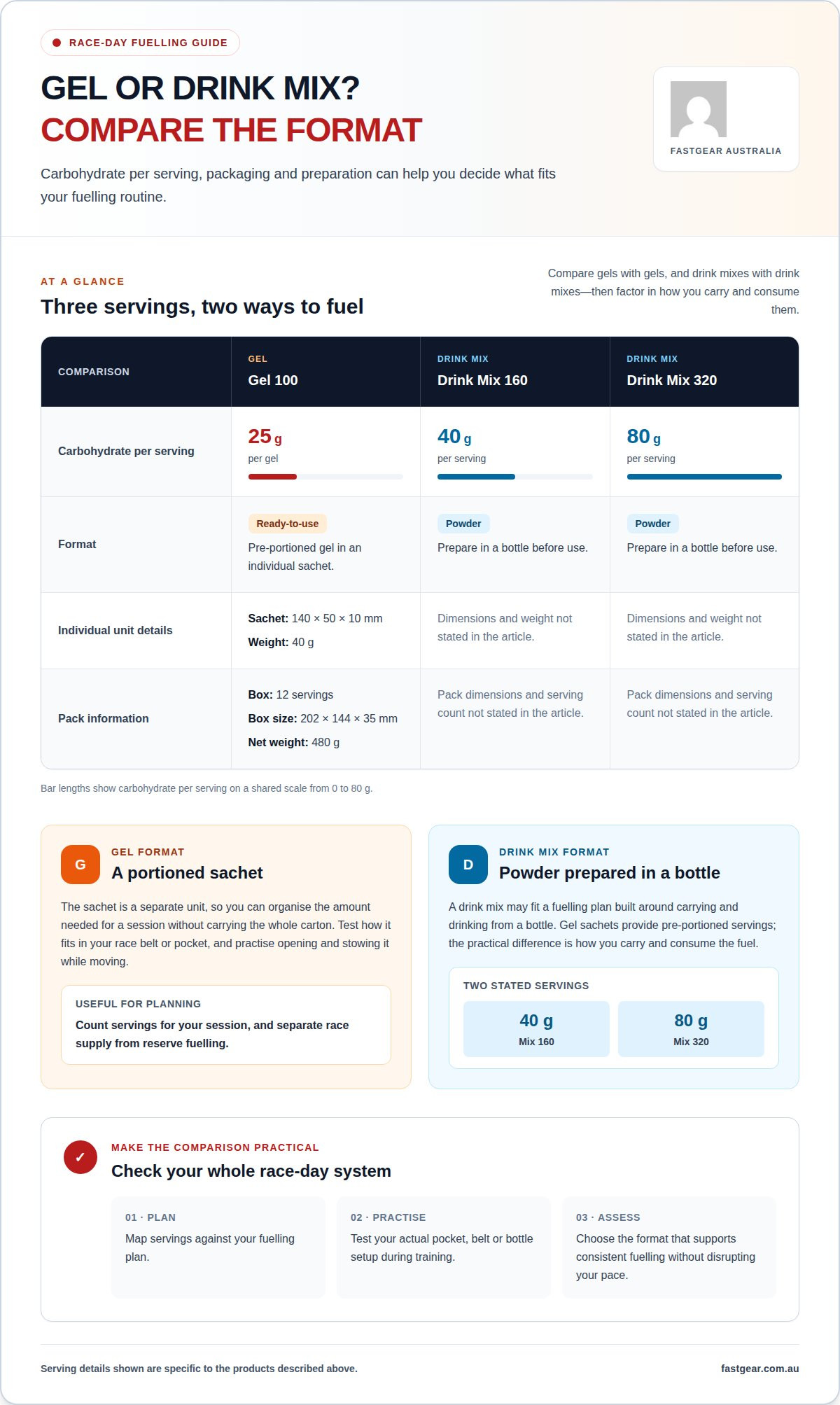
For a product example, Maurten Gel 100 provides 25 grams of carbohydrate per serving. That makes the carbohydrate amount clear when planning intake, but athletes still need to consider how often they want to fuel and whether gels suit their stomach. A high hourly target can require repeated servings, so taste, texture and tolerance matter alongside the hydrogel format.
If you tolerate conventional gels, the extra technology may not change your race-day result. If you struggle with fuelling during hard efforts, a different texture or carbohydrate blend may be worth testing in training. Compare how each product feels, how it fits your fuelling strategy and whether its practical benefits justify the premium for you.
Gastrointestinal tolerance
Carbohydrate delivery is only useful if your stomach tolerates the plan. During exercise, glucose absorption can reach about 60g per hour before SGLT1 transporters are maxed out. Fructose uses a separate transport pathway, so combining carbohydrate sources can support higher intake. That mechanism doesn’t guarantee comfortable fuelling: your gut’s response depends on the product and the amount you consume.
For age-group triathletes, the stated fuelling aim is 60 to 90g of carbohydrate per hour, built up through gut training. Treat that range as a progression, not a first-session target. Start with a manageable amount during training, then practise the same timing and format you expect to use in a race. If your stomach feels unsettled, reduce the intake and adjust the plan before increasing it again.
Research comparing a hydrogel with a matched non-hydrogel carbohydrate solution has reported fewer gastrointestinal symptoms with the hydrogel. This suggests a potential benefit, not a guarantee that you’ll avoid discomfort. Texture, sweetness, fluid intake and fuelling rate can all affect how a product feels. A drink mix may be easier to take regularly, while a gel may suit you if you prefer a compact serving.
Try one product during a familiar training session and note stomach comfort, sweetness and energy intake. Keep the rest of your fuelling routine consistent, as changing several products at once makes it harder to identify the cause of a reaction. Repeat the trial under race-like conditions before relying on that format at an event.
Hydrogel tolerance is therefore individual, even when the formulation is designed for endurance fuelling. The practical decision is whether it helps you follow a sustainable plan without disrupting exercise. If you’re comparing formats for training, explore endurance fuelling options and consider which suits your gut and routine.
Packaging and ease of use
Maurten Gel 100 packaging is compact, but dimensions still matter on race day. Each sachet measures 140x50x10mm and weighs 40g. The box measures 202x144x35mm, with a net weight of 480g. Those figures help distinguish what you store at home from what you carry over distance.
For a long session, map servings against your fuelling plan, then test how they fit in a race belt or pocket. A slim sachet may be easier to carry than a bulkier container, but pocket shape and movement matter. Test your actual setup during training, not for the first time at the start line.
The box contains 12 servings, which makes it straightforward to count available gels before a training block or event. Each sachet is a separate unit, so you can organise the required amount for a session without carrying the whole carton. If you’re packing for a longer distance, separate the race supply from reserve fuelling. That makes it easier to see what remains during the event.
Powder formats create a different routine. Maurten Drink Mix 160 contains 40 grams of carbohydrate, while Drink Mix 320 contains 80 grams. A drink mix needs to be prepared in a bottle, so it suits a fuelling plan built around carrying and drinking from one. Gels provide a pre-portioned option. Both formats can contribute glucose and fructose, but the packaging changes how you carry and consume them.
Ease of use depends on how the product fits your race-day system, not just its packaging. If you want ready-to-use servings, sachets may suit you; if you already carry bottles, powder may be easier to organise. Practise opening and stowing a sachet while moving, then check that it stays accessible. Packaging is useful when it supports consistent fuelling without disrupting your pace.
Maurten’s relative cost compared with other sports nutrition products
Maurten is at the premium end of sports nutrition, but the more useful comparison is cost per planned serving, not pack price alone. Compare gels with gels and drink mixes with drink mixes, then consider carbohydrate per serving, convenience and stomach tolerance. A cheaper product may provide similar fuelling value if it fits your intake plan and works during exercise.
Lower-cost alternatives can also work for endurance sports if they provide suitable carbohydrate and you tolerate them. Maurten’s hydrogel format isn’t essential for every athlete. If a standard gel or drink mix lets you fuel consistently without gastrointestinal distress, it may be the more practical choice. Test it in training before relying on it on race day.
There isn’t one Australian cost across Maurten products: the format and pack size change the comparison. A Gel 100 sachet, a caffeinated gel and a drink-mix serving are different purchase units. For an individual purchase, compare the cost per serving and carbohydrate supplied. For a bulk carton or race pack, divide the total pack cost by its servings, then assess the same measure against your fuelling plan.
Pack size also affects value. A multi-serving box may cost less per serving than individual sachets, while a race pack may group products for an event. These formats save money only if you’ll use the contents and the products suit your stomach. Test the flavour and format during training before buying a larger quantity.
Australian shelf prices can reflect more than the formula itself. Freight, import expenses, retail operating costs and margins may contribute to the final price; the effect varies by seller and product. To compare nutrition options fairly, calculate cost per serving, then weigh carbohydrate delivery, packaging and tolerance. Compare endurance nutrition options and choose a format that fits your training budget and fuelling routine.
Cost varies by product and pack size. Compare the price per serving for the specific gel or drink mix you’re considering.
Bulk cartons and race packs have different total prices depending on their contents and serving count. A multi-serving box may cost less per serving than individual sachets.
Fastgear Australia
Fastgear Australia offers endurance nutrition and practical race gear to help you compare options after weighing Maurten’s price, format and potential benefits. If you’re considering a lower-cost or different-style option, GU Energy Gel – Single and Clif – BLOKS Energy Chews are alternatives to include in your training nutrition. Choose what fits your fuelling plan and sits comfortably during exercise.
For race-day logistics, the Compressport Free Belt Pro can carry essentials, while the Compressport Trail Racing SS Tshirt is a technical apparel option. They serve different needs, so choose according to your event and setup.
Contact Fastgear Australia to discuss your endurance nutrition and racing gear needs.
Make your next fuelling choice count
Turn the question of why Maurten is so expensive into a practical training decision. Decide what you need your nutrition to do during your next training block. Set a consistent fuelling plan, then assess whether the format, taste and carrying demands help you follow it. Keep the trial focused: use one setup and note how it works in your sessions. That gives you firsthand experience from your running or triathlon preparation, rather than assumptions based on a premium label.
If a product’s format doesn’t improve your fuelling routine, another option may suit you better. If it does, you’ll have a clearer basis for deciding whether the premium belongs in your race plan. For guidance on choosing endurance nutrition and gear for your needs, talk through your options with Fastgear Australia. Keep testing your setup in training, then head into your next event ready to race with confidence.
Frequently Asked Questions
Conclusion: Are Maurten Gels Worth It For Triathletes And Runners?
Maurten may be worth considering if its format suits your fuelling plan and you tolerate it during hard efforts. You might value a gel that’s easy to carry, or prefer nutrition that fits your bike and run transitions. Test your chosen setup in training and judge it by comfort, practicality and consistency, not its premium positioning alone.
Maurten Gel Review: Are Maurten Products Good For Triathletes, Runners and Cyclists?
Maurten gels and drink mixes may suit endurance athletes following a structured fuelling routine. The best format depends on your discipline: bottle-based drink mix may be convenient for cycling, while pre-portioned gels may suit running. For triathlon, consider how your nutrition plan works across the bike and run legs, including what you can carry and consume comfortably.
Pricing: Are They Worth The Cost?
Maurten is worth the premium only if its format or formulation adds practical value to your nutrition plan. Compare the cost per serving and carbohydrate provided, then consider whether you’ll use the product consistently. Understanding why Maurten is so expensive matters less than deciding whether it suits your training, stomach and race-day routine better than other options.
How does Maurten’s Australian price compare with other sports nutrition brands?
Maurten is positioned as a premium sports nutrition option, while alternatives vary by format and serving size. Compare like with like: gel with gel, or drink-mix serving with drink-mix serving. Then consider carbohydrate content and how well each option fits your routine. This gives you a more useful comparison than brand reputation alone.
What ingredients and technology are used in Maurten hydrogel products?
Maurten Gel 100 uses six ingredients and combines glucose and fructose in a 1:0.8 ratio. Its hydrogel approach is designed to form a gel structure in the stomach when the product meets stomach acid. The formulation’s appeal is its combination of carbohydrate sources and delivery format, rather than a long ingredient list. Check the product packaging for its full ingredient declaration.
What does Maurten claim its hydrogel technology does, and what evidence supports those claims?
The hydrogel format is intended to support carbohydrate delivery during exercise and may suit athletes seeking high-rate fuelling. Research findings are mixed: one endurance-running study reported better performance in a 5 km time trial than a matched non-hydrogel solution, while a 2020 review concluded hydrogels did not benefit sports performance. These findings don’t establish the same result for every athlete.
