
Uncategorized
Triathlon Transition Area Setup for Organizing Gear and Fuel
Nov
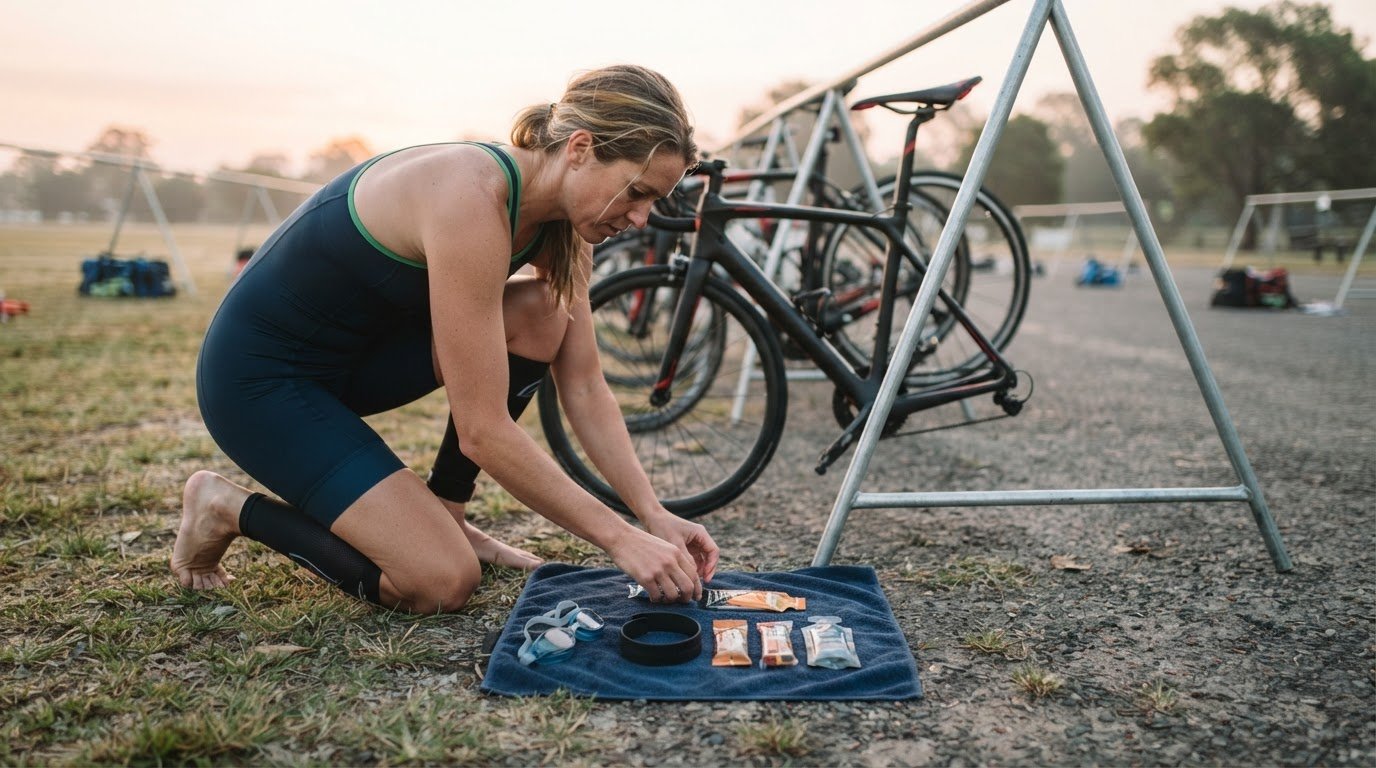
A faster transition starts with less gear, placed in a clear sequence. At most IRONMAN 70.3 triathlons, you can set out your equipment on a small towel beneath your bike. Keep essentials within your space, with nutrition easy to reach and each item ready for its next stage.
It’s tempting to pack for every possibility, but extra equipment can hide what you need when time is tight. The right triathlon transition area nutrition accessories are the ones you’ve practised with and can reach quickly, not simply the ones that fit in your bag.
This guide shows you how to organise a compact setup for T1 and T2, choose familiar fuel and hydration, and keep your gear in race order. You’ll also learn how to adapt your layout to the event format, so you can arrive prepared and move through each transition with focus.
Key Takeaways
- Arrange essentials in race order, with each accessory ready for its role in T1, on the bike, in T2 or on the run.
- Keep your race number and run gear easy to reach so you can follow a clear transition sequence.
- Choose familiar fuel and hydration, then plan when you’ll use them rather than deciding under race-day fatigue.
- Keep your setup compact and uncluttered, with only the gear you need within your transition space.
1. What kit do I need in my triathlon transition area?
Choose gear for each phase: swim-to-bike (T1), bike, bike-to-run (T2), then run. A basic setup can include a towel, helmet, bike shoes, running shoes, race belt and planned nutrition. At most IRONMAN 70.3 triathlons, athletes can set gear on a small towel beneath their bike. A narrow layout keeps essentials easy to locate.
In T1, place your swim gear to one side and bike shoes where you can step into them. Keep your helmet ready to put on, with the straps clear. Put sunglasses beside it if you’ll wear them on the ride. At T2, leave running shoes open, with your race belt and run accessories positioned in dressing order.
For a budget setup, use a towel and simple bags to group small items. A more advanced organiser can still stay compact: choose triathlon transition area nutrition accessories that keep fuel contained and easy to reach, rather than adding bulk. Keep spare items separate from your race sequence. A resealable bag can hold run nutrition, while bottles belong in bike cages.
Fill bike bottles before the race and secure them in their cages. Place bike nutrition where you can access it safely during the ride. Glass containers aren’t allowed in IRONMAN transition areas; follow your event’s instructions for other gear. There’s no fixed cost for organisers and accessories. Your total depends on the type and amount of equipment you choose.
Useful triathlon transition area nutrition accessories include resealable bags for gels and a clear place for bottles. Keep each item within your allocated space, and remove anything that doesn’t serve T1, the bike, T2 or the run. That gives your setup a defined purpose without crowding the gear you need to finish each leg.
2. What Nutrition and Hydration Should You Bring?
Plan fuel around race distance, conditions, body size and gut tolerance. Practise your nutrition during training, including brick sessions and long sessions for Olympic-distance, long-course and Ironman races. Don’t introduce unfamiliar gels, chews or drinks on race day. Write down when you’ll fuel, using time or course markers, before fatigue makes decisions harder.
A sprint, Olympic, 70.3 or Ironman race calls for a plan suited to its duration and your needs, not a universal packing quantity. Choose familiar options such as sports drink, gels, chews, bars and water. Practise breakfast too, then prepare familiar food and drinks before race morning. A high-carbohydrate, low-fibre meal about two to three hours before the start is one suggested approach.
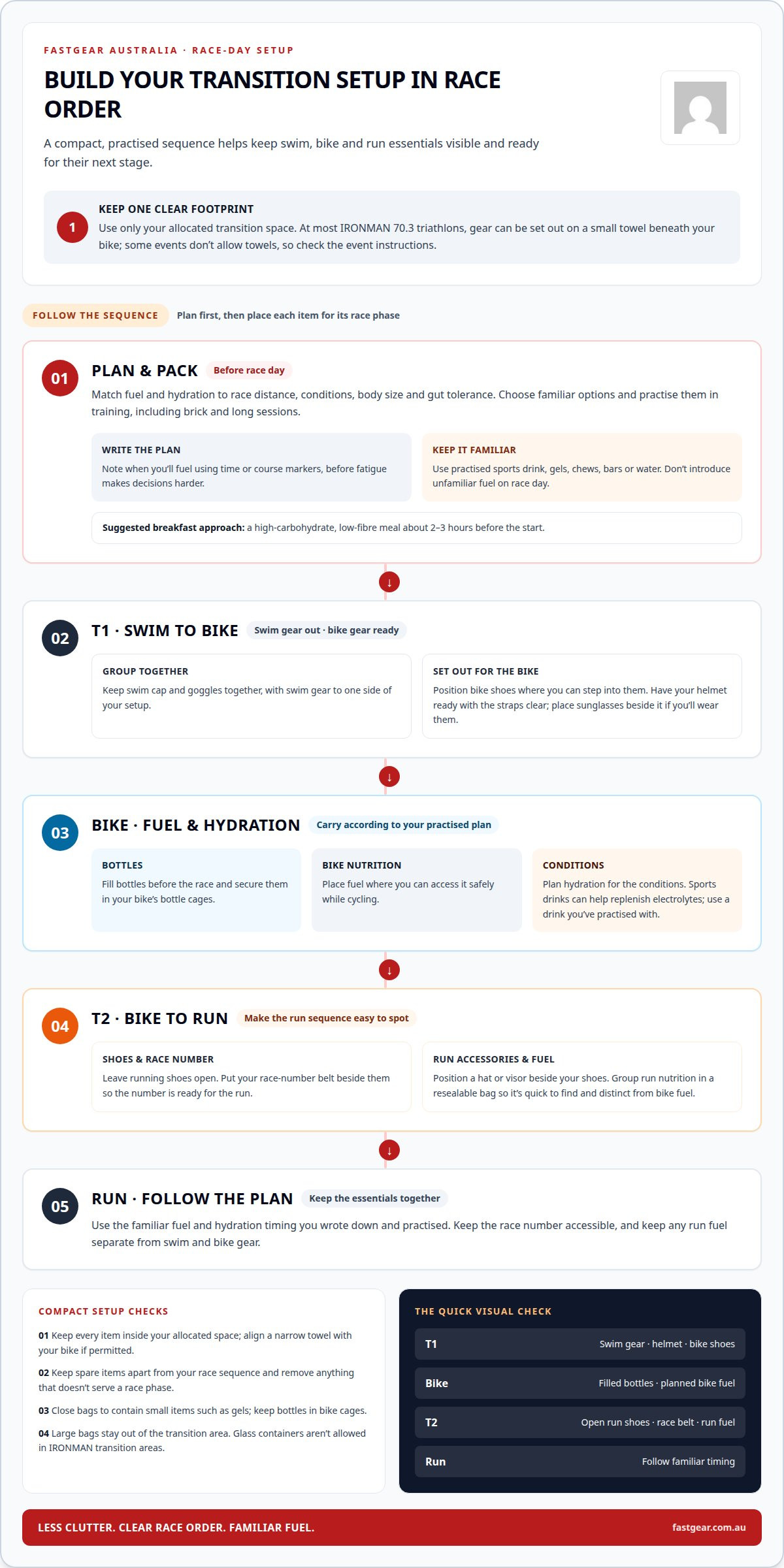
Pack the transition space in race order. Keep your swim cap and goggles together for the swim, then place sunglasses and bike nutrition where they’re easy to access for the ride. Fill bottles and secure them in your bike’s bottle cages. At T2, position running shoes open, with your race-number belt and hat or visor beside them. The belt keeps your number ready for the run.
Use a checklist to match each item to a race phase: swim, bike, run and finish. Group run nutrition in a large resealable bag so it’s quick to find. Keep spares apart from essentials, and close bags to contain small items such as gels. For a split-transition event, sort equipment into the designated gear bags. Keep your transition layout uncluttered so bottles, fuel and accessories stay visible and within your space.
For race day in Australia, pack the equipment and practised nutrition your event requires, then follow its transition instructions. The essentials are your swim and run gear, race belt, planned fuel and filled bike bottles. A clear checklist helps prevent forgotten items without adding unnecessary kit.
Tailor your setup to each race’s duration and your needs rather than following a fixed packing quantity. Keep fuel organised by race phase and stick to a practised plan, especially for Olympic-distance and longer races, where nutrition should be rehearsed in long training sessions.
3. Nutrition and hydration in transition
Arrange bike fuel for easy access, then keep run nutrition separate and visible. Put filled bottles in their cages before racing, and place gels where you can reach them safely while cycling. In transition, group run fuel in a small bag beside your running shoes. This keeps gels distinct from swim equipment and your race number.
Match hydration to your plan and the conditions rather than improvising at the rack. Drink water regularly throughout the day, and increase intake during long training sessions. For race day, prepare hot-day and cool-day adjustments using the forecast. Keep the relevant bottles and fuel ready, so changing conditions don’t leave you searching through spare gear.
Sports drinks can help replenish electrolytes during race-day hydration. Use a drink you’ve practised with, and place it according to your plan. If salt tablets are part of your established approach, keep them in a small plastic bag. Separate them from gels so you can identify each item quickly.
Choose hydration accessories for their role: bottles for bike cages and a small bag for loose nutrition or tablets. Secure lids and close bags before leaving transition. During setup, remove unnecessary packaging and put each item in its planned position. A compact layout makes it easier to spot a misplaced gel or bottle before the start.
Remember that distance, conditions and gut tolerance affect how much fuel and fluid you plan to carry. Write down your intended timing before fatigue affects decision-making, then rehearse the sequence in training. At the rack, keep hydration and nutrition separate from run gear, with the race number accessible for T2. Practise the full routine, including how you’ll take fuel and move towards the finish.
4. Compact transition-area setup
Start with the space your event allocates, then keep every item inside it. A narrow towel aligned with your bike creates a defined working area without spreading gear into neighbouring spaces. Some races don’t allow towels, so follow the event’s transition instructions when planning your layout. Keep large bags out of the transition area and store only race-use essentials at your position.
Separate the swim exit from the bike departure. Place your goggles and swim cap together, with a clear spot for your wetsuit after you remove it. Set bike shoes beside the towel and keep the helmet positioned for quick access, straps open. This arrangement makes the T1 sequence visible: remove swim gear, put on the helmet, then handle the bike as required by event rules.
At T2, create a distinct landing zone for running. Open your running shoes and place the race belt and hat beside them, in the order you’ll use them. Keep gels and other run fuel together, not scattered across the towel. For a split-transition course, pack T1 and T2 equipment in their designated gear bags. Full IRONMAN triathlons use five gear bags, so label and organise each by its race role.
Keep the setup simple rather than adding advanced techniques on race day. Fast access, low bulk and compatibility with your other equipment matter more than maximum capacity. Rehearse the layout before the event, including where wet goggles and the wetsuit will go. A compact arrangement reduces searching and keeps your gear within your own transition space. For the swim leg, choose swimming goggles that fit your race setup.
Fastgear Australia
Fastgear Australia is a practical place to refine your race-day fuel or equipment choices. For a rehearsed nutrition plan, options include GU Energy Gel – Single, Clif – BLOKS Energy Chews and SIS – GO Isotonic Gels. Choose familiar products that fit your fuelling routine, then organise them for quick access in transition.
For equipment planning, the Wove M8 Road / Tri Saddle is another option to consider as part of your bike setup. Keep your selection focused on what supports your race plan, rather than adding items you haven’t practised with. Contact Fastgear Australia to discuss the listed options for your triathlon setup.
Make your next race setup deliberate
Race-day execution is built before you reach the start line. Use a training session to test how familiar kit works under movement, sweat and changing effort. Notice which items you reach for naturally and which create friction. Your triathlon transition area nutrition accessories should support practised decisions, not add another choice when focus matters.
Fastgear Australia offers the Compressport Trail Racing SS Tshirt, GU Energy Gel – Single and Compressport Free Belt Pro. Consider these options as you shape a race kit around your established routine. Trial any new addition in training first, then decide whether it earns a place on event day.
As your event approaches, keep refining the details that make your preparation feel controlled. A consistent setup helps turn planning into confident execution, from the first transition to the finish. Contact Fastgear Australia for help choosing from these options. Keep your preparation focused and your next start line in sight.
Frequently Asked Questions
How Should You Set Up Transition?
Set up in race order, then rehearse the movements you’ll make at each changeover. Before the start, walk from swim-in to your bike and note landmarks that help you locate your rack. Practise removing swim gear, reaching for your bike equipment, then changing into run gear. For a split-transition event, organise each gear bag for its separate location.
What Nutrition and Hydration Should You Bring?
Bring familiar fuel and fluids that match your race plan, distance, conditions and gut tolerance. Choose options you’ve practised, such as gels, chews, bars, sports drink and water. Set a simple timing plan using elapsed time or course markers. Adjust planned hydration for the forecast, and keep the products you’ll use during each leg easy to identify.
What Should Be on a Triathlon Race Day Checklist?
Use a checklist grouped by arrival, swim, bike, run and post-race needs. Include event essentials such as your race number, swim cap, goggles, helmet, bike shoes, running shoes, bottles and planned fuel. Add personal items your routine depends on, such as a hat or towel. For split transitions, give each gear bag its own checklist.
What Should You Avoid on Race Day?
Avoid introducing unfamiliar nutrition or a new transition routine on race day. Leave unnecessary equipment out of your transition space, where it can obscure essentials. Headphones aren’t allowed anywhere on the course, and glass containers aren’t allowed in IRONMAN transition areas. Race instructions also determine what equipment you can place in transition, so pack for your event.
What gear do I need in my triathlon transition area?
Pack equipment for the swim-to-bike and bike-to-run changes, including swim gear, a helmet, bike shoes, running shoes and your race number. A towel can provide a defined place for essentials where event rules allow one. For longer races, include the clothing and accessories your practised routine requires. In split-transition events, separate items according to their designated locations.
What nutrition should triathletes keep in the transition area?
Keep only the fuel you need for your planned race sequence, such as familiar gels, chews or a sports drink. Place run nutrition where it’s easy to reach after the bike leg, and keep it separate from wet swim equipment. Some athletes transfer gels into a small squeezable flask for the run. The amount depends on distance, conditions and personal gut tolerance.
