
Uncategorized
Sustained energy sports chews for Australian endurance athletes
Nov
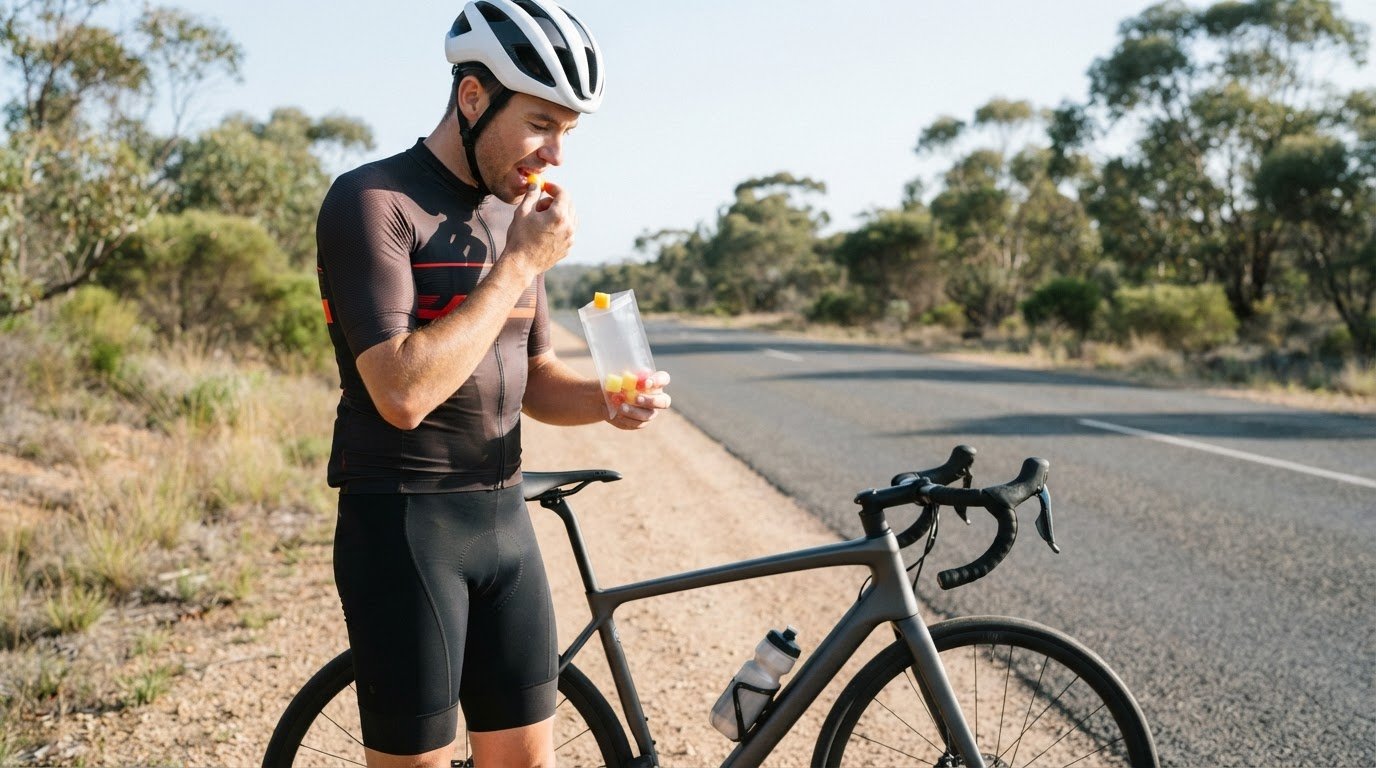
Chews can fuel a long effort, but they aren’t automatically a slower-burning option than gels. Sports chews for sustained energy in Australia can contribute to a planned carbohydrate intake; a serving of Clif BLOKS contains around 24 g of carbohydrates. The right choice depends on how you pace your fuel and how your stomach responds.
If gels are difficult to take on the move or bars feel too bulky for a race, chews are another format to consider. Texture alone, however, does not determine how well your fuelling plan works. Total carbohydrate intake, fluid and caffeine all matter.
This guide explains how carbohydrates and caffeine work together, practical ways to manage stomach discomfort, and how chews compare with gels and bars. You’ll come away with a clearer basis for choosing a format and fitting it into your endurance fuelling strategy.
Key Takeaways
- Match chew servings to your overall carbohydrate plan, rather than treating one format as a complete fuelling strategy.
- Manage stomach discomfort by pacing carbohydrate intake and taking chews with fluid.
- Compare chews, gels and bars by how easily you can carry, consume and tolerate them during your event.
- Choose caffeine deliberately and account for all sources across your race and day.
How do caffeine and carbs work together?
Chews supply portable carbohydrate in small portions, while caffeine can be timed around demanding race segments. Use the serving’s carbohydrate amount to build your hourly plan, and account for caffeine separately.
Carbohydrates for endurance exercise
During endurance exercise, energy chews provide carbohydrate in a chewable format that can be divided across an effort. Check the grams per serving, then count them towards your planned hourly intake. A guide gives 60 g of carbohydrate per hour as a target for most athletes; trained athletes may consume 60 to 90+ g per hour during long rides and runs. Your total comes from all fuel sources, not chews alone.
Some products use glucose and fructose as dual carbohydrate sources. Because these sugars use different intestinal transport pathways, the combination can contribute to carbohydrate intake. Check the ingredient and nutrition information rather than assuming every chew uses the same blend. The carbohydrate total remains the key figure when calculating how a serving fits your plan.
Carbohydrate content and serving sizes
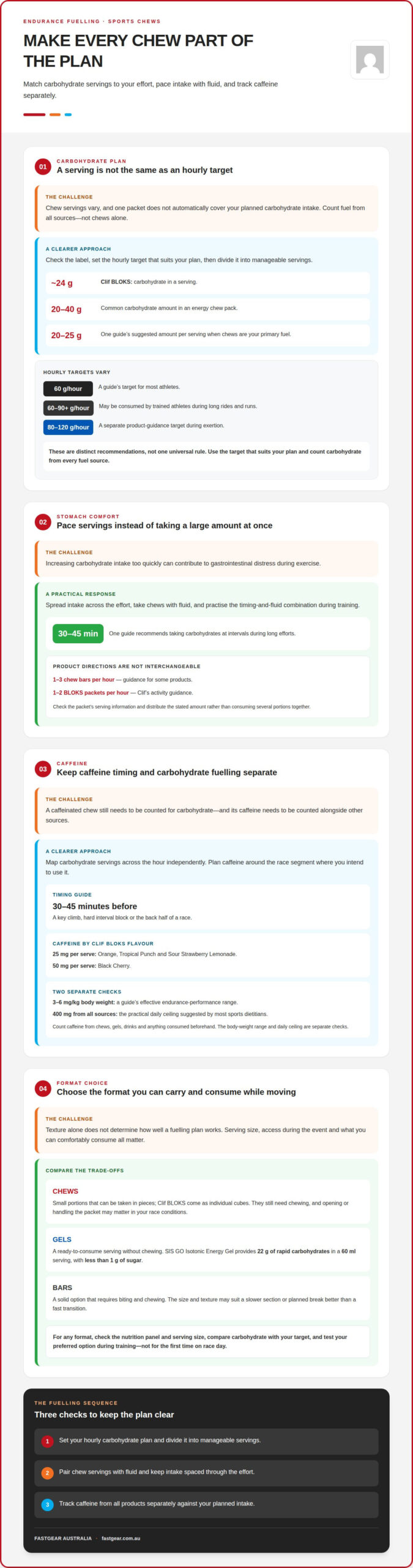
Chew servings vary: a serving of Clif BLOKS contains around 24 g of carbohydrate, while energy chew packs commonly provide about 20-40 g. If chews are your primary fuel, one guide recommends 20-25 g per serving. Compare the labelled serving with the amount you can comfortably consume, then calculate how many servings fit your hourly target.
Hourly recommendations also differ. One guide gives 60 g per hour for most athletes, while trained athletes may consume 60 to 90+ g during long rides and runs. Product guidance also gives an 80-120 g hourly target during exertion. Treat these as distinct targets, not a single rule, and build your intake around the target that suits your plan.
Caffeine adds a separate timing decision; it doesn’t replace carbohydrate. One guide recommends taking it 30-45 minutes before a key climb, hard interval block or the back half of a race. That timing places caffeine ahead of the demanding segment, while carbohydrate servings continue to contribute to your fuelling plan.
For example, Clif BLOKS Orange, Tropical Punch and Sour Strawberry Lemonade contain 25 mg of caffeine per serve; Black Cherry contains 50 mg. Read the flavour’s caffeine amount, include other caffeine sources in your total, and plan carbohydrate intake independently. This keeps the fuel calculation clear when race intensity changes.
Managing gastrointestinal discomfort and caffeine intake
Increasing carbohydrate intake too quickly can contribute to gastrointestinal distress during exercise. Pace your servings, take chews with fluid and plan caffeine separately as part of your fuelling strategy.
Managing gastrointestinal discomfort
Start by spreading carbohydrate intake across the effort instead of eating a large amount at once. One guide recommends taking carbohydrates every 30-45 minutes during long efforts. Take chews with fluid, which can help reduce distress from consuming too much carbohydrate too quickly. Adjust your plan around the product’s serving guidance and your event demands.
Hourly directions vary by product. Guidance suggests 1-3 chew bars per hour, while Clif recommends one to two BLOKS packets per hour during activity. These are product-specific directions, not interchangeable measures. Check the packet’s serving information, then distribute the stated amount rather than consuming several portions together. Practise your approach during training to understand how the timing and fluid combination feels while moving.
Planning caffeine and hourly intake
Count caffeine from every source, including caffeinated chews, gels and drinks. A guide describes 3-6 mg per kilogram of body weight as an effective endurance-performance range. It also gives 400 mg from all sources as the practical daily ceiling suggested by most sports dietitians. Treat those figures as separate checks: one relates to body weight, the other to daily intake.
Plan caffeine around the race segment where you intend to use it, rather than adding it at every fuelling stop. Map carbohydrate servings across the hour separately, so a caffeinated serving is not mistaken for a complete fuelling plan. Before an event, note each product’s caffeine and carbohydrate amounts, including any caffeine consumed beforehand.
Use this simple sequence:
- Set your hourly carbohydrate plan and divide it into manageable servings.
- Pair chew servings with fluid and keep intake spaced through the effort.
- Track caffeine from all products against your planned intake.
Chews compared with gels and bars
Choose a format based on how you can carry and consume fuel while moving. Chews come in small portions, gels provide a ready-to-consume serving, and bars are a solid option. Compare serving size, texture, accessibility during your event and how each format fits your carbohydrate plan.
Chews can suit athletes who prefer taking fuel in pieces rather than consuming a whole serving at once. Clif BLOKS, for example, come as individual cubes, making it possible to portion intake during an effort. Keep the packet accessible and consider whether opening and handling it suits your race conditions. Chews still need to be chewed, which can affect how easily you take them at race pace.
Gels offer a different texture and serving format. SIS GO Isotonic Energy Gel provides 22 g of rapid carbohydrates in a 60 ml serving, with less than 1 g of sugar. A single sachet gives a defined portion, which can make intake straightforward when you want fuel without chewing. Compare the listed carbohydrate amount with your target, then account for the full serving in your plan.
Bars are solid and require biting and chewing, so consider whether that suits your event. Their texture and size may fit a slower section or planned break better than a fast transition. Check the nutrition panel and serving size, just as you would for chews or gels. The format alone does not tell you how much carbohydrate you’ll consume.
Test your preferred option during training, not for the first time on race day. Compare how easy each format is to open, chew or swallow while moving. If you use more than one, give each a clear role, such as chews for smaller portions and a gel when quick access matters. Choose what fits your pace, handling and fuelling plan.
Choosing chews for long efforts, races and sensitive stomachs
For a long ride or run, compare the carbohydrate and sodium in each chew serving. Consider the event conditions, your fuelling schedule and how easily you can manage the texture while moving. In hot conditions, pay closer attention to sodium alongside your carbohydrate plan.
A guide recommends considering 25 to 80+ mg of sodium per serving, particularly in heat. This is a selection range, not a universal target. Compare the label with your wider fluid and electrolyte plan. Clif BLOKS Salted Watermelon contains twice the standard sodium, making its label relevant when comparing variants. Don’t assume all flavours have the same sodium content.
If your stomach is sensitive, assess timing as well as ingredients. GU Energy Chews may take 10-15 minutes to deliver energy to the bloodstream on an empty stomach. That gives you a practical reason to plan intake before a demanding section, rather than waiting until energy feels low. Take each serving with fluid, and avoid bunching several servings together.
Race conditions can affect how easy chews are to manage. Technical terrain, transitions and high-intensity sections may leave less opportunity to open a packet or chew comfortably. Plan around accessible fuelling points and practise the same handling routine during training. Record the product, serving and timing that suit your event pace.
Use this selection process before a long effort:
- Compare carbohydrate and sodium amounts on each product label.
- Choose a serving schedule that spreads intake across the event.
- Pair chews with fluid and practise the routine during training.
- In heat, consider sodium content as part of your overall fuelling plan.
For Australian endurance athletes comparing sports chews, a suitable choice is one whose serving information, handling and timing work with their plan. Set those criteria before race day and practise your chosen routine consistently during preparation.
Fastgear Australia: Compressport Trail Racing SS Tshirt
Fastgear Australia brings endurance fuelling and race gear together for athletes building a practical kit. If your plan calls for chewable fuel, Clif – BLOKS Energy Chews are an option to compare with SIS – GO Isotonic Gels. Choose the format that suits your fuelling schedule and how you prefer to take carbohydrates during an effort.
The Compressport Free Belt Pro can carry essentials, while the Compressport Trail Racing SS Tshirt adds technical apparel to your kit. These products support different parts of preparation: fuelling, carrying and clothing. Use the guidance above to decide what suits your event, then explore the relevant product details.
Browse Fastgear Australia’s endurance nutrition and racing gear.
Build your next race-day fuelling plan
Use your next training session to turn product choices into a repeatable race routine. Note what you carry, when you take it and how the format fits your pace. This gives you a practical basis for refining your setup before your next event, rather than making new decisions under race pressure.
For Australian athletes considering sustained-energy sports chews, the next step is to match the format to the way you race. Fastgear Australia offers Clif – BLOKS Energy Chews and GU Energy Gel – Single, alongside gear such as the Compressport Free Belt Pro. Explore the range with your event requirements in mind, then choose what supports your fuelling approach.
Contact Fastgear Australia to discuss your endurance gear needs. Keep your plan simple, practise it consistently and take that preparation into your next start line.
Frequently Asked Questions
Are chews actually good for sustained energy?
Yes, chews can contribute to sustained energy by supplying carbohydrate during endurance exercise. They are part of a fuelling plan, not a guarantee of constant energy. Consider your pace, total intake and event duration when deciding how to use them. When comparing sports chews for sustained energy in Australia, serving information and ease of use matter as much as format.
How many carbohydrates do sports chews provide per serving?
Carbohydrate content varies by product and serving. GU Energy Chews provide 22 g per serving, while pack sizes and serving definitions differ across the category. Check whether the nutrition panel describes a cube, portion or full packet before calculating intake. That distinction helps you compare products accurately and avoid counting an entire pack when its label defines several servings.
How often should endurance athletes take energy chews during exercise?
Follow the product’s serving directions and space intake across your effort. Guidance for long sessions commonly recommends taking carbohydrate at regular intervals, while instructions vary by chew. For example, Clif recommends one to two BLOKS packets per hour during activity. Treat this as product-specific guidance and include gels, drinks or other carbohydrate sources in your total.
How do sports chews compare with gels, sports drinks, and real food for sustained energy?
Chews offer portionable pieces, gels are ready to consume, and sports drinks combine fluid with their supplied fuel. Real food is another option, with texture and preparation depending on what you choose. Base your choice on what you can carry, consume and tolerate during your event. A mixed approach may suit changing race demands, provided you track each source’s contribution.
What do sports chews cost in Australia per pack and per serving?
Compare the pack price in A$ with the number of labelled servings to calculate the cost per serving. A pack containing several portions offers a different serving value from one treated as a single portion. Check the current product listing alongside the nutrition panel, and compare like with like. Pack size alone can be misleading because serving counts vary.
Are sports chews suitable for running, cycling, and other endurance sports?
Yes, athletes can use chews for running, cycling and other endurance events when the format suits their movement and fuelling plan. A cyclist may find packet access straightforward on a familiar route, while a runner may prefer smaller portions that are easier to manage. Practise your routine during training, including carrying and opening the pack at event pace.
