
Uncategorized
How to Stop Wetsuit Neck Chafing: Neck Protector Guide
Aug
That stinging sensation in the shower after an open-water swim isn’t a badge of honour; it’s a performance killer. Most athletes rely on messy anti-chafe creams that wash away within twenty minutes, leaving them vulnerable to raw skin and painful scabbing. Friction is a mechanical problem that requires a mechanical solution. Integrating a technical wetsuit neck protector into your kit provides the reliable, physical barrier you need to keep your skin intact and your focus on the finish line.
We understand the frustration of painful rashes that sideline your follow-up sessions and ruin your training rhythm. This guide teaches you how to eliminate saltwater chafing and optimise your open-water performance with the right protection strategy. We’ll explore why specialised silicone guards, like the Mugiro Neck Protector, are the ultimate race-day insurance policy for serious triathletes. Get ready to achieve pain-free long-distance swims and faster recovery times with gear designed for peak efficiency in the water.
Key Takeaways
- Understand how saltwater crystals and neoprene movement cause friction-induced dermatitis and how to stop it before it starts.
- Discover why a technical wetsuit neck protector offers a more reliable, permanent physical barrier than traditional anti-chafe creams for endurance sessions.
- Master the step-by-step fitting process and skin preparation required to ensure your protective gear remains secure and effective in rough conditions.
- Identify the technical advantages of using specialised, saltwater-resistant silicone designs like the Mugiro protector to maximise your performance efficiency.
- Learn essential maintenance tips to protect your high-performance gear from UV rays and salt degradation for long-term durability.
The Pain of Wetsuit Rash: Understanding Saltwater Chafing
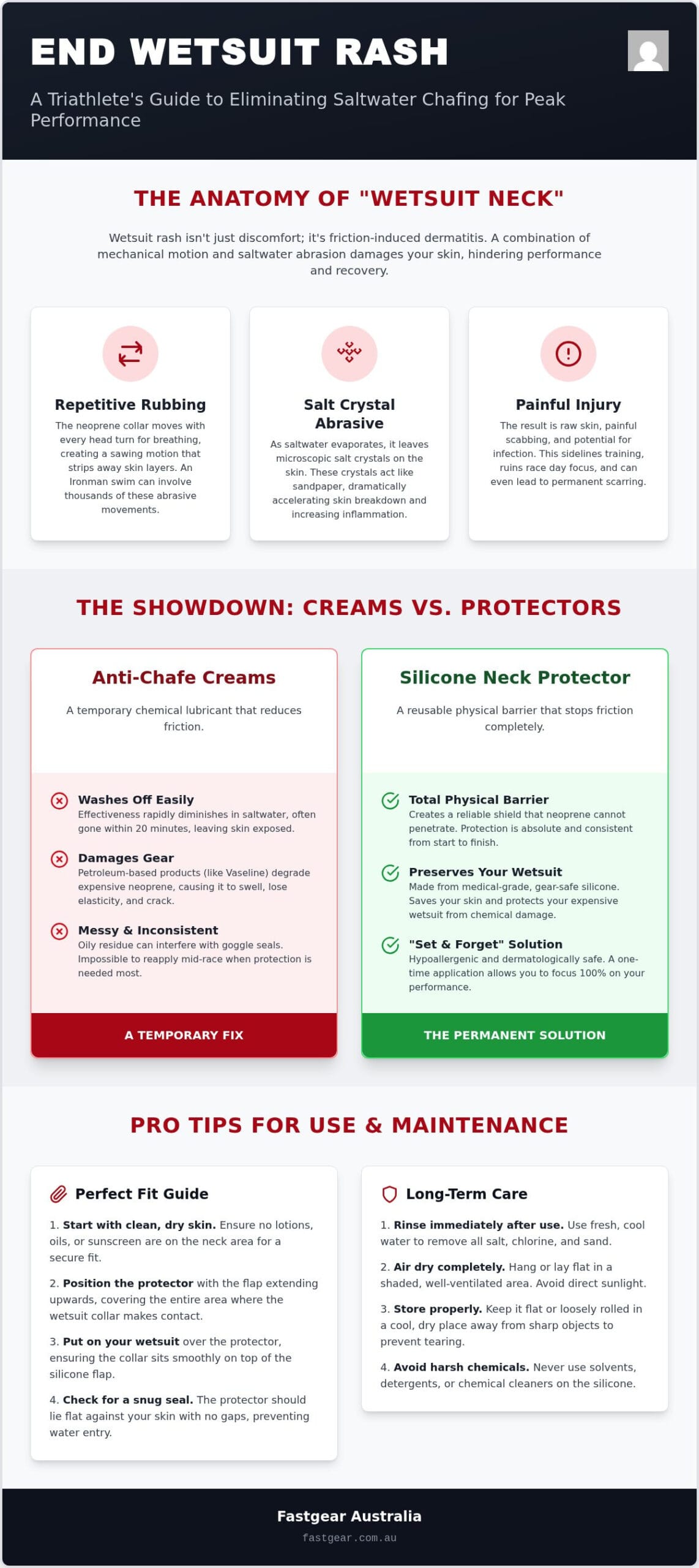
“Wetsuit neck” is more than a minor annoyance for open-water swimmers. It is a specific form of friction-induced dermatitis. This condition occurs when the raw edge of a Wetsuit collar repeatedly strikes the skin during the swim stroke. Every time you rotate your head to breathe, the neoprene moves. This creates a sawing motion that strips away the protective layers of the epidermis. Without intervention, this leads to painful scabbing, permanent scarring, and secondary infections that can sideline your training for weeks.
The ocean environment makes this mechanical problem worse. Saltwater is a liquid abrasive. As you swim, water trapped between the suit and your skin begins to evaporate, leaving behind microscopic salt crystals. These crystals act like sandpaper, accelerating skin breakdown. Standard collars often fail because they cannot account for the sheer volume of repetitions in a typical session. Without a dedicated wetsuit neck protector, you are essentially rubbing salt into an open wound for several kilometres.
The Science of Friction in Open Water
Swimming involves high-frequency repetitive motion. Bilateral breathing requires a neck rotation of roughly 45 to 90 degrees every second or third stroke. Over a 3.8km Ironman swim, that equals thousands of abrasive movements. Heat and sweat further complicate the issue. As your core temperature rises, your skin softens and becomes more susceptible to tearing. High salt concentrations in Australian coastal waters increase skin sensitivity, making the inflammatory response even more aggressive and painful.
Why High-Performance Athletes are Most at Risk
Serious athletes face a dual challenge: volume and velocity. Increased training hours mean more time under tension and more opportunities for skin failure. Faster swimmers generate higher frictional forces against the neoprene. The drag coefficient might be low, but the mechanical pressure on the neck remains high. For Ironman-distance events, a minor irritation at the 500-metre mark becomes an excruciating injury by the time you reach T1. Using a technical wetsuit neck protector is no longer optional for those chasing personal bests. It is a critical piece of race-day insurance that prevents the injury cycle from ruining your entire season.
Silicone Neck Protectors vs. Anti-Chafe Creams: Which is Better?
Choosing between a physical barrier and a chemical lubricant is often the difference between a PB and a DNF. Understanding Skin Chafing is vital for anyone spending hours in the surf. While many swimmers reach for a tub of anti-chafe balm as a reflex, they’re using a temporary fix for a permanent mechanical problem. Anti-chafe creams rely on the lubrication method to reduce friction. This works for short sessions. However, saltwater and constant neck rotation eventually strip the layer away, leaving your skin exposed to the raw edge of your suit.
A wetsuit neck protector utilizes the barrier method. It creates a physical shield that neoprene simply cannot penetrate. This approach is fundamentally more reliable for endurance athletes. Beyond skin protection, there is the health of your gear to consider. Many athletes mistakenly use petroleum-based products like Vaseline. These chemicals are notorious for degrading neoprene. They cause the material to lose elasticity, swell, and eventually crack. Switching to a reusable silicone protector saves your skin and preserves your expensive wetsuit for more seasons.
The Case for Silicone Barriers
Medical-grade silicone is the gold standard for high-performance protection. It’s hypoallergenic and dermatologically safe, making it ideal for athletes with sensitive skin. Unlike creams, a physical silicone layer doesn’t thin out or lose its properties in varying water temperatures. It stays exactly where you put it. The consistency is absolute. Whether you’re five minutes or two hours into a swim, the level of protection remains identical. It’s a “set and forget” solution that allows you to focus entirely on your stroke mechanics.
Why Creams Often Fail During Endurance Races
Creams fail when you need them most. The “wash-off” effect is a reality during long T1 transitions and extended ocean legs. Once the lubricant is gone, there’s no way to reapply it mid-swim. Oily residues are also a nightmare for your other gear. One touch of a greasy finger can ruin the seal on your swimming goggles or cause permanent fogging. If you’re looking for a cleaner, more efficient way to manage friction, the Mugiro Neck Protector offers a technical advantage that creams can’t match. It’s a cost-effective, one-off investment that eliminates the need for recurring chemical purchases.
How to Fit and Wear a Wetsuit Neck Protector: A Step-by-Step Guide
Precision is mandatory. Owning the best technical gear means nothing if the application is sloppy. A correctly fitted wetsuit neck protector is the difference between a seamless session and creating new, unexpected pressure points. If the protector isn’t seated perfectly, the raw edge of your wetsuit can still find a way to bite into your skin. You want a seal that feels like a second skin; secure enough to stay put during a heavy swell, but flexible enough to allow for full cervical rotation.
Preparation starts before you even touch your neoprene. Your skin must be clean and bone-dry. As established, mixing the barrier method with oily lubricants is a recipe for gear failure. Creams prevent the silicone from gripping your skin, which leads to the protector sliding down and exposing your neck. Follow this methodical approach to ensure your kit is locked in and race-ready.
Initial Fitting and Positioning
- Step 1: Clean the Contact Zone. Wash your neck to remove salt, sweat, or leftover sunblock. Dry the area thoroughly. A clean surface ensures the medical-grade silicone creates a reliable, non-slip bond with your skin.
- Step 2: The Slide. Hold the protector with both hands. Gently stretch the opening and slide it over your head. Avoid using your fingernails, as sharp edges can nick the silicone and create a failure point.
- Step 3: Target the Friction Zone. Position the guard so the widest part covers your primary area of irritation. Usually, this is the back and sides of the neck where the collar closure sits. Ensure the bottom edge sits flat against your collarbone before pulling up your wetsuit.
Once the protector is in place, don your wetsuit as usual. The wetsuit collar must sit directly on top of the silicone guard. Before hitting the water, perform a quick 360-degree neck rotation. If you feel any pinching or bunching, adjust the protector immediately. It should feel like an integrated part of your suit, not a separate obstacle.
Troubleshooting Common Fit Issues
If the protector feels restrictive or “choking,” it’s likely sitting too high. Slide it down a few millimetres so the pressure is distributed across the thicker muscles of the lower neck. For athletes using high-cut performance suits, ensure the protector is tucked deep enough into the collar to prevent the neoprene from riding over the top edge. Finally, check your swim cap overlap. Your cap should sit just above the protector. If they overlap significantly, it can break the seal and allow water to flush through, potentially shifting the guard during your set. Secure your goggles last to ensure no straps interfere with the protector’s top margin.
Pro Tips for Maintaining Your Neck Protector and Preventing Injury
Your wetsuit neck protector is a precision tool. It requires the same level of care as your triathlon bike or high-end wetsuit. While medical-grade silicone is incredibly resilient, it isn’t indestructible. Constant exposure to the Australian sun and high-salinity coastal waters eventually degrades the material. UV rays break down the molecular bonds in silicone, leading to brittleness and loss of elasticity. Salt crystals, if left to dry, act as micro-abrasives that can tear the surface. Proper maintenance ensures your “race-day insurance policy” remains effective for every session.
Treating your gear with respect translates directly to performance. A compromised guard won’t sit flush against your skin, which invites the very friction you’re trying to avoid. If the material feels sticky or the edges appear jagged, its structural integrity is gone. Replacing your equipment at the first sign of wear is a small price to pay for avoiding a week of excruciating recovery.
Cleaning and Storage Essentials
Rinsing with fresh water immediately after exiting the surf is non-negotiable. This prevents salt from crystallising and digging into the silicone pores. Use a mild, pH-neutral soap if the guard feels oily from sunscreen or sweat. Avoid harsh chemicals, bleach, or alcohol-based cleaners. These will strip the material’s protective finish and compromise its technical “second skin” feel.
- Rinse thoroughly inside and out with cool fresh water after every use.
- Air dry in a shaded spot, away from direct sunlight.
- Store the guard flat in a dedicated gear bag to avoid permanent creases or stress tears.
- Never leave your protector in a hot car, as extreme temperatures can warp the silicone shape.
Post-Swim Skin Care for Athletes
Even with the best gear, mistakes happen. You might forget your guard for a quick set or fit it poorly in a pre-race rush. If you suffer a “burn,” act fast. Rinse the area with fresh water and apply a soothing, hypoallergenic balm. Avoid products with heavy fragrances or alcohol that cause further inflammation. Look for ingredients like aloe vera or medical-grade lanolin to support the skin’s barrier function. The optimal window for skin repair begins within the first sixty minutes of post-swim hydration and topical treatment to ensure rapid cellular turnover.
Don’t wait for a rash to ruin your training block. Invest in the Mugiro Neck Protector today to ensure your focus remains on your split times, not your skin.
Why the Mugiro Neck Protector is the Ultimate Solution for Australian Athletes
Success in endurance sports is built on marginal gains and the elimination of preventable failures. The Mugiro design represents the industry benchmark for technical neck protection. Unlike generic alternatives, this wetsuit neck protector is engineered by endurance specialists who understand the specific mechanics of the swim stroke. It utilises a high-grade, elastic silicone that mimics the movement of your skin. This ensures the guard remains a functional part of your kit rather than an obstruction. Selecting the correct size is straightforward; a snug fit ensures the guard stays anchored during high-intensity rotation without restricting your breathing or circulation. For a comprehensive breakdown of the engineering and fitting process, the Mugiro neck protector anti-chafe guide for Australian triathletes covers everything you need to know before race day.
Integrating this guard into your routine means prioritising consistency. Australian athletes face some of the most demanding ocean conditions in the world. High salt concentrations and intense UV exposure mean your skin needs more than just a layer of grease. The Mugiro protector offers a professional-grade solution that bridges the gap between comfort and peak performance. It’s a dedicated piece of gear for those who refuse to let physical irritation compromise their split times.
Designed for the Rigours of Triathlon
Triathletes face unique challenges that traditional pool swimmers never encounter. The aerodynamic and hydrodynamic profile of the Mugiro guard ensures zero added drag during the water leg. It’s built to survive the “washing machine” start of a major race, where physical contact and heavy turbulence are constant. During the T1 transition, every second counts. The elastic nature of the silicone allows for instantaneous removal. You won’t waste precious time fumbling with messy creams or struggling with stuck gear. It integrates seamlessly with your existing high-performance kit, including your racing goggles and specialised wetsuit.
Sourcing Quality Gear in Australia
Buying from a specialised Australian retailer ensures you receive race-ready support and authentic products. Local expertise matters when you’re preparing for the harsh conditions of the Aussie coastline. Fastgear Australia curates only the most reliable technical accessories to help you reach peak efficiency. Don’t let an avoidable rash dictate your training schedule or ruin your race-day experience. Kit out your gear bag with performance essentials that actually work. View the Mugiro Neck Protector at Fastgear Australia and secure your skin for your next ocean swim.
Master Your Performance and Protect Your Skin
Friction isn’t just a minor nuisance; it’s a physiological barrier to peak efficiency. We’ve established that relying on temporary lubricants for long-distance ocean swims leaves you vulnerable to salt-induced dermatitis and training setbacks. A technical wetsuit neck protector provides the reliable, saltwater-resistant shield necessary for the rigours of the Australian coastline. By choosing a mechanical solution over messy creams, you ensure your focus remains entirely on your stroke mechanics and split times.
Don’t let painful rashes dictate your training schedule or compromise your race-day results. Upgrade your swim kit with the Mugiro Neck Protector at Fastgear Australia. Trusted by Australian Ironman and marathon swimmers, these reusable guards are crafted from durable, medical-grade silicone. We provide fast national shipping to ensure you’re fully prepared for your next session. Stop fighting the burn and start chasing your next personal best with total confidence.
Frequently Asked Questions
Can I use a neck protector with any brand of wetsuit?
Yes, a technical wetsuit neck protector is compatible with all major wetsuit brands and collar designs. Because the guard sits directly on your skin and underneath the neoprene, it works independently of the suit’s specific closure system. Whether you are wearing a high-performance triathlon suit or a standard surfing steamer, the protector provides a universal physical barrier that neutralises friction regardless of the suit’s material or cut.
How do I stop my wetsuit from rubbing my neck during long swims?
The most effective method to stop neck rubbing is to implement a physical barrier between your skin and the neoprene collar. While anti-chafe creams provide temporary lubrication, they often wash away during endurance sessions. Using a silicone guard eliminates the contact point entirely. Ensure your suit is pulled up correctly at the torso to reduce downward tension on the collar, then secure a protector to lock out any remaining abrasive movement.
Will a neck protector affect my breathing or neck rotation?
A correctly sized protector will not restrict your breathing or cervical rotation. High-performance models use medical-grade silicone with high elasticity, allowing the guard to expand and contract with your neck muscles. This flexibility ensures you maintain a full range of motion for bilateral breathing without feeling constricted. If the guard feels tight, slide it slightly lower on the neck where the muscle mass is broader to distribute the pressure more evenly.
Do I still need to use anti-chafe cream if I have a neck protector?
No, you should avoid using anti-chafe creams in conjunction with a silicone wetsuit neck protector. Applying lubricants can cause the protector to slip out of position, which eventually exposes your skin to the very friction you are trying to prevent. The silicone itself provides a non-slip, protective layer that remains effective without chemical assistance. Keep your skin dry and clean before fitting the guard to ensure a secure, race-ready seal.
How long does a silicone neck protector typically last?
With proper maintenance, a high-quality silicone guard typically lasts for several seasons of regular training and racing. Factors such as UV exposure and salt crystallisation impact the material’s longevity over time. Rinsing the protector with fresh water after every session and storing it out of direct sunlight prevents the silicone from becoming brittle or losing its shape. Replace the guard immediately if you notice any visible tears or a significant loss of elasticity.
Is a neck protector suitable for surfing or just swimming?
These guards are highly effective for surfing, particularly during long sessions involving heavy paddling. Surfers frequently experience “wetsuit neck” due to the constant lifting and turning of the head while paddling through the break. A silicone barrier stays in place even during heavy wipeouts and provides a reliable shield against the abrasive mix of salt and sand. It is a versatile piece of kit for any high-intensity water sport involving repetitive neck movement.
Why does saltwater make wetsuit chafing significantly worse?
Saltwater acts as a liquid abrasive because it leaves behind microscopic salt crystals as it evaporates from your skin. These crystals function like sandpaper between your neck and the neoprene collar. When combined with the repetitive motion of swimming, this accelerated skin breakdown leads to the raw, stinging dermatitis commonly known as “the burn.” A wetsuit neck protector solves this by preventing the salt crystals from ever making contact with your vulnerable skin layers.
